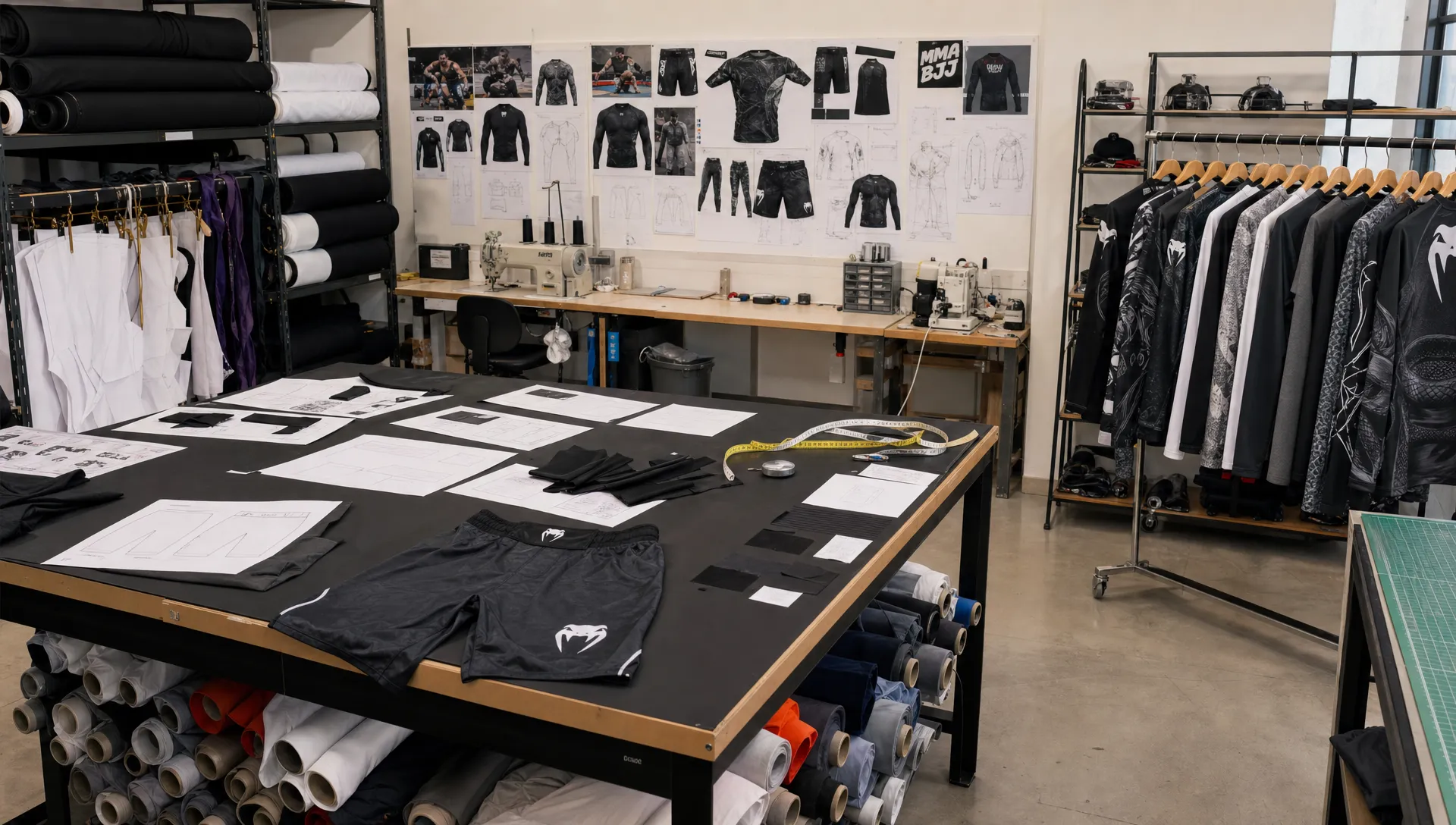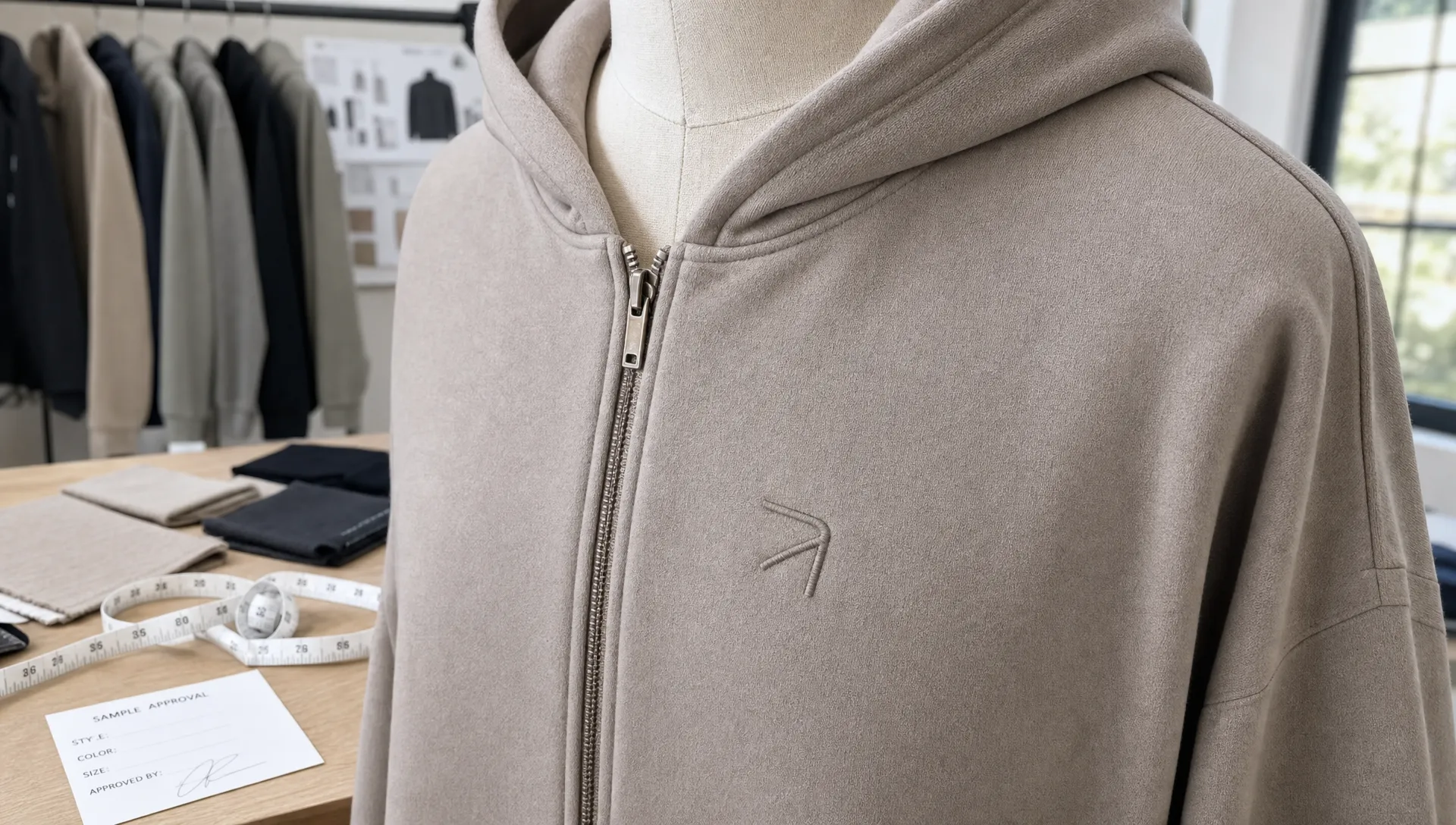
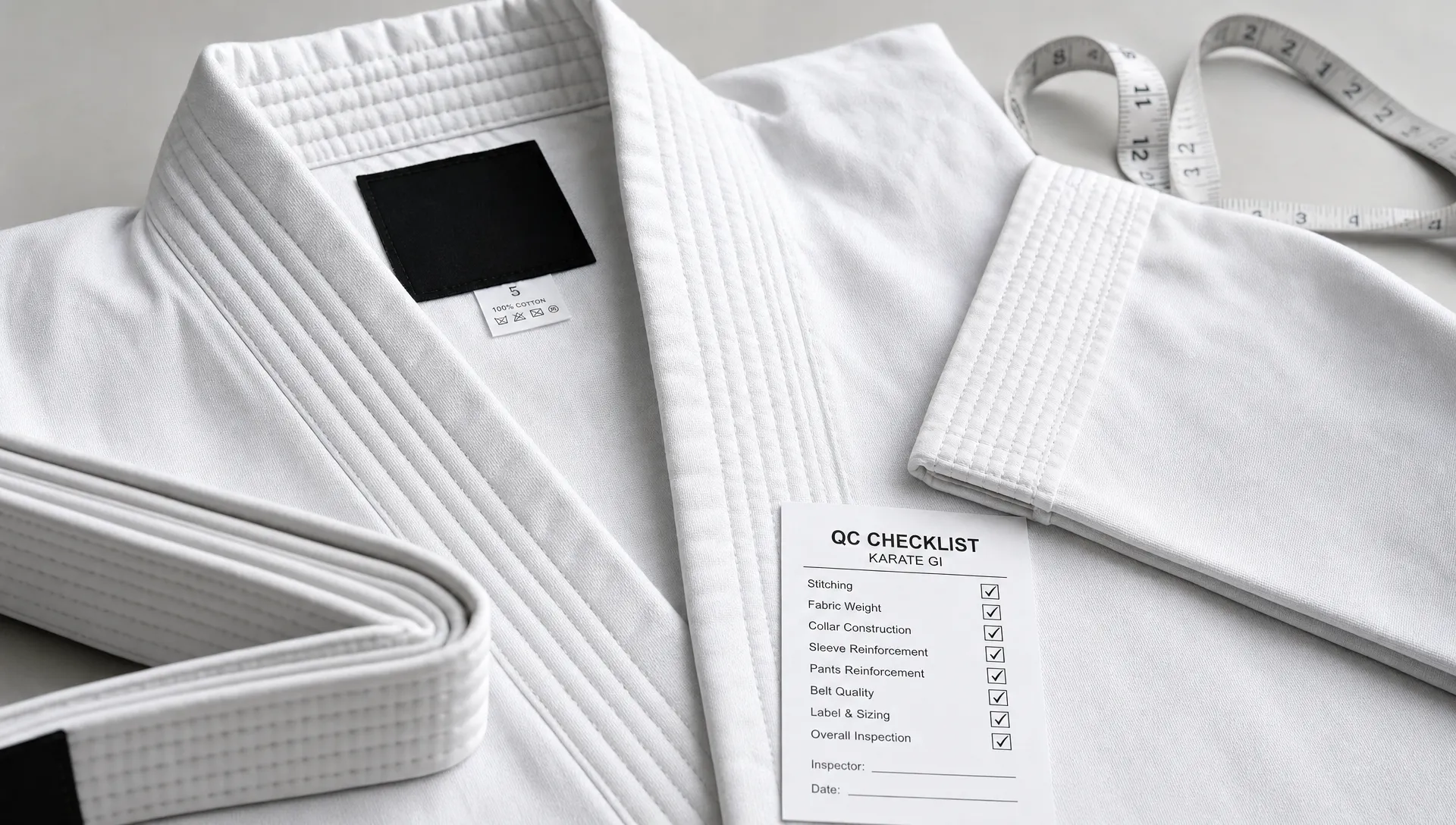
Buying from a karate gi factory is not only about getting the right price per set. For brands, gyms and distributors, the bigger risk is receiving uniforms that look fine in carton photos but shrink too much, vary by size, feel inconsistent across batches or fail after a few months of training.
Most quality issues start before production begins. A factory can only inspect against standards that are written down, approved and tied to a real sample. If the buyer says “heavyweight gi” or “premium stitching” without defining what those terms mean, the final inspection becomes subjective. The better approach is to give the factory measurable checkpoints and require evidence at each stage.
Below are the quality checks buyers should require before placing bulk karate gi orders, especially when sourcing private label uniforms for resale, club programs or distribution.
Start With a Written Quality Standard
A clear quality standard turns a product idea into something a karate gi factory can cut, sew, measure and inspect. It should be part of your tech pack, purchase order or supplier agreement before the first sample is made.
The standard does not need to be complicated, but it should remove guesswork. At minimum, define the fabric, pattern, size chart, construction details, branding, packaging and inspection requirements. If you are still shortlisting suppliers, these requirements pair well with broader guidance on choosing a reliable karate gi manufacturer.
| Requirement | What buyers should define | Why it matters |
|---|---|---|
| Fabric | Fiber content, weave, weight, color, finish and shrinkage limit | Prevents weak fabric, shade variation and unexpected shrinkage |
| Fit | Approved size chart, grading rules and measurement tolerances | Keeps uniforms consistent across youth, adult and half sizes |
| Construction | Stitch type, seam strength, reinforcement points and stitch density | Reduces seam failure during training |
| Branding | Label artwork, embroidery files, patch placement and care labels | Protects brand presentation and compliance |
| Packing | Folding method, bag labels, carton marks and size ratio | Prevents shipping confusion and retail presentation problems |
| Inspection | In-line checks, final inspection standard and defect classification | Makes acceptance or rejection objective |
A buyer should also identify which sample becomes the reference sample. This is usually the approved pre-production sample, not the first sales sample or a photo in a chat thread. The reference sample should stay available during production so the factory QC team can compare bulk output to an approved physical standard.
Fabric Checks Every Buyer Should Require
The fabric is the foundation of a karate uniform. If the fabric weight, weave or finishing varies, even excellent sewing will not save the order. For karate gis, buyers commonly specify cotton canvas, cotton drill or polycotton blends depending on the target customer, price point and training use. What matters most is that the agreed fabric is verified before cutting.
Ask the factory to inspect fabric rolls before production begins. This inspection should look for defects such as slubs, holes, stains, weaving lines, shade variation and uneven finishing. Many apparel factories use a 4-point fabric inspection method or a similar defect scoring system, but the important point is that the fabric should be checked before it reaches the cutting table.
Buyers should require confirmation of these fabric points:
- Fabric weight: Confirm the agreed GSM or ounce weight, not only a verbal description such as lightweight or heavyweight.
- Fiber content: Check that the bulk fabric matches the approved sample and care label claim.
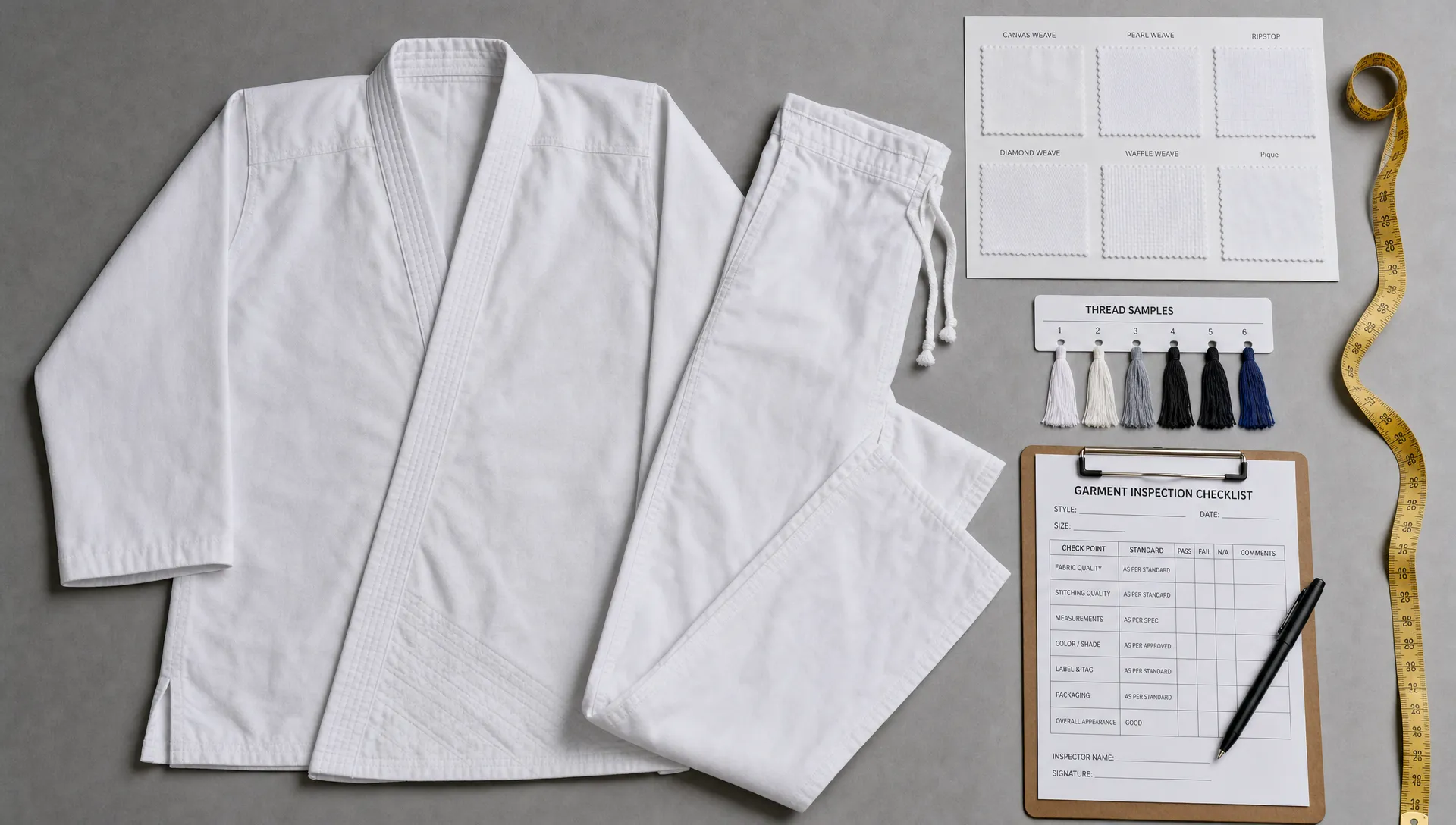
- Weave and hand feel: Compare bulk fabric against the reference swatch for texture, firmness and drape.
- Shade consistency: Check roll-to-roll color variation, especially for black, navy or custom color uniforms.
- Surface defects: Reject fabric with stains, holes, weaving faults or visible contamination before cutting.
Shrinkage deserves special attention. Karate uniforms are washed often, and cotton-heavy fabrics can change noticeably after laundering. A buyer should not accept “pre-shrunk” as a complete quality promise. Instead, ask for a wash test using the same wash and dry method that appears on the care label, then compare measurements before and after washing.
For private label programs, write shrinkage limits into the specification. The acceptable percentage depends on your fabric, fit and target market, but the standard should state the maximum allowed change in length and width. Without this, a size 4 jacket that fits correctly before washing may become too short after several wash cycles.
Colorfastness is another key fabric checkpoint. White uniforms should be checked for yellowing, optical brightness consistency and stains. Colored gis should be checked for color loss during washing and crocking, which is color transfer from rubbing. If the uniforms will be sold in a regulated market, care labeling and fiber declarations also need to match the actual fabric.
Pattern, Size and Fit Checks
A karate gi has to support movement. The jacket must allow punching, blocking and turning without pulling across the shoulders. Pants need enough room through the hip, thigh and crotch so stances do not strain the seams. Fit problems often appear when a factory grades sizes too aggressively or copies one size into a full range without testing proportions.
Before bulk production, ask for a size set sample or at least samples from the smallest, middle and largest sizes in the range. Checking only one middle size is risky, especially if the order includes children’s sizes, adult sizes and extended sizes.
The measurement chart should include clear points of measure. Use diagrams if possible, because different factories may measure sleeve length, jacket width or pant outseam differently. The buyer should approve both the actual measurement and the measuring method.
| Fit checkpoint | What to inspect | Common problem if skipped |
|---|---|---|
| Jacket length | Length from shoulder or center back, based on the agreed method | Jackets look too short or inconsistent by size |
| Chest width | Width across the chest with garment laid flat | Limited upper body movement |
| Sleeve length | Length from shoulder seam or center back, depending on spec | Sleeves fail competition or club preference standards |
| Pant waist | Relaxed and extended waistband measurement | Pants fit poorly across different body types |
| Pant inseam and outseam | Leg length and rise balance | Pants drag, ride up or restrict stances |
| Grading | Size-to-size increments | Larger sizes become too narrow or too long |
Measurement tolerance should also be agreed before production. Small variations are normal in sewn garments, but every measurement cannot have the same tolerance. A jacket length may allow more variation than collar width, and a waistband may need different tolerances when elastic is involved. Critical measurements should have tighter limits.
Construction Checks for Karate Gi Durability
Karate gis face repeated pulling, sweat, washing and friction. The strongest-looking uniform can still fail if construction details are not controlled. Buyers should inspect seam type, stitch density, thread quality and reinforcement placement during production, not only after packing.
The most important stress points are the underarm, side vents, lapel area, crotch, waistband, belt loops and pant inseam. If these areas are weak, customer complaints usually arrive after only a few training sessions. A karate gi factory should be able to explain how it reinforces these points and show the same construction on samples before bulk production begins.
Stitch density should be consistent across the garment. Loose stitching can open under strain, but overly dense stitching may damage the fabric or create puckering. The buyer does not need to prescribe every machine setting, yet the final look and durability standard should be clear.
Check for skipped stitches, broken threads, seam slippage, uneven topstitching, puckered seams and loose thread ends. On the jacket, examine the lapel and front opening carefully because these areas shape the garment’s appearance. On pants, test the waistband, drawcord channel and crotch seam because they receive the most stress during movement.
Branding, Labels and Private Label Checks
For a private label order, the uniform is not only a product. It is a brand asset. A technically acceptable gi can still feel unprofessional if the labels are crooked, embroidery threads do not match the approved shade or patches are placed inconsistently.
Buyers should approve artwork, label samples, embroidery strike-offs and patch samples before bulk production. If the factory is applying woven labels, neck labels, size labels, care labels, hangtags or packaging stickers, every element should be checked against the approved brand file.
Placement matters as much as artwork. A sleeve embroidery that shifts by even a small amount can make a full order look inconsistent when displayed together. Ask the factory to mark placement using measurements from fixed seams, not by eye. For example, patch distance from cuff, hem or side seam should be written into the spec.
Care labels should match the garment’s actual fabric content and destination market requirements. This is especially important for distributors selling across several countries. Incorrect fiber labels or missing origin information can create compliance problems and delay shipments.
In-Line QC and Final Inspection Standards
A strong factory does not wait until the cartons are sealed to find mistakes. In-line quality control catches problems while they can still be corrected. Final inspection confirms whether the finished order matches the approved specification before shipment.
The best inspection plan covers several stages. Arus Sportswear’s overview of how a karate gi factory handles quality at scale explains this production mindset in more detail, but buyers should still write their own required checkpoints into the order.
| Inspection stage | What should be checked | Evidence buyers can request |
|---|---|---|
| Incoming material | Fabric defects, shade, weight, trims and labels | Fabric inspection report and photos |
| First piece | First completed garment from bulk line | Photos, measurements and buyer approval if required |
| In-line QC | Sewing defects, measurement drift and workmanship | In-line report with defect notes |
| Final inspection | Finished goods against approved sample and spec | Measurement report, defect summary and carton count |
| Packing audit | Size ratio, labels, folding, polybags and cartons | Packing photos and final packing list |
Many buyers use AQL, short for acceptable quality limit, to define final inspection sampling. AQL is not a guarantee that every garment is perfect. It is a sampling method that determines how many units are inspected and how many defects are acceptable before the lot fails. Apparel buyers often set separate thresholds for critical, major and minor defects.
Critical defects should usually have zero tolerance. Examples include sharp objects, broken needle contamination or labeling errors that create legal risk. Major defects affect sellability or performance, such as wrong size measurements, open seams, holes, severe stains or incorrect branding. Minor defects are small issues that do not usually affect use, such as a loose thread or slight crease.
| Defect class | Examples in karate gis | Typical buyer action |
|---|---|---|
| Critical | Broken needle fragment, unsafe contamination, serious compliance label error | Reject or hold shipment until corrected |
| Major | Wrong size, open seam, hole, severe shade mismatch, incorrect logo | Rework, replace or fail the lot depending on quantity |
| Minor | Loose thread, light crease, small removable mark | Accept within agreed limit or request cleaning and trimming |
The key is to agree on defect classification before inspection. If the buyer and factory decide after the goods are finished, disputes become harder to resolve.
Packing and Carton Quality Checks
Packing errors can be just as expensive as sewing defects. A distributor may receive good uniforms but still lose time if sizes are mixed, barcodes are wrong or cartons are mislabeled. For ecommerce brands and gyms, poor folding or messy packaging can also reduce perceived value.
Buyers should require a packing standard that includes folding method, polybag size, size stickers, barcode labels, carton marks and carton quantity. If the order uses assorted size ratios, the packing list should match the purchase order exactly.
Cartons should be strong enough for international shipping and storage. The factory should check carton weight, carton dimensions and outer markings before dispatch. If moisture is a concern, especially for long transit routes, ask how the factory protects finished goods during storage and packing.
For brands ordering multiple martial arts uniforms, it helps to understand the wider production sequence from product brief to packing. Arus Sportswear covers that process in its guide to a martial arts uniform factory process, which can help buyers coordinate QC across different uniform categories.
Documentation Buyers Should Keep
Quality control is easier when every approval is traceable. Chat messages and informal photos are not enough for repeat orders. Keep a simple production file for each style, color and size range.
Important documents include:
- Approved tech pack: The latest version of fabric, measurements, construction and branding details.
- Approved sample record: Photos, sample date, sample comments and approval status.
- Bulk material approvals: Fabric swatches, trim samples, label samples and color references.
- Measurement reports: Size set measurements, in-line measurements and final inspection measurements.
- Defect reports: Defect type, quantity affected, corrective action and final result.
- Packing records: Carton list, size ratio, shipping marks and barcode confirmation.
This documentation protects both sides. The buyer can confirm what was approved, and the factory has a clear reference for repeat production.
Red Flags in Factory Quality Conversations
Not every quality issue is visible during sampling. Some warning signs appear in how a supplier talks about QC. A reliable karate gi factory should be comfortable discussing tolerances, inspection points and defect handling.
Watch for these red flags before placing a large order:
- The factory promises “no defects” instead of explaining its inspection process.
- The quote is low because fabric testing, size sets or in-line QC are removed.
- The factory will not provide measurement reports or production photos.
- The supplier cannot explain how shrinkage is tested.
- The approved sample is not kept as a production reference.
- The factory treats labels, packaging or carton marks as minor details.
A buyer does not need to micromanage every operation, but the factory should be able to show how quality is controlled from raw material to carton.
How to Put QC Requirements Into a Purchase Order
The simplest way to reduce disputes is to write QC requirements directly into the purchase order or production agreement. Keep the language practical and tied to evidence.
| QC clause | Example requirement |
|---|---|
| Sample approval | Bulk production starts only after written approval of the pre-production sample. |
| Measurement tolerance | Finished garments must match the approved size chart within agreed tolerances. |
| Fabric control | Bulk fabric must match approved swatch for weight, shade, hand feel and shrinkage. |
| Workmanship | Open seams, holes, severe stains, incorrect labels and wrong logos are major defects. |
| Branding | Label, patch and embroidery placement must follow approved artwork and placement spec. |
| Final inspection | Shipment is released after final QC report, packing list and carton count are approved. |
This level of detail helps the factory plan production correctly and gives the buyer a fair basis for approval, rework or rejection.
Frequently Asked Questions
What quality checks should buyers require from a karate gi factory? Buyers should require checks for fabric weight, shrinkage, shade, sizing, stitching, reinforcement, branding, labels, packing and final inspection. These checks should be based on an approved sample and written specification.
Is a sample enough to confirm karate gi quality? A sample is necessary, but it is not enough by itself. Buyers should also require bulk fabric approval, size set checks, in-line QC and final inspection because bulk production can differ from a sample.
How do I prevent karate gis from shrinking too much? Define the fabric, washing method and maximum shrinkage allowance before production. Ask the factory to run shrinkage tests on bulk fabric or finished garments, then compare results with the approved tolerance.
Should I inspect karate gis before or after packing? Both stages matter. Garments should be checked before packing for measurements and workmanship, then cartons should be audited for size ratios, labels, folding, packing lists and shipping marks.
What is the biggest QC mistake buyers make with karate uniforms? The biggest mistake is using vague quality language. Terms like premium, strong or heavyweight should be replaced with measurable requirements such as fabric weight, stitch standard, size chart, tolerance and approved branding placement.
Build Better Karate Gi Orders With the Right Manufacturing Partner
Quality control is easier when your factory understands martial arts uniforms, private label branding and bulk production requirements. If you are preparing a custom karate gi order for a brand, gym or distribution program, Arus Sportswear can support custom designs, OEM production, branding options, low minimum orders and worldwide shipping.
Use the checklist above before your next order, and make quality checks part of the conversation from the first sample to the final carton.