A strong judo gi range is not built by changing only the logo or adding another color. It starts with a clear understanding of how beginners, club-level players, competitors, instructors and youth athletes use the uniform differently.
For a martial arts brand, gym or distributor, that difference matters. A beginner may need an affordable gi that feels comfortable from the first class. A serious club player may want better durability and a cleaner fit. A competitor may care about lapel structure, sleeve length, shrinkage control and rule compliance. If every customer is offered the same product, the range will either feel too basic for advanced judoka or too expensive for new students.
Planning a custom judo gi range by skill level helps you control product quality, price points and inventory risk. It also gives your customers a reason to trade up as they train longer, which can make your brand more useful over time.
Start with the role each gi will play in your range
Before discussing fabric weight, stitching or labels with a custom judo gi manufacturer, define the job of each product. A clear range structure makes design decisions easier because each model has a purpose.
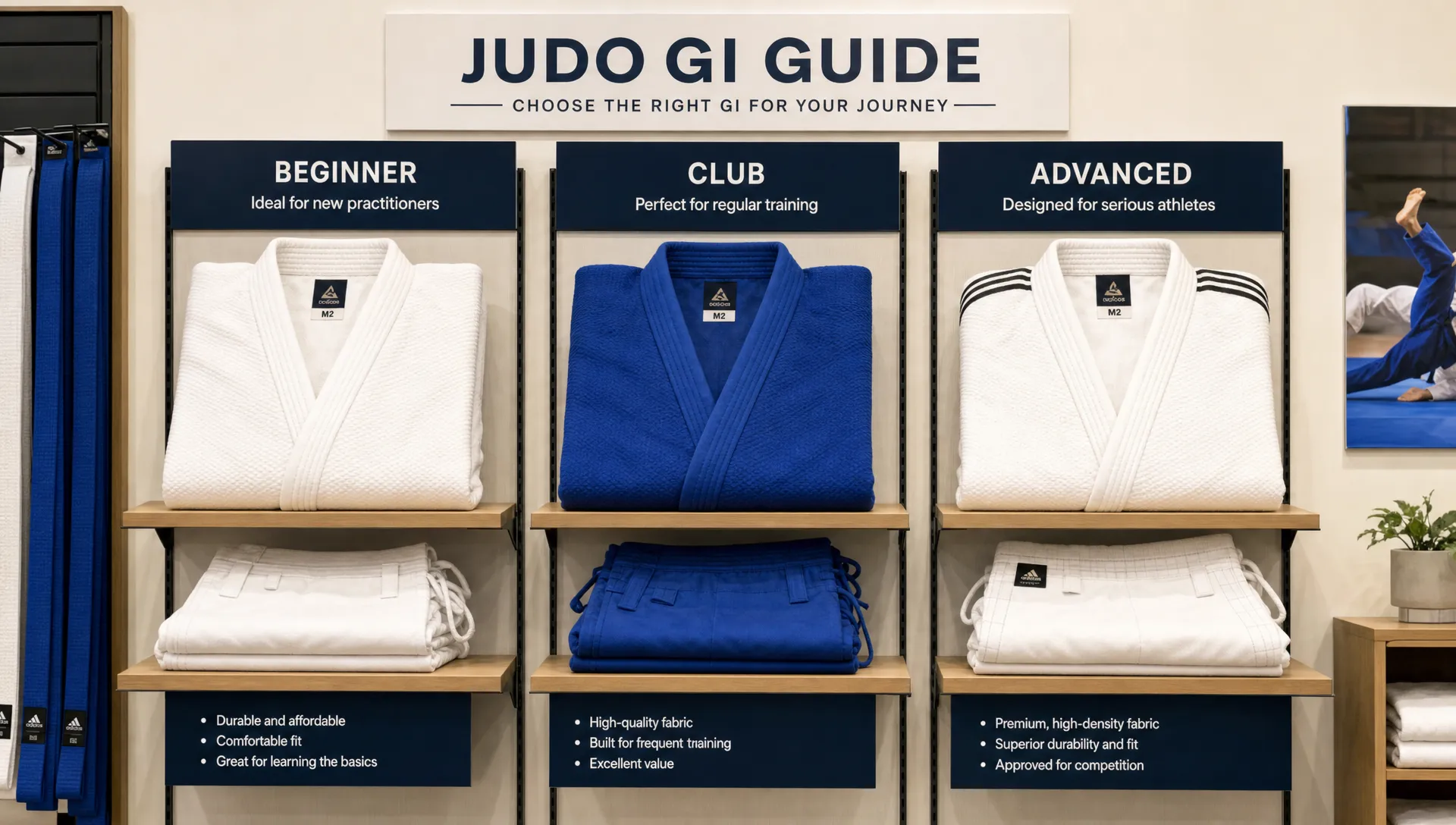
Most brands can start with three to five core models rather than launching a large catalog. Too many options create expensive sampling rounds, more size complexity and slower inventory turnover. A focused line is easier to explain to buyers and simpler for gyms to recommend to students.
A practical judo gi range may include:
- Starter gi for first-time students, school programs and entry-level retail.
- Club training gi for regular weekly practice and long-term gym members.
- Performance gi for advanced players who want better structure, durability and fit.
- Competition-oriented gi for serious athletes, subject to applicable federation rules.
- Youth gi for children who need comfort, washability and practical sizing.
Not every brand needs all five at launch. A gym may only need a youth starter gi and an adult club gi. A distributor may need good, better and best options across a wider size set. A fightwear brand entering judo may prefer one well-tested core model before expanding.
If you are still choosing a production partner, Arus Sportswear has a separate guide with custom judo gi manufacturer tips for growing labels that covers supplier evaluation in more detail. This article focuses on how to structure the product range itself.
Match each skill level to the right product promise
Skill level is not only about rank. A white belt who trains four times per week may put more stress on a gi than a casual green belt. Still, skill level gives you a useful starting point for building your line.
The goal is to match each model to a clear buyer expectation. Beginners care about comfort, price and easy sizing. Intermediate students care about durability and fit. Competitors care about structure, measurements and confidence under pressure.
| Skill level | Typical buyer need | Product priority | Common range position |
|---|---|---|---|
| Beginner | Affordable uniform for starting judo | Comfort, easy care, simple sizing | Entry-level model |
| Youth | Durable gi for growing children | Soft feel, reinforced stress points, practical price | Youth or academy model |
| Intermediate | Reliable gi for frequent classes | Stronger fabric, improved fit, better stitching | Club training model |
| Advanced | Higher performance for intense practice | Better structure, grip resistance, reinforced construction | Premium training model |
| Competitor | Gi suitable for tournaments | Rule-aware measurements, controlled shrinkage, precise pattern | Competition-focused model |
This structure also helps with sales language. Instead of saying one gi is “better” than another in a vague way, you can explain exactly who each gi is for and why it costs what it costs.
Design the beginner judo gi for comfort and low friction
The beginner gi is often the first physical contact a new student has with your brand. If it is stiff, badly sized or uncomfortable after washing, that first impression can be hard to repair.
For beginners, avoid overbuilding the gi. Heavy fabric may sound premium, but it can feel restrictive to new students. A starter model should be easy to put on, easy to wash and durable enough for basic gripping, falling and groundwork.
Key priorities for a beginner judo gi include a comfortable jacket feel, a straightforward pant closure, reinforced knees and a fit that allows movement without looking sloppy. The fabric should hold up to regular washing, but the gi does not need the same dense structure as an advanced competition model.
Branding should stay clean. Woven labels, a small chest embroidery or a discreet sleeve mark can create a professional look without pushing the product out of its intended price range. For gyms, the beginner model should also support easy bulk ordering so instructors can keep common sizes available for new members.
Build the club training gi as the range workhorse
The club training gi is usually the most important model in the range because it serves the widest audience. It must handle repeated gripping, pulling, washing and drying without becoming uncomfortable.
This model should sit between starter affordability and premium performance. Buyers at this level usually understand why a stronger gi costs more, but they still want good value. For brands and distributors, this is often the product with the best chance of repeat orders.
Compared with the beginner model, the club training gi can use a more robust jacket fabric, stronger seam reinforcement and a more refined pattern. The lapel can have better structure, the pants can use heavier reinforcement in high-stress zones and the overall fit can be cleaner across adult sizes.
This is also where your brand identity can become more visible. Contrast stitching, custom woven patches, embroidered logos and branded drawstrings may be appropriate if they support the brand without interfering with judo use. The best club gi still feels like a serious training uniform, not a fashion product with martial arts styling.
Plan the advanced gi around structure, grip and longevity
Advanced judoka put more pressure on the uniform. They grip harder, train more intensely and notice details that beginners overlook. A premium training gi must earn its place through construction, not decoration.
For this level, focus on fabric density, collar feel, sleeve behavior, seam strength and shrinkage control. The jacket should resist deformation during hard gripping, but it should not become so stiff that it limits normal movement. Pants should be built for repeated kneeling, gripping and groundwork.
Advanced players also care about consistency. If a size A3 fits well in the first production run, it should not feel completely different in the second run. That means grading, cutting, washing tests and production tolerances need to be discussed before bulk manufacturing begins.
A premium judo gi can carry stronger branding, but the product should still respect the discipline. Large graphics may suit some combat sports categories, yet many judo buyers prefer a cleaner and more traditional look. If you want a modern style, use details that feel intentional: refined labels, tonal embroidery, branded inner taping or limited contrast accents.
Treat competition models as a separate planning challenge
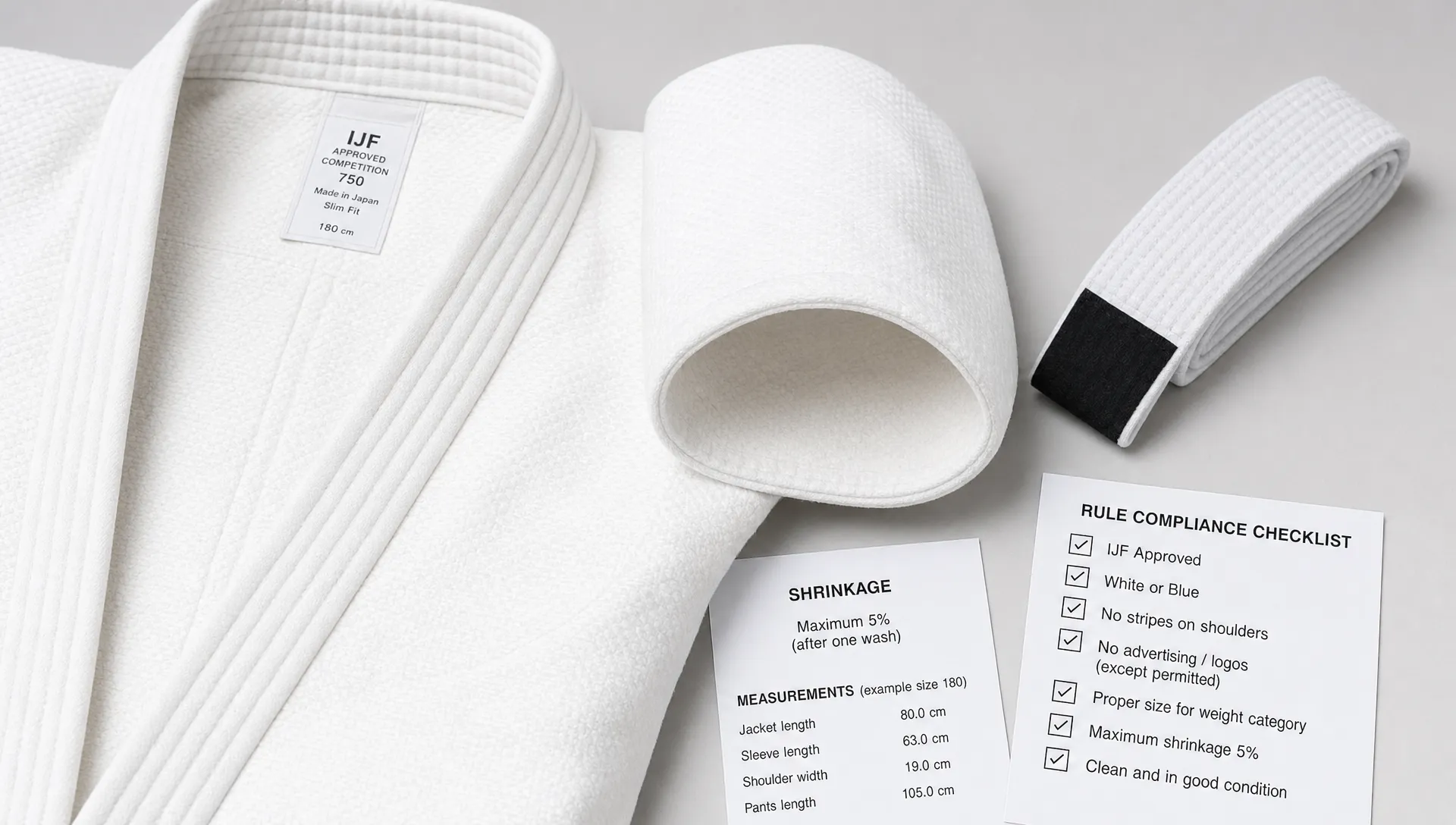
A competition-oriented judo gi needs extra care because rules vary by event level, country and federation. The International Judo Federation publishes detailed judogi requirements for elite competition, including measurements and approval standards. Local, school and national events may apply different rules, so brands should not assume one custom gi will be accepted everywhere.
If your range includes a competition model, decide early what “competition” means for your customers. Is it for local tournaments, national-level players or elite athletes who need officially approved gear? Those are different product briefs.
For competition-focused planning, pay close attention to jacket length, sleeve length, sleeve opening, lapel thickness, belt compatibility and post-wash measurements. The gi must fit correctly after expected shrinkage, not only when it leaves the carton. If you want a model to meet a specific federation requirement, confirm the current rulebook and any approval process before marketing it as compliant.
White and blue are the main colors buyers expect for judo competition use. Some brands may add black or other colors for training, club identity or lifestyle positioning, but these should be presented clearly so customers understand where each model can be worn.
Create a sizing system before you finalize the design
Sizing is one of the biggest risks in a custom judo gi range. A strong design can still fail if customers cannot choose the right size or if the fit changes too much after washing.
Start by deciding how many sizes each model really needs. Beginner and youth lines may benefit from simpler sizing because gyms need fast, low-friction ordering. Advanced and competition models may require more precise adult sizes to satisfy experienced judoka.
Your size planning should consider height, weight, body type, shrinkage allowance and regional buyer expectations. A U.S. distributor may need different size guidance from a European club or an Asian retailer. If you sell online, your size chart must be especially clear because customers cannot try the gi before purchase.
A useful range plan includes fit samples for key sizes, not just one sample in the middle of the scale. Test a small, medium and large adult size whenever possible, plus representative youth sizes if children are part of the line. Pattern grading issues often show up at the ends of the size range.
Decide which details should change between models
A range feels professional when each step up has meaningful improvements. If the only difference between the starter gi and premium gi is a patch, customers will notice. At the same time, changing every detail between models can make production complicated and expensive.
The best approach is to define a controlled upgrade path. Keep some elements consistent across the brand, then improve the components that matter most for each skill level.
| Feature | Starter gi | Club training gi | Advanced or competition gi |
|---|---|---|---|
| Jacket feel | Comfortable and accessible | Stronger for regular practice | Structured for intense gripping |
| Pants | Basic reinforcement | Better knee reinforcement | Heavier stress-point reinforcement |
| Fit | Forgiving and simple | Cleaner athletic fit | More precise and size-sensitive |
| Branding | Minimal and affordable | More visible private label details | Refined premium branding |
| Packaging | Simple polybag or basic pack | Branded retail-ready option | Premium presentation if needed |
This kind of matrix gives your manufacturer a clearer target. It also helps your sales team explain the range without relying on vague words like “standard” or “pro.”
Keep branding practical for judo use
Private label branding is a major reason to produce custom judo gis, but every branding decision should respect the function of the uniform. Embroidery, patches, labels and trims must be placed where they will not irritate the athlete, weaken construction or conflict with event rules.
Common branding options include woven neck labels, size labels, hem labels, chest embroidery, shoulder patches, inner taping and branded packaging. For gyms, a clean logo placement may be enough. For retail brands, the gi may need stronger shelf presence through packaging and hangtags.
Be consistent across the range. A beginner gi and advanced gi can have different levels of detail, but they should clearly belong to the same brand family. Repeating label style, typography, logo placement or packaging language helps buyers recognize your line.
If you are comparing private label production requirements, the private label judo gi manufacturer checklist can help you organize questions around OEM capability, customization and production readiness.
Plan inventory with fewer SKUs and clearer demand assumptions
A judo gi range can become inventory-heavy very quickly. Every new model, color and size multiplies the number of SKUs you need to manage. That is why range planning should include demand assumptions from the beginning.
For a first launch, many brands should prioritize the sizes, colors and models most likely to sell. White adult starter and club gis may move faster than niche colors. Youth sizes may be essential for academy programs, but they need their own reorder logic because children outgrow uniforms quickly.
Before placing a bulk order, estimate demand by customer type. A gym may know how many new students join each month. A distributor may have retailer pre-orders. An online brand may need to start with a leaner size curve until real sales data is available.
Low minimum orders can help reduce launch risk, especially when testing a new range or entering the judo market for the first time. Arus Sportswear supports custom martial arts apparel manufacturing for brands, gyms and distributors, including private label and OEM production, custom designs, bulk order support and worldwide shipping.
Test samples with real judoka before production
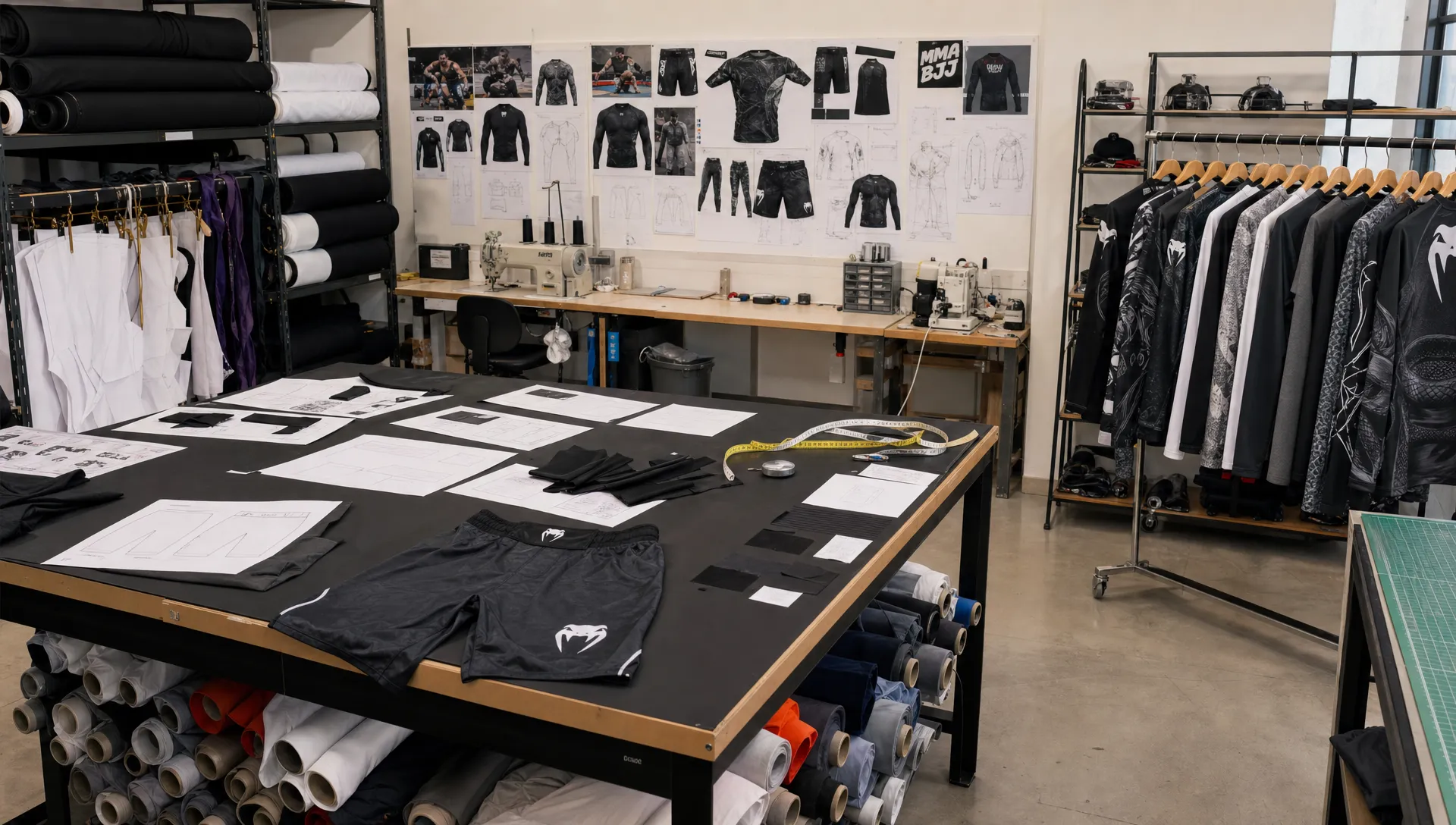
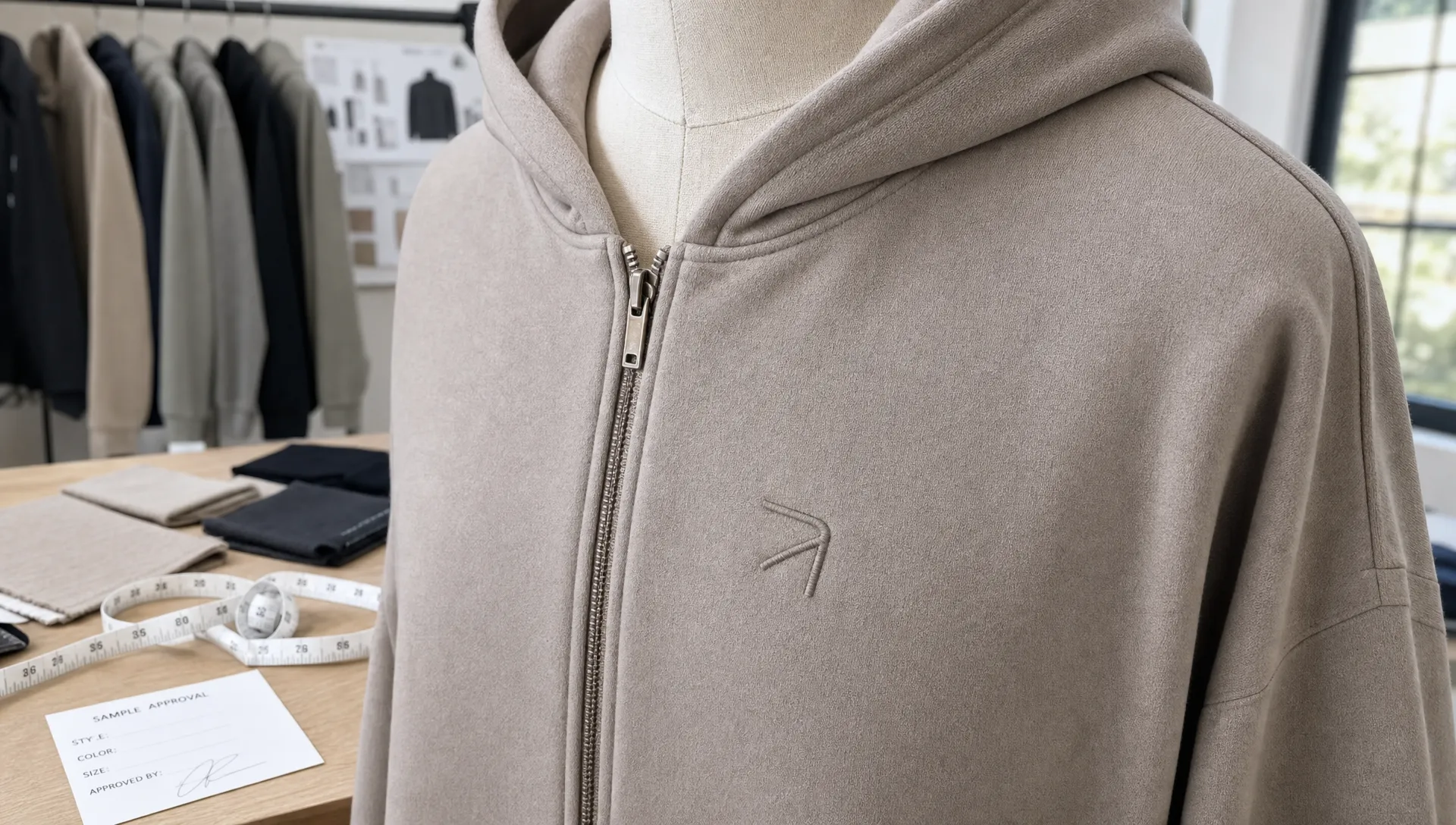
Sampling is where your range plan becomes real. A sample should not be approved only because it looks good on a table. It needs to be worn, washed and tested in training.
Give samples to athletes at the skill level the model is designed for. Beginners can tell you whether the gi feels too stiff or confusing to wear. Club players can test durability through repeated practice. Advanced judoka can comment on grip, sleeve behavior, lapel structure and fit after washing.
A practical sample review should include wash shrinkage, seam strength, comfort, label placement, pant closure, sleeve length, jacket overlap and overall fit. Check the same points after multiple wash cycles because some issues only appear after the fabric settles.
Quality control should also be planned before production starts. The factory needs clear standards for measurements, stitching, fabric defects, labeling, packing and acceptable tolerances. For a deeper look at how martial arts uniforms move from brief to finished goods, you can review the process inside a martial arts uniform factory.
Build the launch around education, not just product names
Once the range is ready, help customers choose correctly. A confusing product ladder creates returns, complaints and slow sales. A clear buying guide makes the line easier to sell online, in gyms and through distributors.
Name each model in a way that reflects its purpose. Terms like Academy, Club, Elite or Competition can work if the product actually matches the promise. Avoid naming a basic gi “competition” unless it was planned, tested and positioned for that use.
Product pages and catalogs should explain who the gi is for, how it fits, how much shrinkage to expect, how to care for it and which training level it suits. For gyms, provide a simple size chart instructors can use when fitting new students. For retailers, include product comparison language that makes upselling natural.
A well-planned custom judo gi range does more than fill a catalog. It gives each customer a uniform that matches their stage in training, gives your brand a credible product ladder and gives your production partner a clearer path to consistent manufacturing.
Frequently Asked Questions
How many models should a new custom judo gi range include? Most new brands can start with two or three models: a beginner gi, a club training gi and possibly an advanced or competition-focused gi. This keeps sampling, sizing and inventory manageable while still giving customers a clear upgrade path.
What is the best judo gi for beginners? A beginner judo gi should be comfortable, durable enough for regular entry-level training and affordable for new students. It should have simple sizing, reinforced stress points and branding that does not add unnecessary cost.
Can one judo gi work for every skill level? One model can work for a narrow customer group, but it rarely serves beginners, advanced athletes and competitors equally well. Skill-level planning helps you match fabric, fit, structure and price to the needs of each buyer.
Do custom judo gis need to follow competition rules? If you market a gi for competition, you should check the relevant federation or event rules before production. Elite-level requirements can be strict, and approval standards may differ from local tournament expectations.
What should I prepare before contacting a custom judo gi manufacturer? Prepare your target skill levels, size range, preferred colors, branding needs, fabric expectations, order quantities and any competition requirements. A clear brief helps the manufacturer recommend realistic construction, sampling and production options.
Plan your custom judo gi range with a manufacturing partner
If you are building a judo gi line for a brand, gym or distributor, the smartest first step is a clear product range plan. Decide who each gi serves, how each model differs and what level of customization your customers actually need.
Arus Sportswear manufactures custom martial arts apparel for global buyers, including private label judo gis, OEM production, custom branding, low minimum orders, bulk manufacturing and worldwide shipping. To discuss a custom judo gi range for your market, visit Arus Sportswear and share your product goals with the team.