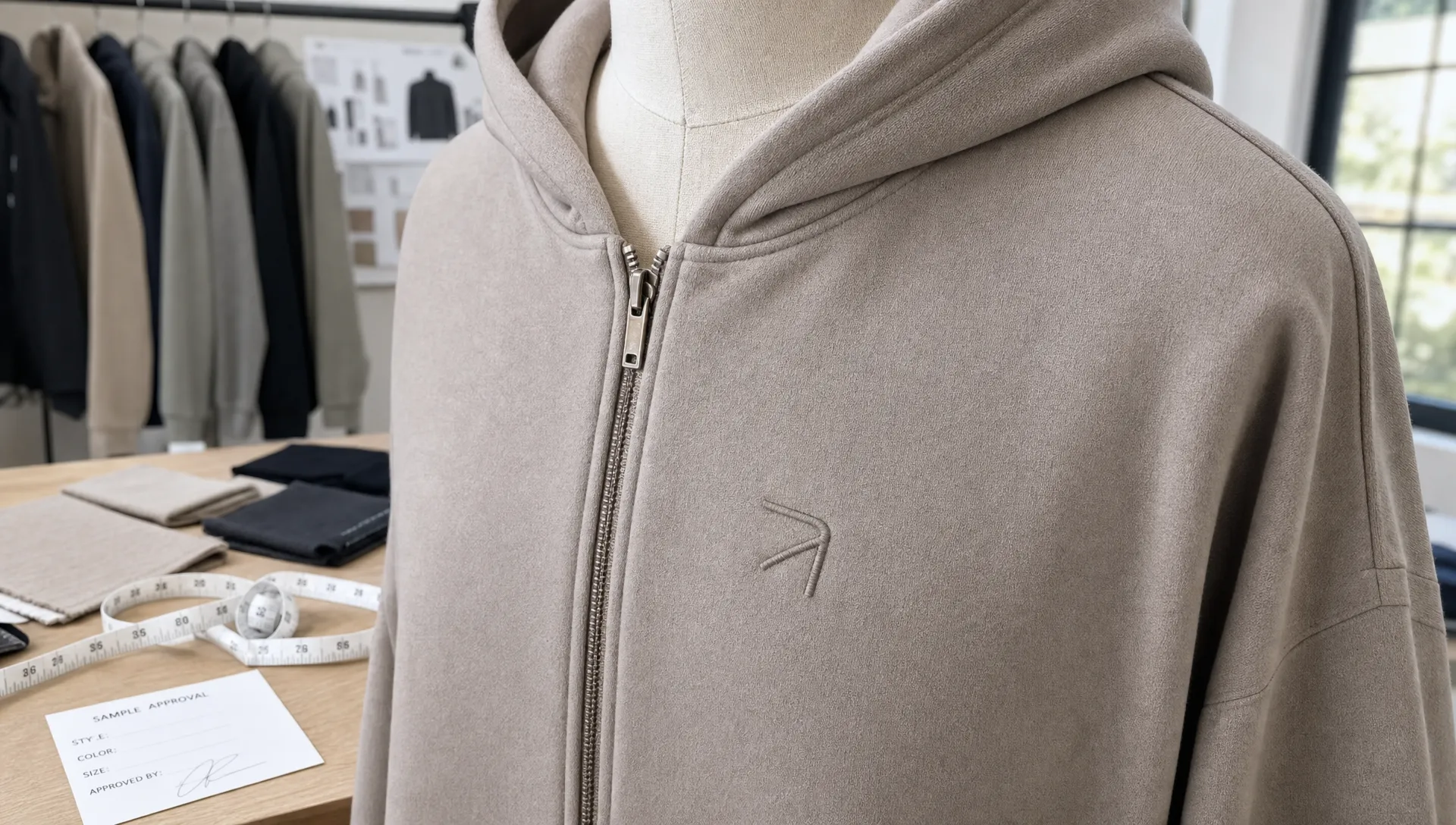
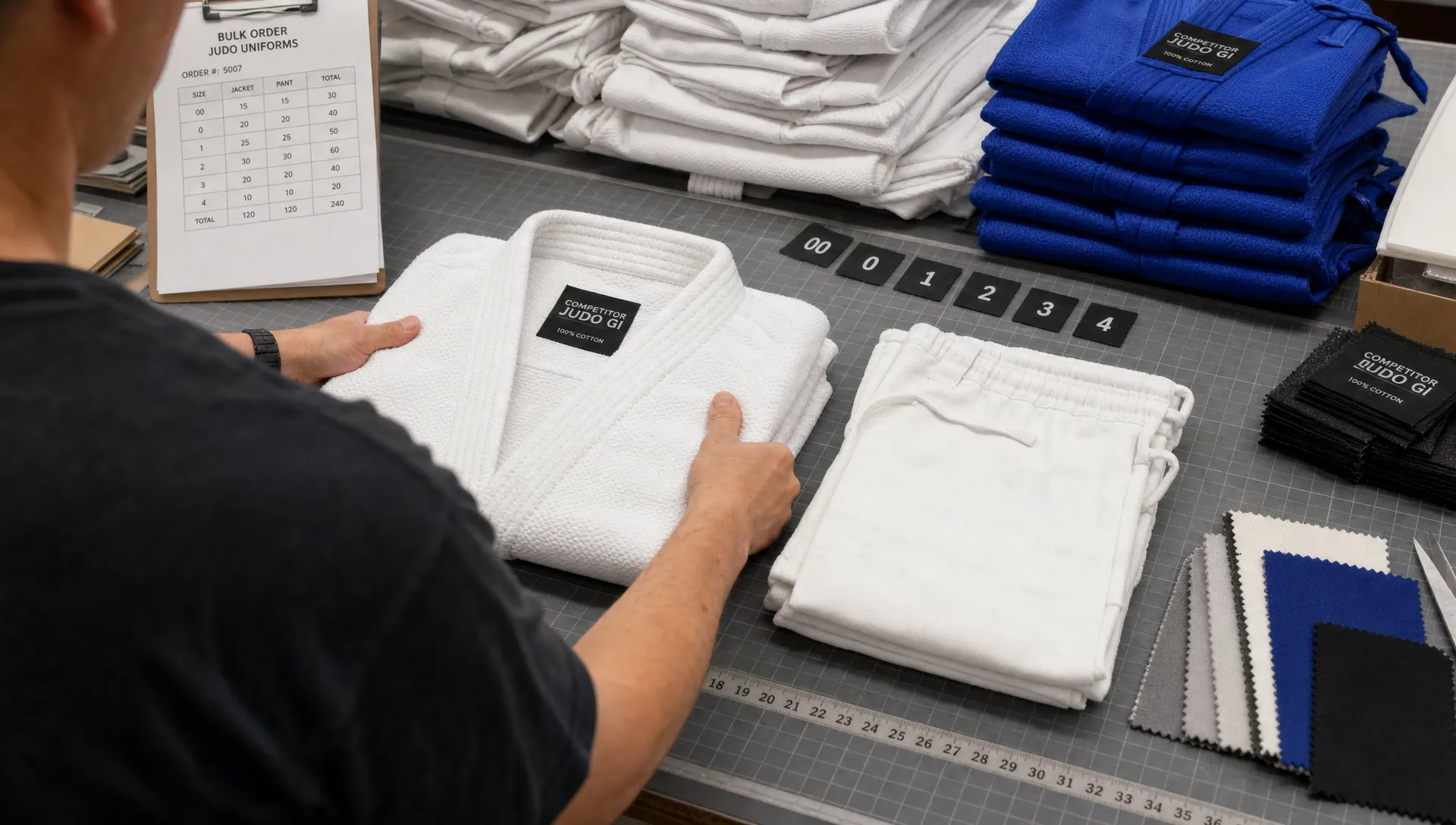
Sourcing judo uniforms in bulk is not the same as buying one gi for a single athlete. A school needs consistent sizing, durable construction and predictable reorders. A reseller needs a product line that photographs well, protects margin and can be replenished without disappointing customers. A wholesale judo gi order works best when you treat it like a product program, not a one-time purchase.
For schools, clubs, distributors and martial arts retailers, the goal is simple: get the right uniform at the right landed cost with fewer surprises after delivery. That means defining the product spec before asking for prices, checking whether the supplier understands judo-specific construction and building a sourcing process that protects quality from sample to shipment.
Start With the Buyer Model: School Program or Resale Line
Before discussing fabric weights or logos, decide how the gis will be sold or distributed. Schools and resellers often need similar products, but they make money and manage risk differently.
A judo school usually wants a reliable entry-level uniform for beginners, youth athletes and regular members. The school may sell the gi as part of a starter package or require it for class uniformity. In that case, the most important factors are comfort, easy sizing, wash durability and simple repeat ordering.
A reseller, distributor or martial arts store has a different challenge. The product must compete on the shelf or online against other brands. Packaging, label presentation, size chart clarity, margin structure and SKU planning matter as much as the gi itself. A reseller may also need multiple tiers, such as a beginner gi, a club training gi and a heavier competition-style option.
| Buyer type | Main goal | Sourcing priority | Common risk |
|---|---|---|---|
| Judo school | Uniform consistency for students | Durable beginner sizes and easy reorders | Too many unsold odd sizes |
| Club team | Branded identity and training durability | Custom labels, embroidery and color consistency | Fit differences across batches |
| Reseller | Sell-through and profit margin | Retail packaging, size charts and balanced SKU mix | Low margin after freight and returns |
| Distributor | Volume supply across many accounts | Bulk pricing, stable production and logistics | Delays during peak ordering periods |
If you are building more than one tier, it helps to map your beginner, intermediate and advanced products before production starts. Arus Sportswear has a deeper guide on how to plan a custom judo gi range for every skill level if you want to structure a broader catalog.
Write a Product Brief Before Asking for a Quote
Many sourcing problems begin with a vague request: “Send me your best price for judo gis.” A supplier cannot quote accurately without knowing the size range, fabric, branding, packaging and order volume. You may receive a low price, but it will often be based on assumptions that do not match your market.
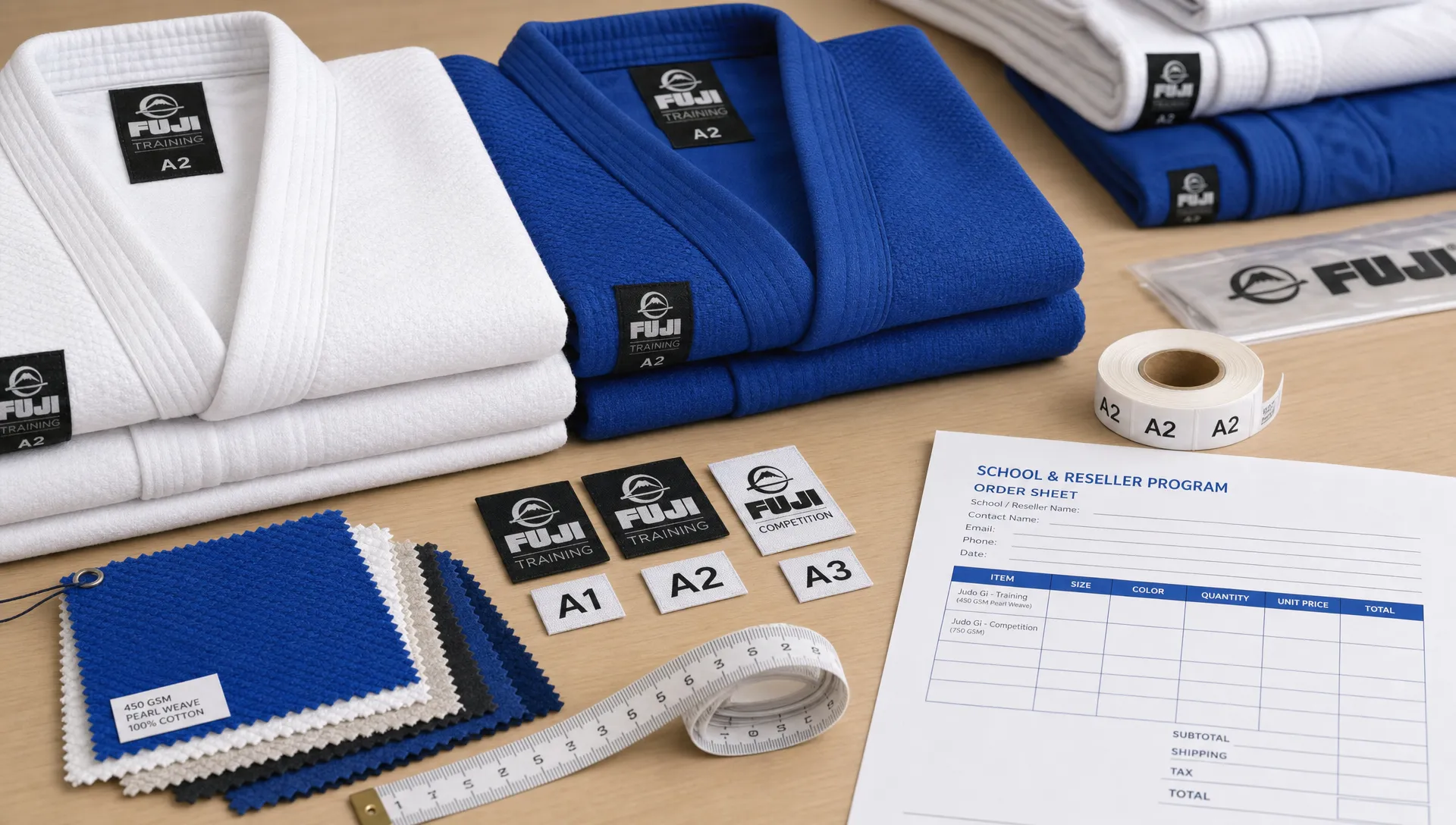
A strong product brief should define who will wear the gi, where it will be sold and what level of training it is intended for. For a school, a wholesale judo gi purchase might focus on white beginner uniforms in youth and adult sizes. For a reseller, the brief may include white and blue options, branded neck labels, hang tags and polybags with size stickers.
At minimum, your brief should include:
- Target customer, such as kids, adult beginners, club athletes or competitors
- Jacket and pants color, usually white, blue or both depending on the market
- Fabric preference, including weave style, approximate weight and shrinkage expectations
- Size range, including youth sizes, adult sizes and any plus-size requirements
- Branding needs, such as woven labels, embroidery, patches, hang tags or packaging
- Expected order quantity by size and color
- Delivery country, required timeline and preferred shipping method
A written brief also helps you compare suppliers fairly. If three factories quote three different fabric weights, packaging types and size sets, the lowest quote may not be the best value. Ask each supplier to quote against the same spec and to list any assumptions clearly.
Choose Fabric and Construction for the User, Not Just the Price
Judo places different stress on a uniform than general martial arts training. Throws, grip fighting and repeated pulling can expose weak collars, loose seams and thin reinforcement quickly. A gi that looks acceptable in product photos may fail in class if the fabric, lapel and stitching are not built for judo.
For school programs, a lighter or mid-weight uniform can be practical because beginners need mobility, comfort and an approachable price. For adult club athletes, a more structured jacket and stronger pants may be worth the added cost. Resellers should avoid choosing only the heaviest option because weight can raise freight cost, feel uncomfortable in warm climates and limit appeal to beginners.
Key construction details to review include jacket weave, collar firmness, sleeve proportions, shoulder reinforcement, side vents, armpit stitching, pant gusset, knee reinforcement and waistband style. For children, some schools prefer elastic waist pants with an additional drawstring because they are easier for beginners. For adult training gis, a traditional drawstring may be expected.
Shrinkage should also be addressed before production. Cotton uniforms can shrink after washing, and different weaves behave differently. Ask the supplier for wash test results or test the sample yourself using the care instructions you plan to provide customers. A reseller should build the final size chart around post-wash expectations, not only the fresh-out-of-package measurement.
Confirm Competition, Federation and School Requirements
Not every judo uniform needs to meet elite competition standards. Many school and beginner products are designed for training, not international tournaments. Still, if your customers compete, you need to know which rules apply in their region.
The International Judo Federation publishes uniform requirements for events under its rules, including details related to judogi fit and dimensions. Buyers can review the latest IJF rules and documents when planning competition-oriented products. National federations and local tournament organizers may also have their own requirements, so schools in the USA, Canada, Germany, Australia, Japan, Thailand, the Netherlands and other European markets should confirm what their athletes actually need.
For beginner programs, practical school rules may matter more than elite specifications. Some clubs require white only. Others allow blue for certain classes or team events. Logo placement, patch size and embroidery should be agreed with the school or reseller before production, especially if students may use the uniform in tournaments.
Evaluate Suppliers Beyond the Unit Price
When you compare wholesale judo gi suppliers, the first quote is only one part of the decision. You need to know whether the manufacturer can produce judo-specific uniforms consistently across sizes and across future reorders. Experience with generic sportswear is helpful, but it does not automatically prove the supplier understands martial arts apparel.
A good supplier should be able to discuss fabric options, construction tradeoffs, size grading, branding methods, packaging and quality control in detail. They should also be comfortable producing samples before bulk manufacturing. If you are building a private label line, use a structured evaluation process like this private label judo gi manufacturer checklist to compare suppliers with less guesswork.
Useful supplier questions include:
- Have you produced judo gis for schools, brands or distributors before?
- Can you provide a size chart with garment measurements, not only height recommendations?
- What parts of the jacket and pants are reinforced?
- Can you produce a full size set sample before bulk production?
- How do you control shrinkage, stitching quality and color consistency?
- What is the minimum order quantity by color, design and size?
- What packaging and labeling options are available for resale?
If the supplier cannot answer these questions clearly, you may face problems later with inconsistent sizing, missed delivery dates or uniforms that do not meet customer expectations.
Plan MOQ, Size Curves and Inventory Carefully
Minimum order quantity affects cash flow, storage and risk. A low MOQ can be useful for a new school program or reseller test launch, but the size breakdown matters just as much as the total number of units. A 200-piece order can still fail if too many units are in sizes that rarely sell.
Schools often need more youth and entry-level adult sizes, especially if the gi is included in beginner enrollment. Resellers may need stronger coverage in common adult sizes, plus a smaller quantity of edge sizes to avoid losing customers. Markets also differ. A size curve that sells well in Japan may not match demand in Germany, Canada or Australia.
A smart wholesale judo gi plan usually starts with a focused range. Instead of launching too many colors, weights and fits at once, many buyers start with a core white gi, validate demand, then add blue or higher-tier options. This makes reordering easier and reduces the chance of tying up cash in slow-moving inventory.
For resellers, packaging should be planned together with inventory. Size stickers, barcodes, hang tags and clear polybags can reduce warehouse handling time and improve the customer experience. For schools, simple packaging may be enough, but each unit still needs accurate labeling so staff can issue the right size quickly.
Calculate True Landed Cost, Not Only Factory Price
A low factory price does not always mean a profitable product. Your real cost includes development, packaging, freight, duties, taxes, inspection and possible returns. This is especially important for bulky products like judo gis because fabric weight and carton volume can affect shipping cost.
| Cost factor | Why it matters | Buyer action |
|---|---|---|
| Sample development | Confirms fit, fabric and branding before bulk production | Budget for revisions instead of rushing approval |
| Unit price | Sets the base cost of the product | Compare only against the same spec |
| Packaging | Impacts retail presentation and warehouse handling | Decide early between simple bulk packing and retail-ready packing |
| Freight | Can change the final margin significantly | Compare air, sea and courier options based on timeline |
| Duties and taxes | Vary by destination country and product classification | Ask a customs broker or freight partner to confirm |
| Quality inspection | Reduces the risk of defects reaching customers | Inspect before final payment or shipment when possible |
| Returns allowance | Protects reseller margin from sizing and defect issues | Improve size charts and QC to reduce preventable returns |
For international buyers, shipping terms should be clear in writing. Confirm whether the quote is ex works, FOB, CIF, DDP or another trade term. If those terms are unfamiliar, ask your freight forwarder to explain who pays for transport, insurance, import duties and local delivery. The right choice depends on your experience, destination market and ability to manage customs paperwork.
Build Quality Control Into the Order
Quality control should begin before bulk production, not after cartons arrive. Approving a single sample is helpful, but it is not enough for a full school or reseller program. You need a process that checks fit, measurements, stitching, labels, packaging and consistency across sizes.
Start with a fit sample to confirm the overall design. Then request a pre-production sample using the final fabric, labels and trims. For larger programs, a size set sample is valuable because grading errors can appear only when multiple sizes are produced. A2 may fit well, for example, but youth or larger adult sizes may need adjustment.
Final inspection should include measurement checks against tolerance, seam strength review, collar and reinforcement inspection, label accuracy, color matching and packaging accuracy. Wash testing is also useful, especially for cotton-heavy uniforms. Document the care instructions that will appear on the garment label and test according to those instructions.
Schools should inspect a few units before distributing uniforms to students. Resellers should keep a production reference sample for each batch so customer complaints can be checked against the approved standard.
Make the Product Easy to Sell and Reorder
A well-made gi still needs clear product information. Resellers should prepare size charts, product descriptions, fabric details, care instructions and photos before stock arrives. Schools should have a simple fitting process for new students, especially children who may fall between sizes.
The most useful size chart includes height guidance, approximate weight guidance and garment measurements where possible. Since shrinkage and fit preference can vary, explain whether the uniform is intended to fit roomy before washing. This reduces returns and helps customers choose confidently.
Reorder planning is just as important as the first order. Track which sizes sell fastest, which sizes are returned most often and which customer questions repeat. Share that data with your manufacturer before the next production run. Over time, you can refine the size curve, adjust the fit and improve the margin without changing the entire product.
If you are still evaluating production partners, Arus Sportswear’s article on custom judo gi manufacturer tips covers how growing labels can prepare product briefs, samples and supplier conversations in more detail.
Work With a Manufacturer That Fits Your Growth Plan
The best supplier for a school testing 100 uniforms may not be the same supplier for a distributor ordering several thousand units across multiple countries. Look for a partner that can support your current order size while also handling future complexity, such as custom branding, additional colors, new size ranges and repeat production.
Arus Sportswear manufactures custom MMA and martial arts apparel for brands, gyms and distributors worldwide, including private label and OEM production for combat sports uniforms. For buyers sourcing judo uniforms in bulk, that means you can discuss custom designs, branding options, low minimum orders, bulk production and worldwide shipping through one manufacturing partner.
A wholesale sourcing plan does not need to be complicated, but it does need to be specific. Define the customer, write the spec, test samples, understand landed cost and set clear QC standards. That process gives schools a reliable uniform program and gives resellers a product line they can sell with confidence.
Frequently Asked Questions
What MOQ should I expect for a wholesale judo gi order? MOQ varies by manufacturer, fabric, color, branding and size range. A simple white school gi usually has fewer production complications than a multi-color private label line with custom packaging. Ask for the MOQ by design, color and size breakdown, not only the total order quantity.
Do schools need IJF-approved judo gis? Most beginner and recreational school programs do not need IJF-approved uniforms unless students are competing in events that require them. If your athletes compete, check the current rules from the relevant tournament organizer, national federation or IJF documentation before production.
Should I choose a lighter or heavier judo gi for resale? Match the weight to the customer. Beginners often prefer a comfortable, affordable uniform, while experienced athletes may want a more structured training gi. Resellers can test one core model first, then add heavier or competition-style options once demand is proven.
How can resellers reduce returns on judo gis? Provide a clear size chart, explain expected shrinkage, use accurate product photos and keep measurements consistent across batches. Returns often happen because customers choose the wrong size or because the delivered product does not match the listed fit.
What should I check in a production sample? Review fabric feel, jacket fit, sleeve length, collar firmness, pants fit, stitching, reinforcement, labels, embroidery and packaging. Wash the sample according to the planned care instructions and compare the post-wash measurements with your size chart.
Is private label judo gi production worth it for a small reseller? It can be worth it if you have a clear audience, realistic order quantities and a plan to differentiate through fit, branding or product presentation. Starting with a focused core product is usually safer than launching too many variations at once.
Ready to source judo uniforms for your school, brand or distribution business? Contact Arus Sportswear to discuss private label and OEM manufacturing, custom branding, low minimum orders and worldwide shipping for your next bulk production run.