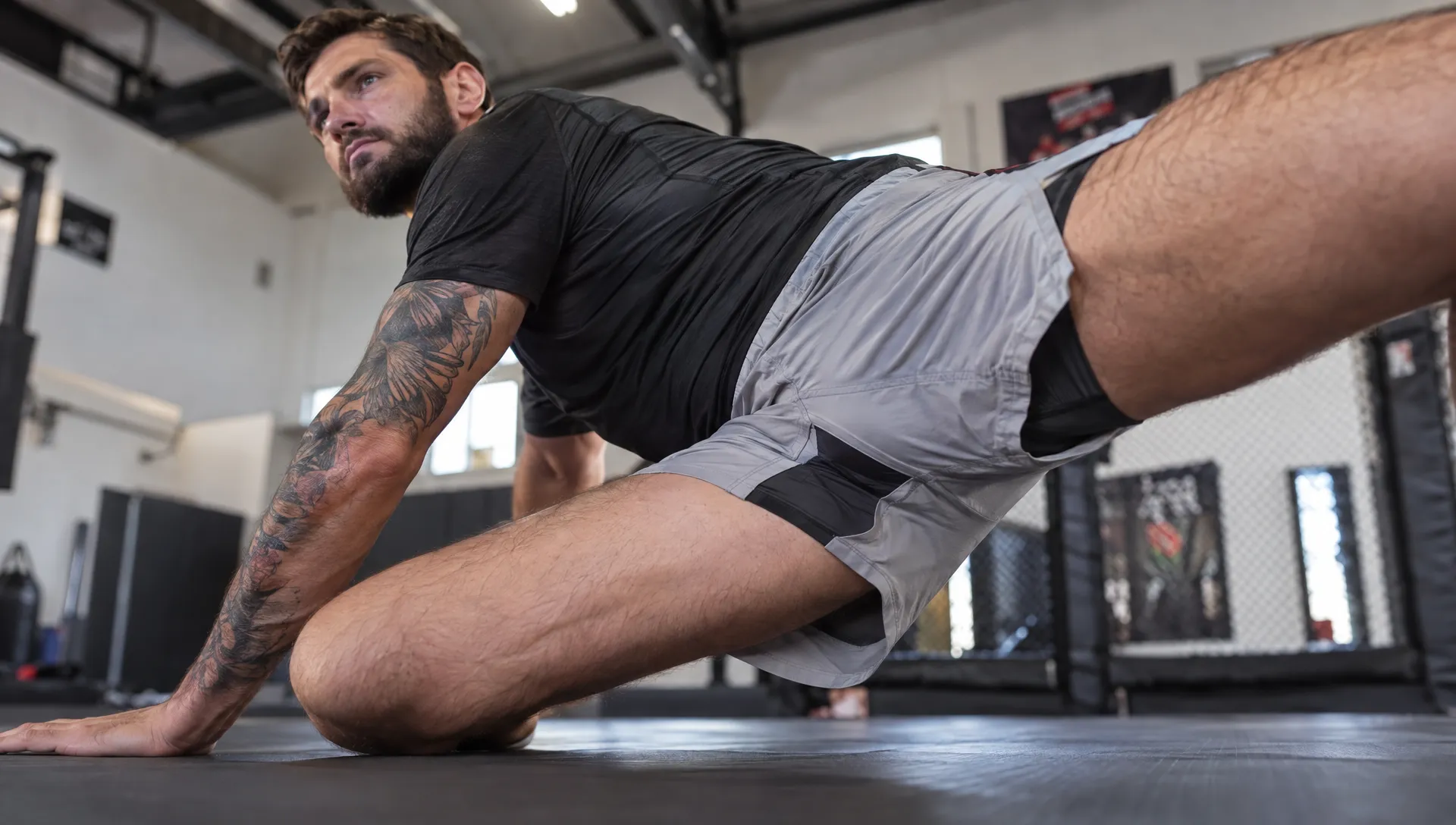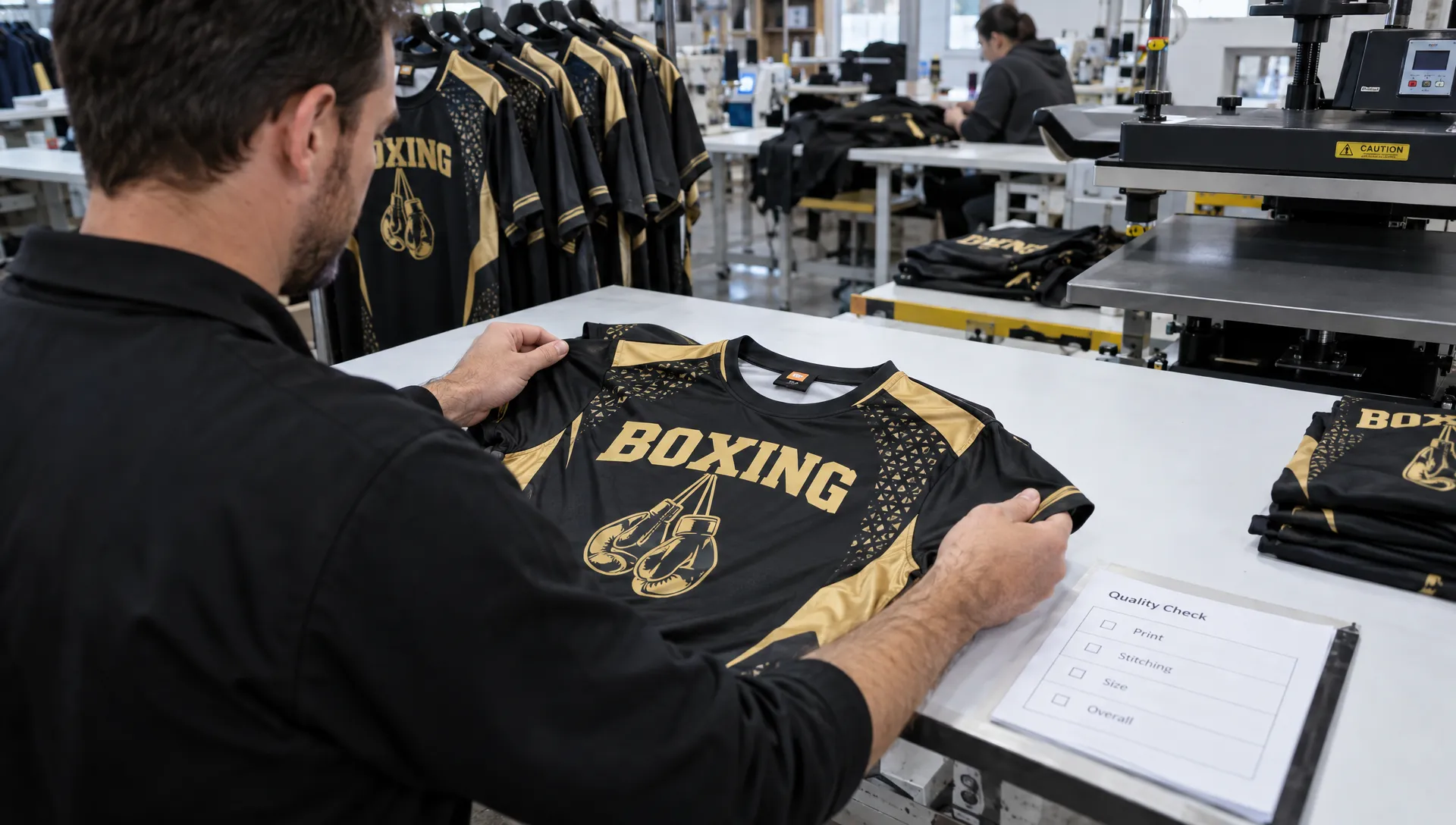
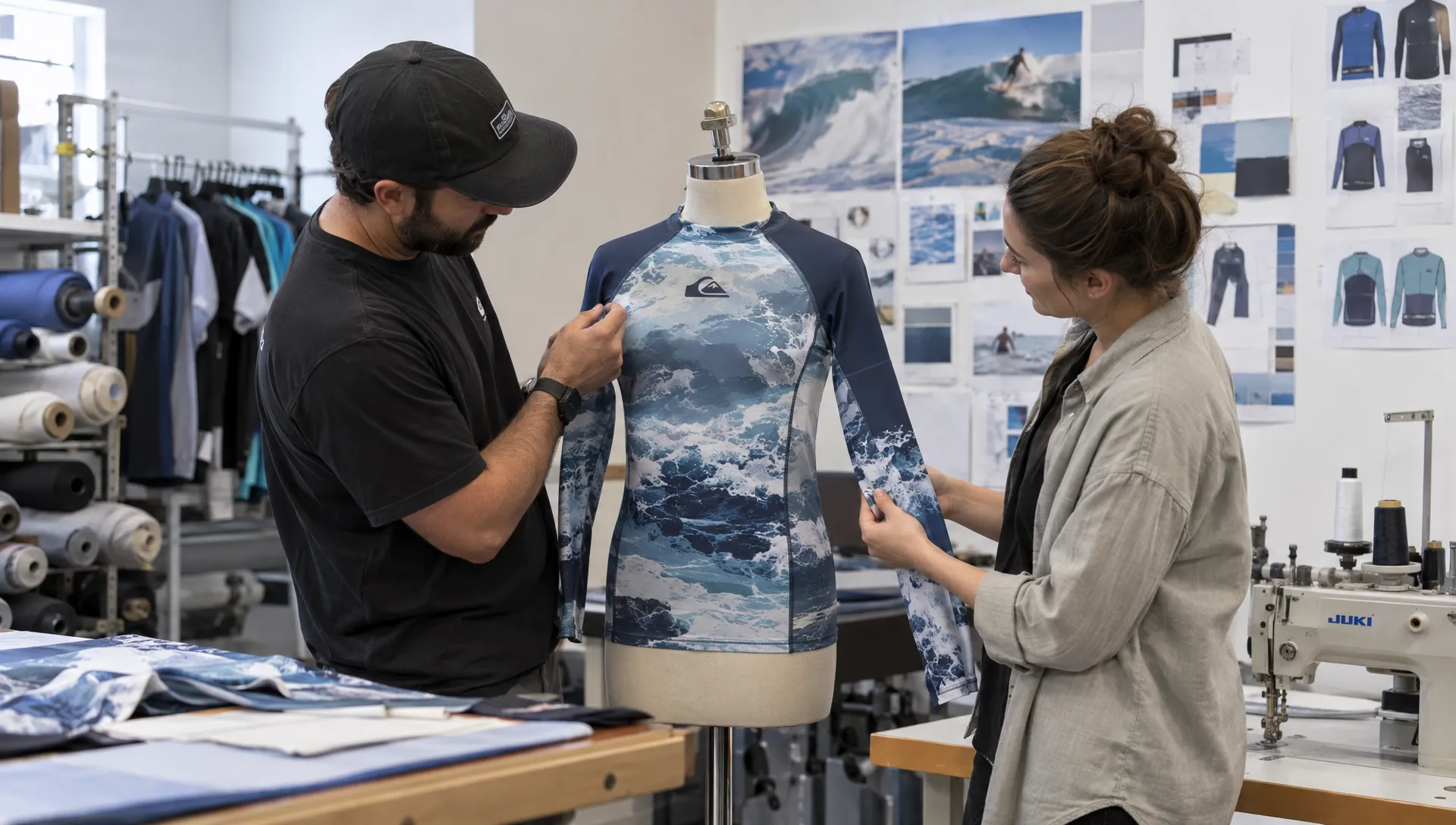
For fightwear brands, gyms and teamwear buyers, apparel sublimation offers a way to put detailed graphics across a garment without adding a raised print layer. Logos, sponsor marks and large patterns become part of the fabric’s coloration rather than sitting on top as a separate film. That makes the process useful for sportswear that needs to stretch, move and withstand repeated washing.
The durability advantage has limits, though. Fabric composition, printing conditions and garment construction all affect the result. A design can resist peeling yet still look disappointing if its colors shift, its seams interrupt the artwork or its fabric becomes translucent under stretch. Understanding how the process works helps buyers specify full-coverage designs that look good beyond the first product photo.
How apparel sublimation puts color into polyester
In the common transfer process, a printer uses dye-sublimation ink to produce a mirrored design on transfer paper. Heat and pressure then move the dye from that paper into a receptive polyester fabric. Under heat, the dye becomes vapor and diffuses into the polymer; as the fabric cools, the color remains within it.
This differs from decoration methods that leave a binder, vinyl or another distinct layer on the surface. There is no separate sublimated film to lift at an edge, so cracking and peeling are not the usual failure modes of the print itself.
It also means a large printed area generally retains the underlying fabric’s feel rather than acquiring a thick coating. However, sublimation does not automatically make a garment breathable or moisture-wicking. Those properties depend on the fabric, its construction and any finishes.
The production settings matter as much as the principle. Inadequate transfer can leave weak color, while excessive heat can damage sensitive fabrics. Manufacturers should establish settings for the actual material, ink and transfer system rather than apply one universal recipe.
Choose fabric that supports the design
The best starting point for apparel sublimation is usually white or light-colored, high-polyester fabric that can tolerate the transfer process. The artwork should follow the substrate choice, not the other way around.
| Fabric or base color | Expected behavior | Buyer consideration |
|---|---|---|
| White 100% polyester | Supports strong color and clear contrast | Assess weight, opacity and hand feel separately |
| Polyester-elastane blend | Can combine printed graphics with stretch | Confirm heat compatibility and inspect under tension |
| Polyester-cotton blend | Dye primarily colors the polyester portion | Expect a softer or less saturated appearance |
| Untreated 100% cotton | Does not retain conventional sublimation dye like polyester | Select another decoration method or a specifically engineered system |
| Dark polyester | Its existing color interferes with the transferred artwork | A white base is normally needed for controlled full-color results |
Conventional sublimation does not print opaque white ink. White areas in the artwork usually reveal the original fabric. A black garment therefore cannot receive a bright white logo through ordinary dye sublimation alone.
For rash guards or fitted training tops, evaluate the printed fabric while stretched. White becoming visible between opened knit loops can make a dark graphic appear lighter. This is different from the dye cracking or coming off, and it deserves a check during sampling.
How full-coverage designs reach the whole garment
Print panels before sewing
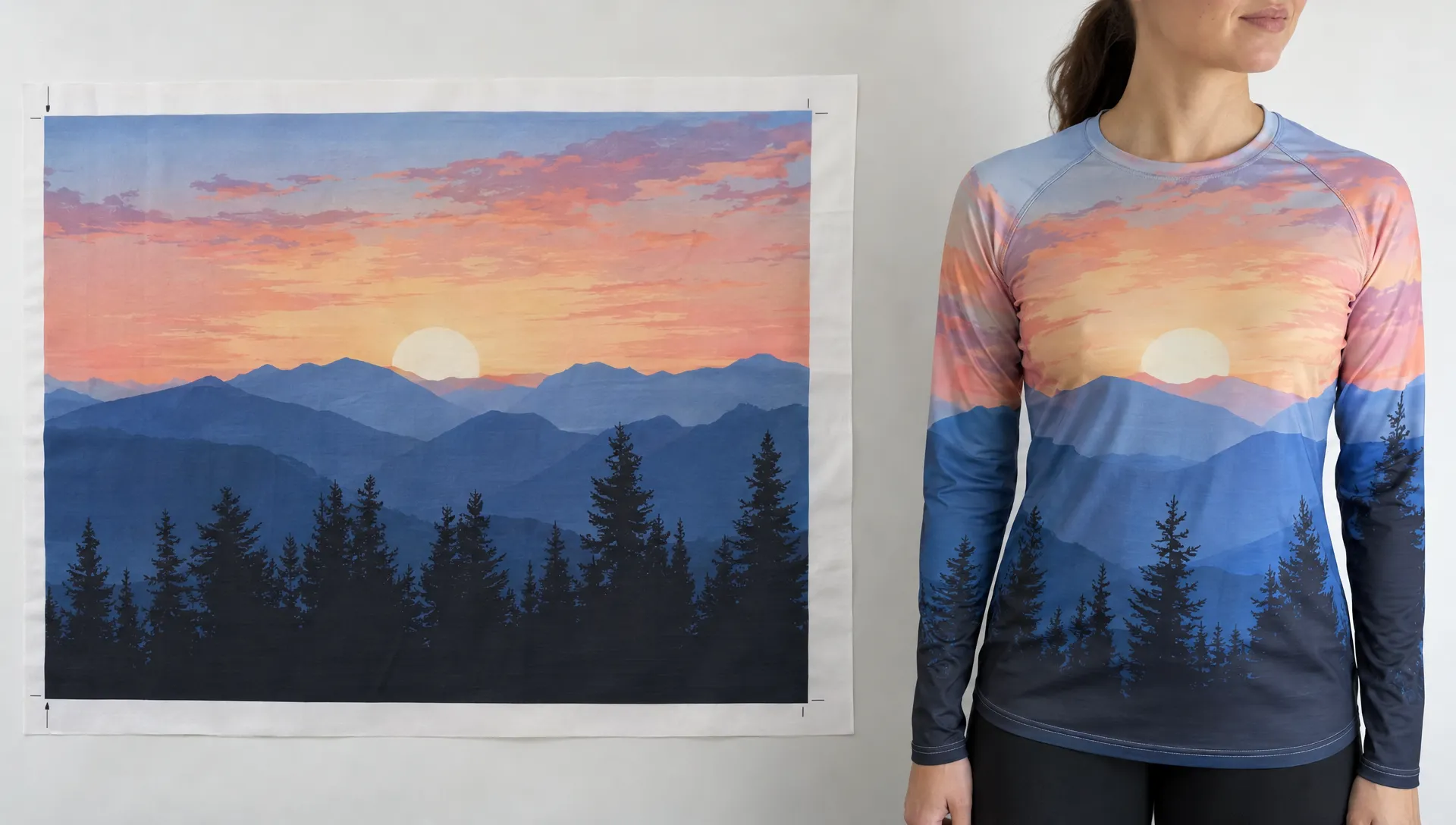
For apparel sublimation with extensive coverage, printing flat fabric or garment panels before assembly gives better access to the printable area than pressing a finished garment. The printed material is then cut and sewn according to the production workflow.
This allows color and artwork to extend across the front, back and sleeves without a conventional rectangular print boundary. It also makes it easier to reach areas that would be obstructed by seams, folds or hardware on an assembled garment.
Printing an already-sewn shirt can leave pale areas beneath wrinkles or around the underarms and collar. Those gaps are a consequence of transfer contact and garment geometry, not an unavoidable feature of every sublimated product.
The approach is relevant to team kits as well as combat sports. Buyers exploring customized sublimation American football uniforms face similar planning needs when combining team colors, player identification and graphics across multiple panels.
Plan artwork around seams and size changes
Full coverage does not guarantee that a thin line will match perfectly across every seam. Cutting tolerances, sewing allowances and fabric movement can shift adjoining artwork. A pattern that looks continuous on a digital mockup may not align exactly on a finished garment.
Keep essential lettering, small sponsor marks and detailed emblems away from seam lines. Extend background artwork beyond the cutting boundary so minor movement does not expose an unprinted edge. The manufacturer should define the necessary bleed and safe areas using its production templates.
Size grading also changes the available space. Agree whether a logo stays the same physical size across the range or scales with each garment. A large chest graphic that works on an adult sample may crowd the armholes on a smaller size.
For apparel sublimation orders, approve artwork on production templates rather than relying only on a lifestyle rendering. Ask for physical samples that show critical placements and any difficult seam transitions.
Why the graphics last, and what can still wear out
Because the dye resides within receptive fibers, the design has no separate printed edge to peel away. Repeated flexing also does not fracture a thick surface coating because that coating is absent. These characteristics suit garments that experience stretching and frequent laundering.
Print durability is not the same as garment durability, however. Abrasion can roughen the fabric surface, pilling can obscure detail and damaged fibers can make colors appear dull. A well-transferred graphic does not strengthen a weak knit or prevent seams from failing.
Color can also change through unsuitable washing, prolonged sunlight, harsh chemicals or excessive heat. Sublimation should therefore be described as resistant to the cracking and peeling associated with some surface decorations, not as permanently fade-proof.
Care instructions need to match the complete garment, including its elastane, trims and stitching. Follow the approved care label rather than assuming that every polyester sports garment can tolerate the same treatment. Where instructed, avoid bleach, high drying temperatures and direct ironing over heat-sensitive components.
Check the print before approving bulk production
Review color on the actual fabric
A monitor displays emitted light, while fabric reflects it. An on-screen color value is therefore not a reliable promise of the finished textile shade. Fabric whiteness, texture, ink behavior and color management all influence the result.
For apparel sublimation involving brand-critical colors, approve a printed swatch or strike-off on the intended production material. Use a physical color reference where appropriate and agree how differences will be assessed. A Pantone reference is a communication aid, not a guarantee that every shade can be reproduced exactly.
Keep an approved physical sample as the comparison standard for production. If the collection combines mesh, stretch jersey and woven polyester, inspect each substrate separately. The same artwork can appear different across those surfaces.
Evaluate washing, rubbing and stretch
Quality checks should distinguish print problems from fabric problems. Inspect the sample before washing, after an agreed laundering sequence and under the amount of stretch expected in use. Look for color change, staining, loss of detail, distortion and damage around seams.
For formal evaluation, AATCC publishes textile test methods including TM61 for laundering colorfastness, TM8 for crocking or color transfer by rubbing and TM15 for perspiration colorfastness. The laboratory and buyer should select suitable methods, conditions and acceptance criteria for the product.
A method number alone is not evidence that a garment passed. Request the applicable report when testing is part of the purchase specification, and confirm which fabric or finished product was evaluated. Accelerated testing also does not translate into a guaranteed number of training sessions.
For broader material and construction checks, the guide to sourcing performance apparel that holds up complements these print-specific approvals.
When sublimation is the right decoration choice
Apparel sublimation is especially useful when the design requires extensive color coverage, gradients, repeated patterns or coordinated graphics across several panels. Names and numbers can be incorporated into the artwork, provided the order data and placement are checked before printing.
It is not automatically the best choice for every product. A small logo on an existing dark cotton T-shirt may suit screen printing or another transfer process better. Embroidery may be preferable when the brief calls for a raised stitched emblem, while specialty finishes require their own decoration systems.
For combat sports collections, assess each garment separately. A polyester rash guard or suitable shorts fabric can be a practical candidate, but a conventional cotton BJJ gi is not the same substrate. Using one branding method across an entire range should not take priority over material compatibility.
Cost comparisons should also use equivalent specifications. Panel printing, cutting, sewing, personalization and sample approvals all affect the work involved. Compare finished-garment quotes rather than assuming one printing method will always be cheaper.
Frequently asked questions
What kind of shirt is best for sublimation? A white or light-colored polyester shirt is generally the most straightforward choice for vivid graphics. High-polyester blends can also work, but the final appearance and heat tolerance should be confirmed with a sample.
What kind of ink does apparel sublimation use? It uses dye-sublimation ink formulated for a compatible printing and transfer system. Ordinary inkjet ink is not a substitute. The ink, printer, transfer paper and fabric need to work together.
Can sublimation cover an entire uniform? It can cover the printable fabric panels when artwork and production are planned for all-over printing. Seams, collars, trims and other components still need separate consideration. Full coverage does not necessarily mean printing inside the garment or across every accessory.
Will sublimated logos peel off? A properly sublimated logo has no separate film layer to peel away. The fabric can still abrade or deteriorate, and color can change under unsuitable care or exposure. Any additional applied badges or transfers have their own durability characteristics.
Turn the artwork into a production-ready brief
A useful brief includes the garment type, intended fabric, size range, panel artwork, color references and personalization requirements. It should also identify critical logo placements, the expected care routine and the sample approvals needed before bulk production.
Arus Sportswear offers custom designs, private label and OEM manufacturing for combat sports apparel. To discuss a suitable approach, share your artwork and garment requirements with Arus Sportswear. Confirm fabric compatibility, print coverage and approval expectations before committing to the production run.