Good fightwear shorts need to do more than stretch when you pull the fabric by hand. They must allow deep hip movement, hold their shape through repeated training and avoid construction details that can catch or scrape a training partner. For brands, gyms and distributors, that balance starts with a clear specification and a realistic sample test, not a fabric name or an attractive mockup.
The most useful buying question is simple: does the finished garment stay comfortable, secure and intact during the movements it will actually face?
Start with movement, not a fabric label
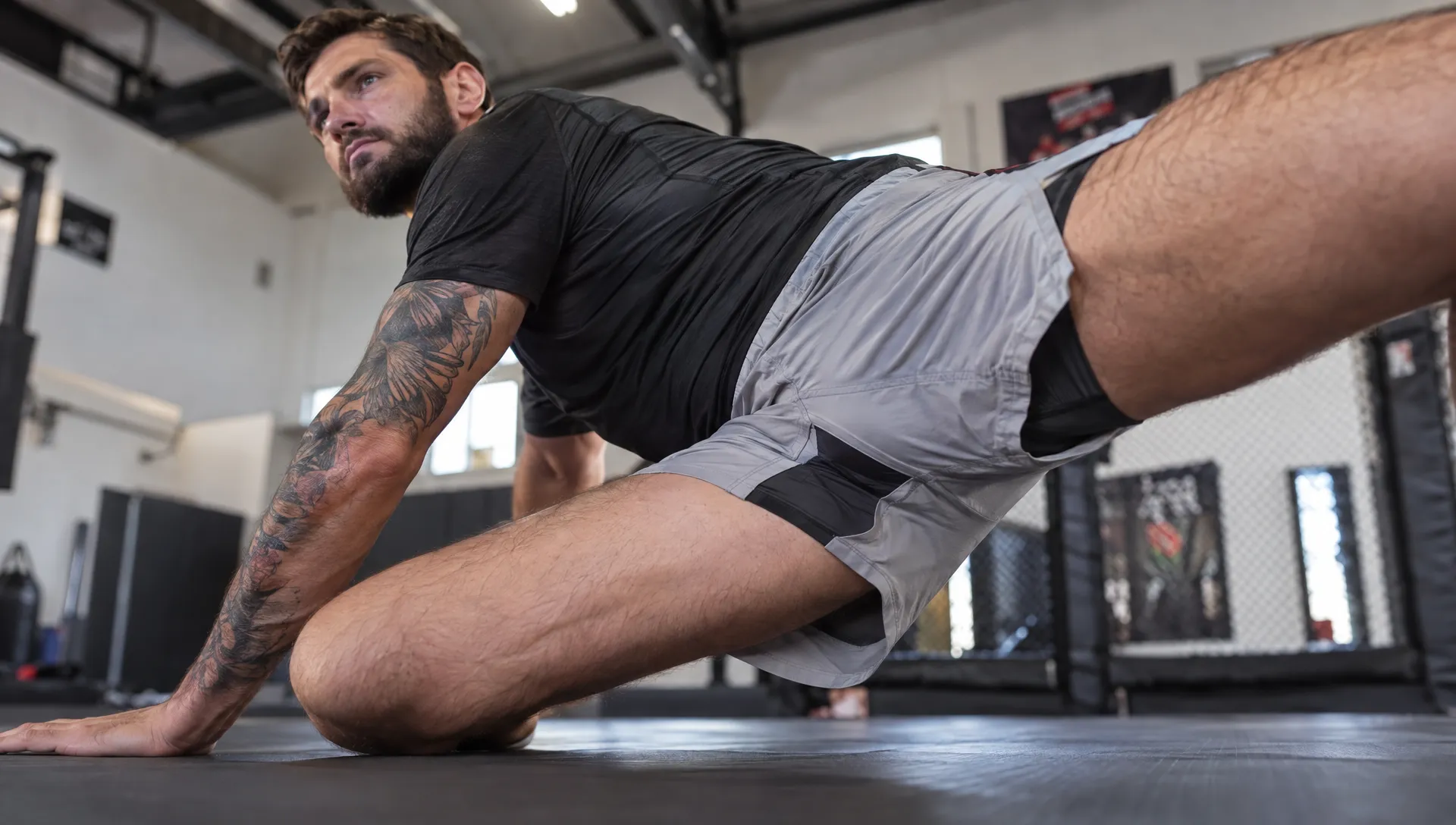
A high kick, a penetration step and a deep squat load shorts differently. Kicking demands room across the hips and thighs. Level changes challenge the crotch and rear rise. Ground transitions expose the waistband and seams to twisting, compression and repeated contact.
Before selecting material, define the intended use and test the sample accordingly. A pair designed primarily for striking may need a different cut from one used for frequent takedowns and ground work. The aim is not to make every garment identical, but to identify where restriction or movement occurs.
Have wear testers perform controlled kicks, lunges, sprawls and technical stand-ups while wearing their usual training underlayers. Watch for the waistband sliding, the crotch pulling tight or the hems catching against the thighs.
Well-balanced fightwear shorts should accommodate those movements without requiring constant adjustment. If a sample only works after sizing up enough to create a loose waist, the pattern needs attention rather than a different size recommendation.
Specify stretch and recovery separately
Stretch describes how far a fabric extends. Recovery describes how well it returns after that extension. Both matter, because a material can feel flexible initially yet become loose or distorted during use.
Ask suppliers which directions the fabric stretches and how they measure recovery. Terms such as “four-way stretch” do not, by themselves, establish the amount of extension, the force required or the remaining deformation after release.
For a useful comparison, assess candidate fabrics under the same conditions. A textile laboratory can select an appropriate method for the material and intended use. A hand-pull check is helpful for screening samples, but it cannot replace controlled measurements.
Let the pattern share the work
A gusset, adequate thigh room and correctly positioned panels can reduce the amount of stretch required from the main fabric. Conversely, a restrictive pattern can make even a highly elastic material feel uncomfortable.
When specifying fightwear shorts, evaluate the fabric and pattern together rather than treating stretch percentage as the main performance score. Check extension across the seat and upper thigh, then inspect whether those areas return to their original shape.
Pay particular attention to gusset transitions. A flexible insert surrounded by restrictive seams may simply move the stress to its edges.
Build strength into the whole garment
Strong fabric does not automatically produce durable shorts. The finished garment can fail at a seam, a waistband attachment or the end of a side split long before the main panels tear.
Ripstop construction uses a reinforcing grid intended to help limit tear propagation, but the label alone does not establish abrasion resistance, seam performance or lifespan. Arus Sportswear’s Fusion-R Fight Fight Fight shorts provide one example of a ripstop design with an elastic waistband and drawstring. Those listed features are a starting point for evaluation, not substitutes for testing the garment in use.
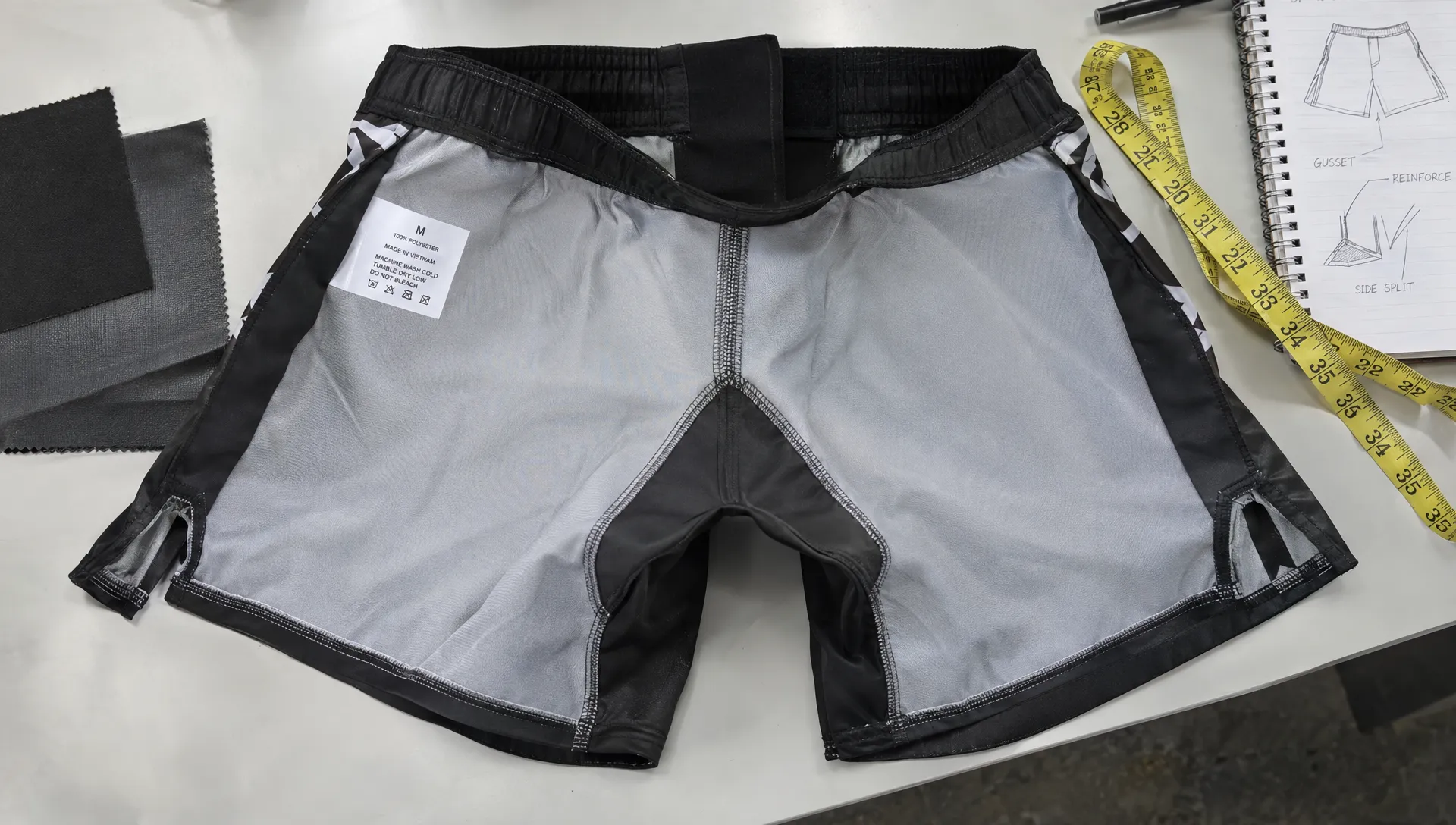
For fightwear shorts, inspect the weakest construction junctions as closely as the largest fabric panels. Crotch intersections, split openings and waistband joins deserve particular attention because they experience concentrated loads.
Reinforcement must remain comfortable
Reinforcement can help at stress points, but extra stitching, thread tension or fabric layers can also create stiffness. A heavily reinforced seam that rubs the wearer is not a successful solution.
Turn the sample inside out and examine seam allowances, thread ends and any exposed fastening edges. Then test it during movement. Check for stitches opening under extension, puckering after release and rough areas that become noticeable against damp skin.
If a problem appears, record its location and the movement that caused it. “The crotch seam restricts a deep lunge” gives a manufacturer a clearer revision target than “the shorts feel tight.”
Treat safety as a construction requirement
Apparel safety is largely about removing avoidable snagging, abrasion and interference. Shorts are not protective equipment, and stronger fabric cannot prevent impact injuries.
For contact training, examine hard components, exposed fasteners, open pockets and loose cords. A detail that is harmless during running may be unsuitable when another athlete’s fingers or toes can become caught in it.
The waistband should stay secure without relying on excessive compression. Drawstrings need manageable lengths and an arrangement appropriate to the intended activity. If hook-and-loop fastening is used, check that its abrasive surface remains covered when the garment is closed and during movement.
Competition requirements also matter. For example, the IBJJF uniform requirements address permitted no-gi attire and construction restrictions. Check the current rules for the specific organizer before approving a competition product; acceptance in one setting does not guarantee acceptance elsewhere.
A practical safety review of fightwear shorts should include both the outside surfaces a partner may contact and the inside surfaces that touch the wearer. Repeat that review after washing, when curling edges or distorted closures may become easier to spot.
Test the sample as a system
Fabric tests and garment wear tests answer different questions. Laboratory testing can compare material properties under controlled conditions. Wear testing reveals how fabric, pattern, seams and closures interact on a moving athlete.
Use several testers across the intended size range rather than relying on a single athlete. Include different thigh proportions and hip measurements, because a secure fit on one body shape can hide a pattern problem on another.
Keep the movement sequence consistent between samples. Record restriction, waistband displacement, seam discomfort and visible damage, along with the size worn and the tester’s relevant measurements. This makes revisions easier to compare.
Include laundering in the approval process
Evaluate samples before washing and again after repeated laundering under the proposed care instructions. Measure the same reference points each time, including the waist, inseam and key panel dimensions.
For fightwear shorts, post-wash checks should cover recovery, seam appearance, closure function and whether branding has become rough or distorted. Agree on acceptable changes before testing rather than deciding afterward that any result is good enough.
Keep an approved reference sample, photographs and the written specification together. If the design changes, update all three so the production team is not working from conflicting instructions.
Turn sample findings into a production brief
A useful technical pack describes observable requirements. “Premium quality” is too vague to guide production or settle a disagreement about an order.
The following checks can help turn design goals into a practical approval process. They are buyer-defined checks, not a certification standard.
| Area | What to specify | What to check on the sample |
|---|---|---|
| Main fabric | Composition, construction and agreed material reference | Stretch direction, recovery and surface wear |
| Pattern | Measurement points and size tolerances | Hip mobility, thigh clearance and coverage |
| Seams | Seam construction and reinforcement locations | Opening stitches, stiffness and rubbing |
| Waistband | Finished measurements and closure arrangement | Slippage, twisting and pressure during movement |
| Contact surfaces | Restrictions on hard or exposed components | Snagging points and abrasive edges |
| Care performance | Care instructions and agreed wash-test procedure | Dimensional change, distortion and closure function |
The production brief for fightwear shorts should also identify which changes require fresh approval. Substituting an elastic, altering seam construction or changing the branding method can affect the garment even when its overall appearance remains similar.
Breathability deserves its own assessment rather than being inferred from stretch or low fabric weight. Arus Sportswear’s guide to sourcing breathable apparel for high-heat combat sports explains the distinction between ventilation, moisture management and drying performance.
Keep conditioning checks separate from contact testing
Athletes often wear the same shorts for technical practice and conditioning, but those sessions place different demands on clothing. Controlled squats or step-ups can reveal waistband movement and thigh restriction without involving a partner.
If an established conditioning program includes added resistance, equipment such as the BodySport Weighted Vest should be assessed for its own fit and suitability. A vest is separate conditioning equipment, not evidence that the shorts are safe for contact work, and it should not be used during contact sparring.
Evaluate fightwear shorts first during ordinary movement without added load. This helps distinguish a garment restriction from a change in technique caused by extra resistance. Contact suitability still requires a separate inspection and appropriate technical wear testing.
Frequently Asked Questions
Is more stretch always better? No. Greater extension can help movement, but it does not guarantee good recovery, stable fit or durable seams. A well-designed pattern may perform better with moderate stretch than a restrictive pattern made from a more elastic fabric.
Does ripstop mean the shorts will not tear? No. Ripstop construction is intended to help limit the spread of a tear. Performance still depends on the yarns, fabric construction, damage location and loads applied. Seams and closures also need separate evaluation.
How should a brand approve fightwear shorts for bulk production? Approve the material, measurements, construction and branding together. Combine controlled material testing where appropriate with wear tests and laundering checks, then retain a reference sample and written acceptance criteria.
Can one design work for training and competition? It can, provided the fit suits the intended movements and the construction meets the relevant organizer’s current rules. Confirm permitted closures, pockets, coverage and branding before presenting a design as competition-ready.
Develop fightwear shorts around a clear specification
A dependable garment comes from balancing movement, recovery, construction strength and contact safety. None of those qualities can be confirmed by appearance alone.
Arus Sportswear offers private label and OEM manufacturing for brands, gyms and distributors, with custom designs, branding options, low minimum orders and worldwide shipping. When discussing a project with Arus Sportswear, provide the intended training use, size range, preferred construction and sample acceptance criteria. Confirm the applicable minimum order, testing arrangements and production requirements for your specific design before committing to a bulk order.