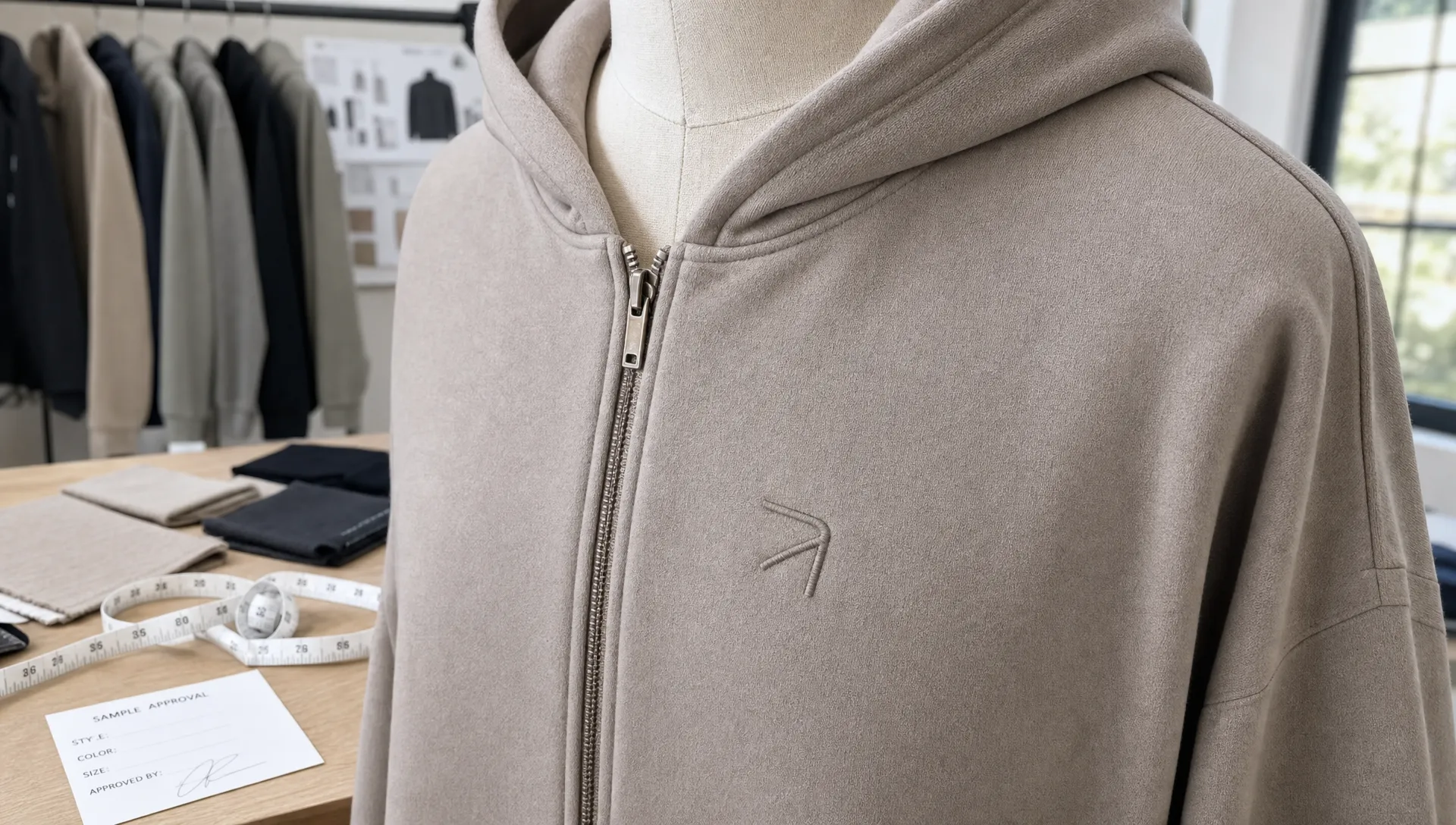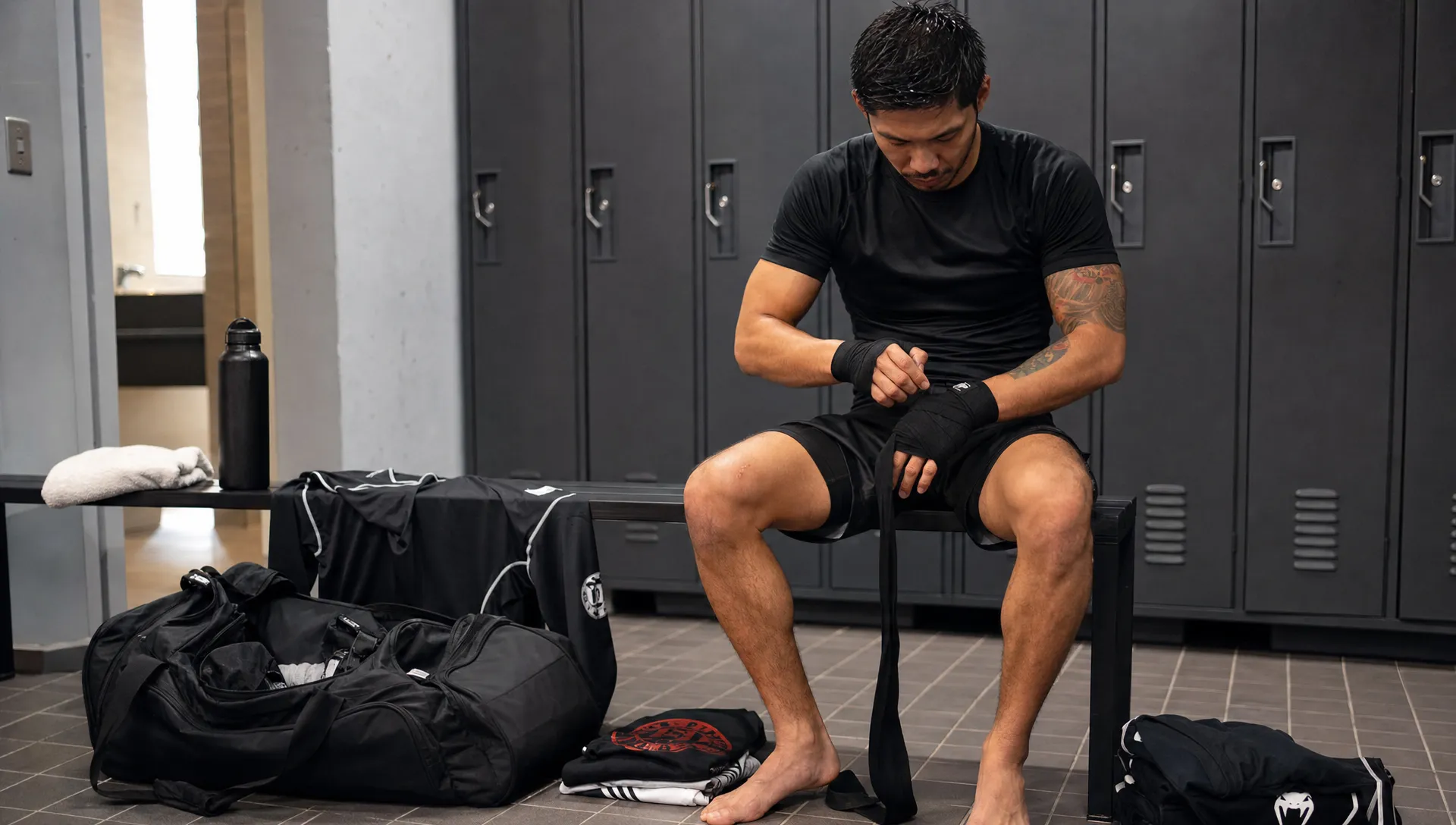
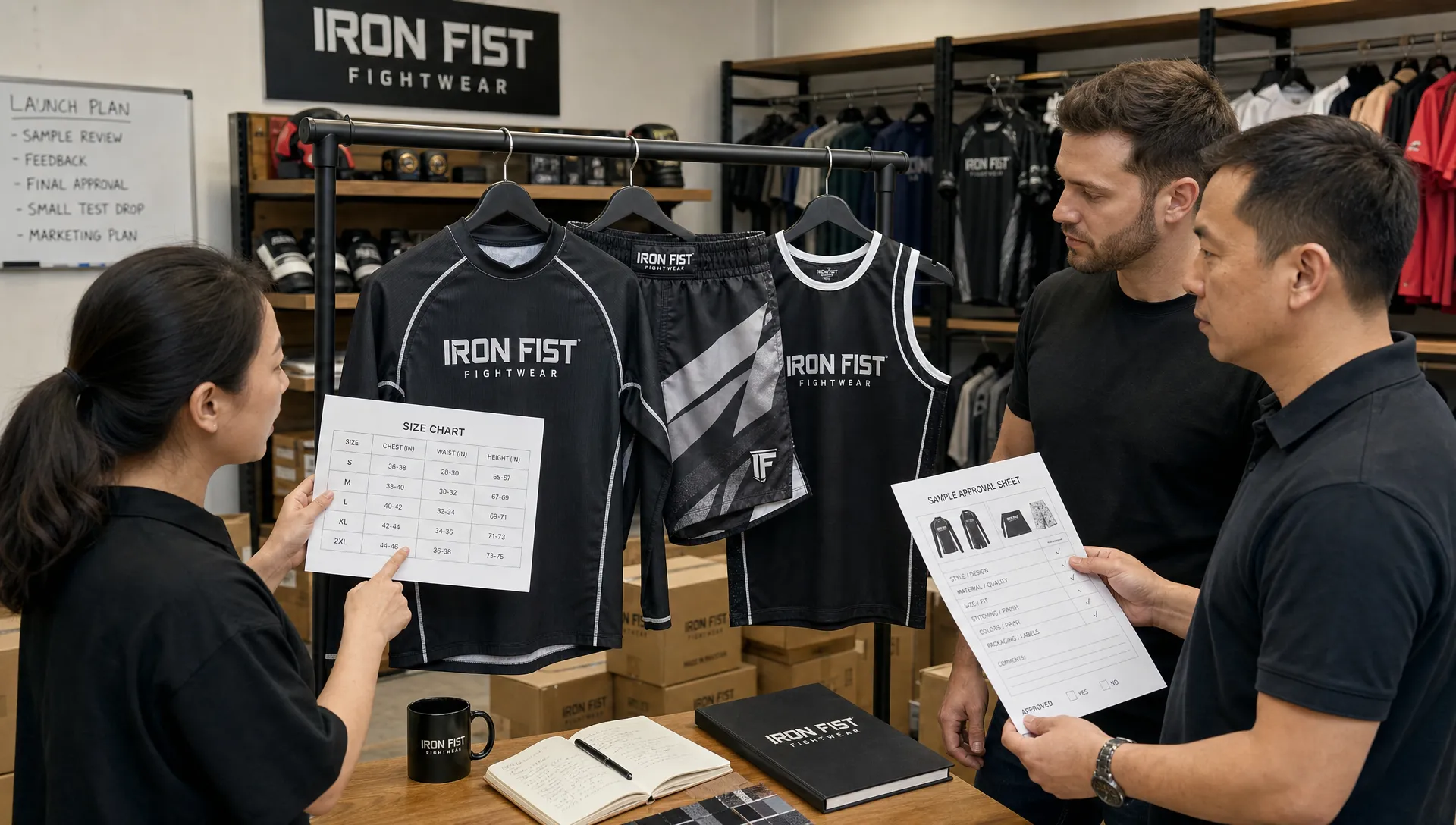
Launching a sportswear line used to mean committing to large quantities before you knew what customers actually wanted. For gyms, fightwear brands and distributors, that is a dangerous way to learn. One wrong fit, weak colorway or overestimated size run can leave cash tied up in boxes instead of growth.
Private label sportswear changes that equation. Instead of building every product from scratch, a brand can work with a manufacturer to produce custom-branded apparel in controlled quantities, test demand, gather feedback and scale what proves itself. That makes the test drop one of the most practical launch strategies for modern sportswear brands.
A low-risk test drop is not just a smaller order. It is a structured market experiment. You are testing whether a specific product, design, price and audience match can generate real sales before you commit to a broader collection.
What a Low-Risk Test Drop Actually Tests
A test drop is a limited product release designed to answer business questions quickly. For a combat sports brand, that might mean launching one rash guard design before building a full No-Gi set. For a gym, it could mean releasing a branded training short to members before ordering hoodies, joggers and lifestyle pieces.
The goal is not to look small. The goal is to learn with discipline. A good test drop can validate whether customers care about the product enough to buy it, whether the sizing works for your audience and whether your branding connects beyond a logo mockup.
Most test drops answer questions like:
- Does this product category fit our audience's training habits?
- Which sizes sell first, and which sizes sit?
- Does the design feel premium enough for the price?
- Are customers asking for restocks, new colors or matching items?
- Can our brand sell apparel without discounting too early?
That feedback is more valuable than opinions collected before launch. People often say they like a design, but a test drop shows whether they will actually pay for it.
Why Private Label Sportswear Lowers Launch Risk
Private label sportswear reduces risk because it lets brands use manufacturing infrastructure that already exists. You still control the branding, design direction and product positioning, but you do not need to own machinery, hire production staff or manage every technical detail from zero.
For new and growing brands, this matters. Apparel risk usually comes from three areas: product development, inventory and cash flow. Private label production helps manage all three by giving you a more practical path from idea to saleable product.
A manufacturer that offers private label and OEM production can help turn concepts into production-ready apparel while supporting brand-specific details such as prints, trims, labels and packaging options. Exact possibilities depend on the product type and order requirements, but the overall model is built for brands that want control without factory ownership.
If you are still shaping the broader launch strategy, it can help to understand how fitness wear manufacturers support new brand launches through sampling, fabric selection, production planning and shipping coordination.
Test Drops Make Smaller Product Decisions Possible
A full launch often pressures a brand to make too many decisions at once. You choose multiple products, several colors, a wide size range, packaging, marketing assets and stock quantities before real customer behavior gives you direction.
A test drop narrows the decision. Instead of launching ten pieces, you might test one or two products with strong commercial logic. In combat sports, that could be a rash guard, MMA short, BJJ gi, boxing short or gym-branded training tee. In broader sportswear, it might be a compression top, performance short or lifestyle hoodie.
This focused approach reduces creative confusion. It also makes your sales data cleaner. If you launch one rash guard and it sells out quickly, the message is clear. If you launch twelve SKUs and only three perform, it becomes harder to understand whether the issue was category, design, pricing, size range or promotion.
For brands in the USA, Canada, Germany, Australia, Japan, Thailand and across Europe, smaller test drops also make it easier to adapt to regional differences. A design that resonates with a Muay Thai gym audience in Thailand may not perform the same way with a BJJ audience in Canada. Testing lets you learn locally before making global inventory decisions.
A Better Way to Compare Full Launches and Test Drops
The difference between a full launch and a test drop is not only quantity. It is the level of uncertainty you are willing to carry.
| Decision Area | Traditional Full Launch | Low-Risk Test Drop With Private Label Sportswear |
|---|---|---|
| Product range | Multiple styles launched at once | One to three focused products |
| Inventory exposure | Higher stock commitment before proof | Controlled order based on a clear test goal |
| Design validation | Based mostly on internal opinion | Based on actual sales and customer feedback |
| Cash flow | More capital tied up in inventory | More capital preserved for marketing and restocks |
| Speed of learning | Slower because there are more variables | Faster because the offer is simpler |
| Scale plan | Often decided before launch | Built after the first data comes in |
This is why private label sportswear is especially useful for brands that want to move professionally without gambling their entire budget. The product can still look polished, but the business model gives you room to improve.
Proven Product Bases Help You Move Faster
One of the hardest parts of launching apparel is not the artwork. It is getting the garment itself right. Fabric weight, stretch, stitching, waistband construction, collar shape, sleeve length and overall fit all influence whether customers buy again.
Private label manufacturing allows you to start from product types that a manufacturer already understands. That does not mean every garment is generic. It means the technical foundation is not being invented from nothing for your first drop.
This is valuable in performance categories, where poor construction becomes obvious during training. A rash guard has to handle sweat, stretching and washing. MMA shorts need mobility and secure closure. A gi needs fabric and stitching choices suitable for grappling. A boxing garment must allow movement without feeling flimsy.
For example, a brand planning a No-Gi test drop could start by exploring custom rash guard manufacturing as a focused first product rather than trying to launch a complete fightwear collection immediately.
Low Minimum Orders Protect Cash Flow
Cash flow is often the real constraint for apparel brands. Selling out can feel frustrating, but overstock can be far worse. Unsold inventory takes up storage space, absorbs cash and often forces discounting that weakens brand perception.
Low minimum orders help brands test demand without overextending. For a gym owner, that may mean ordering enough apparel to validate interest among members and online followers. For a distributor, it can mean testing a design with one region or one sales channel before placing a larger bulk order.
The key is to treat the first order as a controlled investment rather than a final answer. A test drop should be large enough to produce meaningful feedback, but not so large that the brand becomes dependent on perfect sell-through.
Before placing the order, set simple success markers. These do not need to be complicated, but they should be clear.
- Sell-through target within a defined period
- Number of repeat buyers or returning gym members
- Most requested sizes and colors
- Customer feedback on fit, fabric and perceived value
- Restock requests after the first release closes
When those markers are defined before launch, you avoid emotional decision-making. You can decide whether to restock, adjust or move on based on evidence.
Private Label Branding Makes the Drop Feel Real
A common mistake with test drops is making them look temporary. Customers do not care that the brand is testing. They judge the product as if it is part of a serious collection.
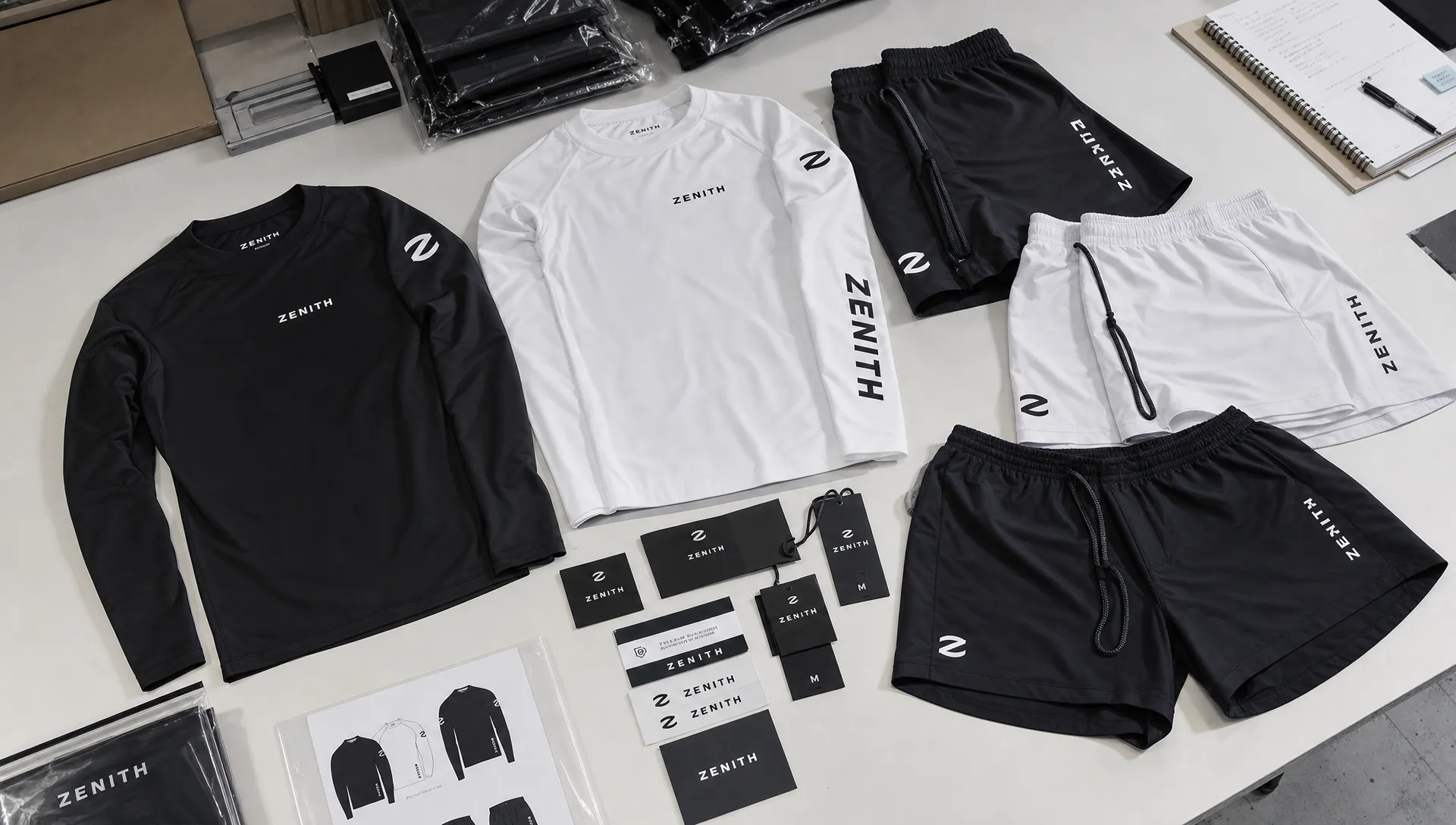
Private label sportswear helps because branding can be built into the product experience. Depending on the product and manufacturing options, this may include custom artwork, woven labels, printed labels, hang tags, packaging details or other brand elements. These details make the drop feel intentional rather than experimental.
That matters for combat sports and fitness communities, where identity is part of the purchase. Athletes wear apparel that reflects the gym they train at, the discipline they practice and the style they want to project. A plain product with a weak logo placement rarely builds the same attachment as a product designed around a clear brand story.
Branding also supports better feedback. If customers love the garment but ignore the design, you have one kind of lesson. If they love the design but complain about fit, you have another. A properly branded drop gives you cleaner signals because the product is close enough to market-ready.
Test Drops Reveal the Right Size and SKU Mix
Size planning is one of the easiest places to lose money. New brands often guess based on personal preference or standard size charts, then discover that their audience buys differently.
A test drop gives you real size data. Maybe your gym sells more XL and XXL than expected. Maybe your women's compression pieces need a different size curve. Maybe your European distributor needs a different breakdown than your US online store.
This is especially important for international markets. Size expectations, fit preferences and buying habits can vary across regions. A brand selling in Germany and the Netherlands may need a different approach than a brand selling primarily in Thailand or Australia. Test drops help you identify those differences before committing to large stock allocations.
The same logic applies to color and design. Black may be safe, but a bolder colorway might create stronger demand in a specific niche. A test drop lets customers show you the right balance between commercial basics and standout designs.
Feedback Loops Turn One Drop Into a Better Second Drop
The biggest advantage of a test drop is not the first release itself. It is what the first release teaches you about the second.
After the drop, review sales data and customer comments together. Sales alone can tell you what moved. Feedback tells you why it moved, what almost stopped buyers and what they want next. This combination helps you improve the next order with less guesswork.
A practical review should cover product performance, design reaction, fit notes, customer service issues, shipping experience and restock demand. If the garment performed well but customers asked for a matching short, the next test can be a coordinated set. If the design sold but the size curve was wrong, the next order can adjust inventory distribution. If the product struggled despite strong marketing, the category may not match your audience yet.
This is how small drops become a product development system. Instead of betting on one large launch, you build a repeatable cycle: test, learn, refine and scale.
When a Test Drop Is Ready to Scale
A test drop is ready to scale when the evidence supports a bigger move. Selling out is a positive sign, but it is not the only signal. A very small drop can sell out because supply was limited, not because demand is deep.
Look for stronger indicators. Did customers ask for restocks without a discount? Did buyers post or recommend the product? Did the product perform across more than one channel, such as gym members and online customers? Did the size curve make sense, or did you sell only a narrow set of sizes?
Once the signs are strong, private label manufacturing can support the move from test quantity to larger production. That may mean increasing units, adding colors, expanding the product family or creating a seasonal drop calendar. Brands planning for that next stage should also think about repeatable design systems, fit standards and production planning, which are covered in more detail in these custom sports apparel tips for brands that want to scale.
Scaling should still be controlled. A strong first drop does not mean every future product will work. The smartest brands keep testing even as they grow, using each release to sharpen the next.
Common Mistakes That Make Test Drops Riskier
Private label sportswear lowers risk, but it does not remove the need for planning. Some brands turn a test drop into a gamble by adding too many variables or skipping basic validation.
One common mistake is testing too many products at once. If the drop underperforms, you may not know what caused the problem. Another mistake is focusing only on artwork while ignoring fit, fabric and construction. In performance sportswear, customers may buy once because the design looks good, but they only come back if the product holds up.
Pricing is another issue. A test drop should reflect the market position you want to build. If you launch with heavy discounts, you may only prove that people like cheap apparel. That is not the same as proving demand for your brand.
Finally, some brands fail to plan the restock path. If the product sells out and you have no next step, the momentum fades. Before launch, ask your manufacturer what information is needed for a repeat order and what changes can realistically be made for the next run.
Frequently Asked Questions
What is private label sportswear? Private label sportswear is apparel produced by a manufacturer for a brand, gym or distributor to sell under its own name. The manufacturer handles production while the buyer controls brand direction, design details and market positioning.
Why are test drops useful for new sportswear brands? Test drops help brands validate product demand before committing to larger inventory. They provide real sales data, size insights and customer feedback that can guide future production decisions.
Can a test drop still look premium? Yes. A test drop should look like a finished brand release, not a rough experiment. Custom branding, thoughtful design and suitable product quality help customers take the launch seriously.
How many products should be in a first test drop? Many new brands benefit from starting with one to three focused products. This keeps the test simple enough to understand which product, design and price point performed best.
What should a brand do after a successful test drop? Review sell-through, customer feedback, size data and restock requests. If the signals are strong, the brand can scale the winning product, add related items or plan a larger seasonal release.
Build a Smarter First Drop With Arus Sportswear
A low-risk test drop works best when the product is focused, the branding is clear and the manufacturing plan supports future growth. Private label sportswear gives gyms, fightwear brands and distributors a practical way to test demand without taking on unnecessary production risk.
Arus Sportswear manufactures custom MMA and martial arts apparel for brands worldwide, including private label and OEM fightwear, BJJ gis, rash guards, boxing apparel and combat sports uniforms. With custom design support, low minimum orders, bulk order capability and worldwide shipping, Arus Sportswear helps brands test carefully and scale what works.
If you are planning your next limited release, start with a focused product, clear success metrics and a manufacturer that understands combat sports apparel production. Visit Arus Sportswear to explore private label and OEM manufacturing options for your brand.