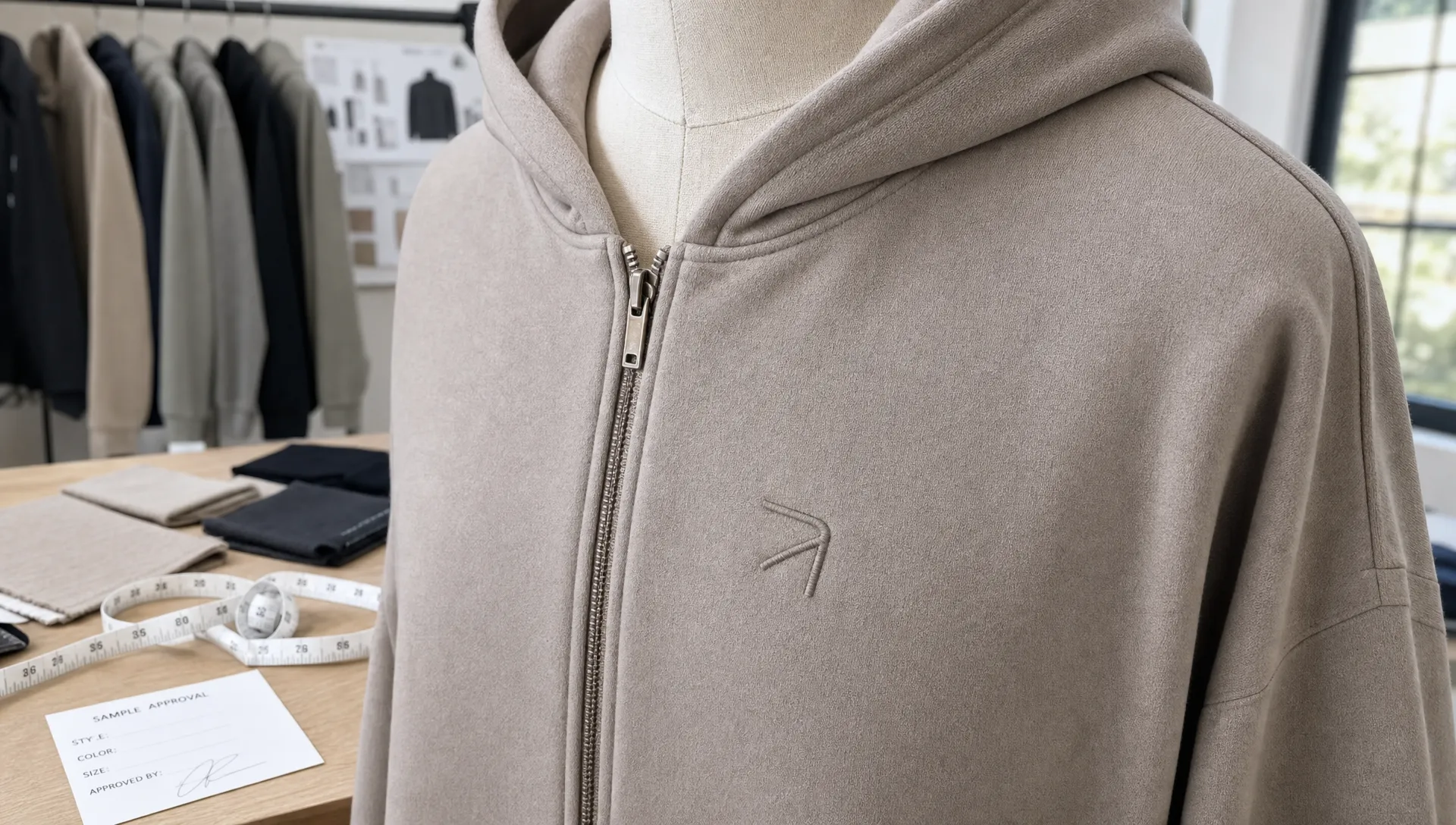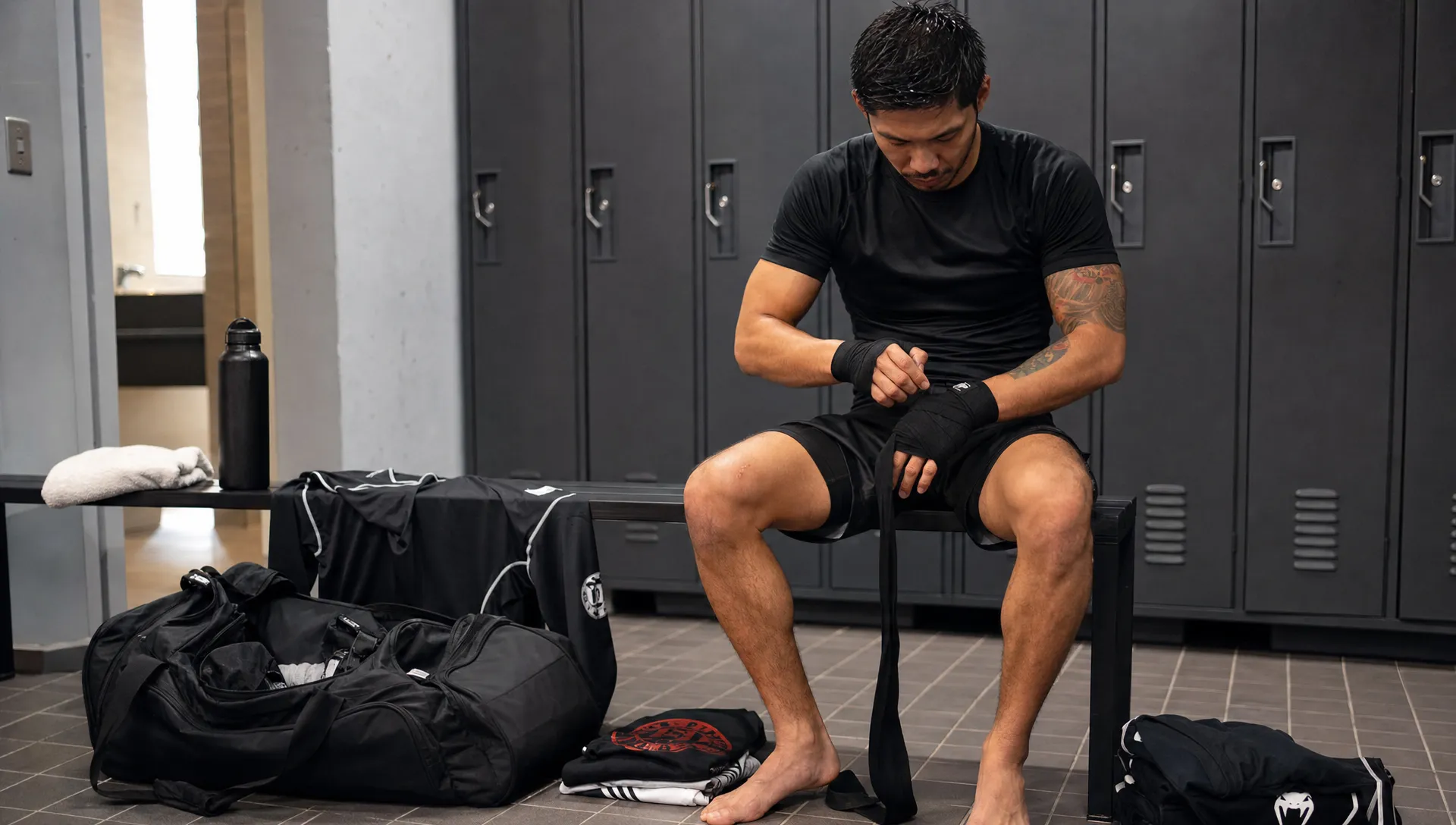
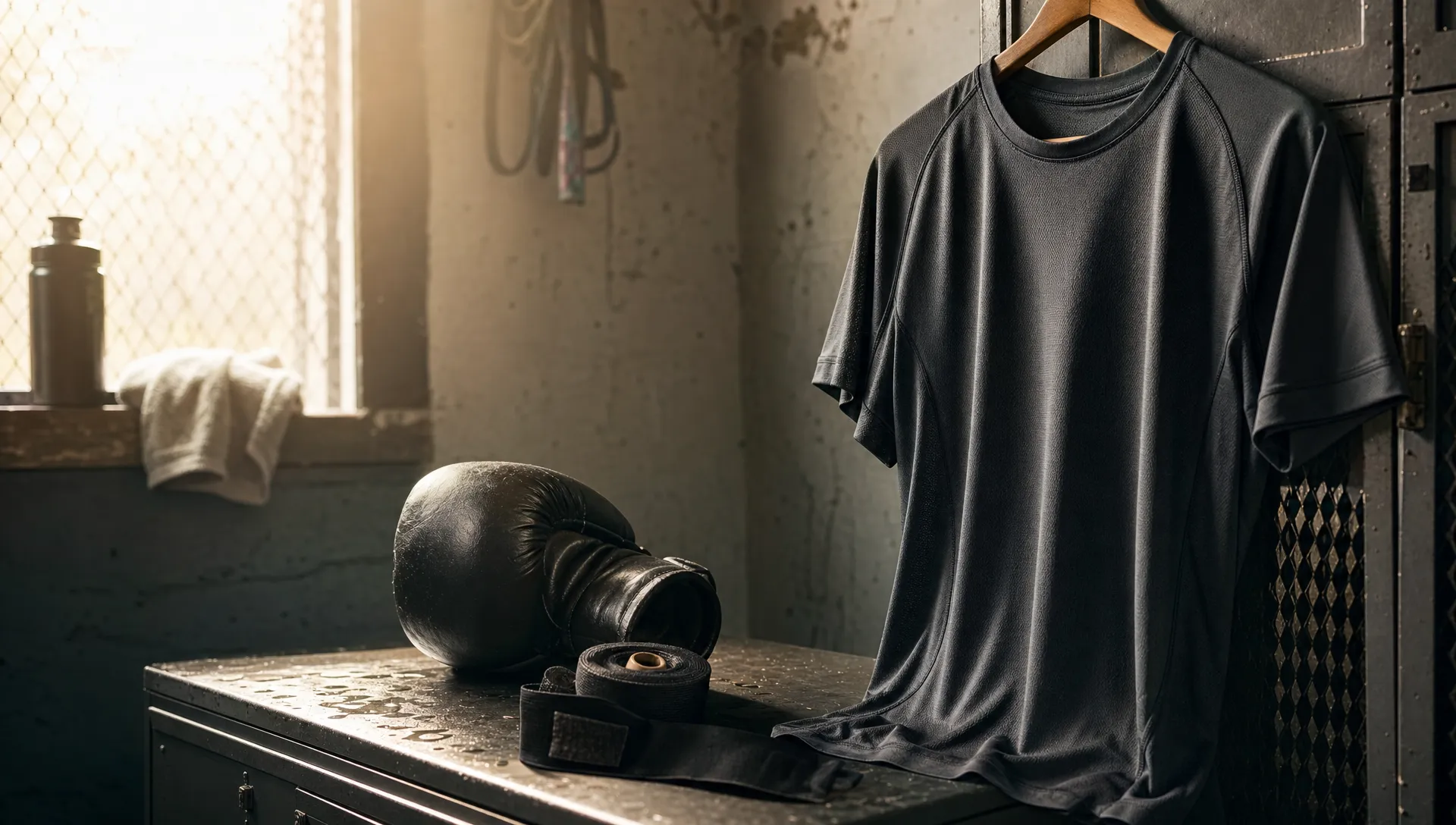
High-sweat training exposes weak fabric fast. A shirt can feel soft on a sample hanger, then turn heavy, clingy and abrasive after 20 minutes of boxing rounds, no-gi grappling or summer conditioning. For brands, gyms and distributors, selecting fabric for athletic wear is not just a design choice. It affects comfort, durability, logo quality, repeat orders and how professional the product feels after months of washing.
The right fabric depends on the sport, climate, fit and decoration method. A compression rash guard does not need the same textile as a loose training tee, and a fight short has different stress points than a gym hoodie. The goal is to match fabric performance to the way the garment will actually be used when sweat, friction and heat are part of every session.
Start With the Sweat Profile, Not the Swatch
High-sweat training means repeated cycles of moisture, heat, movement and laundering. The fabric has to manage sweat while stretched, rubbed against skin or equipment and washed frequently. Before comparing fabric options, define the training environment as clearly as possible.
A practical fabric brief should answer these questions:
- What sport or training style is the garment built for?
- Will the fit be loose, athletic, compression or competition-specific?
- Is the wearer training indoors, outdoors, in hot weather or in mixed climates?
- Will the garment face mats, gloves, barbell knurling, pads or frequent body contact?
- Does the design need sublimation, screen printing, heat transfer, embroidery or woven labels?
- How often will customers wash and dry the garment?
This step keeps you from choosing a fabric based only on softness, trend or price. A comfortable lifestyle knit may fail in a fight gym because it pills under abrasion. A very lightweight running fabric may dry quickly but become transparent when wet. A heavy compression fabric may look premium but trap heat during long sessions in Thailand, Australia or the southern United States.
| Training condition | Fabric priority | Why it matters |
|---|---|---|
| Hot indoor conditioning | Moisture wicking, fast drying and airflow | Helps reduce cling and heat buildup during repeated rounds |
| MMA, BJJ and wrestling training | Abrasion resistance, stretch recovery and smooth surface | Fabric must handle mats, grips and body contact without losing shape |
| Boxing and kickboxing sessions | Breathability, light weight and wash durability | Shirts and shorts need to stay comfortable through high output work |
| Compression fit garments | Recovery, wet opacity and controlled stretch | Fabric should move with the body without sagging or becoming see-through |
| Outdoor team training | Colorfastness, durability and climate suitability | Sun, sweat and repeated washing can expose weak dyes and finishes |
Key Fabric Properties for High-Sweat Athletic Wear
Moisture movement and dry rate
Moisture management has two parts: moving sweat away from the skin and releasing it so the garment can dry. A fabric can wick moisture across its surface yet still feel wet if it holds too much liquid. Another fabric may dry quickly but fail to spread sweat, leaving damp patches where the body sweats most.
For performance garments, ask about wicking behavior, absorbency and drying performance. Textile labs often use standardized methods to evaluate moisture movement. AATCC publishes recognized textile test methods used across the industry, including methods related to moisture management, colorfastness and laundering. You do not need to become a lab technician, but you should understand which performance claims are backed by testing and which are just sales language.
Breathability and air movement
Breathability is about more than thin fabric. A dense knit can feel hot even if it is light. A slightly heavier mesh or engineered knit may feel cooler because it allows more air exchange. In high-sweat apparel, airflow is especially useful in upper-back panels, underarms, side panels and other heat zones.
For fightwear and compression pieces, designers often balance breathability against coverage and durability. Open mesh may improve airflow, but it can snag or reveal too much in contact sports. The best choice depends on where the fabric sits on the garment and how much abuse that area will take.
Stretch and recovery
Stretch is how far the fabric moves. Recovery is how well it returns to its original shape. In high-sweat training, recovery matters because heat, moisture and repeated movement can make poor fabrics bag out at the elbows, knees, waistband or seat.
Spandex, also called elastane, is common in compression tops, leggings, shorts panels and fitted athletic tees. The exact percentage is not the whole story. Yarn quality, knit structure, fabric weight and finishing all influence recovery. A lower-spandex fabric with a stable construction may perform better than a higher-spandex fabric that feels rubbery, traps heat or loses shape after laundering.
Durability under sweat and friction
Sweat contains salts and oils that can make wear more aggressive when combined with friction. In MMA, BJJ, boxing and strength training, the fabric may rub against mats, gloves, pads, benches, belts and textured equipment. That makes abrasion resistance and pilling performance important, especially for private label products meant to represent a gym or brand over time.
Durability should be evaluated on both the fabric and the finished garment. A strong textile can still fail if seams, panels, waistbands or logo applications are not compatible with the stress of training.
Skin feel, chafing and wet opacity
Dry handfeel can be misleading. A fabric that feels smooth in a showroom may become rough when wet, especially if the surface pills or if the garment uses heavy decoration in high-friction areas. For high-sweat training, test the fabric damp and stretched, not only flat and dry.
Wet opacity is another overlooked issue. Light colors, white panels and thin compression fabrics can become transparent when saturated. If your brand sells to gyms, academies or team programs, opacity problems can create returns and damage trust even when the rest of the garment performs well.
Common Fabric Options and Trade-Offs
No single fiber is the best for every athletic product. Fiber type matters, but fabric construction, finishing and garment design often matter just as much. Use this table as a starting point when comparing fabric for athletic wear in high-sweat conditions.
| Fabric or fiber direction | Strengths | Watchouts | Common use cases |
|---|---|---|---|
| Polyester performance knit | Good wicking potential, quick drying, strong color options and strong sublimation compatibility | Quality varies widely by yarn, knit and finish | Training tees, rash guards, uniforms and sublimated teamwear |
| Recycled polyester knit | Similar performance potential to virgin polyester with a recycled content story | Sustainability claims should be documented and tested where required | Brand collections, team apparel and retail sportswear |
| Nylon or polyamide blends | Smooth handfeel, strong abrasion resistance and premium stretch feel | Can cost more and may not suit every decoration method | Compression wear, leggings, sports bras and premium training pieces |
| Polyester-spandex or nylon-spandex blends | Better stretch and fit than rigid fabrics | Poor recovery or weak finishing can lead to sagging | Rash guards, compression shorts, fitted tees and leggings |
| Stretch woven polyester blends | Durable, structured and suitable for movement | Less soft than knits and needs correct pattern engineering | MMA shorts, training shorts and fight shorts |
| Cotton-rich blends | Familiar handfeel and casual appeal | Holds moisture longer and can feel heavy in hard training | Lifestyle tees, warmups and lower-intensity gym merchandise |
| Mesh and perforated knits | Improved airflow and ventilation | Can snag, stretch out or reduce opacity if poorly selected | Side panels, back panels, vents and hot-zone inserts |
If you plan to make recycled, organic or chemical-safety claims, ask for documentation rather than relying on supplier wording. Certifications such as OEKO-TEX STANDARD 100 can help brands communicate that textiles have been tested for certain harmful substances, but the exact certification, scope and validity should be verified for the specific fabric or finished product.
Match the Fabric to the Product Category
A common mistake is using one fabric across a full athletic line to simplify sourcing. That can work for some basics, but high-sweat training categories usually need different fabric directions. A combat sports brand may use smooth compression knit for rash guards, stretch woven fabric for MMA shorts and breathable jersey for training tees.
| Product category | Fabric direction to consider | Selection notes |
|---|---|---|
| Rash guards and compression tops | Polyester-spandex or nylon-spandex knit with strong recovery | Prioritize stretch, smooth surface, flat decoration and wet opacity |
| MMA and fight shorts | Stretch woven polyester or polyester-spandex woven | Check tear strength, waistband stability, gusset movement and print durability |
| Training tees and tanks | Lightweight polyester jersey, poly-spandex jersey or breathable mesh panels | Balance soft handfeel with wicking, wash durability and logo compatibility |
| Compression shorts and leggings | Nylon-spandex or polyester-spandex with high recovery | Test squat opacity, waistband hold, seam comfort and pilling |
| Boxing shorts and gym shorts | Lightweight woven or knit depending on style | Prioritize airflow, freedom of movement and waistband comfort |
| Warmups and hoodies | Polyester fleece, interlock or blended performance fabric | Focus on shape retention, colorfastness and comfort before and after training |
| Martial arts uniforms | Category-specific woven cotton or cotton-blend constructions | Durability, shrinkage control and tradition often matter more than quick-dry performance |
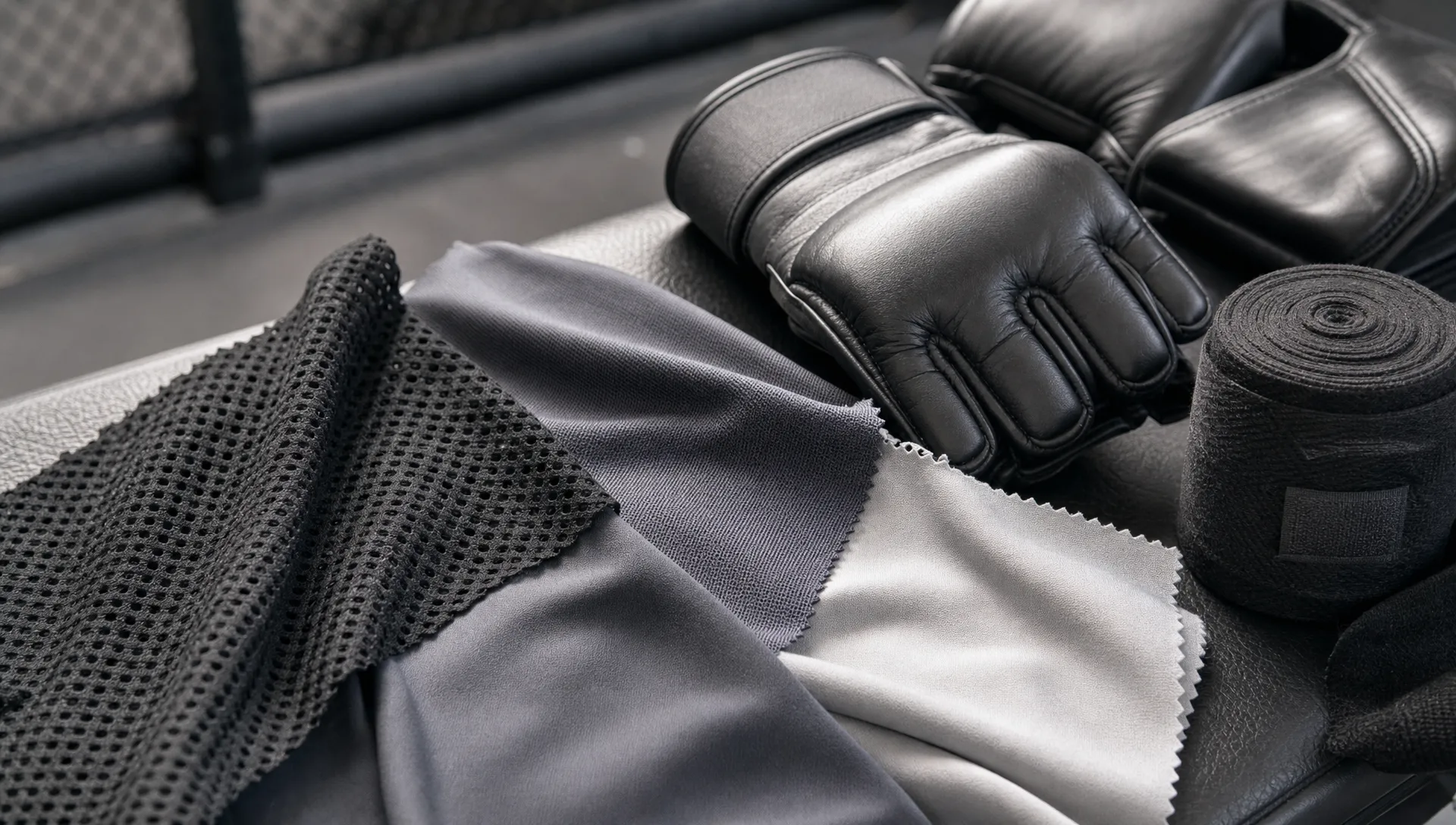
Do Not Approve Fabric Without Testing It Wet
Fabric should be tested in the conditions your customer will create. For high-sweat apparel, that means damp samples, repeated stretch, friction and laundering. Early in development, in-house screening can eliminate obvious problems. Before bulk production, lab testing and production sample approval give you stronger protection.
| Test area | What to check | Practical evaluation |
|---|---|---|
| Moisture behavior | Wicking, wet cling and drying feel | Dampen the sample evenly, wear or stretch it, then compare drying and comfort |
| Stretch recovery | Bagging after movement and moisture | Measure a marked area before stretching, after stretching and after rest |
| Wet opacity | Transparency when saturated and stretched | Test light colors under realistic lighting while the fabric is damp |
| Abrasion and pilling | Surface wear from mats, equipment and washing | Rub against relevant surfaces and review after multiple wash cycles |
| Colorfastness | Dye transfer, fading and staining | Use lab tests for perspiration, washing and rubbing when approving bulk fabric |
| Decoration durability | Cracking, peeling, dye migration or puckering | Wash decorated samples repeatedly and stretch printed areas after drying |
| Shrinkage and torque | Size change and twisting | Measure samples before and after laundering according to intended care instructions |
This process is especially important for private label and OEM production, where your brand name is on the garment even if a factory produces it. If you want a broader view of durability, sourcing and supplier evaluation, Arus Sportswear has a related guide on how to source performance apparel that holds up.
Choose Decoration Methods With Fabric in Mind
Fabric and branding should be decided together. A logo method that works on a thick hoodie may fail on a stretchy rash guard. A transfer that looks sharp on a dry sample may crack or peel after repeated sweat and wash cycles if it is not designed for stretch.
Sublimation is popular for fightwear, team uniforms and performance apparel because the artwork becomes part of polyester-based fabric rather than sitting heavily on the surface. It works best on polyester-rich, usually light-colored materials. It is not a universal solution for cotton-rich fabric, dark bases or every premium handfeel.
Screen printing and heat transfers can work well when inks, adhesives and curing are matched to the textile. For stretch garments, the decoration needs to stretch with the fabric and recover without cracking. Embroidery can add a premium look to jackets, hoodies and some shorts, but it may pucker lightweight knits or irritate the skin if placed in high-contact zones.
Logo size and placement also matter. A large front print can reduce breathability on a training tee. A thick transfer across the chest of a rash guard may feel stiff during grappling. For a deeper brand-focused view, see this guide to athletic wear logos that make your brand look pro.
Build a Fabric Brief Your Manufacturer Can Act On
A clear brief saves sampling time and reduces expensive revisions. Instead of asking for the best sweat-wicking fabric, describe the end use, customer, target price and performance needs. A capable manufacturer can then suggest realistic options based on fabric availability, MOQ, decoration method and production category.
Include these details in your fabric brief:
- Garment type, such as rash guard, MMA short, training tee or compression short
- Training environment, including indoor gyms, hot climates, outdoor fields or competition use
- Fit goal, such as relaxed, athletic, compression or uniform-specific
- Target handfeel, weight and coverage level
- Required stretch direction and recovery expectations
- Preferred decoration method and logo placement
- Color range, including any light colors that need opacity testing
- Expected wash frequency and care instructions
- Any certification, recycled content or restricted substance requirements
- Target order quantity, size range and market position
Do not over-specify a fabric you found in another brand's retail product unless you know it is available for your order size and price point. Many popular retail fabrics are custom-developed, exclusive or impractical for smaller runs. A better approach is to define the performance target, then work with a manufacturer to find the closest viable fabric.
Common Mistakes When Selecting High-Sweat Athletic Fabrics
Choosing by softness alone is the most common mistake. Softness sells during sampling, but customers judge athletic wear after training, washing and wearing it again. A fabric that pills quickly, traps sweat or loses shape will not earn repeat orders even if it feels good on day one.
Another mistake is assuming lighter always means better. Lightweight fabric can improve airflow and drying, but it can also reduce durability, coverage and structure. For compression shorts, rash guards and light-colored garments, going too thin can create more problems than it solves.
Brands also run into trouble when they separate design from production. Fabric affects panel shape, seams, waistbands, labels, logo methods and packaging. If you approve each element separately without testing the finished garment, the final product may not perform as expected.
Finally, avoid treating all high-sweat customers the same. A Muay Thai gym in Thailand, a wrestling club in Canada, a fitness brand in Germany and a distributor serving multiple European markets may all need different priorities. Climate, training style, retail price and customer expectations should guide the final fabric decision.
Frequently Asked Questions
What is the best fabric for athletic wear in high-sweat training? There is no single best fabric for every product. Polyester performance knits, nylon blends and spandex blends are common because they can support wicking, stretch and fast drying. The best choice depends on the garment type, fit, sport and decoration method.
Is polyester or nylon better for sweaty workouts? Polyester often performs well for quick-dry garments and sublimated designs, while nylon can offer a smoother handfeel and strong abrasion resistance. Fabric construction and finishing can matter as much as the fiber, so compare tested samples rather than choosing by fiber name alone.
Should athletic wear for high-sweat training include spandex? Spandex is useful when the garment needs stretch, compression or close body movement. It is common in rash guards, leggings and compression shorts. Loose tees or woven fight shorts may use less spandex or rely on pattern design and stretch woven construction.
Is cotton bad for high-sweat athletic wear? Cotton is not always bad, but it absorbs and holds moisture more than most performance synthetics. It can work for lifestyle pieces, casual gym merchandise and lower-intensity apparel. For hard training, quick-dry synthetic or synthetic-blend fabrics usually perform better.
How should a brand test fabric before bulk production? Test fabric damp, stretched and washed. Review moisture behavior, opacity, pilling, shrinkage, colorfastness and decoration durability. For serious production, combine in-house wear testing with lab testing and approve a finished pre-production sample before bulk manufacturing.
Build High-Sweat Athletic Wear With a Fabric Plan
High-sweat apparel succeeds when fabric, fit, decoration and production are developed together. The best textile is not just the one that looks premium in a swatch book. It is the one that performs during training, survives washing and supports your brand experience at scale.
Arus Sportswear manufactures custom MMA and martial arts apparel for brands, gyms and distributors worldwide, including private label and OEM production for fightwear, sportswear and combat sports uniforms. If you are developing rash guards, MMA shorts, boxing apparel, BJJ gis or custom training wear, Arus Sportswear can help turn your fabric brief into production-ready apparel with custom branding, low minimum orders and worldwide shipping.