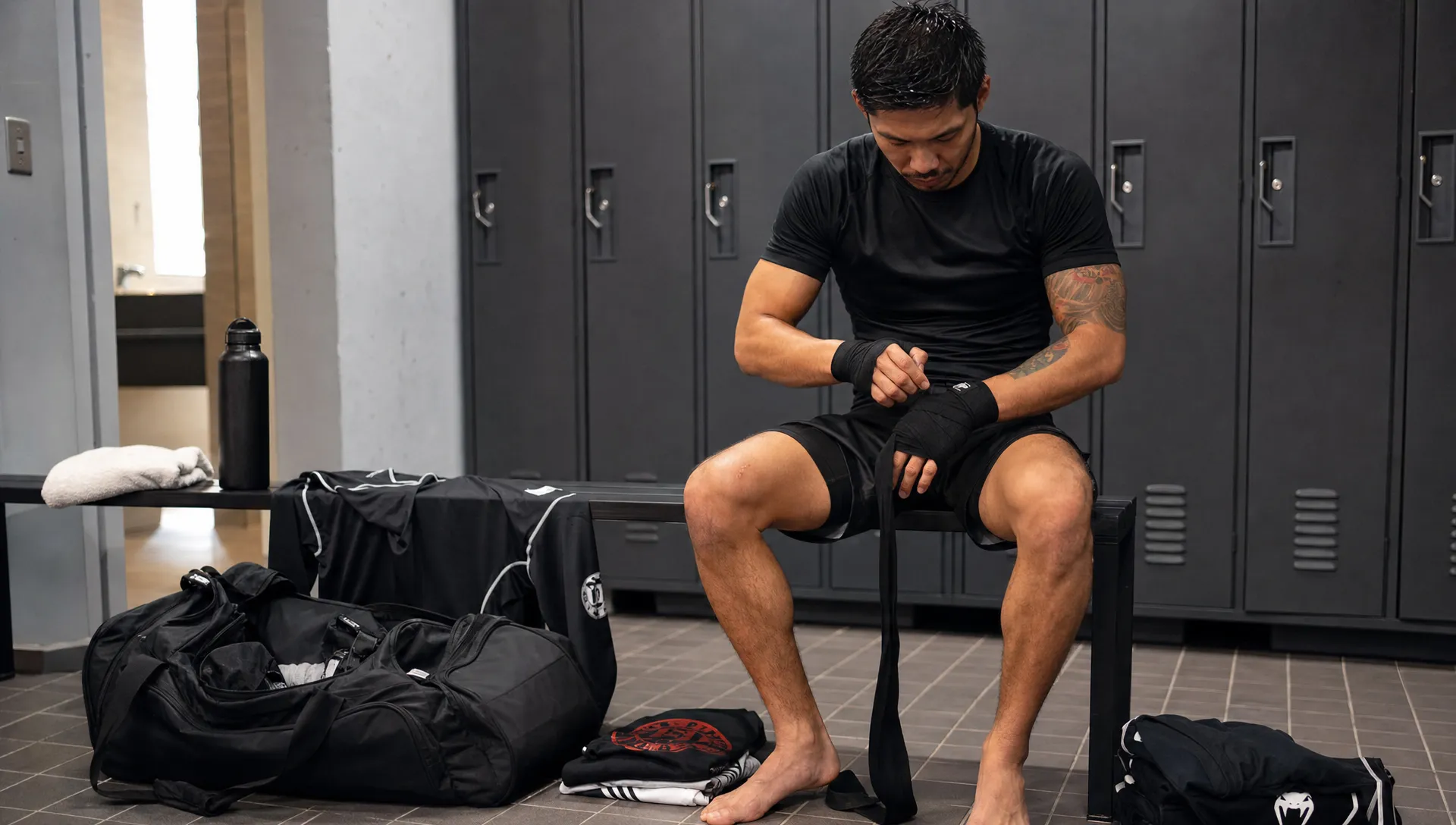
A martial arts uniform is not just a piece of clothing. It has to move correctly, withstand repeated training, represent the discipline, and communicate the identity of the gym or brand selling it. That is why working with a custom martial arts uniform manufacturer can create far more value than ordering generic uniforms from a standard apparel supplier.
For martial arts brands, academies, fightwear retailers, and distributors, customization affects product quality, customer loyalty, margins, and the ability to scale. The right manufacturer helps turn an idea into a repeatable product line, whether you are developing karate uniforms, BJJ gis, judo gis, taekwondo doboks, MMA apparel, or private label fightwear.
Below are the key benefits of choosing a manufacturer that understands martial arts uniforms specifically, not just general garment production.
Better Fit for the Demands of Each Discipline
Different martial arts place very different demands on a uniform. A karate gi often needs a crisp look, clean movement, and the right snap during strikes. A BJJ gi must handle constant gripping, pulling, and friction. A judo gi needs heavy-duty reinforcement and a cut that supports throws and grip fighting. A taekwondo uniform should allow high kicks and fast directional changes without restricting the athlete.
A custom martial arts uniform manufacturer can adjust patterns, fabric weights, cuts, collars, sleeve lengths, pant widths, and reinforcement points based on the discipline and the end user. This is a major advantage over generic sourcing, where the product is usually made to a broad template with limited room for refinement.
When fit is designed around real training conditions, athletes notice the difference. Uniforms feel less restrictive, last longer, and better match the expectations of instructors and competitors. For a brand or gym, that translates into fewer complaints, stronger repeat purchases, and a more professional product reputation.
Stronger Brand Identity and Product Differentiation
In a crowded martial arts apparel market, selling the same blank uniform as everyone else makes it difficult to stand out. Custom manufacturing allows your brand to create a product that feels proprietary, not interchangeable.
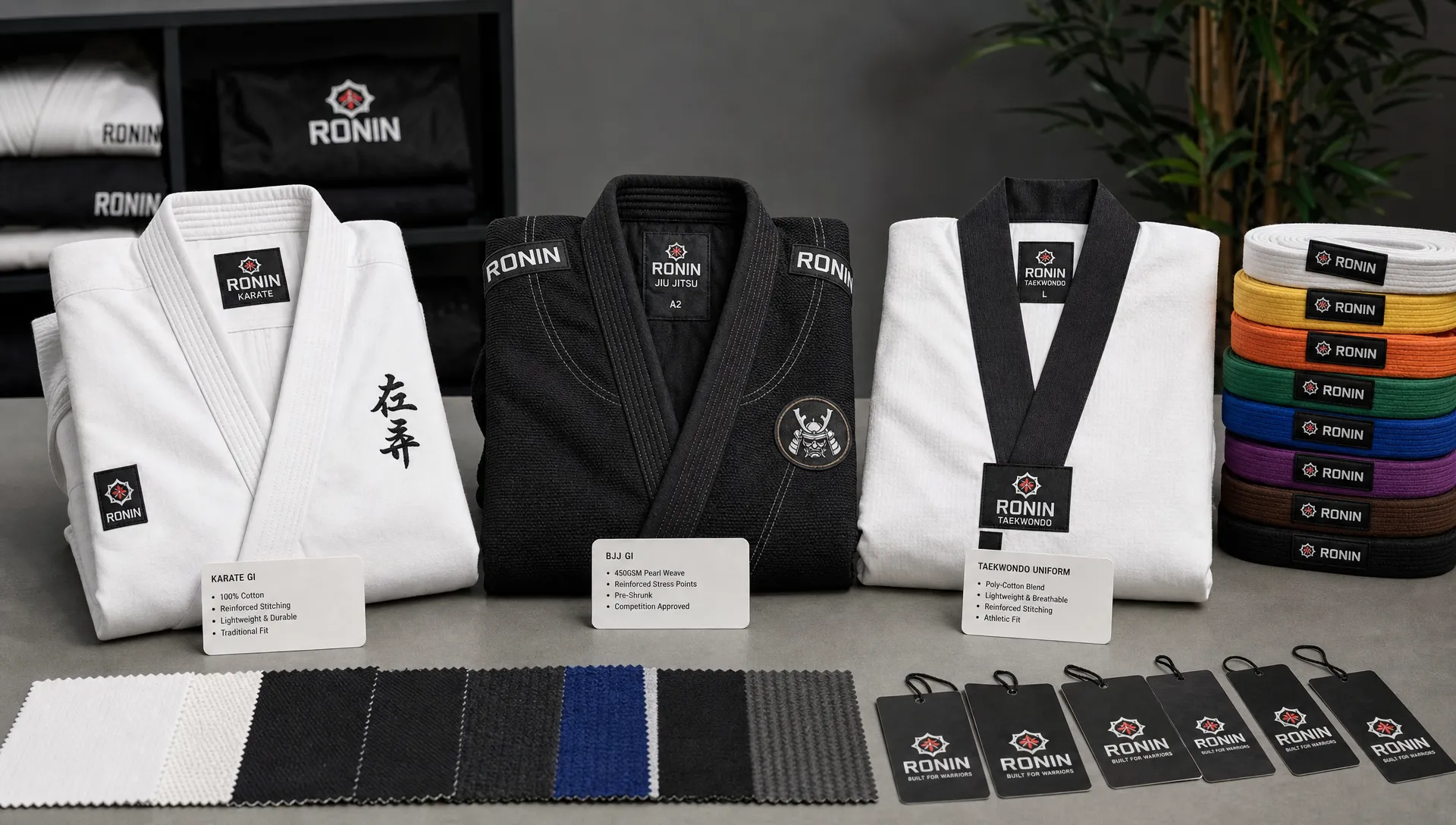
Brand identity can be built into many details, including woven labels, embroidery, patches, contrast stitching, sublimated panels, custom trims, drawcords, size labels, hangtags, and packaging. Even subtle decisions, such as collar thickness, stitching color, or a specific fabric texture, can help a uniform feel more premium and recognizable.
For gyms, branded uniforms create consistency across students and instructors. For private label brands, they help build a product line that customers can identify and reorder. For distributors, they provide a stronger sales story than basic catalog products.
The goal is not to add decoration for the sake of decoration. The goal is to use design choices that match the positioning of the product. A kids' beginner uniform, a premium competition gi, and a high-volume academy uniform should not all look or feel the same.
More Control Over Quality and Consistency
Quality problems in martial arts uniforms can become expensive quickly. Poor stitching, weak seams, inconsistent sizing, shrinking fabric, loose embroidery, and fading colors can lead to returns, negative reviews, and damaged relationships with gyms or retailers.
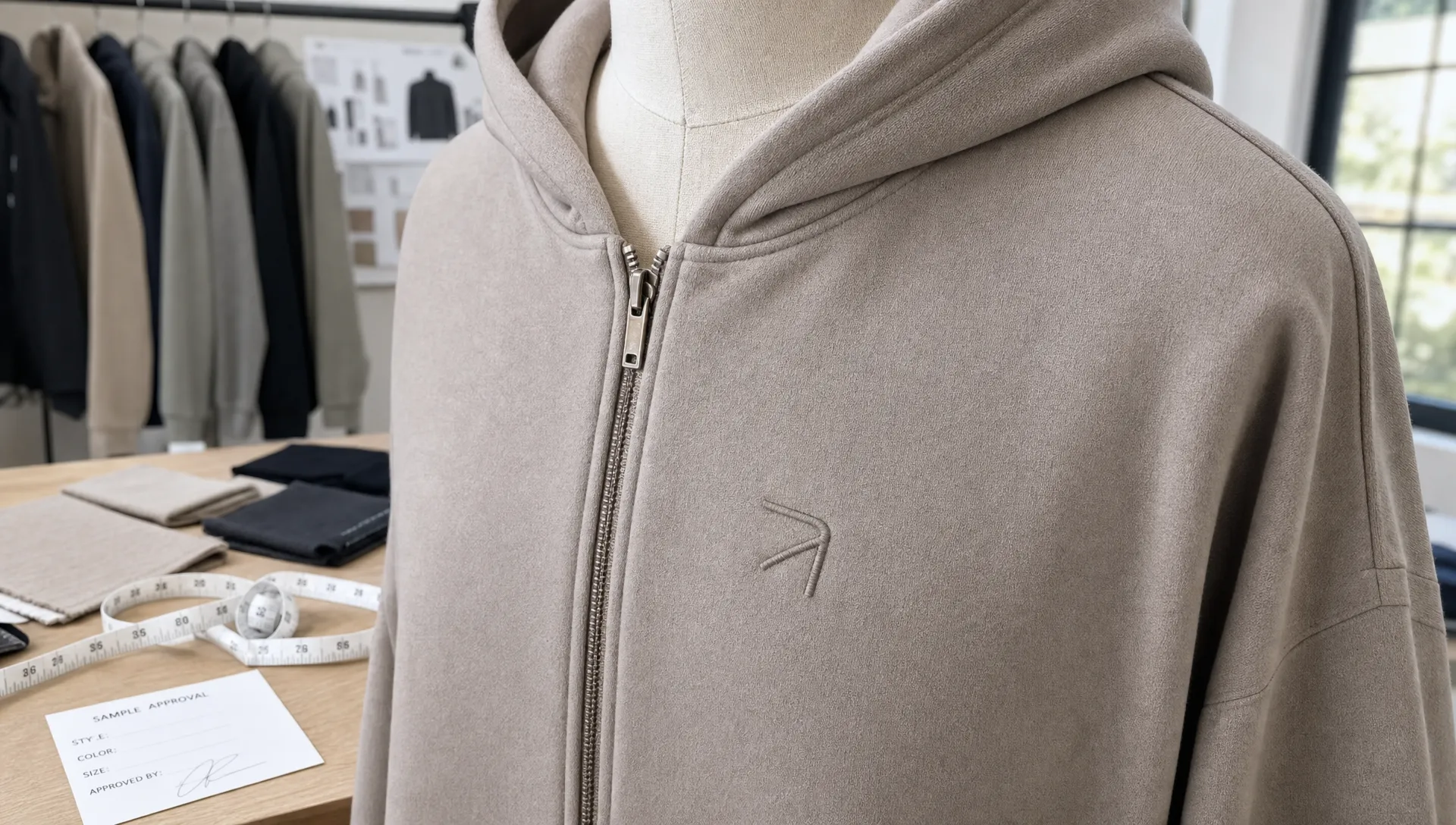
A specialized manufacturer can help define and maintain product standards through technical specifications, samples, size grading, fabric checks, production inspections, and packaging requirements. Instead of relying on whatever a supplier already has in stock, you can create a controlled product standard and repeat it across future orders.
This is especially important when you are selling in bulk. If one batch fits differently from the next, instructors and customers lose confidence. If colors shift between orders, a gym's uniform program can look inconsistent. If a gi shrinks more than expected, size exchanges increase. Custom manufacturing helps reduce these issues because the product is developed around an agreed specification.
| Business need | Generic uniform sourcing | Custom martial arts uniform manufacturing |
|---|---|---|
| Fit | Limited stock patterns | Patterns can be adjusted by discipline and market |
| Branding | Basic logo placement | Labels, trims, embroidery, patches, packaging, and colorways |
| Quality control | Depends on supplier inventory | Built around approved samples and specifications |
| Reordering | May vary by batch | More consistent repeat production when specs are maintained |
| Product positioning | Harder to differentiate | Easier to create beginner, academy, and premium lines |
Smarter Product Development From Idea to Production
Many brands know what they want their uniforms to look like, but they do not always know how to translate that idea into production details. A custom manufacturer bridges that gap.
The process usually starts with a product brief that defines the discipline, target user, fabric preference, branding requirements, size range, order quantity, and expected price position. From there, the manufacturer can help refine construction choices, sampling, pattern adjustments, and production planning.
For example, a brand may want a lightweight BJJ gi for hot climates, but the product still needs enough reinforcement for training. A karate school may want an affordable student uniform, but it still needs consistent sizing and clean finishing. A distributor may need multiple size ranges packed and labeled for different retail accounts. These are manufacturing decisions, not just design decisions.
If you are still comparing supplier models, this guide on how to pick an OEM martial arts uniform manufacturer is a useful next step for evaluating production partners more carefully.
Better Cost Control Without Sacrificing the Product
Customization is often misunderstood as simply making a product more expensive. In reality, a good manufacturer can help you control costs by matching the specification to the use case.
Not every uniform needs the heaviest fabric, the most complex embroidery, or the most expensive trims. Overbuilding a beginner uniform can reduce margin and make pricing difficult. Underbuilding a premium uniform can damage the brand. The benefit of custom manufacturing is that you can decide where to invest and where to simplify.
Cost control can come from choosing the right fabric weight, simplifying non-essential details, standardizing size ranges, planning repeat orders, and aligning packaging with the sales channel. A uniform sold through an academy may need different packaging than one sold through ecommerce or wholesale retail.
The best outcome is not the cheapest uniform. It is a uniform that meets customer expectations, protects your margin, and can be produced consistently.
Easier Scaling for Gyms, Brands, and Distributors
Once demand increases, sourcing becomes more complex. A gym may need uniforms for new students every month. A brand may need seasonal drops or expanded size ranges. A distributor may need reliable bulk production for multiple customers.
A custom martial arts uniform manufacturer supports growth by creating repeatable systems. Approved samples, size charts, artwork files, fabric references, packaging instructions, and quality standards become part of a production foundation. This makes it easier to reorder, expand, and adjust without starting from zero each time.
Scaling also requires planning. Minimum order quantities, production timelines, shipping methods, and inventory strategy all affect cash flow. Brands that treat manufacturing as a long-term partnership are usually better prepared than those who source reactively only when stock runs low.
For a deeper look at growth planning, the article on how martial arts uniforms manufacturers support scale explains how repeatable production systems help brands move beyond one-off orders.
Better Support for Private Label Programs
Private label manufacturing is one of the biggest advantages of working with a custom uniform supplier. Instead of reselling another company's product, you can create uniforms under your own brand name.
This matters because private label products help build long-term brand equity. Customers associate the fit, durability, design, and experience with your business. For gyms, this can turn uniforms into a recurring revenue stream. For fightwear brands, it supports a more complete product catalog. For distributors, it can create exclusive products that competitors cannot easily copy.
Private label programs also make it easier to create clear product tiers. You might develop an entry-level student uniform, a mid-range academy uniform, and a premium competition model. Each tier can have its own fabric, construction, branding, and price point.
More Reliable Supply Chain and Inventory Planning
Uniform manufacturing does not end when the garments are sewn. For growing brands, the real challenge is getting the right sizes, styles, and quantities delivered on time and organized for sale.
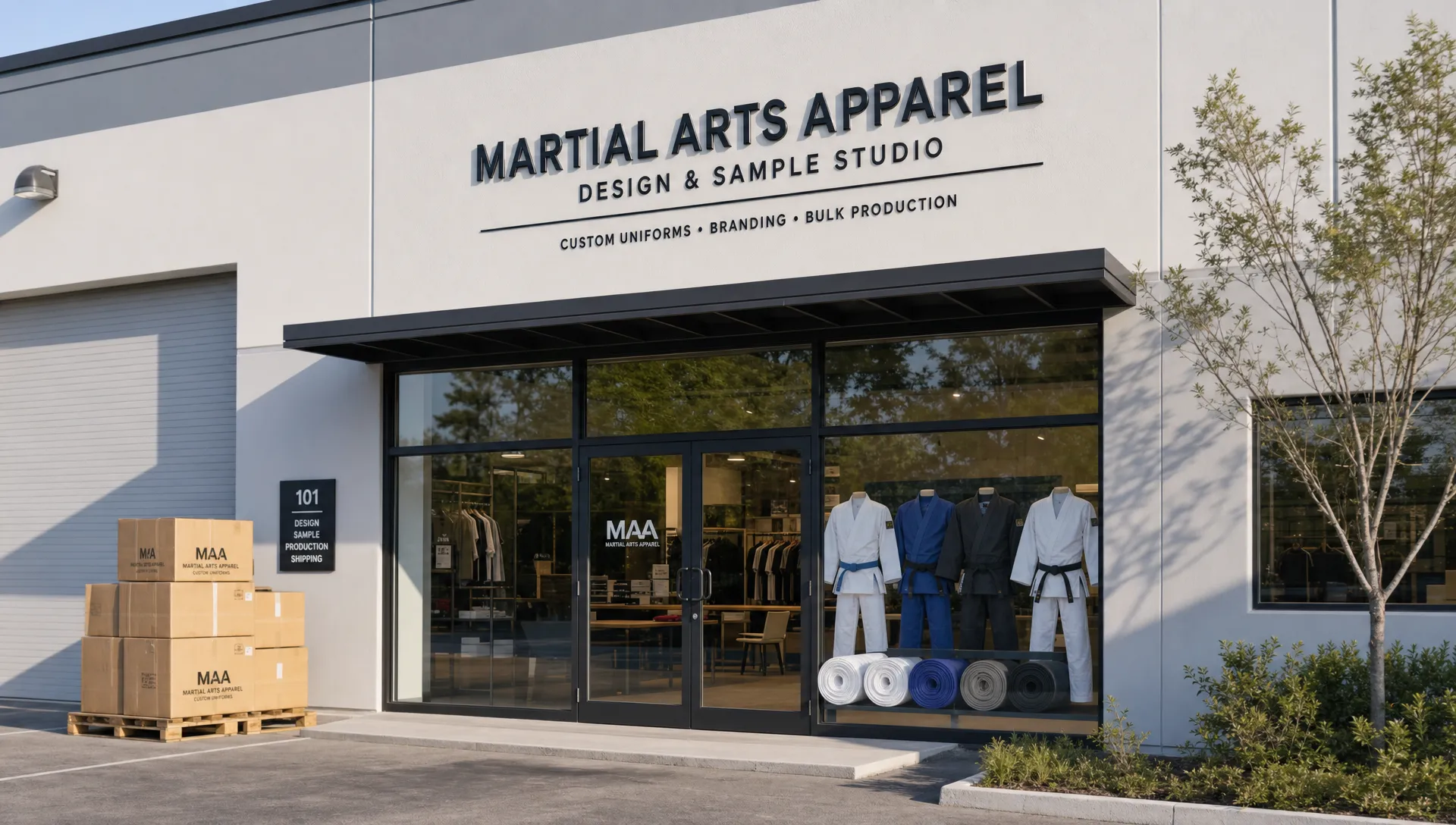
A manufacturer experienced in bulk orders can support clearer packing instructions, carton labeling, size assortments, and production scheduling. These details may sound small, but they make a major difference when you are receiving hundreds or thousands of uniforms.
Inventory planning is especially important for martial arts businesses because size demand is not always evenly distributed. Kids' programs, adult beginners, competition teams, and wholesale customers may all require different size curves. Custom production lets you plan size ratios and product variants around your actual customer base rather than accepting whatever stock is available.
For businesses expanding storage capacity for bulk uniform inventory, event stock, or regional distribution, physical logistics may also include secure overflow space. In those cases, nationwide shipping container suppliers can be relevant for companies planning practical storage or modular workspace solutions alongside their apparel supply chain.
Improved Customer Experience and Loyalty
A well-made custom uniform improves the customer experience before, during, and after training. The uniform looks like it belongs to the academy or brand. It fits the purpose. It holds up under repeated use. It creates a sense of belonging for students and a sense of trust for buyers.
For gyms, this can strengthen community. New students often feel more committed when they receive a uniform that matches the school identity. For brands, consistent product quality leads to better reviews and repeat customers. For distributors, reliable uniforms make it easier to maintain relationships with retail and wholesale accounts.
Customer loyalty is rarely built on one feature. It comes from the complete experience: product feel, appearance, durability, sizing, delivery, and reorder consistency. A custom manufacturer gives you more control over each of these factors.
More Flexibility Across Martial Arts Categories
Many businesses do not sell only one type of uniform. A combat sports brand may offer rash guards, MMA shorts, boxing apparel, BJJ gis, and karate uniforms. A distributor may serve multiple martial arts schools. A gym group may need different uniforms for different programs.
Working with a manufacturer that understands martial arts apparel can make category expansion easier. The technical needs of a gi are different from a rash guard, and both are different from boxing shorts or karate uniforms. When your manufacturing partner understands these differences, you can build a more coherent product range.
This does not mean launching everything at once. In many cases, the smarter path is to start with a focused product, prove demand, then expand. A custom manufacturing relationship gives you a foundation for that expansion.
What to Prepare Before Contacting a Manufacturer
The benefits of custom manufacturing are strongest when you approach the process with clear requirements. You do not need every detail finalized, but you should be ready to explain the product and business goal.
A strong starting brief often includes:
- The martial arts discipline and target customer, such as kids' karate students, adult BJJ athletes, or gym beginners.
- Preferred fabric type, weight, color, and performance expectations.
- Branding details such as logos, labels, embroidery, patches, or packaging.
- Size range, estimated order quantity, and any size ratio requirements.
- Target price position, such as entry-level, academy-grade, or premium.
- Any reference samples, sketches, measurements, or previous production issues.
If you want to understand what happens after the brief is shared, this overview of the martial arts uniform factory process explains the steps from specifications and sampling through cutting, sewing, quality control, and packing.
Why the Right Manufacturer Becomes a Long-Term Asset
A custom martial arts uniform manufacturer is more than a vendor. The right partner can become part of your product strategy.
They help you refine ideas, avoid common production mistakes, improve consistency, and prepare for growth. They can support custom branding, private label development, OEM production, and bulk order planning. For brands and gyms that want to build something lasting, that expertise is often more valuable than a one-time low price.
A strong manufacturing relationship also creates institutional knowledge. Your supplier learns your sizing, your quality expectations, your branding style, and your reorder patterns. Over time, this makes product development smoother and reduces the risk of repeated errors.
Frequently Asked Questions
What is a custom martial arts uniform manufacturer? A custom martial arts uniform manufacturer produces uniforms based on a brand's or gym's specifications, including fabric, cut, sizing, branding, labeling, and packaging. This differs from buying generic stock uniforms with limited customization.
Is custom manufacturing only for large martial arts brands? No. Custom manufacturing can support growing brands, gyms, distributors, and private label sellers. Low minimum order options, where available, can make it easier to start with focused products before scaling.
What types of uniforms can be customized? Common custom products include karate uniforms, BJJ gis, judo gis, taekwondo uniforms, kung fu uniforms, tai chi uniforms, and related combat sports apparel. The best options depend on the manufacturer's capabilities.
How does custom manufacturing improve branding? It allows you to add brand-specific details such as labels, embroidery, patches, trims, colors, packaging, and product tiers. This helps your uniforms feel exclusive rather than generic.
What should I ask a manufacturer before placing an order? Ask about martial arts apparel experience, fabric options, sampling, size grading, branding methods, quality control, minimum orders, production timelines, packing, and shipping support.
Build Martial Arts Uniforms That Represent Your Brand
Choosing a custom martial arts uniform manufacturer gives you more control over product quality, fit, branding, and long-term growth. Instead of adapting your business to generic inventory, you can develop uniforms that match your customers, your discipline, and your brand position.
Arus Sportswear manufactures custom MMA and martial arts apparel for brands, gyms, and distributors worldwide, including private label and OEM production, custom branding options, bulk order support, and low minimum orders. If you are planning a new uniform line or improving an existing one, partnering with a specialized manufacturer can help turn your concept into a product your customers are proud to wear.