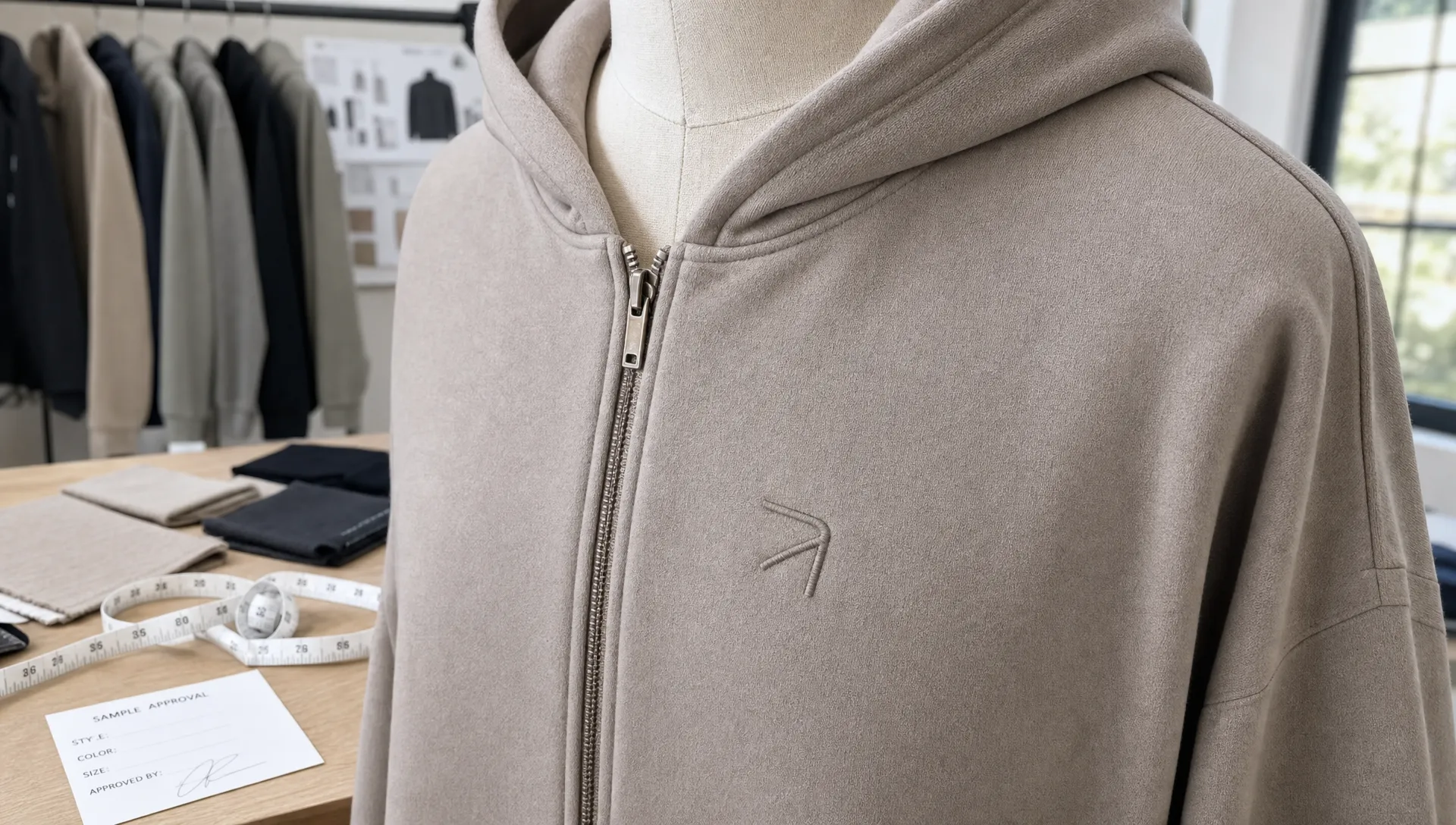
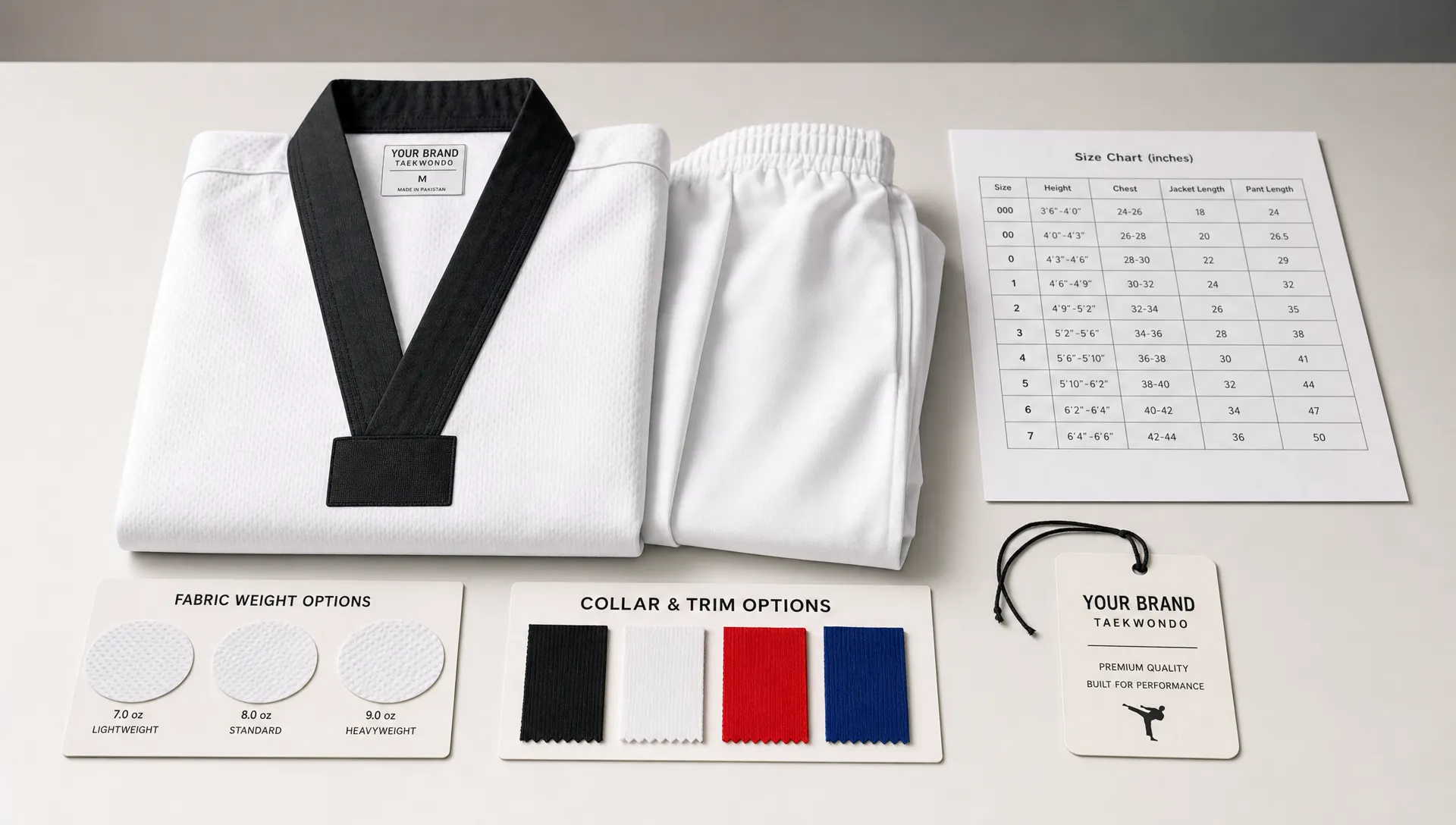
Choosing a taekwondo uniform manufacturer is not only about finding a factory that can sew a white jacket and pants. For a martial arts brand, gym chain, school, or distributor, the dobok is a product your customers train in every week, wash repeatedly, and connect with your reputation.
The right questions help you separate a general sewing supplier from a manufacturing partner that understands martial arts fit, movement, durability, branding, and repeatable bulk production. Before you approve a sample or pay a deposit, use the questions below to evaluate whether a taekwondo uniform manufacturer can support your product, your customers, and your growth.
Start With the Uniform You Actually Need
Before speaking with a factory, clarify the type of taekwondo uniform you want to source. A manufacturer can give better answers when your brief is specific, and you will be able to compare suppliers more fairly.
Ask yourself whether the uniform is for beginner students, daily academy training, competition, black belt programs, or retail resale. A lightweight training dobok has different requirements than a premium uniform designed for sharper movement, stronger structure, or a more polished retail presentation.
You should also define the style. Some taekwondo programs use V-neck pullover uniforms, while others prefer crossover jackets or school-specific variations. Trims, lapel colors, embroidery, patches, pants cut, and waistband construction can all affect production cost, lead time, and minimum order quantity.
If your brand sources across multiple combat sports, it may help to compare your taekwondo needs with the broader selection process described in this guide on choosing an OEM martial arts uniform manufacturer. The key is to avoid treating every martial arts uniform as the same product.
What Taekwondo Experience Do You Have?
The first question is simple: has the manufacturer actually produced taekwondo uniforms before?
A confident supplier should be able to discuss dobok patterns, fabric weights, size ranges, reinforcement points, and typical branding placements. They do not need to reveal another client’s private designs, but they should be able to explain their experience clearly and show relevant sample work when possible.
Ask questions such as:
- Have you produced V-neck, crossover, or school-specific taekwondo uniforms?
- What fabric options do you recommend for training, competition, and beginner programs?
- How do you adjust the pattern for kicking range, stance work, and hip movement?
- Can you produce children’s and adult sizes with consistent grading?
- Do you offer private label branding, custom labels, and branded packaging?
A weak answer is usually vague. If a supplier only says “we make martial arts uniforms” but cannot explain taekwondo-specific construction, you may face problems later with fit, comfort, or customer satisfaction.
How Do You Build the Uniform for Movement?
Taekwondo places heavy demands on a uniform. Students kick high, rotate the hips, shift stances quickly, and train through repeated movement. A uniform that looks good on a hanger can still fail during training if the cut restricts motion.
Ask how the manufacturer handles shoulder width, sleeve length, crotch depth, pant leg shape, and waistband comfort. The jacket should allow upper-body movement without pulling awkwardly. The pants should support kicking without splitting, sagging, or feeling too tight around the hips and thighs.
This is also where sizing matters. A taekwondo uniform manufacturer should be able to work from a size chart, develop graded patterns, and define measurement tolerances. Do not rely on generic “small, medium, large” sizing without exact body and garment measurements.
A good manufacturer will discuss both fit and function. They should understand that martial arts apparel is not only about appearance. It must perform during actual training.
Which Fabrics Do You Recommend, and Why?
Fabric choice affects comfort, durability, shrinkage, cost, and the perceived value of your brand. Rather than asking only for “good fabric,” ask the manufacturer to explain the options in practical terms.
For taekwondo uniforms, buyers often compare cotton, poly-cotton blends, and textured or ribbed fabrics depending on the desired look and use case. The best choice depends on whether the product is positioned as entry-level, mid-range, premium, lightweight, or heavy-duty.
Ask for fabric details such as composition, weight, weave, shrinkage behavior, hand feel, and colorfastness. If you are producing white uniforms, ask how the fabric handles repeated washing. If you are adding colored trims or embroidery, ask whether the colors have been tested for bleeding or fading.
| Fabric question | Why it matters | What to look for |
|---|---|---|
| What is the fabric composition? | Impacts comfort, durability, shrinkage, and price | Clear breakdown such as cotton, polyester, or blend percentage |
| What is the GSM or weight? | Helps compare suppliers accurately | A specific number or range, not vague terms like “medium” |
| Has shrinkage been tested? | Protects fit after washing | Pre-production or sample wash testing |
| Is the fabric suitable for embroidery or patches? | Prevents puckering and distortion | Stable fabric and recommended backing methods |
| Can the fabric be used consistently for reorders? | Supports brand consistency | Reliable sourcing and documented material specifications |
If a supplier cannot provide basic fabric specifications, it becomes difficult to maintain quality across bulk orders and reorders.
What Is Your Sampling Process?
Never judge a taekwondo uniform manufacturer by promises alone. The sample is where your product becomes real.
Ask whether the supplier provides a prototype sample, a fit sample, and a pre-production sample before bulk production. In smaller projects, these stages may be combined, but the principle remains the same: you need a physical uniform to evaluate before committing to a large order.
During sample review, check the fit, fabric feel, stitching, logo placement, label accuracy, trim colors, waistband comfort, and movement range. Have someone actually train in the sample if possible. Static photos are useful, but martial arts uniforms should be tested in motion.
If you are planning a larger wholesale program, size planning is just as important as sample approval. These martial arts uniform wholesale buying tips for 2026 can help you think through sizing, inventory, and reorder strategy before you finalize your production run.
How Do You Control Quality During Production?
Quality control should not happen only when the cartons are packed. By then, mistakes are expensive to fix.
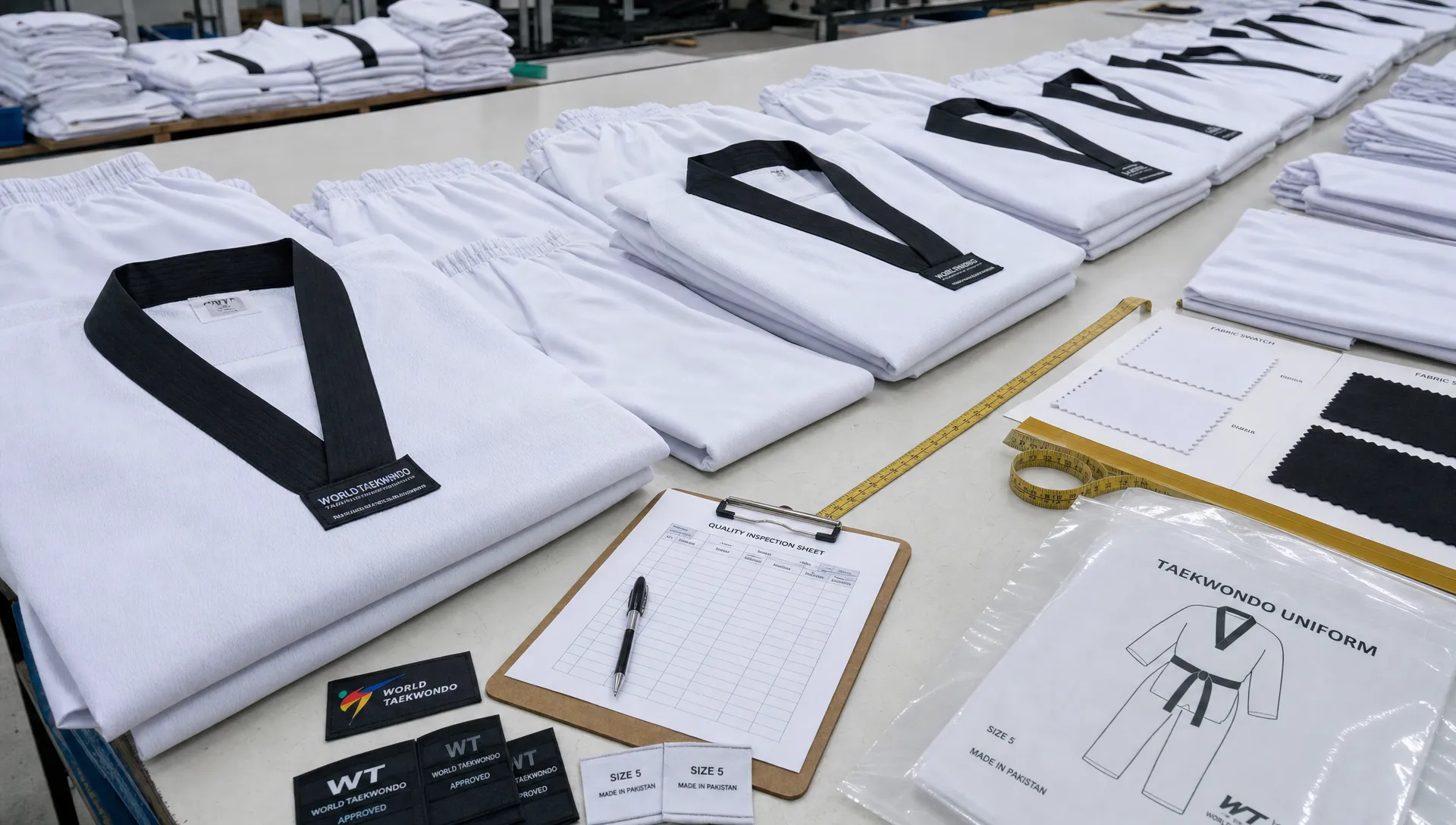
Ask the manufacturer where quality checks happen in the process. Fabric inspection, cutting accuracy, stitching checks, label verification, embroidery review, measurement checks, and final packing inspection all help reduce defects.
Great manufacturing depends on repeatable systems. In technical industries, companies such as BKL’s smart engineering solutions focus on safer, smarter, and more efficient processes. The same mindset applies to apparel sourcing: each step should be defined, checked, and improved so the final product is consistent.
For taekwondo uniforms, pay special attention to stress points. Crotch seams, side seams, sleeve attachments, pant hems, waistbands, and any embroidered or patched areas should be inspected carefully. Uniforms are pulled, stretched, washed, folded, and worn repeatedly. Small construction problems can turn into customer complaints quickly.
Ask whether the factory uses measurement tolerances, in-line inspection, final inspection, or AQL-style checks. You do not need to demand one specific system, but you do need to know that quality is being controlled before, during, and after sewing.
If you want a clearer view of how production moves from brief to packing, this overview of the martial arts uniform factory process explains the steps buyers should understand.
What Branding Options Can You Support?
For a gym, academy, or private label brand, branding is not an afterthought. It is part of the product.
Ask what branding methods the manufacturer can handle. Common options may include embroidery, woven labels, printed labels, patches, screen printing, heat transfers, hang tags, polybags, and custom carton marks. The right choice depends on your brand positioning, budget, order quantity, and durability expectations.
Be specific about placement. A logo on the chest, sleeve, back, pant leg, neck label, or waistband can each require different production steps. If your uniform includes school emblems or rank-related trim, confirm how those details will be documented and checked.
A reliable taekwondo uniform manufacturer should help you turn branding ideas into production-ready specifications. That means confirming colors, sizes, stitch counts when relevant, placement measurements, and packaging requirements before bulk production begins.
What Are Your MOQ, Lead Time, and Reorder Terms?
Minimum order quantity matters, especially for new brands, growing gyms, and distributors testing a new uniform line. But MOQ should never be discussed in isolation.
Ask whether the MOQ applies per design, per color, per fabric, per size, or per total order. A supplier may advertise a low minimum, but the practical minimum can change once you add multiple sizes, trims, labels, or packaging options.
Lead time is equally important. Ask how long sampling takes, how long bulk production takes after sample approval, and how shipping timelines are estimated. If you have a tournament, school launch, retail drop, or seasonal sales window, build in extra time for revisions and logistics.
Reorder terms are another important question. If your first batch sells well, can the manufacturer reproduce the same fabric, fit, labels, and packaging? Can they keep your size chart and specifications on file? Can they support higher volume later?
A good sourcing partner should be able to support your first order without making future orders difficult.
How Do You Communicate Specifications?
Many production problems come from unclear documentation. A conversation is not enough. Your supplier should be able to work from written specifications and confirm details before production.
Ask whether the manufacturer uses tech packs, measurement charts, bill of materials, artwork files, color references, and approved sample records. If you do not have a full tech pack, ask whether they can help develop one from your concept, reference sample, or design notes.
Good documentation protects both sides. It gives the factory clear instructions and gives you a reference point for approval, inspection, and future reorders.
This is especially important for private label uniforms. Your brand may need consistent labels, packaging, size stickers, care labels, and carton markings. Without a documented process, small errors can appear from one batch to the next.
What Does a Strong Answer Look Like?
Use this table when comparing responses from different manufacturers.
| Topic | Question to ask | Strong answer | Warning sign |
|---|---|---|---|
| Experience | Have you made taekwondo uniforms before? | Supplier can explain relevant styles, fabrics, and construction | Generic claims with no detail |
| Fit | How do you support kicking and movement? | Supplier discusses pattern, crotch depth, waistband, and grading | Focus only on appearance |
| Fabric | What materials do you recommend? | Supplier gives composition, weight, and use-case guidance | Vague “best quality” claims |
| Sampling | Can we approve a sample before bulk? | Clear sample process with revisions if needed | Pushes bulk order without sample approval |
| Quality | When do inspections happen? | Checks at fabric, cutting, sewing, measurement, and final packing stages | Quality checked only after packing |
| Branding | Can you handle private label details? | Labels, logo placement, packaging, and artwork are documented | Branding handled informally |
| Scaling | Can you support reorders? | Specs are saved and repeat production is planned | No clear reorder process |
The goal is not to interrogate the factory. The goal is to understand how they think, how they work, and whether their process can protect your product.
Red Flags to Watch For
Some warning signs appear early. If a manufacturer avoids detailed questions, refuses to provide samples, or cannot explain fabric and sizing, proceed carefully.
Be cautious if the supplier promises unusually fast production without reviewing your design. Custom uniforms require material sourcing, sampling, approvals, cutting, sewing, finishing, packing, and shipping. A realistic timeline is better than an attractive promise that fails later.
Also watch for inconsistent communication. If answers change from one message to the next, or if the supplier does not confirm details in writing, the risk of errors increases. Martial arts uniforms involve many small details, and those details need to be managed carefully.
Finally, avoid choosing only by the lowest unit price. A cheaper uniform that shrinks, tears, fits poorly, or arrives late can cost more in returns, lost trust, and damaged brand reputation.
Final Questions Before You Place an Order
Before paying a deposit, make sure you can answer these questions with confidence:
- Have you approved the fabric, fit, and construction through a physical sample?
- Is the size chart documented with tolerances?
- Are logo placements, labels, trims, and packaging confirmed in writing?
- Do you understand the MOQ by style, size, color, and fabric?
- Is there a clear production timeline after sample approval?
- Does the manufacturer have a quality control process before shipment?
- Can the same specifications be repeated for future orders?
If any answer is unclear, pause and ask for clarification. A reliable manufacturer will prefer clear expectations over rushed approvals.
Frequently Asked Questions
What should I send to a taekwondo uniform manufacturer first? Send your target style, size range, fabric preference, branding requirements, estimated order quantity, reference images if available, and any deadline. If you have a tech pack or existing sample, include that too.
Do I need a sample before ordering custom taekwondo uniforms? Yes. A sample helps you evaluate fit, fabric, stitching, logo placement, and overall quality before bulk production. It is one of the best ways to reduce sourcing risk.
What MOQ should I expect for taekwondo uniforms? MOQ depends on the manufacturer, fabric, design complexity, branding, color, and size breakdown. Always ask whether the MOQ applies per design, per color, per size, or per total order.
Can a taekwondo uniform manufacturer add private label branding? Many specialized martial arts apparel manufacturers can support private label details such as woven labels, embroidery, patches, hang tags, packaging, and carton markings. Confirm the exact options during sampling.
How do I compare two manufacturers fairly? Give both suppliers the same brief, fabric expectations, size chart, branding details, and estimated order quantity. Then compare sample quality, communication, documentation, lead time, MOQ, and quality control process.
Ready to Source Custom Martial Arts Uniforms?
The best taekwondo uniform manufacturer is not just the one with the lowest quote. It is the partner that understands your product, documents your specifications, produces reliable samples, controls quality, and can support repeat orders as your brand grows.
Arus Sportswear manufactures custom martial arts apparel for brands, gyms, and distributors, including private label and OEM production with custom design, branding, bulk order support, low minimum orders, and worldwide shipping. If you are planning a new uniform line or improving an existing one, start by sharing your brief with Arus Sportswear.