Scaling a martial arts brand is not only a sales problem. It is also a production problem.
When demand grows, every operational weakness becomes more visible: inconsistent sizing, late deliveries, fabric shortages, uneven embroidery, weak seams, and suppliers that cannot repeat a winning product. For gyms, fightwear brands, distributors, and private label sellers, the right manufacturing partner can turn growth from a stressful gamble into a controlled system.
A specialized martial arts uniforms manufacturer supports scale by combining product expertise, repeatable production methods, quality control, and flexible order planning. Instead of simply sewing garments, the manufacturer helps brands move from small test batches to larger, more predictable programs across disciplines like karate, BJJ, taekwondo, judo, boxing, MMA, and tai chi.
Why scale is difficult in martial arts uniforms
Martial arts uniforms look simple from a distance, but they must perform under real stress. A karate gi needs crisp structure and clean movement. A BJJ gi needs reinforcement, durability, and grip-resistant construction. A taekwondo uniform needs mobility and comfort. A tai chi uniform needs a different drape, fit, and feel.
That variety makes scaling harder than scaling a basic T-shirt line. The product has to match the discipline, the customer’s expectations, and the brand’s positioning. If a brand grows without manufacturing discipline, it may face problems such as:
- Different sizing between batches
- Fabric weight changes without approval
- Unstable color matching across reorders
- Delayed restocks during peak enrollment seasons
- Branding mistakes on labels, patches, and embroidery
- Higher defect rates as order quantities increase
A martial arts uniforms manufacturer reduces these risks by building systems before volume increases. That system starts with technical clarity.
1. Turning product ideas into repeatable specifications
A brand may begin with a simple idea: a premium karate uniform, a school-branded taekwondo dobok, or a private label BJJ gi. To scale, that idea must become a repeatable specification.
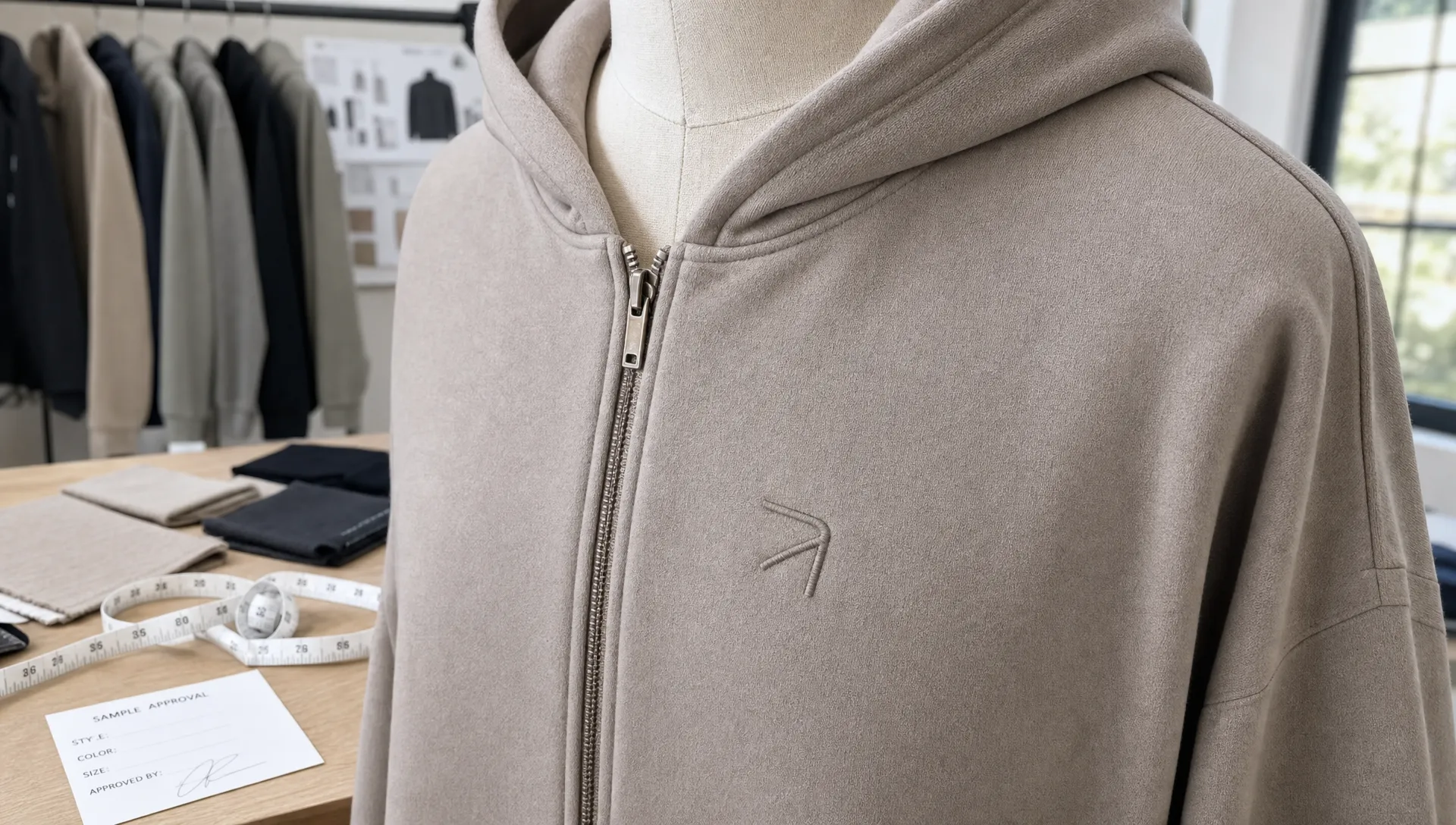
A capable manufacturer helps define the details that keep every reorder consistent. This includes fabric type, GSM or weight, weave, shrinkage tolerance, size grading, collar construction, reinforcements, stitching type, label placement, packaging, and folding standards.
Without clear specifications, production becomes guesswork. One batch may fit well, while the next may feel too loose, too heavy, or too stiff. With a controlled tech pack and approved sample, the manufacturer has a reference point for every future order.
For brands still defining their product standards, it is useful to understand what happens inside the production workflow. Arus Sportswear’s guide to the martial arts uniform factory process explains how briefs, fabrics, patterns, cutting, sewing, quality control, and packing connect into one production system.
2. Matching materials to discipline and price point
Scale does not mean producing one uniform for everyone. It means building a product range that can serve different buyers without losing control.
A martial arts uniforms manufacturer can help a growing brand choose fabrics and construction methods based on use case. For example, beginner uniforms may prioritize affordability and comfort, while advanced uniforms may require heavier fabric, stronger stitching, and a more refined finish.
The right material strategy can support multiple business goals:
| Scaling goal | Manufacturing decision | Why it matters |
|---|---|---|
| Serve beginners | Use cost-effective, comfortable fabrics | Helps gyms and schools order in larger quantities |
| Build a premium line | Upgrade fabric, reinforcements, and finishing | Supports higher perceived value and brand positioning |
| Reduce returns | Improve size grading and shrinkage control | Creates a more predictable fit for customers |
| Improve reorder consistency | Standardize approved materials | Keeps future batches aligned with the original product |
| Expand into new disciplines | Adjust patterns and construction | Prevents one-size-fits-all product mistakes |
Good manufacturers also understand sourcing realities. If a fabric is difficult to maintain at scale, they can recommend alternatives before the brand builds its entire line around a material that may cause delays later.
3. Supporting private label growth
Private label manufacturing is one of the fastest ways for martial arts businesses to scale. Instead of investing in a full factory setup, brands can work with a specialist that already understands martial arts apparel production.
For gyms, this can mean offering uniforms with school branding. For distributors, it can mean creating exclusive product lines for resale. For newer fightwear brands, it can mean launching with custom labels, packaging, and design details without taking on production infrastructure.
The advantage is focus. The brand can concentrate on positioning, sales, customer relationships, and community building, while the manufacturer handles the production requirements behind the scenes.
Private label growth works best when the manufacturer can support:
- Custom woven labels and care labels
- Logo embroidery, printing, patches, or trims
- Size ranges suited to adults, youth, or both
- Product variations for different disciplines
- Bulk packing or retail-ready presentation
- Repeat orders based on approved specifications
This is where a specialized martial arts partner differs from a generic apparel factory. Combat sports uniforms need more than decoration. They need functional construction, durable seams, movement-specific patterns, and consistent sizing.
4. Building OEM systems for repeat orders
OEM production helps established brands scale by giving them a controlled way to manufacture designs under their own requirements. The brand provides direction, while the manufacturer supports development, sampling, production, and repeatability.
For martial arts companies, OEM manufacturing is especially valuable when the product line grows beyond one uniform. A brand may start with karate uniforms, then add BJJ gis, rash guards, boxing shorts, tracksuits, or training apparel. Each category has different technical needs, but customers still expect the same brand experience.
A manufacturer that understands OEM production can help keep those categories organized. Instead of managing separate disconnected suppliers, brands can build a more unified production system.
If your brand is moving from small batches toward broader product lines, Arus Sportswear’s article on OEM manufacturing for martial arts brands offers a closer look at how OEM support can help companies scale faster.
5. Improving quality control as volume grows
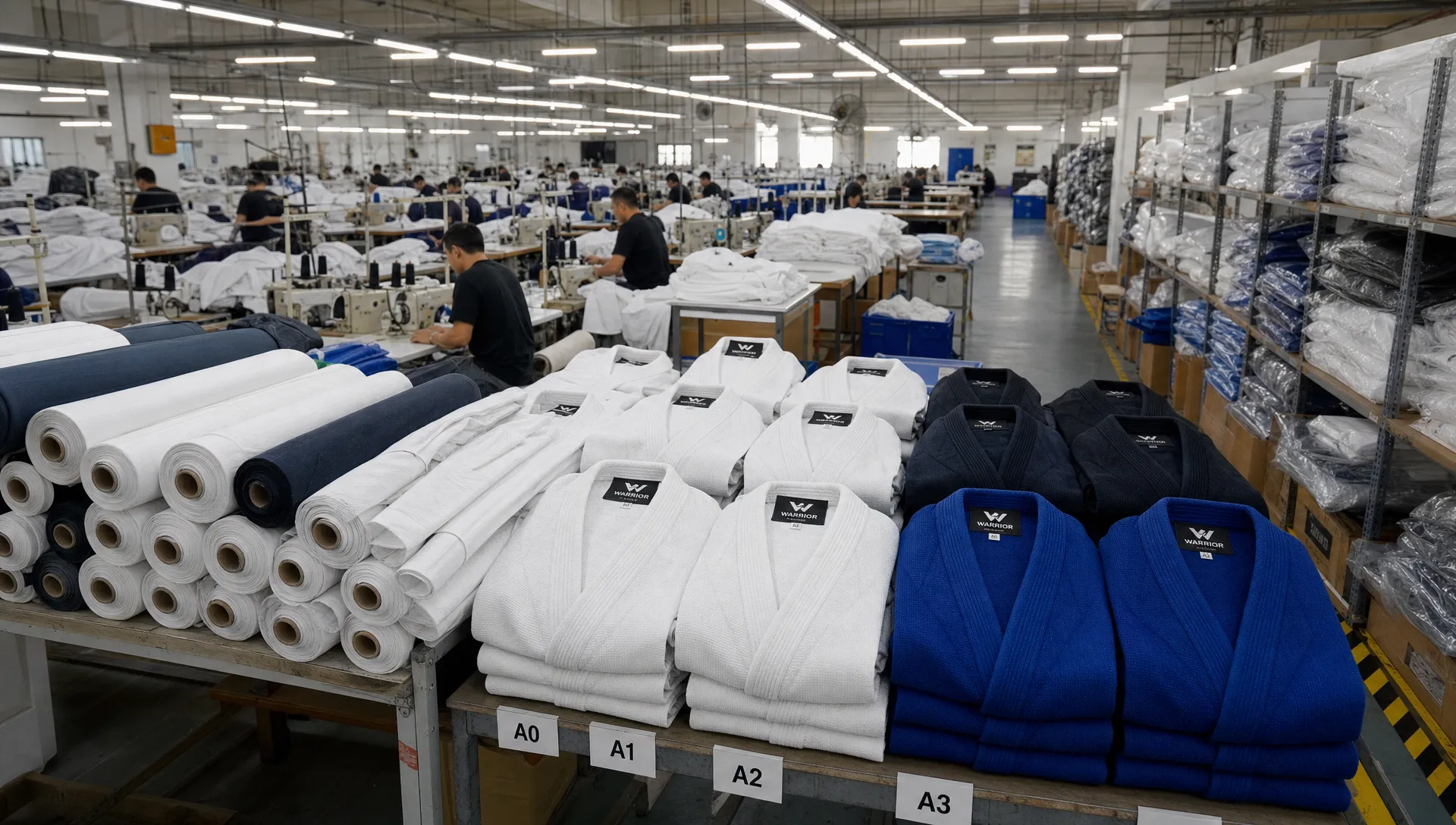
Quality control becomes more important, not less, when order quantities increase. In small batches, a brand may catch problems manually. At scale, quality must be built into the process.
A martial arts uniforms manufacturer supports scale by checking quality at multiple stages rather than only at the end. This may include fabric inspection, pre-production sample approval, cutting accuracy checks, sewing inspections, measurement audits, branding verification, and final packing review.
The goal is not perfection as a slogan. The goal is consistency customers can feel. If a gym orders 300 uniforms for students, the uniforms should look and fit like they belong to the same program. If a distributor reorders a product six months later, the new batch should align with the previous one.
Quality control also protects brand reputation. A weak seam, uneven logo, or poor size run does not feel like the factory’s mistake to the end customer. It feels like the brand’s mistake. That is why scaling companies need manufacturers that take inspection seriously.
6. Helping brands plan inventory and reorder cycles
Growth often fails when sales outpace supply planning. A martial arts uniforms manufacturer can help brands think through production timelines, reorder points, and bulk order strategy.
Martial arts businesses often experience seasonal demand. Enrollment may rise at the start of the year, before school terms, ahead of tournaments, or during gym expansion. If a brand waits until inventory is already low, production and shipping lead times can create stockouts.
A better approach is to forecast around known demand patterns. Brands can use previous sales data, upcoming events, wholesale commitments, and school enrollment calendars to decide when to reorder.
Manufacturers support this process by clarifying what is realistic. They can help brands understand sample approval timelines, bulk production windows, packaging requirements, and shipping considerations. This does not remove every delay, but it gives the brand more control.
The same planning mindset applies across custom product categories. Made-to-order businesses, including sellers of custom 3D printed collectibles, often need to balance personalization, production time, and shipping expectations so customers understand what they are receiving and when it will arrive.
7. Enabling low MOQ testing before larger production
Scaling does not always mean placing the largest order immediately. In many cases, the smartest path is to test first, then expand.
Low minimum order quantities help brands validate new designs, fabrics, disciplines, or logo placements before committing to larger runs. This is especially useful for new brands, gym merchandise programs, and distributors testing a new market.
A good manufacturer can help structure this growth path. A brand might start with a smaller order of a karate uniform, gather feedback, adjust sizing, then move into a larger wholesale order. Another brand might test a BJJ gi design with a limited release, then expand into multiple colors or size ranges after demand is proven.
This staged approach reduces risk. It also helps brands avoid being stuck with large quantities of inventory that need revisions.
8. Supporting wholesale and distributor requirements
Wholesale buyers need reliability. They are often supplying multiple gyms, schools, retailers, or regional customers. If uniforms arrive late, inconsistent, or poorly packed, the problem spreads across their entire customer network.
A martial arts uniforms manufacturer supports wholesale scale by helping standardize the buying process. This includes clear product specifications, size breakdowns, carton packing, labeling, branding consistency, and reorder planning.
For wholesale buyers preparing for larger purchasing cycles, Arus Sportswear’s guide on martial arts uniform wholesale buying tips covers practical factors like discipline-specific requirements, fabric evaluation, and supplier communication.
Wholesale success depends on repeatability. If a distributor can confidently reorder the same uniform, with the same fit, label, and packaging, it becomes easier to build long-term accounts.
9. Reducing operational burden for growing brands
One hidden benefit of working with a martial arts uniforms manufacturer is operational relief. As brands grow, they can become overwhelmed by sourcing, sampling, production follow-up, inspection, packaging, and logistics coordination.
A manufacturing partner does not replace the brand’s responsibility to make strong product decisions. However, it can reduce the amount of daily production complexity the brand has to manage alone.
This matters because founders and operators often need to spend their time on sales, partnerships, athlete sponsorships, gym relationships, ecommerce, customer support, and product strategy. When manufacturing is structured, the team can focus more energy on growth instead of constant troubleshooting.
What to look for in a manufacturer that can support scale
Not every supplier is built for long-term growth. Some can make a small sample, but struggle with repeat orders. Others can produce volume, but lack martial arts-specific knowledge.
When evaluating a martial arts uniforms manufacturer, look for signs that the supplier understands both production and scaling:
- Experience with combat sports uniforms, not only general apparel
- Ability to develop samples from custom requirements
- Clear communication about materials, sizing, and timelines
- Options for private label or OEM production
- Quality control steps throughout production
- Capacity to support repeat orders and bulk manufacturing
- Flexibility for smaller tests before larger runs
- Worldwide shipping support if you sell internationally
The best partner is not always the cheapest. The best partner is the one that helps you protect product consistency as demand grows.
How Arus Sportswear helps martial arts brands scale
Arus Sportswear manufactures custom MMA and martial arts apparel for brands, gyms, and distributors worldwide. Its production support includes private label manufacturing, OEM production, custom apparel designs, low minimum orders, bulk order support, custom branding options, and worldwide shipping.
For growing companies, this combination matters. A brand can begin with a focused product, such as a school uniform or fightwear line, then expand into additional categories as demand increases. By working with a manufacturer that understands MMA fightwear, BJJ gis, boxing apparel, karate uniforms, and broader martial arts apparel, brands can build a more consistent product ecosystem.
Scale is not only about producing more units. It is about producing more units without losing the identity, fit, quality, and reliability that made customers trust the brand in the first place.
Frequently Asked Questions
What does a martial arts uniforms manufacturer do? A martial arts uniforms manufacturer produces discipline-specific apparel such as karate uniforms, BJJ gis, taekwondo uniforms, judo uniforms, boxing apparel, MMA fightwear, and related training gear. Many also support custom branding, private label production, OEM manufacturing, and bulk orders.
How can a manufacturer help a martial arts brand scale? A manufacturer helps scale by creating repeatable specifications, controlling material consistency, improving quality checks, supporting larger order quantities, managing custom branding, and helping brands plan reorders more effectively.
Is low MOQ useful for scaling a martial arts uniform brand? Yes. Low MOQ allows brands to test designs, sizing, fabrics, and market demand before committing to larger production runs. This reduces inventory risk and helps brands refine products before scaling.
What is the difference between private label and OEM martial arts apparel? Private label usually involves producing apparel under a brand’s name with custom labels, logos, and packaging. OEM manufacturing is more specification-driven, where the manufacturer produces products according to the brand’s design, technical requirements, and performance expectations.
When should a brand move from small orders to bulk manufacturing? A brand should consider bulk manufacturing when it has proven demand, stable sizing, approved samples, reliable sales channels, and enough forecast data to avoid overstocking or stockouts.
Ready to scale your martial arts apparel line?
If your gym, brand, or distribution business is ready to move beyond inconsistent sourcing, Arus Sportswear can help you build a more reliable production path. From private label uniforms to OEM martial arts apparel and bulk fightwear manufacturing, the right partner can make growth more predictable.
Visit Arus Sportswear to explore custom manufacturing options for martial arts uniforms, MMA apparel, BJJ gis, boxing apparel, and branded combat sportswear.