A strong sweatshirt program has to do more than look good on a hanger. For gyms, fight teams and sportswear brands, sports sweatshirts need to survive warmups, travel days, weight room sessions, recovery wear and retail display. That means development should start with the athlete’s routine, not only with a logo or color idea.
The best products in this category sit between performance apparel and lifestyle merchandise. They should feel comfortable enough for daily use, durable enough for repeated washing and polished enough to represent a team or brand in public. If you plan the fabric, fit, decoration and production details early, one sweatshirt can become a reliable training layer and a profitable retail item.
Why sports sweatshirts belong in a training and retail range
Sweatshirts are one of the easiest items for customers to understand. A rash guard, fight short or gi may be tied to a specific sport, but a crewneck or hoodie fits into almost every athlete’s week. It works before class, after sparring, on travel days and as casualwear outside the gym.
For gyms and brands, sports sweatshirts are also useful because they carry identity without needing a full uniform context. A fighter can wear one in a walkout photo, a coach can wear one during seminars and a customer can wear one to school or work. That gives the product more visibility than many technical items.
The retail value comes from this crossover. A sweatshirt is not only an add-on at checkout. When designed well, it becomes part of the community uniform and a repeatable seasonal product.
Define the use case before choosing fabric
Development starts with deciding what the sweatshirt must do. A lightweight pullover for warmups has different needs than a heavyweight fleece hoodie built for fan merchandise. Before sketching panels or choosing colors, define the main use case clearly.
Training-focused sweatshirts should allow easy movement through the shoulders, chest and elbows. Retail-focused styles can lean more into hand feel, graphic impact and streetwear proportions. Hybrid products need a balanced fit that can handle movement without looking like generic teamwear.
A simple way to clarify the purpose is to classify the item by use:
| Product direction | Best use | Key development priority |
|---|---|---|
| Lightweight crewneck | Warmups, travel, layering | Breathability and easy movement |
| Midweight hoodie | Gym retail, coaching, daily wear | Comfort, durability and branding |
| Heavyweight fleece | Premium merchandise, colder climates | Structure, warmth and perceived value |
| Zip hoodie | Team travel, coaching, event staff | Convenience and professional presentation |
The most successful sports sweatshirts usually have one primary job and one secondary job. For example, a gym hoodie can be built first for retail but still shaped to work over a compression top after training.
Choose fabrics that match sweat, climate and retail value
Fabric is the biggest decision because it controls comfort, price positioning and how the garment behaves after washing. Cotton-rich fleece feels familiar and retail-friendly, but it can hold moisture. Polyester blends can dry faster and add durability, but they need a good hand feel to avoid looking too basic.
For training environments, look at moisture behavior, stretch recovery, shrinkage control and surface pilling. Combat sports gyms are tough on apparel because garments are often tossed into gym bags, washed frequently and worn across different activities. If the sweatshirt will be used near high-sweat training, fabric choices should be evaluated alongside broader fabric selection for high-sweat athletic wear.
Here are common options to discuss during development:
| Fabric type | Strengths | Watchouts |
|---|---|---|
| Cotton-poly fleece | Soft hand feel, durable, common for hoodies | Quality varies by yarn and finishing |
| French terry | Lighter feel, good for layering, less bulky | May feel less premium if too thin |
| Brushed fleece | Warm, cozy, strong retail appeal | Can trap heat during intense training |
| Performance fleece blend | Better drying, good shape retention | Needs testing for comfort and print quality |
Because sports sweatshirts sit close to both performance and lifestyle categories, the right fabric is rarely the cheapest one. The goal is a material that supports the product story, survives repeated wear and makes customers feel the price is justified.
Build the right fit system for athletes and customers
Fit can make or break a sweatshirt line. A product that looks good in a flat mockup may fail if the sleeves restrict shadowboxing, the hem rides up during warmups or the hood feels too heavy under a jacket.
Start with the body shape. Athletic customers often prefer room in the chest and shoulders, but a cleaner taper through the waist can make the sweatshirt look more intentional. For general retail, relaxed fits remain popular, especially in lifestyle sportswear, but oversized should still look designed rather than poorly graded.
Pay attention to the shoulder and armhole. A slightly dropped shoulder can feel modern, but too much drop can limit movement or make smaller sizes look sloppy. Raglan sleeves can improve mobility and create a sportier appearance, while set-in sleeves create a cleaner retail look.
Size grading deserves extra care for international markets such as the USA, Canada, Europe, Australia and Japan. Body expectations can differ by region, so ask your manufacturer how sample measurements translate across the full size range. Sports sweatshirts should be tested on more than one body type before bulk production.
Plan branding that sells without damaging performance
Branding is where many sweatshirt projects become either memorable or messy. Large chest prints, sleeve graphics, embroidered crests and woven labels can all work, but each decoration method affects hand feel, stretch and cost.
A gym or fightwear brand should decide which visual element carries the product. If the main logo is strong, a clean chest placement may be enough. If the brand has a slogan, mascot or event graphic, the back panel can become the hero area. For premium retail, small embroidery plus a branded hem label can feel more elevated than a large print.
Retail research is useful here. Looking at how established streetwear retailers present heavyweight fleece, graphic hoodies and relaxed silhouettes, such as this curated page for Stüssy hoodies, crews and sweatpants, can help brands understand how product photography, fit language and graphics influence buying decisions. Your product does not need to copy streetwear, but it should learn from how customers evaluate comfort, status and styling.
For gym owners, the same principle applies to community value. Branded apparel can support loyalty and sales when it feels like something members want to wear outside class, not just a required team item. That is why a sweatshirt program should connect with the larger strategy behind branded sports clothing.
Turn one sweatshirt idea into a product architecture
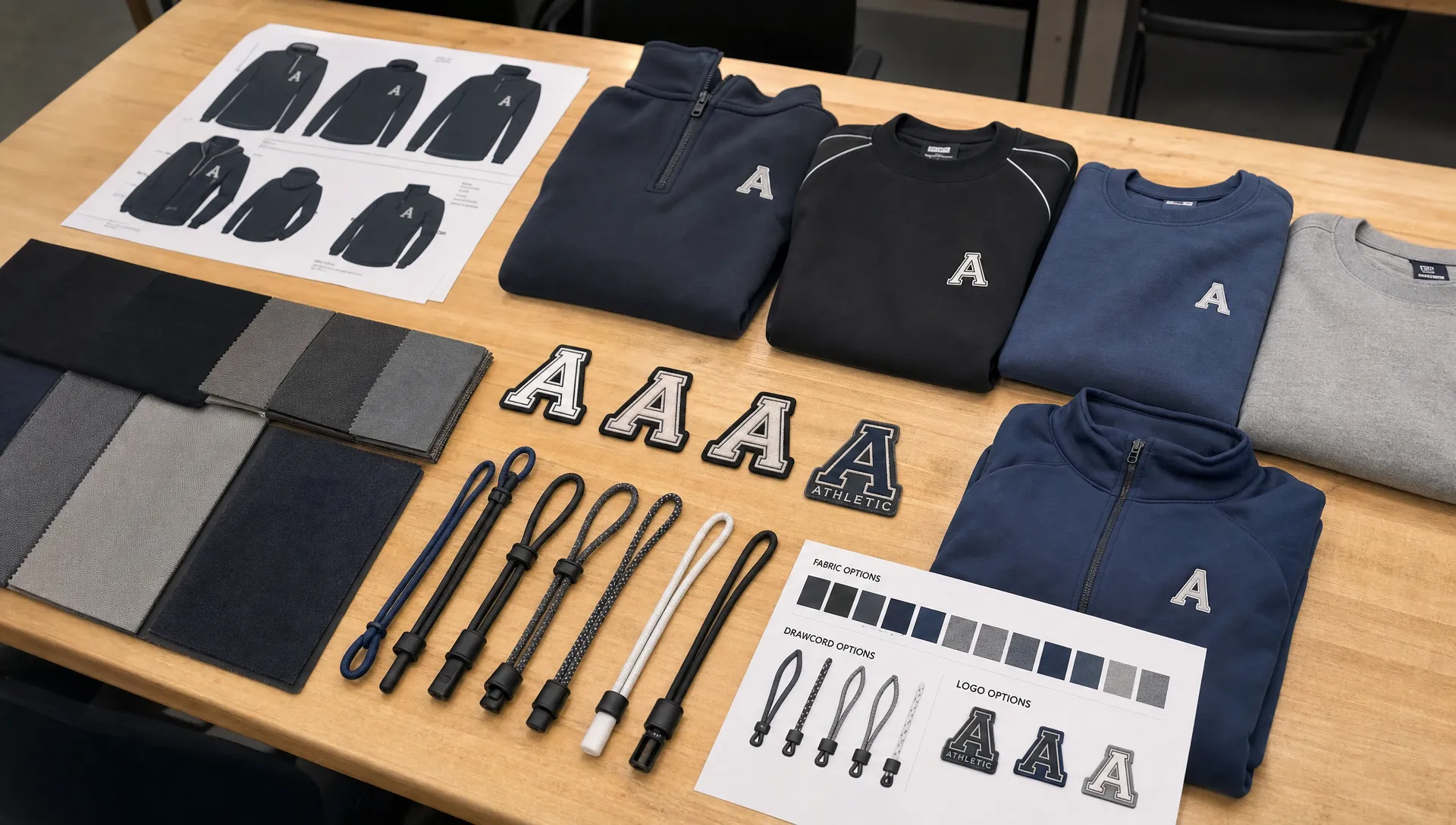
A sweatshirt line becomes easier to sell when it has structure. Instead of producing one random hoodie, think about how each style fits into a collection. This helps with color planning, inventory control and repeat drops.
For a first release, many brands do best with a compact assortment: one core hoodie, one crewneck and one limited color or graphic. The core item can stay available across seasons, while the limited item creates urgency. If you already sell rash guards, fight shorts, gis or boxing apparel, the sweatshirt color palette should connect to those products.
Because sports sweatshirts often work as both teamwear and merchandise, you can build versions around price and usage. A basic training crew can use a simple print and midweight fabric. A premium retail hoodie can add heavier fleece, embroidery, custom drawcords or upgraded trims.
A simple architecture might look like this:
| Tier | Product role | Design approach |
|---|---|---|
| Core | Always available gym or brand staple | Main logo, reliable color, strong size range |
| Seasonal | Limited retail drop | New graphic, event color or campaign theme |
| Premium | Higher perceived value | Heavier fabric, embroidery, custom labels |
| Team | Coaches, fighters or staff | Cleaner branding, consistent uniform look |
This approach is especially useful for private label and OEM manufacturing because it lets you brief the factory clearly. Rather than changing everything each time, you can refine a base pattern and update colors, graphics or trims.
Prepare technical specifications before sampling
A factory can only develop the product you describe. A clear tech pack reduces confusion, sampling delays and avoidable cost. It does not need to be overly complicated, but it should give the manufacturer enough detail to build the sweatshirt accurately.
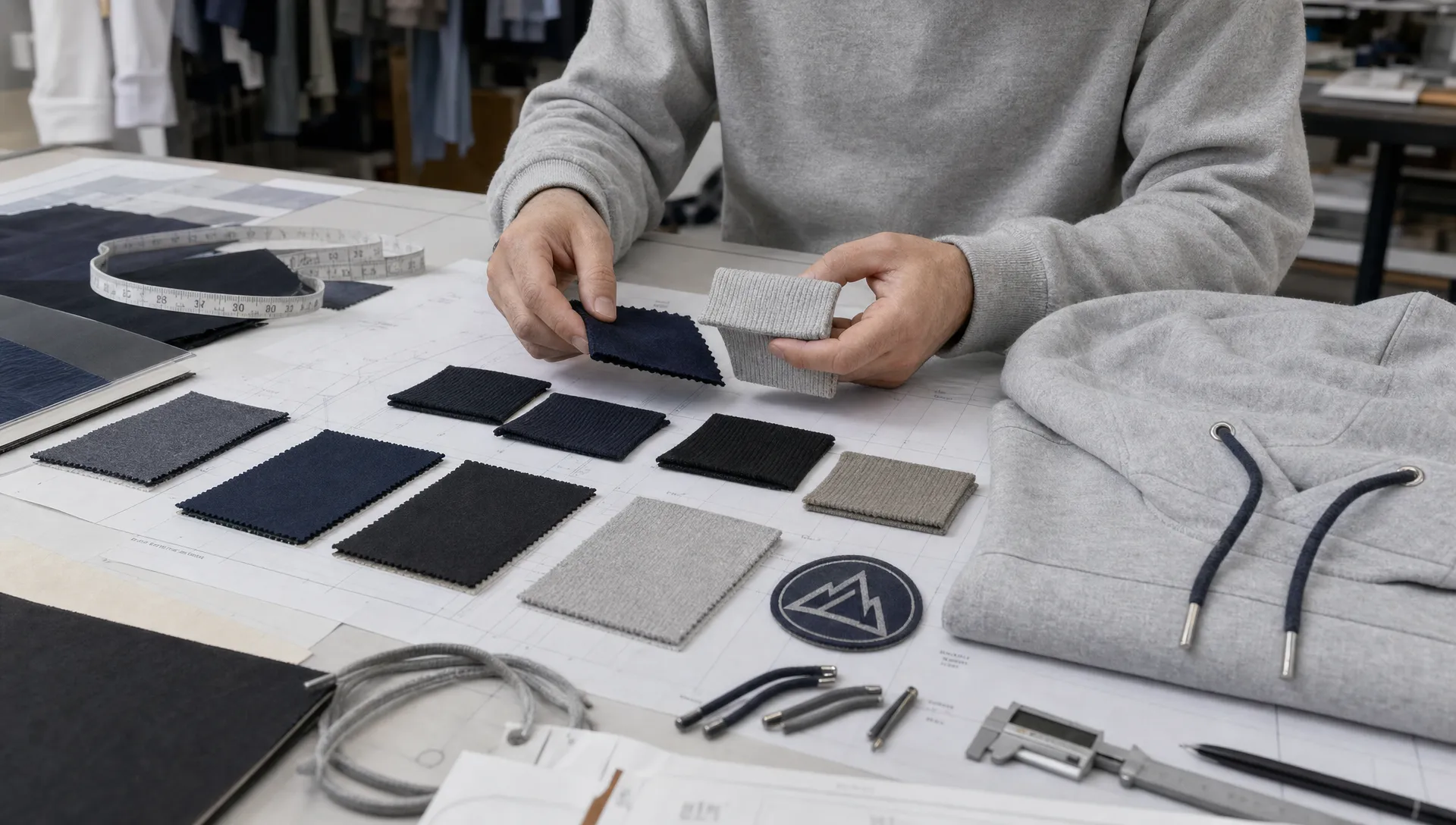
Include the garment type, fit reference, fabric composition target, fabric weight, size range, color standards, logo placements, decoration methods and packaging requirements. If you have an existing sample you like, send it as a fit reference while making clear what should change.
Measurements matter most. Chest width, body length, sleeve length, shoulder width, cuff height, waistband height and hood size should be defined for the sample size. If the sweatshirt has a kangaroo pocket, zipper, rib panel or side seam detail, those specs should be included too.
Sports sweatshirts with embroidery, screen printing or heat transfer graphics should also be tested for placement on the body, not only on the pattern. A print that looks centered on a flat garment can sit too low once worn.
Test samples like training gear, not only merchandise
Sampling should include movement, wash and merchandising checks. Have athletes wear the sample during warmups, stretching, bag work, coaching or travel. The goal is not to turn a sweatshirt into a compression garment, but to confirm that it supports real use.
Wash testing is just as important. Check for shrinkage, twisting, pilling, print cracking, color bleeding and rib recovery. Sweatshirts are washed often, and retail customers quickly notice when cuffs lose shape or fleece becomes rough.
Merchandising tests are simpler but still valuable. Fold the sample, hang it, photograph it and place it next to other products in your range. Does the color still look right? Does the logo read clearly? Does the garment feel aligned with your brand’s price level?
If you are building a wider drop, consider how the sweatshirt works beside tees, shorts, rash guards or joggers. This keeps the range cohesive and supports the broader goal of learning how to build a sportswear collection customers actually want.
Plan production around quality, MOQ and reorder potential
Production planning should balance ambition with realistic sales volume. Low minimum orders can help gyms and emerging brands test demand without taking on too much inventory, but the product still needs to be designed for repeatability.
If your sweatshirt sells well, you should be able to reorder it without rebuilding the entire project. Keep records of fabric, trims, print colors, embroidery files, measurements and packaging details. This makes future drops faster and more consistent.
For international buyers, shipping and seasonality matter. A heavy fleece hoodie may sell well in Canada, Germany and the Netherlands during colder months, while lighter French terry may suit gyms in Thailand or Australia better. Brands selling across regions can use the same core identity but adjust fabric weight and color timing.
Arus Sportswear manufactures custom MMA and martial arts apparel for brands, gyms and distributors, including private label and OEM production. For sports sweatshirts, that means development can be planned alongside fightwear, uniforms or broader sportswear so the line feels connected rather than pieced together.
Launch the sweatshirt with a clear retail story
A good launch explains why the product exists. Customers should understand whether the sweatshirt is built for warmups, team travel, everyday wear, premium retail or a special event. The clearer the role, the easier it is to sell.
Product descriptions should mention fit, fabric feel, weight, care guidance and best use. Photos should show the garment on body, folded and in detail. For gyms, in-person display still matters. A sweatshirt placed at the front desk or worn by coaches often sells better than one hidden behind other merchandise.
Preorders can be useful for limited drops, especially for gyms with loyal communities. For evergreen products, keep the design simple enough to reorder and restock. The ideal outcome is a sweatshirt that customers ask for again, not a one-time product that creates leftover sizes.
When sports sweatshirts are developed with fabric, fit, branding and production in sync, they can support both athlete comfort and retail growth. That is the difference between basic logo apparel and a product people choose to wear repeatedly.
Frequently Asked Questions
What fabric is best for sports sweatshirts? Cotton-poly fleece is a strong all-around choice because it combines softness, durability and retail appeal. French terry works well for lighter layering, while performance fleece blends may be better when faster drying and shape retention matter.
Should a training sweatshirt fit loose or athletic? It should allow shoulder and arm movement without looking oversized by accident. Many brands choose a relaxed athletic fit with room through the upper body and a cleaner shape through the waist.
Can sweatshirts be used for gym retail and team uniforms? Yes. A clean logo hoodie or crewneck can work for coaches, athletes, members and fans. The key is choosing branding and colors that feel wearable outside the gym.
How many sweatshirt styles should a new brand start with? Most new brands should start with one or two strong styles, such as a core hoodie and a crewneck. This keeps sampling, inventory and marketing easier to manage.
What should be included in a sweatshirt tech pack? Include measurements, fabric details, colors, trims, logo placement, decoration method, size range and packaging notes. Clear specifications help the manufacturer produce more accurate samples and bulk orders.
Develop custom sports sweatshirts with Arus Sportswear
If you are building apparel for a gym, combat sports brand or distributor, Arus Sportswear can help turn your sweatshirt concept into a private label or OEM product. From custom designs and branding options to bulk order support and worldwide shipping, the right manufacturing partner can make your training and retail line easier to launch.
Start by defining the use case, target customer and product tier. Then work with a manufacturer that understands both athletic function and retail presentation so your next sweatshirt drop looks professional, fits well and represents your brand with confidence.