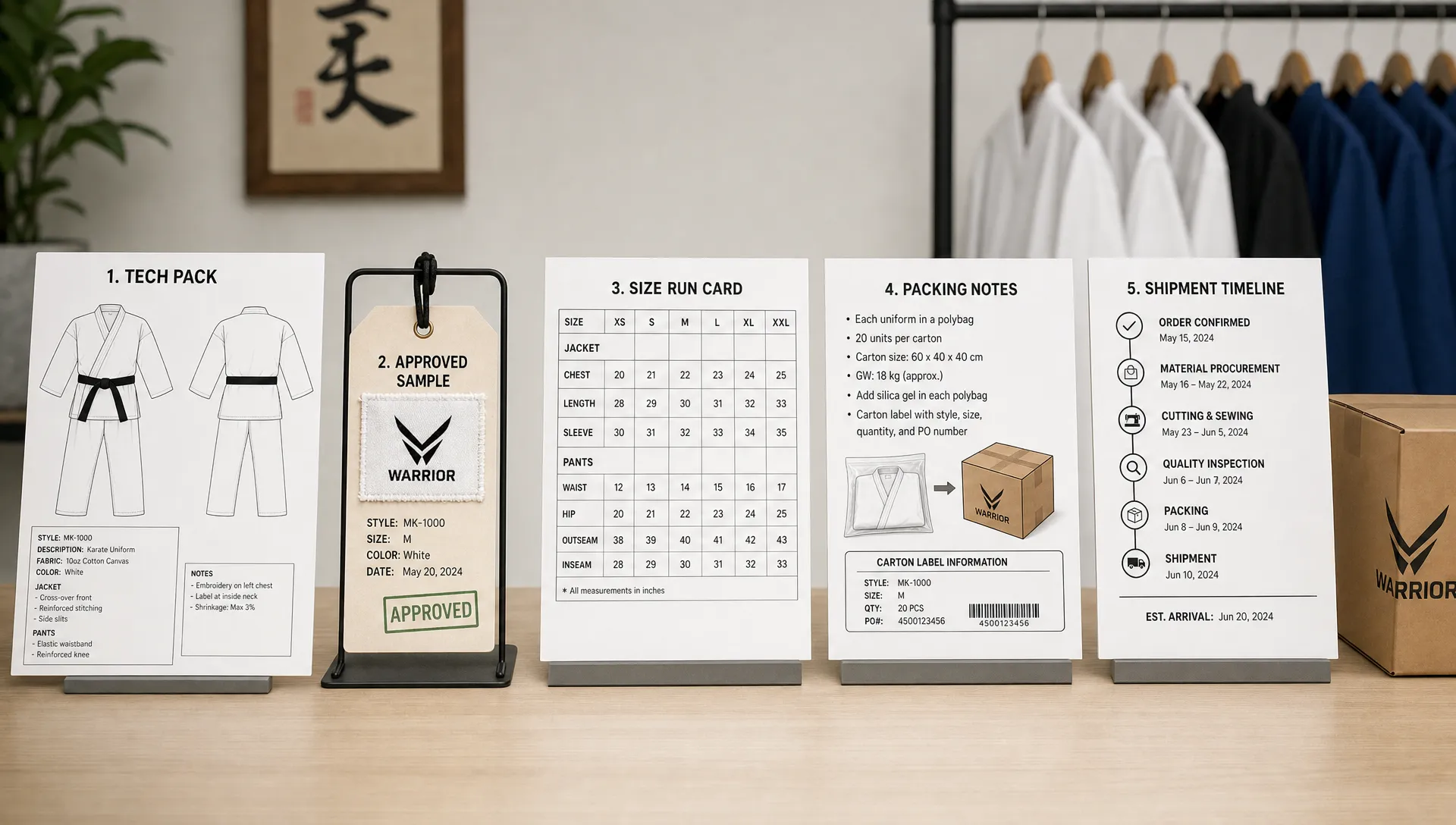
A bulk order of martial arts uniforms does not begin when fabric reaches the cutting table. It begins much earlier, when your product idea becomes clear enough for a factory to quote, sample, grade, produce and inspect without guessing.
That is the real value of a strong tech pack. It turns a creative concept into production instructions. For a brand, gym or distributor, it also gives you a way to compare suppliers, control quality and repeat successful styles season after season.
Working with an OEM martial arts uniform manufacturer is not only about finding someone who can sew uniforms. The process has to move through structured stages: product brief, technical specification, sampling, approval, bulk production, quality control, packing and shipment. If one stage is vague, the next one becomes harder, slower and more expensive.
This guide walks through that full path, from tech pack to bulk order, so you can approach OEM uniform production with fewer surprises.
Why the Tech Pack Matters in OEM Martial Arts Uniform Production
A tech pack is the reference document that tells a manufacturer how your uniform should be made. It is not just a design file or a logo placement sheet. A complete tech pack covers the fabric, fit, construction, trims, size chart, labeling, packaging and quality expectations for the product.
For martial arts uniforms, this matters because performance requirements vary widely by discipline. A lightweight karate uniform, a traditional kung fu uniform, a reinforced grappling gi and a taekwondo dobok do not behave the same way in training. The pattern, fabric weight, seam strength and movement allowance all need to support the intended use.
A good tech pack helps both sides avoid assumptions. The buyer does not have to explain the same detail repeatedly by email, and the factory can quote and sample based on a shared technical reference. If you are still evaluating potential suppliers before preparing production files, this guide on how to pick an OEM martial arts uniform manufacturer explains what to look for beyond the lowest quote.
Step 1: Define the Uniform by Discipline and Use Case
Before fabric selection or logo placement, define what the uniform is for. The best specification starts with the athlete, training environment and discipline requirements.
A uniform for beginners in a karate school may prioritize comfort, clean presentation and affordability. A uniform for frequent grappling has to handle pulling stress, repeated washing and abrasion. A premium private label line may require stronger branding, tighter size grading and more refined packaging.
| Uniform type | Key production considerations | Typical specification focus |
|---|---|---|
| Karate uniform | Lightweight movement, clean shape, easy washing | Fabric weight, sleeve and trouser length, belt compatibility |
| Taekwondo uniform | Kicking range, mobility, neckline shape | Pattern balance, gusset design, collar style |
| Kung fu uniform | Traditional silhouette, comfort, visual detail | Closure style, fabric drape, trim placement |
| Judo or grappling gi | Grip stress, reinforcement, shrinkage control | Fabric density, seam strength, collar structure |
| Kids martial arts uniform | Durability, comfort, simple sizing | Soft hand feel, reinforced stress points, easy care labels |
This first step helps the manufacturer understand what the uniform must do, not only how it should look. The more clearly you define the use case, the easier it is to choose materials, develop patterns and set quality expectations.
Step 2: Build a Factory Ready Tech Pack
A factory ready tech pack should be precise enough that a production team can make a first sample without needing to fill in major gaps. It does not need to be beautifully designed, but it must be complete, consistent and measurable.
The most useful tech packs include:
- Flat sketches or clear product images showing front, back and key detail views
- Fabric details such as composition, weight, weave, color and finish
- Construction notes for seams, collars, cuffs, waistbands and reinforcement areas
- Branding instructions for embroidery, woven labels, patches, printing or other logo applications
- Size chart with finished garment measurements and acceptable tolerances
- Trim details including drawcords, buttons, elastic, labels, patches and packaging items
- Color references, preferably using a standard color system or approved physical sample
- Packing instructions, carton markings and any retailer specific requirements
For martial arts uniforms, measurement points should be especially clear. Sleeve length, jacket body length, shoulder width, trouser inseam, waistband relaxed measurement and waistband extended measurement can all affect fit. If the product includes a gi jacket, collar width and thickness may also need to be specified.
A tech pack should also separate what is fixed from what is open to factory recommendation. For example, your brand may require a specific logo position and size, but you may ask the manufacturer to recommend a fabric weight based on your target price and intended use. That flexibility can be useful, as long as every final decision is recorded before sampling moves forward.
Step 3: Turn Specifications Into a Quote You Can Actually Compare
Once the tech pack is ready, the manufacturer can prepare a quotation. Treat this quote as more than a unit price. It is a production map that shows what the factory believes it is making, how it will be packed and what commercial terms apply.
A useful OEM quote should make the product scope clear. You want to understand the style, fabric, color, size range, branding method, packaging, order quantity and any assumptions behind the price. If one supplier quotes a reinforced uniform with custom labels and another quotes a plain uniform without packaging detail, those prices are not comparable.
| Quote item | Why it matters before sampling |
|---|---|
| Fabric specification | Small changes in weight, composition or weave can change cost and performance |
| Branding method | Embroidery, patches, woven labels and printing have different setup needs |
| MOQ | Minimum quantity can vary by fabric, color, size range and customization |
| Sample terms | Clarifies cost, timing and whether revisions are included |
| Packing method | Affects presentation, carton size and landed cost |
| Lead time estimate | Helps plan launch dates, pre-orders and inventory replenishment |
| Shipping terms | Determines what is included in the quote and what costs remain separate |
For importers and distributors buying across multiple styles, the buying process can become more complex. This is where broader planning helps, especially around quantities, size curves and landed cost. Arus Sportswear has a separate guide with practical martial arts uniform wholesale buying tips that can support this stage.
Step 4: Develop Samples Before Approving Bulk Production
Sampling is where the tech pack meets real fabric, real stitching and real fit. It is also where many problems are easiest to fix. Once a bulk order is cut, changes become more costly and may not be possible without waste.
The first sample usually verifies the design direction, fabric choice, construction and measurements. It may not be perfect, and it should not be treated as a failure if revisions are needed. A useful sample review is specific. Instead of saying “make the fit better,” note that the sleeve is 2 cm too long, the trouser rise needs more room or the logo embroidery should move 1.5 cm higher.
For martial arts uniforms, sample testing should include more than standing in front of a mirror. Have athletes perform the movements the uniform is designed for: kicks, stances, grappling grips, kneeling positions or repeated arm extension. Check whether the fabric restricts movement, whether the waistband stays secure and whether stress points feel properly reinforced.
Wash testing is also valuable before bulk approval. Some cotton rich uniforms may shrink, soften or change shape after washing. Synthetic blends may dry faster but feel different on the body. The point is not that one material is always better than another. The point is to confirm that the chosen material matches the product promise you plan to sell.
Step 5: Approve Materials, Trims and Branding as a Complete Set
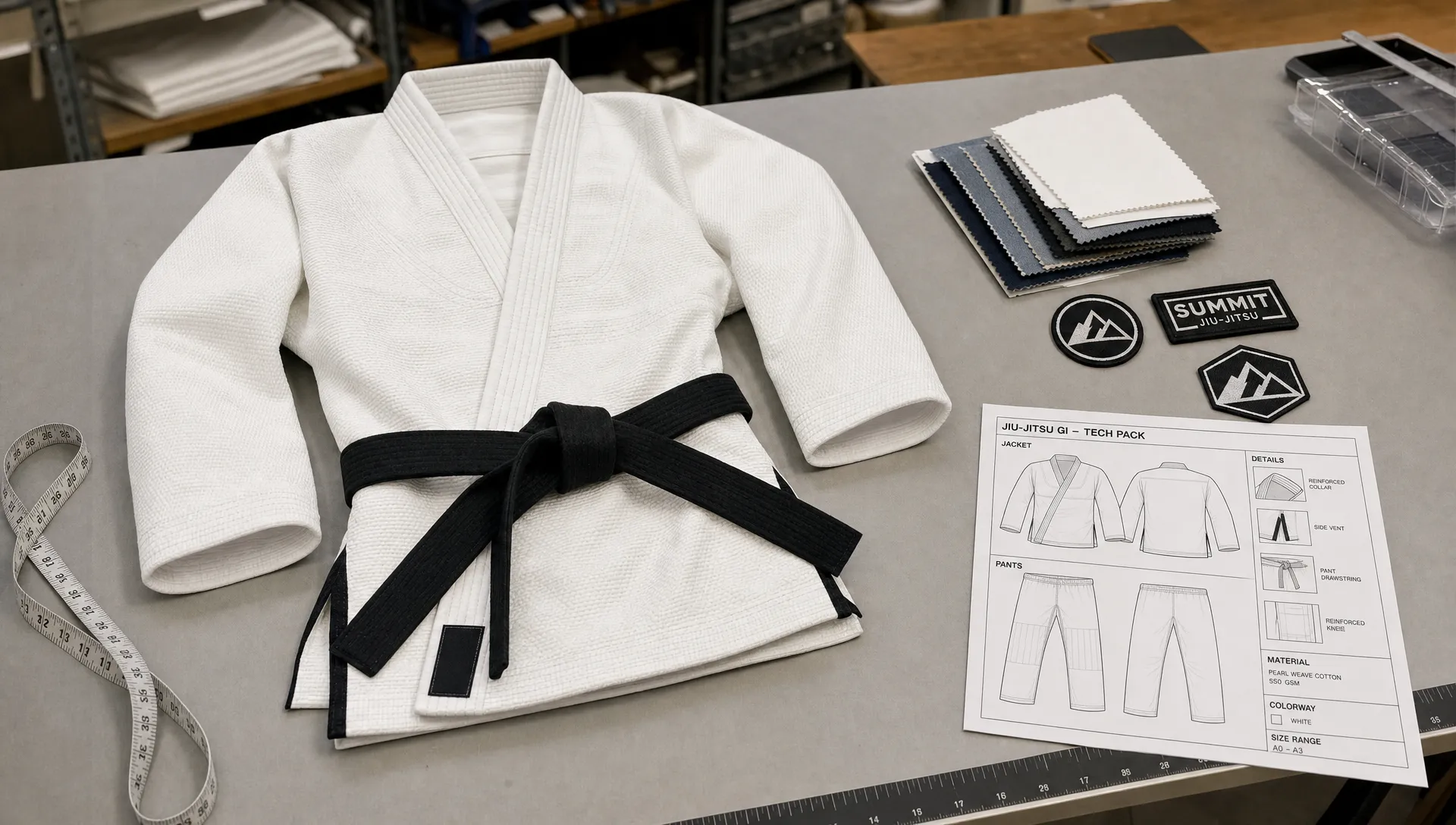
A common mistake is approving fit while leaving other details unresolved. Bulk production should not start until fabric, color, trims, labels and branding are all confirmed together.
This matters because each component affects the final product. A slightly different fabric lot may change how the jacket hangs. A different thread color may make embroidery look off brand. A label with the wrong fiber content or size code can create problems for fulfillment. Even packaging details can affect how the product appears to customers when they open the order.
Before bulk approval, create a final sample reference. This can be a pre-production sample, an approved physical sample or a clearly documented final sample with photos and notes. The factory and buyer should both know which version controls the order.
Your approval record should include the final fabric, trims, colors, logo artwork, placement measurements, size chart, care label details and packing instructions. If your order includes multiple colors or grades, approve each one separately rather than assuming the same result will carry across every variation.
Step 6: Prepare the Bulk Order Breakdown
A bulk order is not only a total quantity. It is a breakdown by style, color, size, label and packing method. The clearer this breakdown is, the easier it is for the factory to plan materials, cut accurately and pack the shipment correctly.
For example, an order for 1,000 uniforms may involve five sizes, two colors and two logo versions. That can quickly become many SKUs. If the order matrix is unclear, production errors become more likely.
| Order planning item | What to confirm |
|---|---|
| Style code | Unique code for each uniform design |
| Color code | Approved color name or reference for each option |
| Size range | Full size run, including youth, adult or plus sizes if needed |
| Quantity per size | Exact quantity for cutting and packing |
| Logo version | Gym, brand or distributor branding assigned to each SKU |
| Label details | Size label, brand label, care label and country specific information |
| Packing method | Individual bags, size sorting, carton quantity and carton markings |
Size curves deserve close attention. New brands often order too evenly across all sizes, then run out of middle sizes while slow moving sizes remain in stock. If you have past sales data, use it. If you do not, discuss your target market with your manufacturer or distributor partners and make conservative decisions for the first run.
Step 7: Move Into Bulk Production With Clear Controls
Once the bulk order is approved, the factory moves into production planning. This typically includes material procurement, pattern confirmation, grading, marker making, cutting, sewing, finishing, inspection and packing.
Each stage needs consistency. The approved sample should guide cutting and sewing. The approved size chart should guide measurement checks. The approved packing instructions should guide the warehouse team. If changes happen after production starts, they should be documented and confirmed by both sides.
A martial arts uniform factory also has to manage discipline specific construction details. Reinforcement patches, waistbands, collars, side vents, inseams and sleeve openings must be handled consistently across sizes. If you want a deeper look at how the production floor works, this article on the martial arts uniform factory process explains the steps from briefing through packing.
Communication during bulk production should be practical and documented. Production updates, in-line sample photos and inspection notes can help catch issues early. The goal is not to micromanage the factory. It is to keep the order aligned with the approved standard.
Step 8: Inspect Quality Before Shipment
Quality control should not be left until the cartons are sealed. A stronger process checks materials before cutting, workmanship during production and finished goods before shipment.
For martial arts uniforms, inspection should focus on both appearance and function. A uniform can look acceptable at first glance but fail in the areas that matter during training. Seams need to be secure, measurements must stay within tolerance and branding has to match the approved artwork.
| Inspection area | Common issue to catch |
|---|---|
| Measurements | Sleeve, trouser or jacket length outside tolerance |
| Stitching | Skipped stitches, loose threads or uneven seam lines |
| Reinforcement | Missing or weak stress point reinforcement |
| Fabric | Shade variation, stains, holes or incorrect weight |
| Branding | Wrong logo size, placement, thread color or label |
| Packing | Mixed sizes, incorrect carton marks or missing labels |
Defect standards should be agreed before inspection. A loose thread may be minor if it can be trimmed. A wrong logo placement or incorrect fabric color may be major because it affects sellability. Clear standards reduce disputes and help the factory correct issues efficiently.
For larger orders, some buyers use third party inspection services. Others rely on the manufacturer’s internal quality control process, especially when there is an established relationship. Either way, final approval should happen before the goods leave the factory.
Step 9: Plan Packing, Shipping and Reorders Early
Packing is part of the product experience and the logistics cost. A uniform packed by size and style is easier to receive, store and ship to customers. A poorly packed order can create confusion at the warehouse, even if the garments themselves are well made.
Confirm whether each uniform should be individually packed, bundled by size or packed according to distributor requirements. If you sell online, barcode labels or SKU labels may be important. If you sell through gyms, size sorted cartons may be enough.
Shipping documents also need attention. Commercial invoices, packing lists and transport documents should match the actual shipment. Care labels and product labels should reflect the destination market’s requirements. Your manufacturer can help prepare production and packing information, but import requirements should be checked by the buyer or importer of record.
Reorder planning starts before the first shipment arrives. Keep the approved tech pack, sample comments, final measurements, production notes and order breakdown in one place. When the first production run sells well, this documentation helps you repeat the style with less development time.
Common Mistakes That Slow Down OEM Uniform Orders
Many production delays come from small gaps at the beginning of the project. The most common issues are preventable with better documentation and more disciplined approvals.
The biggest mistake is sending only a logo and asking for a bulk price. Without fabric, sizing, construction and packing details, a manufacturer can only estimate. That estimate may change once the real product is defined.
Another common issue is approving a sample visually but not measuring it. A uniform may look good on one model yet be inconsistent with the size chart. Always compare the sample against the finished garment measurements and record any corrections.
Late artwork changes also create delays. Embroidery files, patch shapes, label artwork and print colors often require setup or material preparation. Changing them after sample approval can affect cost, timing and consistency.
Finally, many brands underestimate the importance of size planning. A strong uniform design can still disappoint customers if the size range does not match the market. Use data when possible, start with a practical size curve and refine future orders based on real sales.
FAQ
What should be included in a tech pack for OEM martial arts uniforms? A tech pack should include product sketches, fabric specifications, construction notes, size chart, tolerances, branding details, trims, color references, labels, care information and packing instructions. The goal is to give the manufacturer enough information to quote, sample and produce without guessing.
How many samples are needed before placing a bulk order? The number depends on how complex the uniform is and how complete the first tech pack is. Many projects need at least one development sample and one final approved sample before bulk production. More revisions may be needed for new patterns, new fabrics or highly customized branding.
Can I start OEM production if I only have a sketch and logo? You can start a discussion with a sketch and logo, but bulk production needs more detail. A manufacturer may help turn your concept into workable specifications, but final fabric, sizing, construction, branding and packing details should be confirmed before sampling and bulk orders.
What affects the MOQ for martial arts uniforms? MOQ can depend on fabric availability, dyeing requirements, customization level, size range, branding method and total order complexity. A plain standard fabric uniform may have different requirements from a fully custom private label uniform with special trims and packaging.
How can I reduce risk before placing a bulk order? Use a complete tech pack, approve physical samples, test fit and movement, confirm wash behavior, document branding details and agree on quality standards before production. Clear approval records are one of the best ways to prevent misunderstandings.
Turn Your Martial Arts Uniform Tech Pack Into Production
If you are preparing a martial arts uniform line, the right manufacturing process can make the difference between a stressful order and a repeatable product system. Arus Sportswear manufactures custom MMA and martial arts apparel for brands, gyms and distributors worldwide, with private label production, OEM manufacturing, custom branding, low minimum orders, bulk order support and worldwide shipping.
Share your uniform concept, tech pack or product requirements with Arus Sportswear to discuss how your design can move from sample development to bulk production.