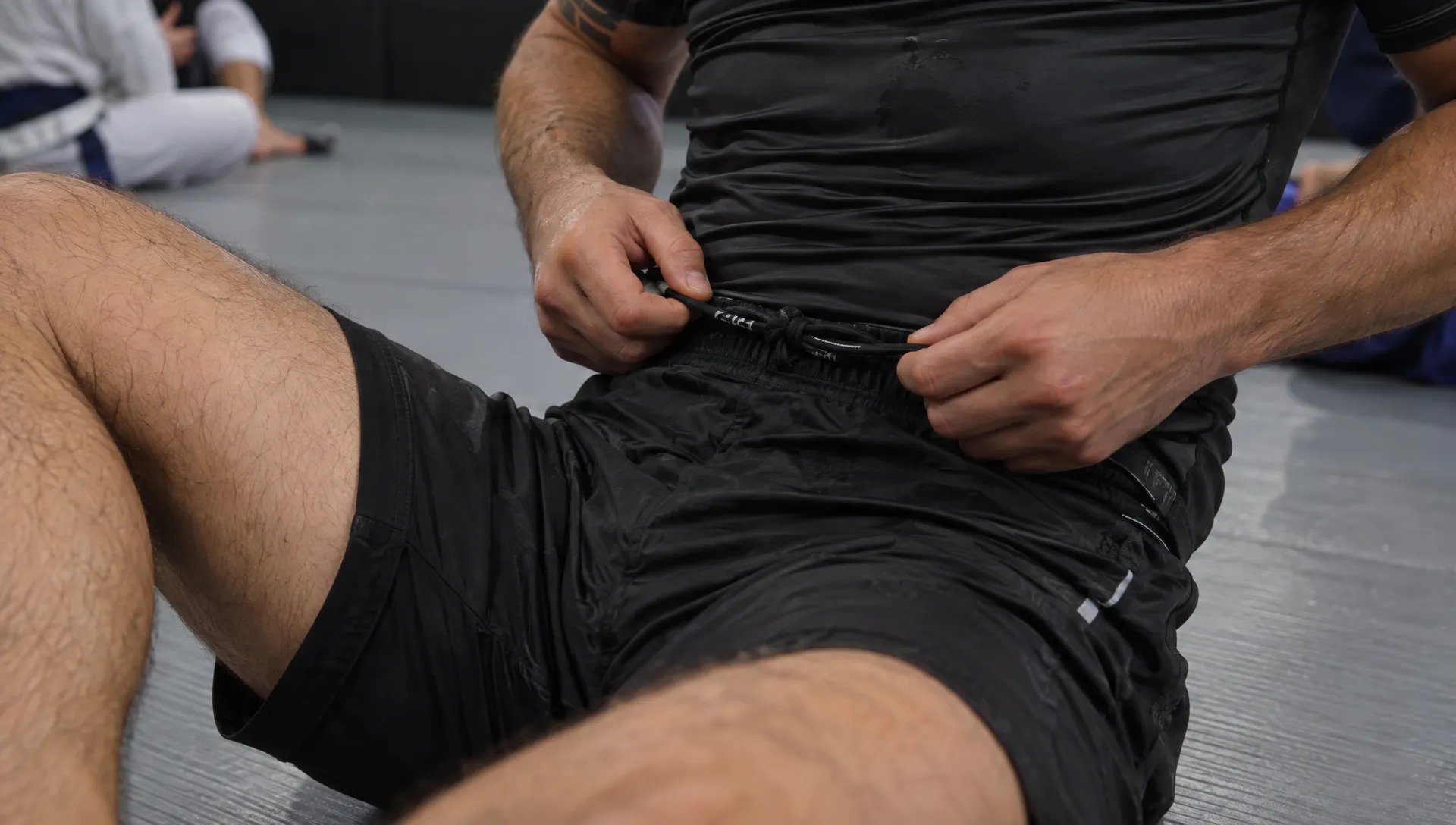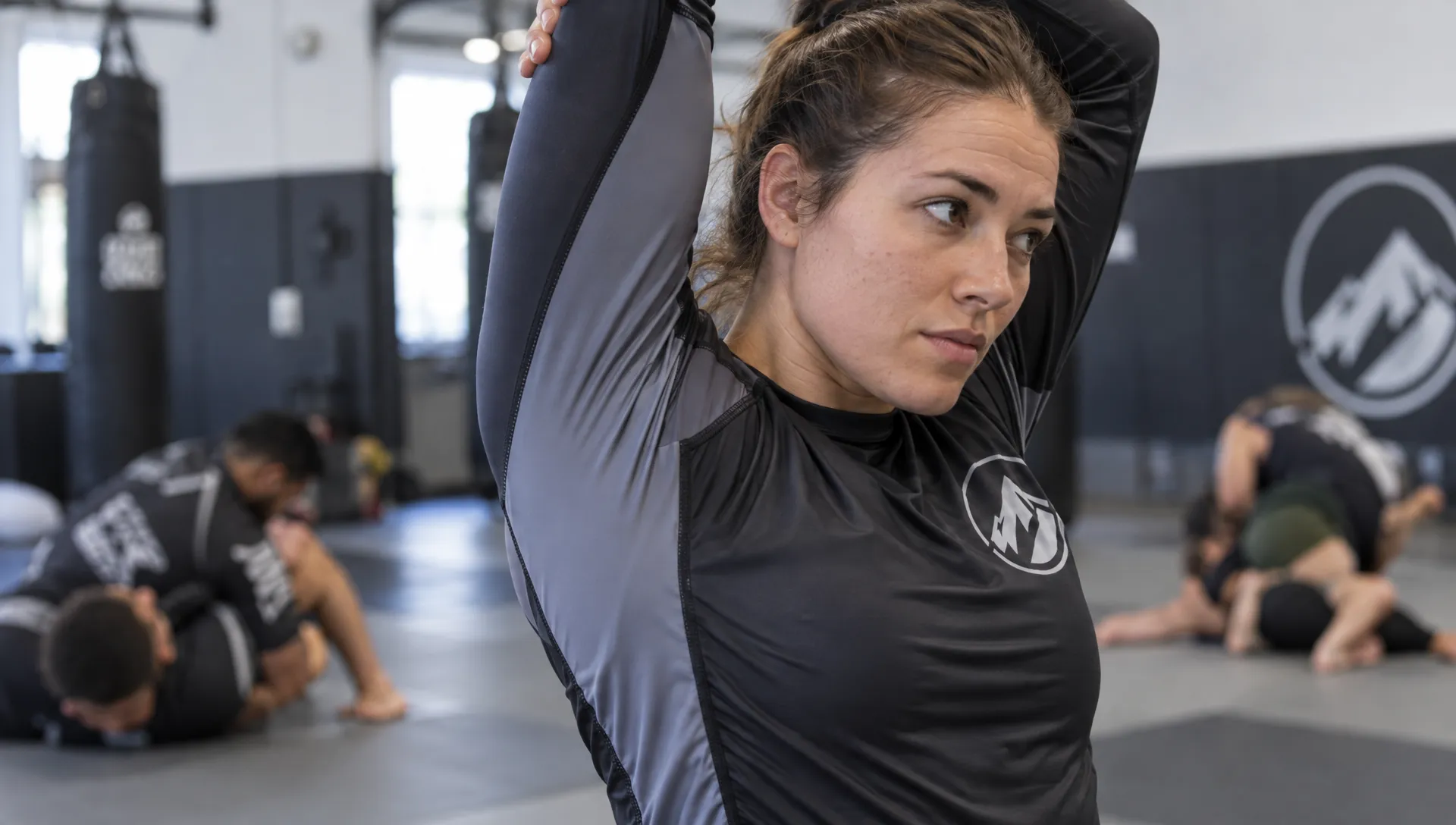
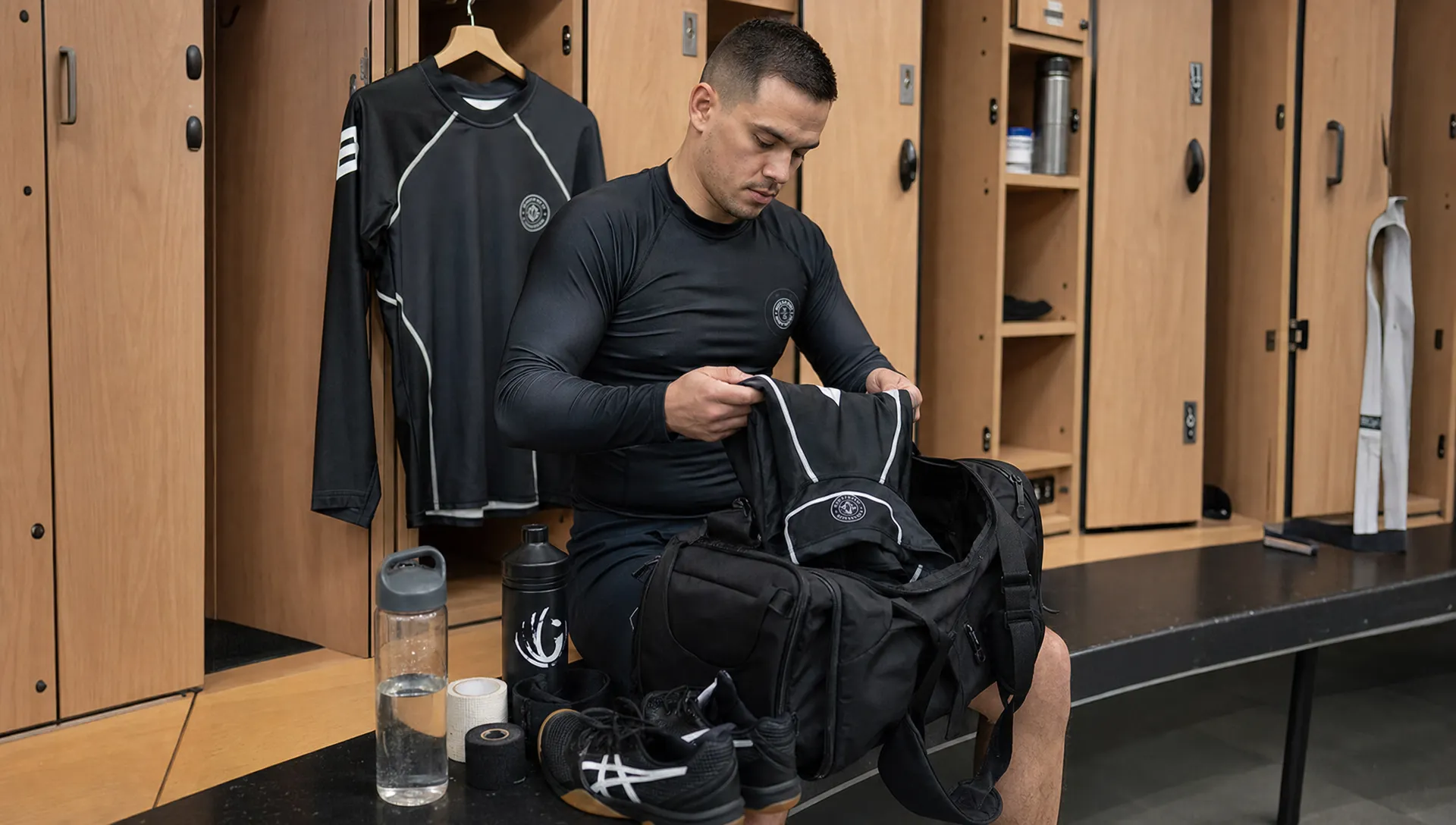
Developing jiu jitsu rash guards for hard daily rolls is not the same as putting a logo on generic compression wear. Grappling creates constant pulling, friction, sweat, mat contact and laundering, often several times a week. If you sell to gyms, teams or serious No-Gi athletes, your product has to be designed around that reality from the first brief, not corrected after returns start coming in.
Start with the real use case for jiu jitsu rash guards
A daily training rash guard lives a harder life than most fitness apparel. It is stretched during frames, twisted during scrambles, rubbed against mats, trapped under body weight and washed frequently. The development process should begin with how the garment will be used, not only how it will look in product photos.
For a brand or gym, that means defining the training environment clearly. A rash guard made for casual open mat use may not need the same fabric weight or seam reinforcement as one made for competitors training two sessions a day. Climate matters too. Products sold in Thailand, Japan, Australia or the southern United States may need stronger moisture management than apparel designed mainly for cooler gyms in Canada, Germany or the Netherlands.
Define the athlete before choosing specs
The athlete profile guides every decision. A beginner may prefer a slightly more forgiving fit, while advanced competitors often expect a close compression fit that does not bunch under grips. For jiu jitsu rash guards, that difference affects pattern grading, sleeve length, hem hold and neckline comfort.
You should also decide whether the range is built for men, women, youth athletes or a unisex gym program. Unisex rash guards can work for basic team orders, but retail customers usually expect better size segmentation. If your audience includes female athletes, a dedicated fit block can reduce pulling across the chest, excess fabric at the waist and sleeve discomfort.
Translate rolling pressure into a product brief
A strong product brief should describe the situations the rash guard must survive. Include common movements such as collar ties, underhooks, overhooks, guard retention, turtle defense and wrestling exchanges. These positions create stress in different areas of the garment.
Your brief should cover fabric composition, weight, stretch direction, seam type, panel layout, artwork method, logo placement, size range and packaging expectations. If you work with an OEM or private label supplier, clear technical notes reduce sampling rounds and help the manufacturer understand whether you are building an entry-level team rash guard or a premium daily training product.
Choose fabric that survives heat, grip and abrasion
Fabric is the foundation of performance. The most reliable jiu jitsu rash guards for daily training usually balance stretch, recovery, abrasion resistance and moisture handling. A fabric can feel impressive in a hand sample, but still fail when exposed to repeated pulling and sweat.
Polyester and spandex blends are common because they handle sublimation well, dry quickly and offer strong color reproduction. Nylon and spandex blends can feel softer and more premium, though they may require a different printing or finishing approach depending on the design. Neither option is automatically better. The right choice depends on your target price, artwork needs, hand feel and durability requirements.
Fabric weight also matters. Very light fabric may feel breathable, but it can become transparent when stretched or lose structure during hard rounds. Very heavy fabric may feel protective, but it can overheat athletes in humid gyms. If heat is a major market concern, pair your fabric decision with a broader sourcing strategy for breathable combat sports apparel rather than treating ventilation as an afterthought.
| Development factor | Why it matters in daily rolls | What to validate before bulk production |
|---|---|---|
| Stretch recovery | Helps the garment return to shape after grips and frames | Check fit after repeated wear and wash cycles |
| Opacity under stretch | Prevents see-through panels during movement | Test light and dark colors in larger sizes |
| Abrasion resistance | Reduces pilling and surface wear from mat contact | Review pilling, rubbing and field-test feedback |
| Moisture management | Keeps the athlete more comfortable in long sessions | Test drying speed and feel after heavy sweat |
| Print compatibility | Protects artwork quality and brand presentation | Approve colors after sublimation or chosen decoration method |
Engineer the fit for grappling, not gymwear
A product can use excellent fabric and still fail if the fit is wrong. Well-built jiu jitsu rash guards should feel secure through movement without choking the neck, pinching the armpits or riding above the waistline during inversions.
The torso should be long enough to stay tucked or sit securely under fight shorts, but not so long that it folds heavily around the hips. Sleeves need enough compression to stay in place, especially on long-sleeve versions, while still allowing elbow flexion and shoulder rotation. The neck opening should be close enough to avoid sagging but comfortable enough for repeated shots, frames and head movement.
Build sizing around real bodies and real markets
International sales make fit development more complex. Customers in the USA, Canada, Europe, Australia and Japan may have different expectations around compression, torso length and size labels. A medium in one market may not match what buyers expect elsewhere.
Use body measurements and garment measurements in your size chart. Body measurements tell customers which size to choose, while garment measurements help experienced athletes understand compression. If you already sell gis or training uniforms, do not copy that size structure directly. Rash guards use stretch fabric and need their own grading logic.
Sampling across several body types is essential. Test short and tall athletes, broad shoulders, narrow waists, larger midsections and long arms. Daily training exposes bad grading fast because fabric tension concentrates where the pattern is off.
Design construction details for hard grappling contact
Construction is where many rash guards separate themselves from generic compression tops. Seams must sit where they will not scrape skin, split under tension or create pressure points during prolonged mat contact. Flatlock stitching is common because it creates a low-profile seam, but the seam layout is just as important as the stitch type.
Shoulders, underarms, side seams, sleeve cuffs, neckline and hem all deserve close attention. These are common stress points during pummeling, grip fighting and scrambling. If your brand wants a deeper technical breakdown, Arus has a separate guide on rash guard reinforcement zones that focuses specifically on areas many martial arts labels overlook.
The hem is especially important for daily use. A rash guard that rides up every round distracts the athlete and makes the product feel cheap. Some brands use silicone grippers, longer body lengths or tighter lower hems, but each choice affects comfort and cost. Test the solution in live rolling before committing.
Test artwork, sublimation and brand placement
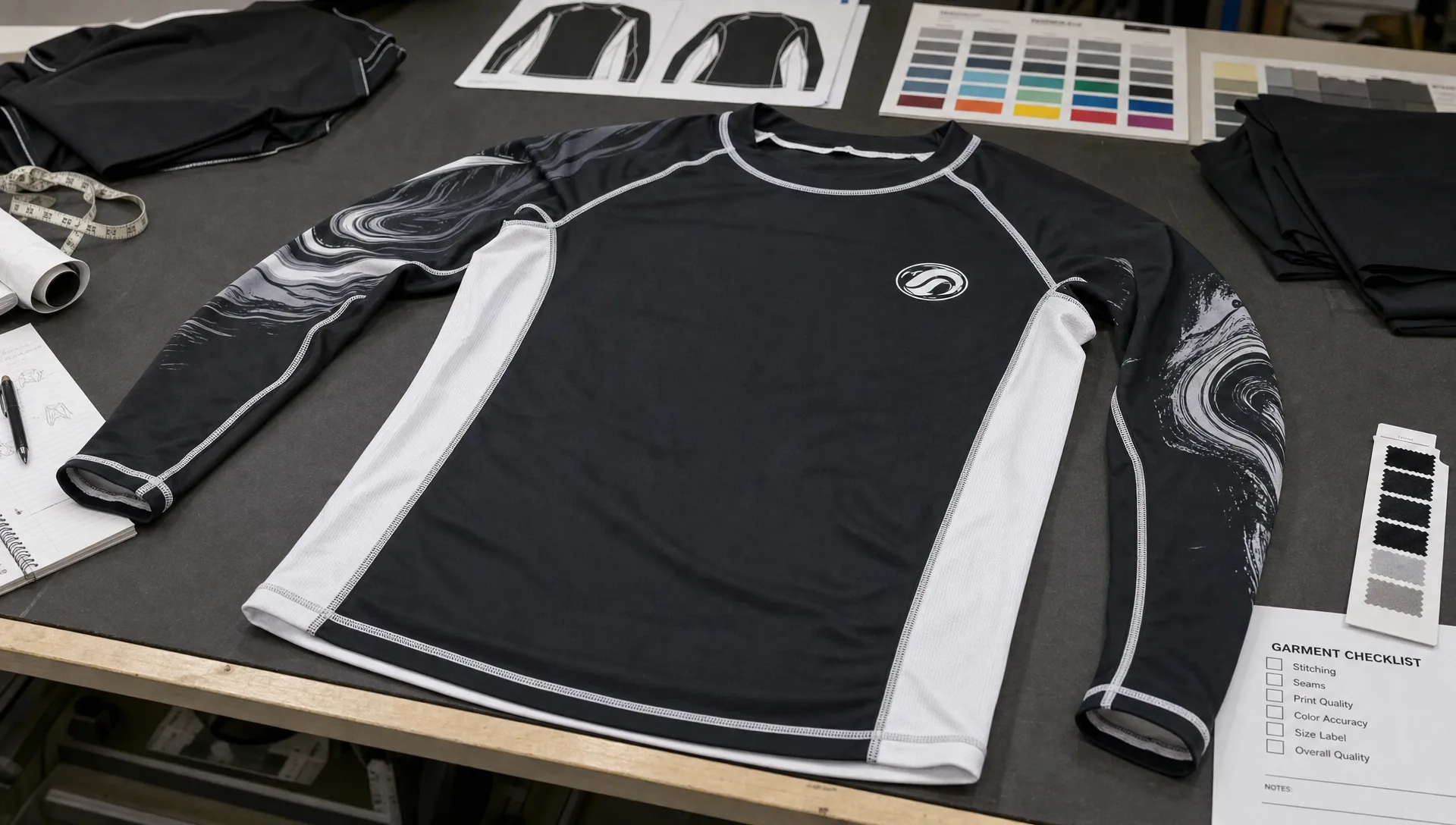
For jiu jitsu rash guards, visual design has to work under stretch and sweat. A graphic that looks clean on a flat template can distort around the chest, shoulders or waist once the garment is worn. Large logos, sharp geometric patterns and text-heavy designs need particular care because distortion is easy to notice.
Sublimation is widely used for grappling rash guards because the artwork becomes part of the fabric surface rather than sitting as a thick layer on top. This can help reduce cracking and peeling concerns compared with some surface decoration methods. Still, sublimation quality depends on fabric, ink control, color management and cutting accuracy.
Brand placement should also consider competition use. If your product is intended for No-Gi tournaments, review the current rules of the event organizers you are targeting. The IBJJF rule book and uniform guidance can change, so check the latest version before calling a product competition legal.
For gym orders, decide where names, academy marks and sponsor logos will sit before sampling. Chest, back, sleeve and side-panel placements all behave differently when stretched. Keep small text away from areas that bend or twist heavily.
Prototype under hard daily rolls before scaling
Before you scale jiu jitsu rash guards into bulk production, put prototypes into the hands of athletes who will be honest. A showroom sample is not enough. You need feedback from hard rounds, sweaty rounds, repeated washing and different body types.
A good testing group includes coaches, competitors, hobbyists and at least one athlete who is hard on gear. Ask them to train normally rather than protect the sample. The goal is to find weak points before customers do.
Useful prototype feedback includes how the neck feels after warmups, whether sleeves migrate during underhooks, whether the hem rides up, how the fabric feels when soaked, how the print looks after washing and whether seams cause irritation. Short comments like “feels tight” are not enough. Ask where it feels tight, during which movement and whether the issue appears at the start or end of training.
Document each sample version. Note fabric code, pattern version, seam construction, size, athlete body measurements and wash history. Without that record, it becomes hard to know which change improved the product and which change created a new problem.
Plan production for consistency, MOQ and brand growth
Brands that sell jiu jitsu rash guards across multiple gyms or countries need consistency more than one perfect sample. Bulk production should match the approved prototype in fabric feel, print color, stitching, sizing and packaging. This is where communication with your manufacturer matters.
If you are developing a private label or OEM range, confirm order quantities, size breakdown, labeling, packaging, artwork files and inspection expectations before production starts. Low minimum orders can be useful for new brands, but small runs still need disciplined approvals. A rushed first batch can damage confidence with gym owners and distributors.
Color control deserves attention. Sublimated colors can shift depending on fabric base, print settings and heat application. Approve physical samples when possible, especially for brand colors, belt-rank themes or academy marks. Digital mockups are useful for layout, but they are not a substitute for a production sample.
Arus Sportswear supports brands, gyms and distributors with custom rash guard manufacturing for MMA, BJJ, No-Gi and related combat sports. If you are building a product line, share your design goals, target market and expected order structure early so the manufacturing plan can match your commercial plan.
Create a quality control checklist before launch
A simple checklist helps protect your launch from preventable issues. It also gives your manufacturer a clear standard for approval.
| Quality check | What to look for | Why it matters |
|---|---|---|
| Fit approval | Correct compression, torso length and sleeve position | Prevents comfort complaints and returns |
| Seam inspection | No skipped stitches, twisting or rough internal seams | Reduces irritation and seam failure |
| Print review | Accurate color, sharp edges and correct logo placement | Protects brand presentation |
| Stretch test | No transparency, cracking or major distortion | Confirms performance under movement |
| Wash review | Shape, color and seam condition after laundering | Reflects real customer use |
| Packaging check | Correct labels, sizes and SKU separation | Supports retail and distributor handling |
Use this checklist before photography, wholesale shipment or gym delivery. Once a team order reaches athletes, even small issues become visible quickly because everyone trains in the product at the same time.
Frequently Asked Questions
What fabric is best for hard daily rolling? Polyester-spandex blends are common for sublimated rash guards because they print well and dry quickly. Nylon-spandex can offer a softer feel. The best choice depends on your target market, price point, design method and performance testing.
Should a rash guard fit tight or loose for BJJ? It should fit close to the body without restricting breathing, shoulder movement or elbow flexion. Loose fabric can bunch, twist and get in the way during grappling exchanges.
Are long-sleeve or short-sleeve rash guards better? Long sleeves offer more skin coverage and are popular for daily No-Gi training. Short sleeves can feel cooler in hot gyms. Many brands offer both so athletes can choose based on climate and preference.
How many samples should a brand test before bulk production? There is no fixed number, but most brands should expect more than one sample round if they are developing a serious training product. Fit, fabric, artwork and seam placement often need adjustment after live rolling feedback.
Can jiu jitsu rash guards be made for competition and daily training? Yes, but the design brief must account for both. Daily training needs durability and comfort, while competition use may require checking current organizer rules for colors, logos and uniform requirements.
Develop a rash guard your athletes can trust
Hard daily rolling is unforgiving. If the fabric overheats, the hem rides up, the seams rub or the print fails, athletes will notice in the first few sessions. Strong development comes from connecting fabric, fit, construction, artwork and testing into one process.
For brands, gyms and distributors, jiu jitsu rash guards are an opportunity to build trust through gear that performs every week. Start with the athlete, test under real pressure and work with a manufacturing partner that understands combat sports apparel, not just generic activewear.