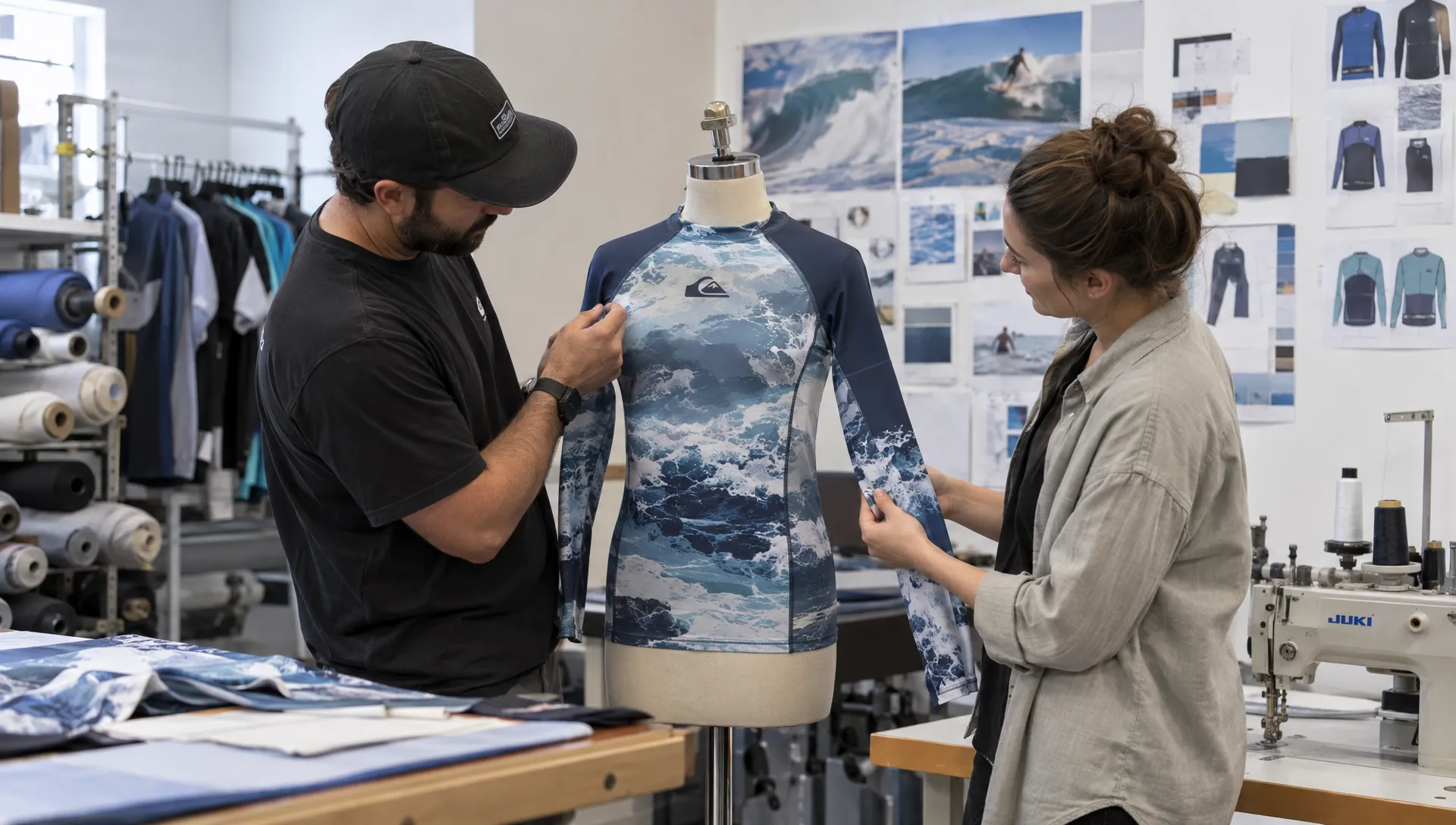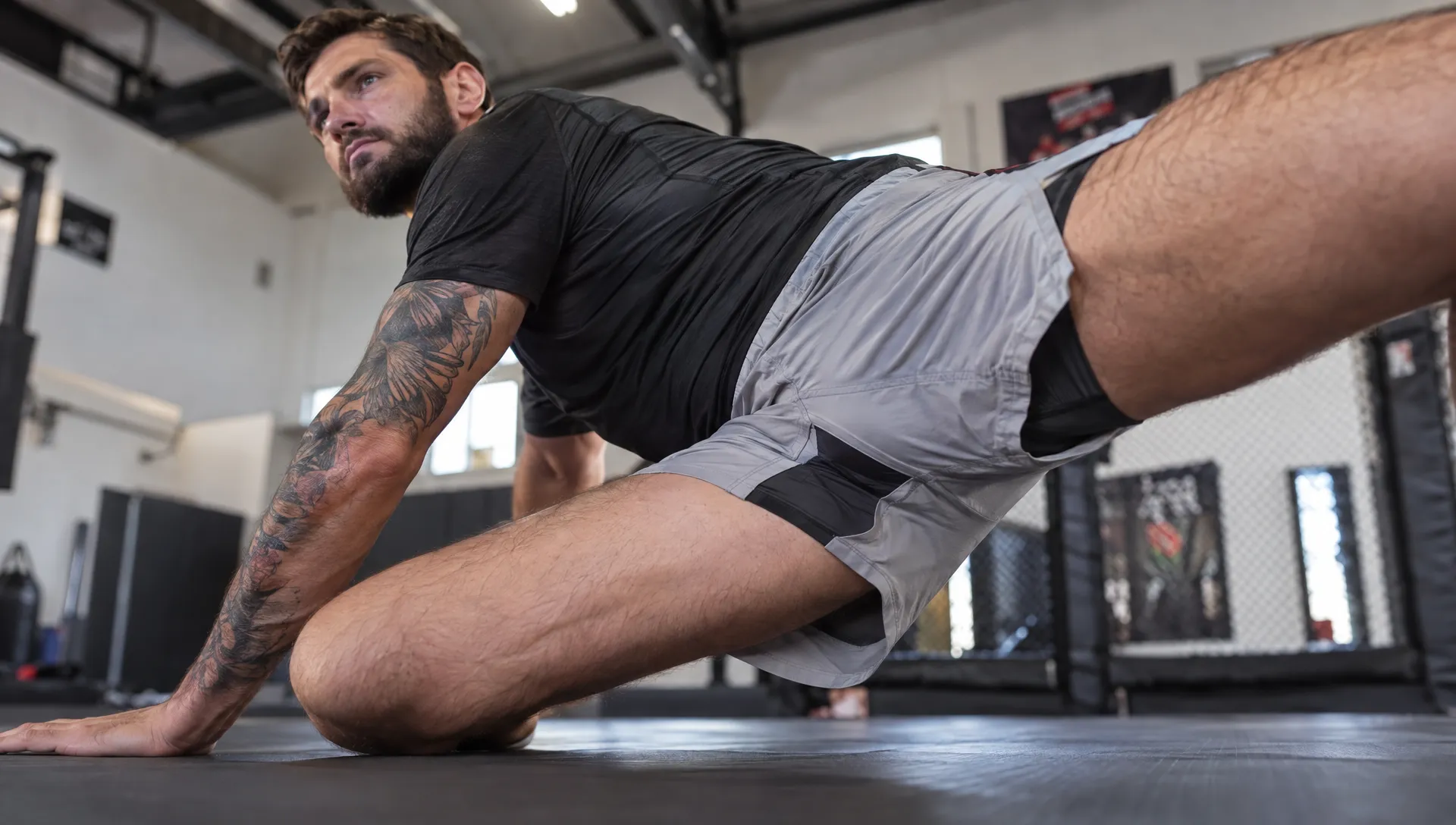
To make uniforms custom to your brand yet consistent across every size, you need more than a scaled-up pattern. A medium sample can look excellent while smaller sizes have crowded logos and larger sizes have restrictive sleeves. Consistency means preserving the same fit intent, movement allowance and visual identity throughout the size range, not giving every garment identical proportions.
For combat-sports brands, gyms and distributors, that requires coordinated decisions about patterns, fabrics, decoration and inspection. The most useful approval process checks how these elements interact across sizes before bulk production begins.
Start with a clear definition of what should stay the same, what should change and how each decision will be verified.
Define what consistency means for your uniform
A consistent uniform should deliver a recognizable silhouette and comparable functionality for its intended wearers. That does not mean every athlete receives the same amount of loose fabric or that every measurement increases at the same rate.
A fitted rash guard, loose karate jacket and pair of MMA shorts need different approaches. Stretch, overlapping panels, waistband construction and sleeve shape all influence whether a garment performs as intended.
Separate your requirements into three categories:
| Requirement | What should remain consistent | What may change by size |
|---|---|---|
| Fit | Intended silhouette and movement allowance | Widths, lengths and shaping |
| Construction | Seam type, reinforcement and finishing standard | Seam lengths and component dimensions |
| Branding | Colors, logo proportions and visual hierarchy | Placement offsets or approved artwork scale |
| Function | Secure coverage and unrestricted sport-specific movement | Pattern geometry and opening dimensions |
This distinction prevents a common mistake: treating a visually uniform collection as proof that every size fits correctly.
Keep uniforms custom to the athlete, not just the label
Establish the wearer profile and fit blocks
A size label is not a body specification. An XL sold in one market may represent different dimensions from an XL sold elsewhere. For international orders, work from measurements and intended fit rather than assumptions about regional labels.
Define the population you are fitting, including height range, relevant body measurements and whether garments should be close-fitting or relaxed. If your range includes youth and adult sizes, consider whether separate pattern blocks are needed instead of extending one adult pattern downward.
A fit block is the starting pattern shape used to develop a garment family. It should reflect the intended wearer and product, not simply the factory's available size labels.
Distinguish body measurements from garment measurements
Your specification should identify whether each value describes a person or a finished garment. Confusing the two can produce an entire order with the wrong fit.
For example, a hypothetical garment measuring 52 cm across the chest when laid flat has an approximate 104 cm circumference. That does not automatically make it suitable for a person with a 104 cm chest. A loose jacket needs positive ease, while a stretch garment may use negative ease, meaning its unstretched dimensions are smaller than the body.
For custom uniforms, the relationship between body size, finished dimensions and fabric behavior matters more than the letter on the label.
Build grade rules around critical measurements
Define how each measurement changes
Pattern grading is the process of developing other sizes from a base pattern. It should preserve the intended shape rather than enlarge every dimension by one percentage.
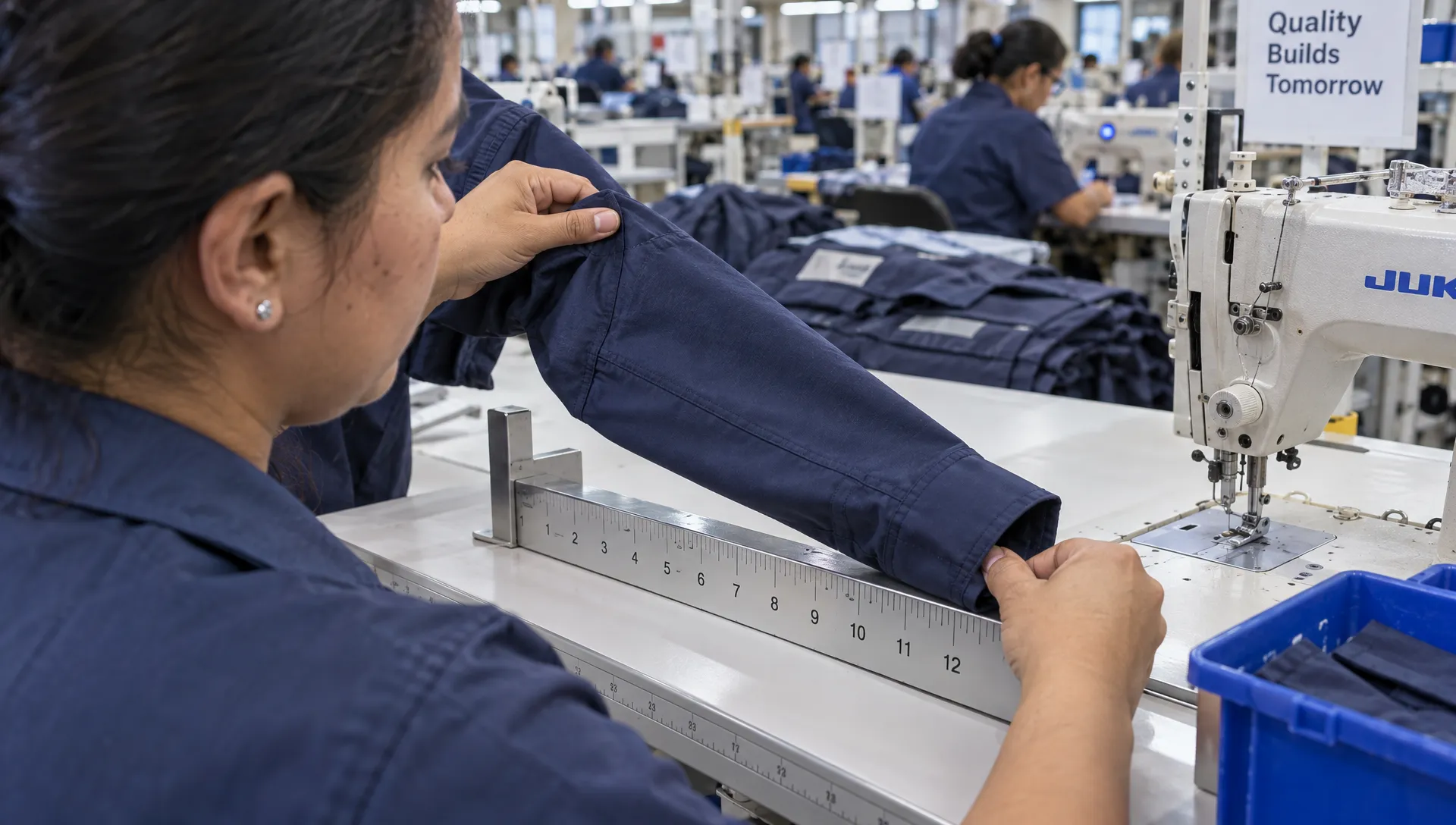
Create a measurement specification covering the full size range. For each point of measure, include its definition, measuring method, target value and allowed tolerance. A sketch is especially helpful where different measuring routes could produce different results.
Critical points vary by garment. Rash guards may require close attention to chest width, upper-arm circumference and body length. MMA shorts need checks around the waist, seat, rise and leg opening. BJJ gis need coordinated jacket, sleeve and trouser dimensions.
Record stretch-garment measurements in a defined condition, such as relaxed and laid flat. Otherwise, one inspector may gently pull the fabric while another measures it without tension.
Review transitions, not only endpoints
The smallest and largest sizes deserve attention, but problems can also appear where the grading approach changes. A range might increase in one set of increments through medium, then use different increments above large.
Check whether these transitions preserve balance. Adding chest width without enough upper-arm room can leave a larger rash guard restrictive. Extending a gi jacket without reviewing sleeve length can create a different silhouette from the approved base size.
A cross-size review makes custom uniforms more dependable because it evaluates the relationship between measurements, not just isolated numbers. Put samples side by side and compare sleeve angle, panel shape, pocket location and coverage as well as overall width and length.
Specify branding separately from pattern grading
Artwork should not automatically follow the same scaling rules as the garment pattern. A logo that grows with every size may become oversized on larger uniforms, while a fixed graphic can crowd a small front panel.
Choose a deliberate policy for each decoration. A chest logo might retain one approved width across adult sizes, with a separate youth version. A full-panel sublimated design may need size-specific artwork that preserves its composition around seams and openings.
Specify the artwork's dimensions and its reference points. “Centered on the chest” is open to interpretation. A placement drawing can define the centerline and distance from a seam or neckline using an agreed measuring method.
For custom uniforms with stripes, panel graphics or sponsor logos, review the complete garment rather than separate artwork files. Check that important elements remain visible and are not distorted by seam allowances, stretching or changes in panel shape.
If you are still defining those approval details, use the same discipline applied to custom sport uniform specifications that prevent reworks: convert visual preferences into instructions that production staff can verify.
Verify consistency after washing and movement
Use the same laundering conditions
A garment can meet its dimensions before washing and fall outside them afterward. Woven uniforms may shrink, while stretch garments can change through relaxation, laundering or inadequate recovery.
Agree on the care conditions the product is designed to withstand. Then measure samples before and after a documented washing and drying process that reflects the intended care label. Compare changes in length and width separately, since they may behave differently.
Do not apply a single shrinkage allowance to every component without checking it. A gi jacket body, collar, lining and trousers may respond differently. Decoration also needs review for puckering, distortion or a changed position relative to the garment.
Keep the material construction consistent between approval samples and production. Changes to knit structure, fabric weight or finishing can alter fit even when the pattern remains unchanged.
Test the movements the garment must support
Static measurements cannot tell you everything about performance. Ask representative wearers to perform movements relevant to the discipline, such as raising their arms, squatting, kicking or adopting a grappling stance.
Use the same assessment criteria across sizes: restriction, unwanted exposure, waistband movement and seam pressure. A larger sample should not pass merely because the wearer can put it on.
For custom uniforms, post-wash movement checks connect the measurement specification to actual use. Record the wearer's relevant body measurements alongside feedback so a fit problem can be traced to the pattern, fabric or size selection.
Make production checks specific to each size
Set tolerances that support the grading plan
A tolerance is the permitted variation around a target measurement. It is not a substitute for accurate grading, and one blanket tolerance may not suit every part of a uniform.
As an illustrative example, suppose adjacent sizes differ by 2 cm at a flat measurement and each permits a tolerance of ±1.5 cm. Their acceptable measurement ranges overlap. That overlap may be acceptable for the product, but it should be a conscious decision rather than an unnoticed consequence of broad tolerances.
Discuss tolerances in relation to fit sensitivity, fabric behavior and manufacturing capability. An opening that controls comfort or coverage may require different treatment from a less sensitive dimension.
Inspect the range, not just the popular size
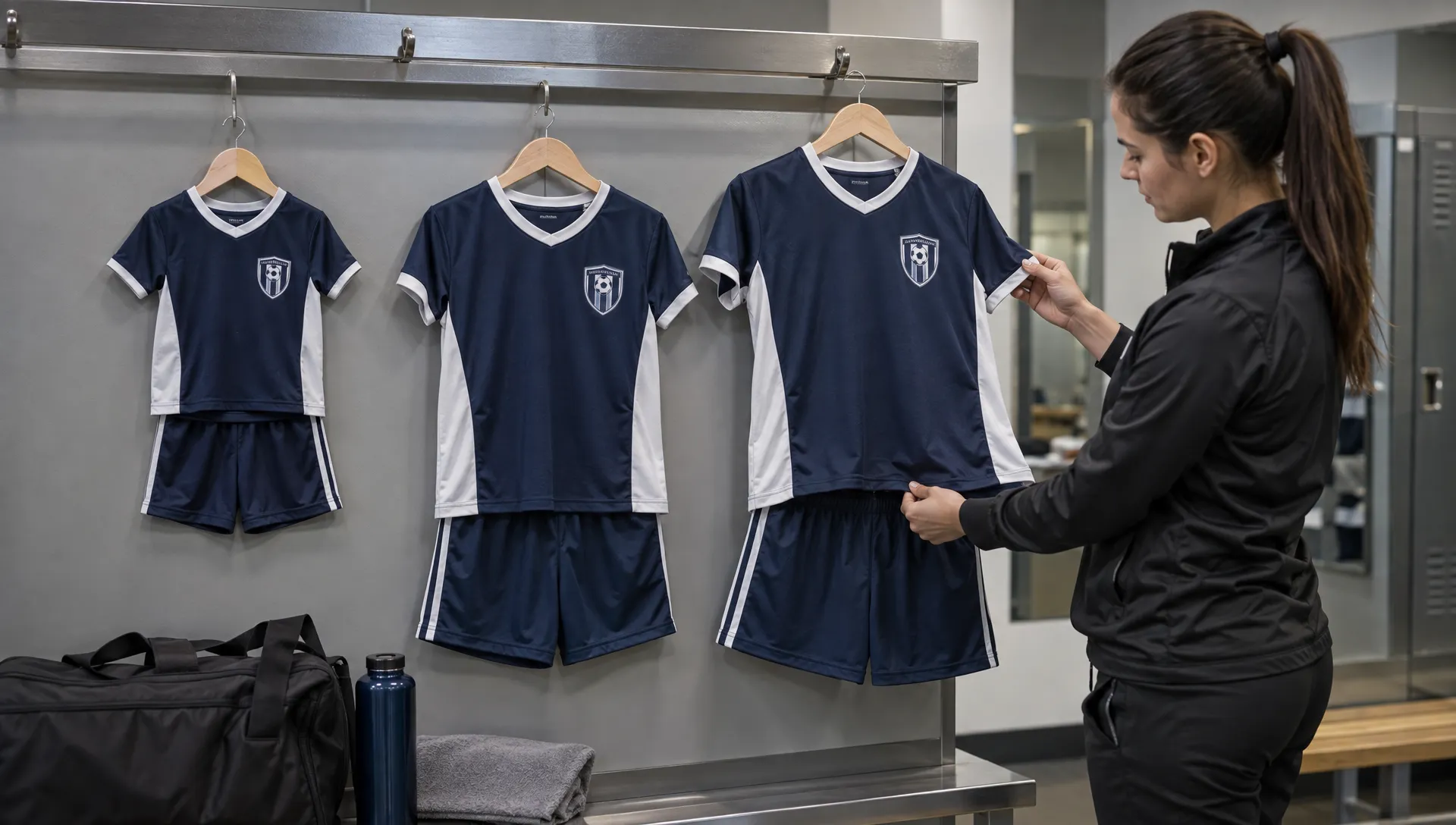
An approved medium sample does not establish that the entire production range is correct. Request a size-set review that includes the smallest size, largest size and any important grading transitions. A full size set may be appropriate when launching an unfamiliar fit.
For bulk inspection, agree on checks that represent the sizes and material or production batches in the order. Comparing everything against a single medium reference can miss size-specific cutting, sewing or artwork errors.
Use the applicable measurement sheet for each inspected size and record deviations. Photographs should show the garment, size identification and measuring position clearly enough to support a corrective discussion.
This keeps custom uniforms aligned with their approved specifications rather than relying on a general impression that the order looks consistent. If size collection is also causing problems, a separate workflow for ordering team apparel without sizing delays can help organize wearer selections without replacing technical fit approval.
Keep fit approval separate from medical claims
A close-fitting compression garment is not automatically validated for therapeutic use. Ordinary fit approval does not establish a controlled pressure level or substantiate medical claims.
If a product is intended for a medical purpose, assess its intended use and destination-market requirements separately. OMC Medical provides regulatory support for medical devices, which is a different review from sportswear sizing and sewing quality. Keep that distinction clear in product development and marketing.
Preserve the approved standard for repeat orders
Once the range passes review, create a controlled approval package. It should contain the current patterns, size specifications, fabric requirements, artwork files, placement instructions and testing records. Identify the approved version so an old measurement chart cannot silently return to production.
Retain reference garments where practical, but do not rely on a sample alone. Fabric can age or relax, and a garment does not explain every construction decision. Written specifications make the reference more useful.
When a reorder changes fabric, decoration technique or a key component, decide which approvals must be repeated. A nominally identical material can still perform differently if its construction or finishing changes.
For custom uniforms, repeatability depends on controlling changes as carefully as the first order. Agree that substitutions affecting fit, appearance or function require review before use, then keep an approval record available to both buyer and manufacturer.
Frequently asked questions
Should every size use the same logo dimensions? Not necessarily. Fixed dimensions can work well for some chest logos, but smaller panels or youth sizes may need a separate approved version. Preserve logo proportions and review placement on actual garments.
Can one approved sample confirm the whole size range? No. It confirms that sample's fit and construction. Review additional sizes to verify grading, particularly the smallest, largest and any sizes where the grading rules change.
How do you choose measurement tolerances? Consider how strongly each measurement affects fit, the fabric's behavior and the manufacturer's process capability. Check whether the tolerances undermine meaningful differences between adjacent sizes. Avoid copying one tolerance across every measurement without review.
What should trigger a new fit approval? Changes to the pattern, fabric construction, stretch behavior or fit-sensitive components should prompt a review. The extent of retesting depends on what changed and which sizes could be affected.
Prepare a size-consistency brief before requesting production
Before your next order, bring together the intended wearer profile, complete size chart, critical measurements and artwork placement rules. Identify the samples and tests you want reviewed before bulk approval.
Arus Sportswear offers custom designs, private label and OEM manufacturing for MMA fightwear, BJJ gis, boxing apparel and martial arts uniforms. When discussing your project, ask how your size-set requirements, fit checks and approval records can be incorporated into the production plan.
The goal is straightforward: approve a repeatable system for every size, not just one attractive sample.