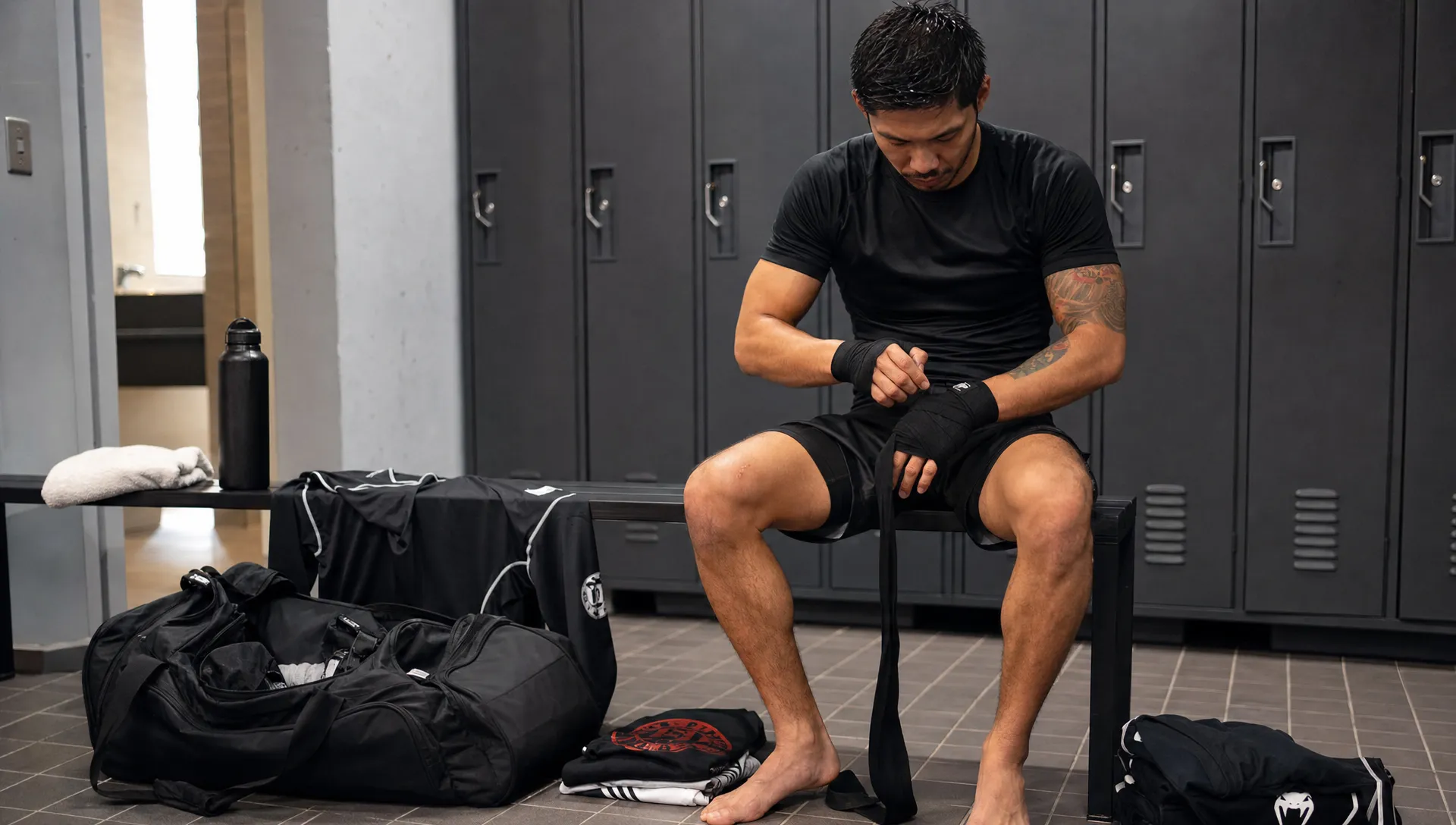
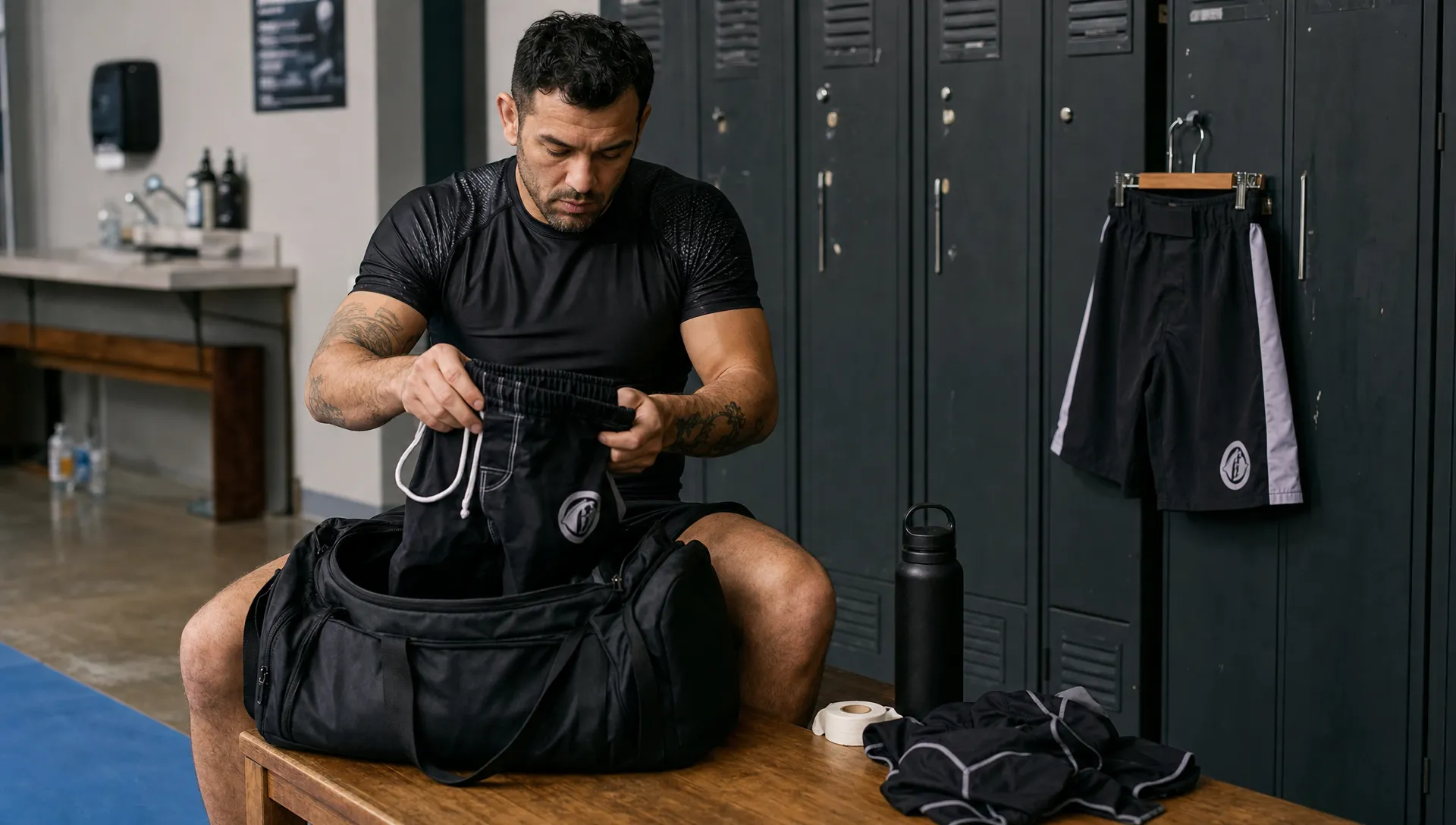
A pair of shorts can look ready for any combat sport on a product page, but the mat will expose the difference fast. BJJ fight shorts are pulled, compressed, folded under hips, rubbed against tatami and tested through positions that MMA shorts do not face in the same way.
For brands, gyms and distributors, that difference matters. If you source BJJ shorts using a generic MMA short spec, you can end up with waistbands that roll during inversions, seams that chafe in closed guard, side openings that snag toes or branding that looks good before the first hard session but wears badly after repeated washing.
MMA shorts and BJJ shorts are related products, not identical ones. They share a need for mobility, sweat management and durability, yet they serve different movement patterns and rule environments. A good manufacturing brief should reflect that from the first sample.
The core difference is how athletes move
MMA shorts are designed for a mixed ruleset: striking, wrestling, cage work, scrambles and ground exchanges. The athlete needs room for kicks, knees, sprawls and clinch transitions. Some MMA cuts use wider leg openings, side slits or a looser outer shape because dynamic striking mobility is part of the product brief.
BJJ fight shorts are made for sustained grappling. Athletes spend more time seated, supine, inverted, kneeling, passing and entangled with another athlete's limbs. Fabric gets trapped under bodyweight. The waistband is pulled by rotational pressure. The inner thigh and seat zones get constant friction. The shorts must move without creating handles, snags or bulky pressure points.
That is why BJJ shorts are not simply “MMA shorts with a jiu jitsu print.” The best specs start with the question: what does this garment need to do during guard retention, passing, wrestling rounds and no-gi competition?
BJJ fight shorts vs MMA shorts: key spec priorities
The table below summarizes the main differences a sourcing team should discuss before approving patterns, fabrics or trims.
| Spec area | BJJ fight shorts priority | MMA shorts priority | Why it matters |
|---|---|---|---|
| Fit | Controlled, close enough to avoid grabbing or snagging | Often more open for kicking and mixed movement | BJJ involves more limb entanglement and fabric contact |
| Length | Usually mid-thigh to above-knee depending on rules and brand style | Can range from short-cut to board-short length | BJJ shorts must balance coverage with guard mobility |
| Leg opening | Secure and mobile without excessive flare | Often wider or slit for high kicks | Extra fabric can catch during grappling exchanges |
| Waistband | Low-profile, secure under pulling and inversion | Secure but may allow more closure variation | BJJ waistbands face constant rotational force |
| Hardware | Minimal, soft and covered | Also safety-focused, but sport rules differ | No-gi events often restrict pockets, zippers and rigid parts |
| Seams | Chafe-resistant when seated, kneeling and compressed | Built for multi-directional movement and impact | Ground positions expose seam comfort problems quickly |
| Branding | Smooth prints or low-profile placements | More room for large fightwear graphics | Raised logos can irritate or violate rules in some contexts |
If you are comparing baseline cuts, Arus Sportswear's Fusion MMA fight shorts show how lightweight construction and short-cut mobility can work in a mixed combat short. For BJJ-specific production, the same foundation often needs tighter control around waistband, leg opening, hardware and seam placement.
Fit and pattern: control matters as much as stretch
BJJ brands often focus on fabric first, but pattern engineering does just as much work. A high-stretch fabric cannot save a pattern that twists, rides up or creates excess fabric around the crotch.
A BJJ short pattern should support hip flexion, kneeling pressure and rotational movement. The athlete should be able to shoot, sit through, invert and recover guard without the shorts sliding off the waist or bunching between the legs. The cut does not need to feel restrictive, but it should feel controlled.
Length and leg opening
For grappling, longer is not always better. A longer board-short style can provide coverage, but it can also fold under the knee, catch on a partner's foot or feel heavy when soaked with sweat. Very short cuts improve mobility, but some gyms and customers prefer more coverage for no-gi training.
The best length depends on your market and intended use. A U.S. no-gi brand may want a modern above-knee athletic fit. A gym selling beginner training kits may prefer a more conservative length. A competition-focused line should be checked against the current tournament rules where your customers compete.
Leg opening is just as important. If it is too wide, the shorts can flare during inversions and expose compression layers. If it is too narrow, athletes feel resistance when passing, squatting or shooting. Many BJJ shorts work best with a moderate opening and enough stretch through the gusset or paneling to move without large side slits.
Gusset and panel placement
A gusset can improve mobility, but only if it is placed for grappling. In BJJ, the crotch and inner thigh area is under repeated stretch during guard, half guard, mount escapes and wrestling shots. A gusset that is too stiff or poorly shaped can create pulling at the seams.
Panel placement should reduce stress at the center seam and support lateral movement. It should also avoid bulky intersections where the athlete sits or where a partner's knee pressure lands during passing. On a sample, test the pattern in real positions rather than only with a standing fit check.
Waistband and closure systems need special attention
A waistband that feels fine in a showroom can fail in three minutes of rolling. In BJJ, the waistband is constantly challenged by hip movement, framing, seat scooting, guard pulls and inversions. If it stretches out, twists or relies on bulky closures, athletes notice immediately.
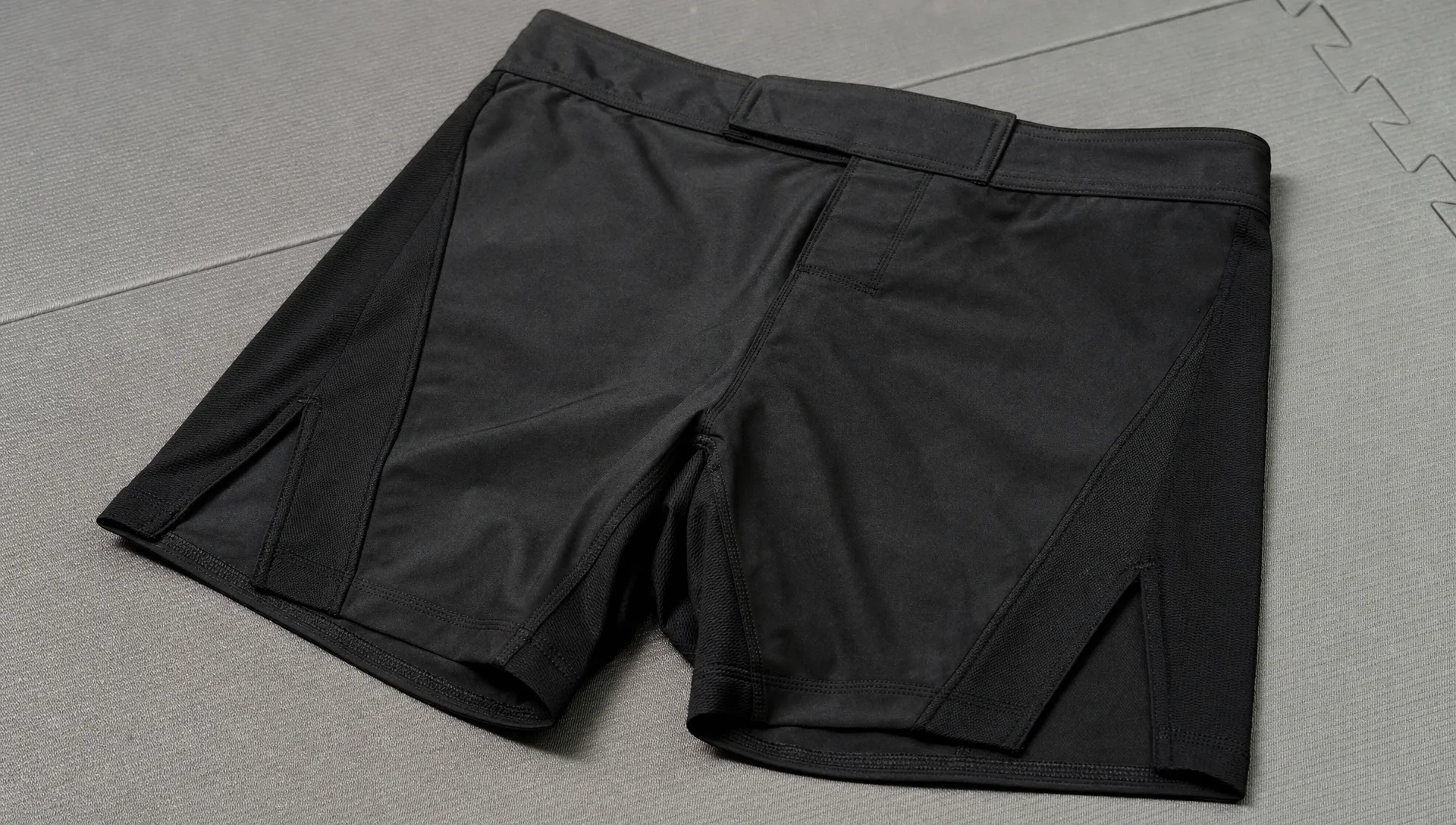
For BJJ fight shorts, the waistband should be secure, flat and comfortable under pressure. Internal drawcords are popular because they reduce exposed snag points. Elastic can add comfort, but it needs enough recovery to avoid a loose fit after repeated wear. Hook-and-loop closures can work in some fight short designs, yet exposed or bulky hook-and-loop may scratch rash guards, collect lint or irritate training partners.
A good waistband brief should define closure placement, drawcord type, elastic width, stretch recovery, label placement and how the inside finish feels against the skin. That level of detail prevents the factory from treating the waistband as a generic component.
Fabric: abrasion, recovery and hand feel beat flash
MMA shorts often emphasize a mix of lightness, ventilation and explosive movement. BJJ shorts need those qualities too, but they also need strong abrasion resistance and reliable recovery after being stretched under pressure.
Common choices include stretch woven polyester blends, ripstop-style constructions and polyester-spandex fabrics with quick-dry performance. The right choice depends on your product tier, target retail price and intended customer. A premium competition short may justify a more technical 4-way stretch fabric, while a gym team short may prioritize durability and cost control.
| Fabric decision | What to ask for | What to test |
|---|---|---|
| Stretch direction | 2-way or 4-way stretch based on movement needs | Squats, sprawls, guard recovery and seated positions |
| Abrasion resistance | Fabric that handles mat friction and partner contact | Inner thigh, seat and side panel wear after rolling |
| Recovery | Elastic return after repeated stretching | Waist, crotch and leg opening shape retention |
| Weight | Light enough for sweat management, substantial enough for durability | Wet feel, transparency and cling during training |
| Print compatibility | Sublimation or durable print method suited to the fabric | Color fastness, cracking, peeling and wash results |
Do not choose fabric only from a swatch card. Swatches help with hand feel, but they do not show how the textile behaves when an athlete is sweaty, seated and under pressure. For BJJ shorts, sample testing on the mat is part of the specification process, not a final marketing step.
Seams must be durable without feeling bulky
Seam placement is one of the easiest details to overlook and one of the first things athletes complain about. BJJ creates pressure in unusual places. Athletes sit on seams, drag seams across the mat and compress seams under bodyweight during pins and escapes.
For BJJ fight shorts, the inside finish should be smooth enough for bare-skin wear or use over compression shorts. Overly bulky seams in the crotch, seat or inner thigh can cause irritation. Weak seams in those same zones can fail during guard play or wrestling exchanges.
Reinforcement should be used where it actually helps. Bartacks or reinforced stitching can support stress points near the waistband, side seams and gusset. However, reinforcement should not create hard ridges that rub against the athlete or training partner. The goal is a short that feels clean inside while still holding up to repeated grappling stress.
Quality control should include seam stretch checks, wash testing and real movement testing. A production sample should be worn through sparring rounds, not just photographed on a model.
Compliance and safety are different in no-gi BJJ
Tournament rules are another reason BJJ shorts need separate specifications. Many no-gi rule sets restrict hard trims, open pockets, zippers, buttons or other elements that can scratch, snag or create unfair gripping opportunities. The IBJJF uniform guidance is a useful reference point for brands designing competition-oriented no-gi gear, but brands should always confirm the latest rulebook for each event or federation they serve.
MMA shorts also need to be safe and rule-appropriate, especially for amateur and professional events, but the apparel is judged in a different sporting context. BJJ places more emphasis on continuous body contact, limb entanglement and gripping risk. A small pocket opening, exposed cord end or rigid logo badge can become a bigger problem in no-gi grappling than it might appear during a standing fit test.
For a brand selling internationally, this matters even more. Customers in the United States, Canada, Germany, Australia, Japan, Thailand, the Netherlands and wider Europe may compete under different organizations. A safe product brief avoids questionable trims from the start instead of trying to create separate fixes after production.
Branding should survive grappling, not just look good online
BJJ shorts give brands a strong visual canvas, but decoration needs to match the sport. Large printed panels can look excellent, especially with sublimation, because the artwork becomes part of the fabric surface rather than a raised element. This is useful for team shorts, academy merchandise and private label fightwear.
Raised patches, thick rubber badges or poorly placed embroidery can be less suitable for no-gi grappling. They may rub, peel or create unwanted texture in high-contact zones. If you want a premium logo detail, place it where it will not interfere with movement or contact, then test it after washing and rolling.
Color and artwork should also align with your sales channel. A competition-focused short may need a cleaner design that fits event rules. A lifestyle-oriented gym drop can carry bolder graphics. A distributor serving multiple markets may need a core black version, a team color version and a limited graphic version to cover different buyers without overcomplicating inventory.
This is the same product discipline brands use when developing gis. If your line includes both no-gi shorts and kimono products, the sourcing logic in the BJJ gis buyers guide for brands, gyms and distributors can help you think through sizing, branding, quality control and packaging as one system.
Sizing and grading must reflect grappling bodies
BJJ athletes are not shaped like one generic activewear fit model. A size medium may need to fit a lean featherweight competitor, a stocky wrestler or a hobbyist with larger thighs. If your grading only scales the waist evenly, the shorts may become too tight through the hip and thigh or too loose at the waistband.
A better BJJ fight shorts size chart separates body measurements from garment measurements. Waist, hip, outseam, inseam, front rise, back rise and leg opening should be reviewed across sizes. For international buyers, include both inches and centimeters to reduce friction for North American, European and Asian customers.
Fit testing should include athletes across the size range, not only the middle size. If the small size rides too low during inversions or the extra large restricts hip flexion, the grading needs revision before bulk production. The same principle behind a reliable jiu jitsu suit size chart applies here: clearer measurements reduce returns and protect brand trust.
Sample testing checklist for BJJ shorts
Before approving bulk production, test samples in the exact setting your customers will use them. A short that passes a standing mirror check has not passed a BJJ test.
Use this checklist during development:
- Test guard retention, passing, shots, sprawls, inversions and seated movement.
- Check whether the waistband rolls, slips or creates pressure after hard rounds.
- Look for fabric snagging, leg flare and bunching between the thighs.
- Wash and dry samples multiple times according to the care label before final approval.
- Inspect print durability, seam strength, drawcord security and label comfort.
- Confirm trims, pockets and closures against the rules your customers care about.
If the short will be sold as both MMA and BJJ gear, be honest about the tradeoffs. A hybrid short can work well, but it still needs to be tested against both striking mobility and grappling friction. If BJJ is a primary use case, do not let MMA styling decisions weaken the mat performance.
Frequently Asked Questions
Are BJJ fight shorts the same as MMA shorts? No. They may use similar fabrics and construction methods, but BJJ fight shorts need more focus on grappling fit, waistband security, seam comfort, hardware restrictions and abrasion resistance from mat contact.
Can MMA shorts be used for BJJ training? Yes, many athletes train BJJ in MMA shorts, especially if the shorts are lightweight, secure and free from unsafe trims. For a brand creating a BJJ-specific product, the specs should still be adjusted for no-gi grappling.
What fabric is best for BJJ fight shorts? Many brands use stretch woven polyester blends or ripstop-style fabrics with good recovery and quick-dry performance. The best choice depends on price point, durability goals, print method and whether the shorts are for training or competition.
Should BJJ shorts have pockets? For competition-focused no-gi shorts, pockets can be a problem because many rule sets restrict open pockets or hard closures. If your product is designed for tournaments, check the current rules and avoid features that could create snagging or safety issues.
How should brands test BJJ shorts before production? Test them through live grappling rounds, not only standing fit checks. Pay close attention to waistband movement, seam irritation, leg opening control, fabric stretch recovery, print durability and post-wash shape retention.
Build the short around the sport
BJJ fight shorts need their own specifications because jiu jitsu creates its own demands. The garment has to stay secure during inversions, resist mat abrasion, avoid snag points, comply with no-gi expectations and still represent the brand clearly.
For brands, gyms and distributors, the safest path is to brief the product around actual grappling use before fabric, artwork or packaging decisions are finalized. Arus Sportswear supports private label and OEM production for MMA and martial arts apparel, including custom fightwear for brands that need controlled specs, custom designs, branding options, bulk order support, low minimum orders and worldwide shipping. To plan a BJJ short that performs on the mat and fits your brand, start with Arus Sportswear and build from the sport outward.