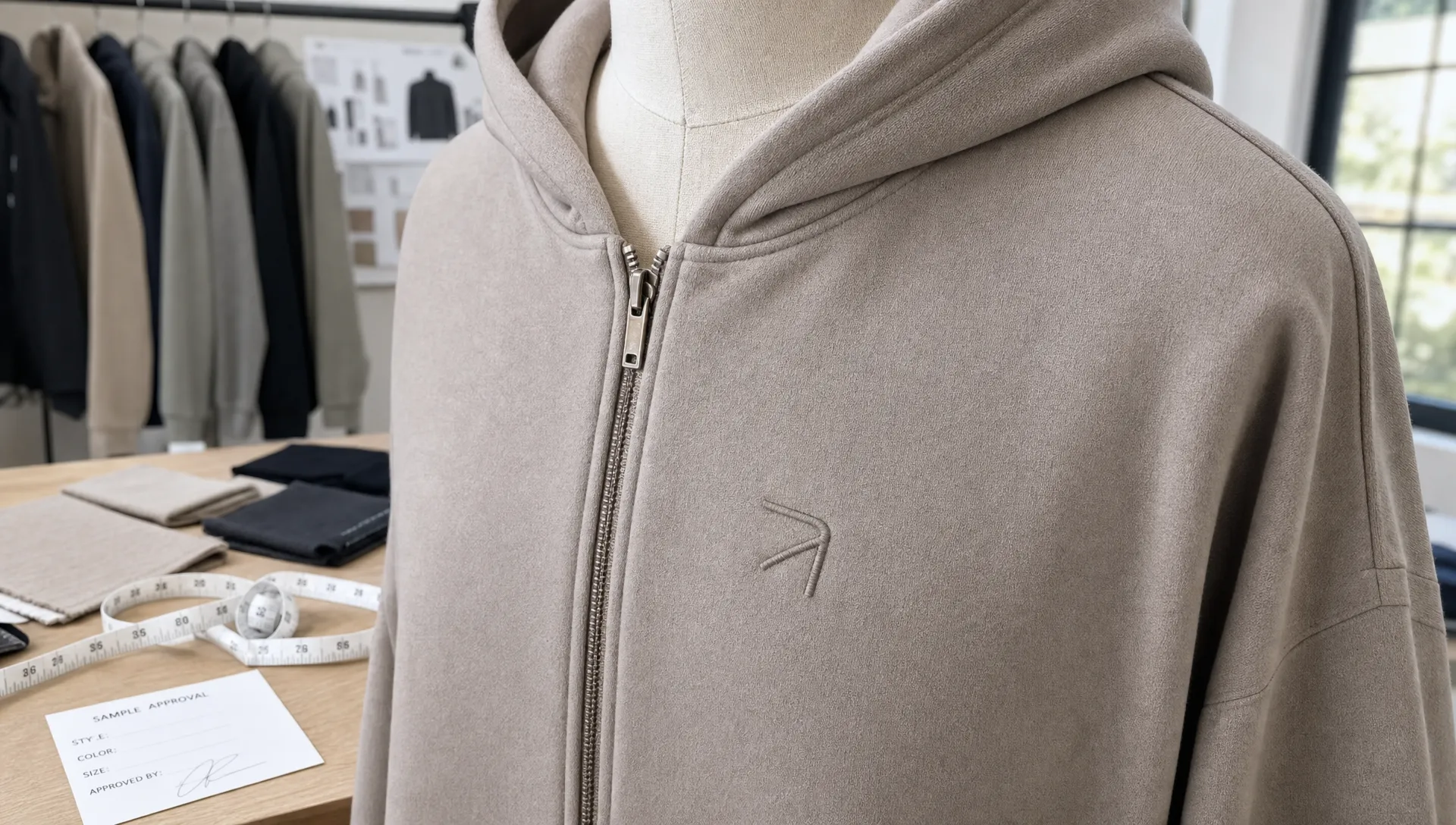
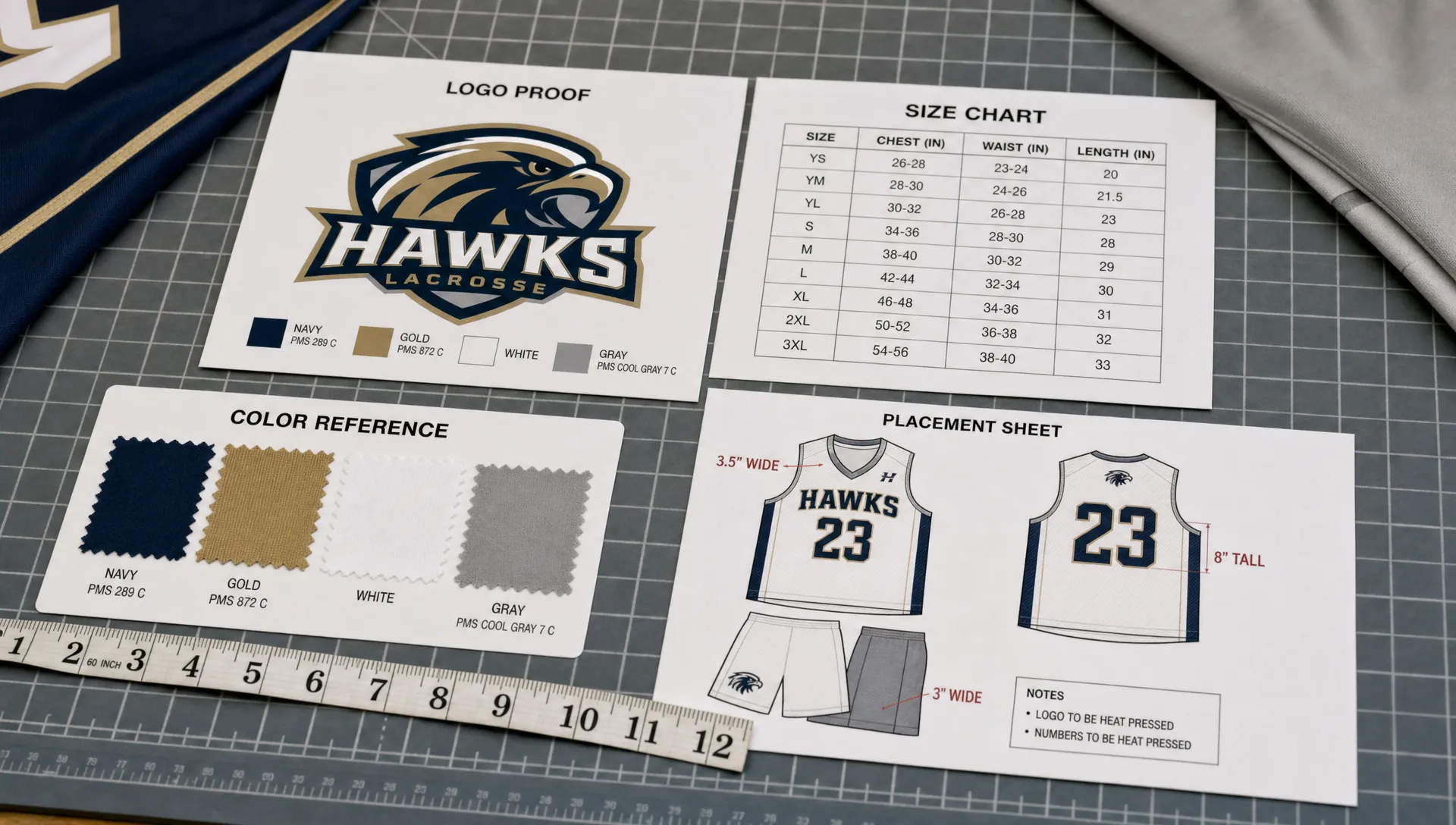
Costly reworks rarely begin on the sewing line. They usually begin earlier, when a logo is approved from a blurry mockup, a color is described as “dark red,” a size chart has no tolerance or a player name is corrected after production has already started.
For brands, gyms and distributors ordering custom sport uniforms, every unclear detail can turn into extra sampling, material waste, delayed launch dates and difficult conversations with teams or retail buyers. The goal is not to make the approval process complicated. The goal is to make the order clear enough that your manufacturer can repeat it accurately.
Below are nine uniform details worth locking before sample approval and bulk production. Use them as a practical checklist for soccer kits, basketball uniforms, baseball sets, MMA teamwear, martial arts apparel and private label sportswear programs.
Why uniform reworks happen before production starts
A rework is any correction that must be made after a sample, print file, cut panel, label or finished garment has already been produced. Sometimes it is small, such as moving a chest logo down one inch. Sometimes it affects the entire order, such as changing fabric weight after the first bulk lot has been cut.
In custom manufacturing, the biggest risk is not customization itself. The risk is an approval process that relies on assumptions. A designer may assume the manufacturer understands the intended fit. A buyer may assume the screen color is close enough to the fabric color. A production team may assume the latest roster file is final.
Those assumptions are expensive because sports uniforms must balance branding, comfort, motion, durability and team consistency. If you are scaling a repeatable apparel line rather than placing a one-time team order, it helps to connect these production details with a broader sourcing plan. Arus Sportswear has covered that bigger picture in its guide to custom sports apparel tips for brands that want to scale.
The 9 details to confirm before bulk production
| Detail to lock | What to confirm | Rework it helps prevent |
|---|---|---|
| Sport-specific use | Movement, contact level, climate and rule needs | Wrong fit, weak seams or unsuitable trims |
| Fabric specification | Construction, weight, stretch, finish and hand feel | Fabric substitution or poor performance |
| Size chart and tolerances | Body measurements, garment measurements and grading | Inconsistent fit across sizes |
| Color standards | Pantone references, swatches and approval lighting | Mismatched panels, logos or repeat orders |
| Artwork placement | Vector files, dimensions, roster data and mockups | Crooked logos, wrong names or poor scaling |
| Decoration method | Sublimation, embroidery, screen print, transfer or patches | Cracking, bleeding, stiffness or wash issues |
| Construction details | Seams, reinforcements, waistbands and closures | Premature wear or uncomfortable uniforms |
| Labels and compliance | Fiber content, care, origin, size and brand labels | Relabeling, rejected stock or market delays |
| Approval workflow | Version control, sample comments and packing specs | Conflicting instructions or shipment errors |
1. Sport-specific performance requirements
A uniform should be designed for the sport first and styled around that function. A basketball jersey needs arm mobility and breathable comfort through repeated sprints. A soccer kit often needs lightweight fabric, secure numbering and comfort under constant outdoor movement. Baseball uniforms may need a different balance of structure, abrasion resistance and button or piping details. Combat sports apparel needs even more caution around trims, rough edges and stress points.
Before design approval, define how the uniform will be used. Is it for competition, training, retail merchandise or promotional events? Will athletes wear protective gear over it? Will the product be used in hot climates like Thailand or Australia, cold outdoor conditions in Canada or indoor gyms across Europe?
That context affects fabric, cut, seams and decoration. A design that looks strong in a flat mockup can fail if it restricts movement or uses details that do not suit the sport. When working on teamwear such as customized basketball uniforms, this first step helps keep the finished product aligned with real athletic use, not just brand presentation.
2. Fabric construction, weight and stretch
Fabric is one of the most common sources of rework because buyers often approve appearance without defining performance. Two fabrics can look similar in a photo but feel completely different on the body. One may stretch enough for movement, while another may pull at the seams. One white fabric may be opaque enough for uniforms, while another may become see-through under bright light or sweat.
A clear fabric specification should include the construction, weight range, stretch direction, finish and any performance expectations. If you need polyester interlock, mesh, spandex blend, woven fabric or heavyweight cotton for a martial arts uniform, say so in the tech pack. If you are open to manufacturer recommendations, define the outcome instead: breathable, durable, smooth surface for sublimation, matte hand feel or structured fit.
Do not rely on fabric names alone. Terms like “premium,” “performance” and “heavy duty” are too vague for production. A good specification gives your manufacturer enough information to source consistently and enough flexibility to suggest a better alternative when needed.
3. Size chart, fit block and tolerance range
A size chart is not the same as a fit system. Many reworks happen because the buyer approves a medium sample but does not confirm how the pattern should grade up and down across all sizes. The result can be a small size that fits well, an XL that feels too wide or youth sizing that does not match the intended market.
For custom sport uniforms, confirm whether the fit is athletic, relaxed, compression, unisex, men’s, women’s or youth-specific. Then define key garment measurements such as chest width, body length, waist, hip, inseam, sleeve opening or outseam depending on the product. The manufacturer should also know the acceptable tolerance range for each measurement.
Fit is especially important for international orders. A size large for a gym in the USA may not match expectations for a distributor selling in Japan or Germany. If you serve multiple regions, create a sizing system that reflects your customer base rather than copying a generic chart from another product.
4. Color standards beyond digital mockups
Digital mockups are useful for layout approval, but they should not be treated as final color proof. Screens vary, lighting changes perception and fabric absorbs dye or ink differently from paper. A navy on your laptop may become too bright after sublimation or too dull on a different fabric base.
Use recognized color references where possible, such as Pantone values for brand colors and physical swatches for fabric approval. Also clarify which parts of the uniform must match exactly and which can have slight variation. For example, a team logo may need tighter color control than an interior neck tape.
Repeat orders require special attention. If you plan to reorder the same custom uniforms later, keep approved color references and sample records. Dye lots and material batches can vary, so a physical production sample is often the best reference for consistency.
5. Artwork files, logo size and placement maps
Artwork problems are among the easiest mistakes to prevent and among the most frustrating to fix late. A low-resolution logo, missing font, unclear player roster or vague placement note can delay sampling and create avoidable back-and-forth.
Send production-ready artwork whenever possible. Vector files such as AI, EPS or editable PDF are usually preferred for logos because they scale cleanly. Fonts should be outlined or included. Player names and numbers should be provided in a clean spreadsheet, with spelling checked before submission.
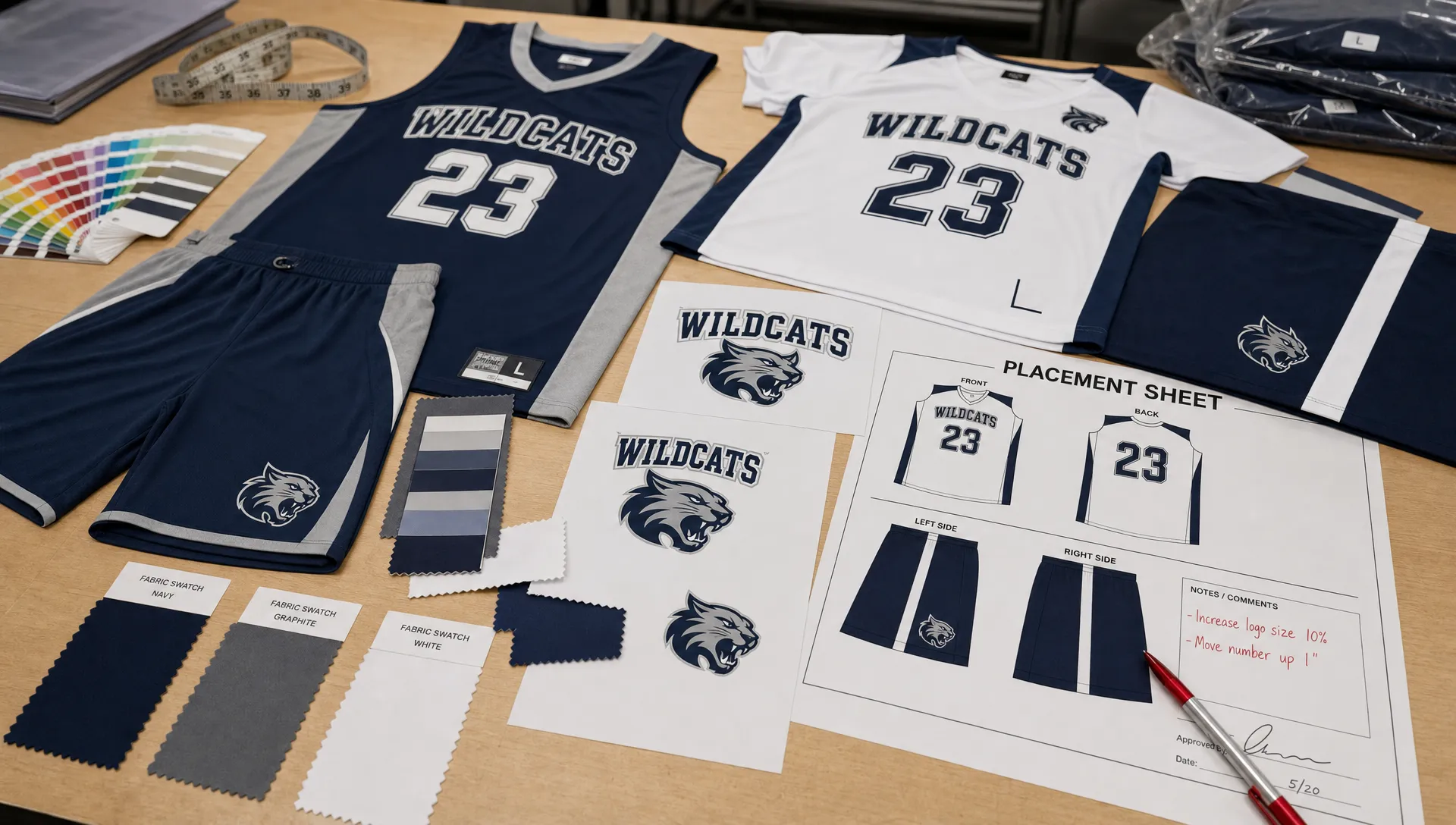
Placement should be measured, not guessed. Instead of saying “logo on left chest,” specify the logo width, distance from the neckline or center front and orientation. For roster-heavy orders like a customized soccer uniform, clean name and number data can be just as important as the jersey design itself.
6. Decoration method matched to the fabric
The right decoration method depends on the fabric, sport, order quantity, design complexity and expected wear. Sublimation can be effective for full-color polyester uniforms because the design becomes part of the fabric surface. Embroidery can give a premium look, but it adds weight and may not suit every lightweight or high-stretch garment. Screen printing, heat transfers, woven patches and applique each have their own strengths and limits.
Reworks happen when decoration is chosen only for appearance. A print may look sharp on a mockup but feel stiff on a performance garment. A large embroidered logo may pull on a thin fabric. A patch may look premium but create discomfort in a contact sport if the backing or edge is not suitable.
Confirm the decoration method early and ask for a sample or strike-off when the logo, fabric or color combination is new. This helps you judge scale, texture, color accuracy and wash behavior before the full order is produced.
7. Seams, reinforcements and hardware
Sports uniforms fail first at stress points. Waistbands stretch, underarms pull, crotch seams take pressure, collar seams rub and hems can twist after repeated washing. Construction details deserve the same attention as colors and logos.
Your spec should identify seam types, reinforcement points, waistband construction, drawcord style, closures, piping, pockets and any trims. For martial arts, MMA, football or other contact sports, avoid unnecessary hard or abrasive hardware. If a trim can scratch, catch, loosen or irritate skin, it should be questioned before sampling.
The best construction choices are not always the most complex. A clean seam, correct stitch type and suitable reinforcement can prevent more problems than a decorative feature that looks good in photos but fails under training conditions.
8. Labels, care instructions and market compliance
Labels often get less attention than the visible design, yet they can create serious rework if they are wrong. A finished uniform may need relabeling if the size label, country of origin, fiber content, care instructions or brand label is missing or inaccurate.
Requirements vary by market. The U.S. Federal Trade Commission provides textile labeling guidance covering areas such as fiber content, country of origin and business identification for many textile products. You can review its business guidance in Threading Your Way Through the Labeling Requirements Under the Textile and Wool Acts. In the European Union, Regulation (EU) No 1007/2011 covers textile fiber names and related labeling of textile fiber composition.
If you sell in the USA, Canada, Germany, Australia, Japan, Thailand or across Europe, confirm your labeling requirements before production. Your manufacturer can follow the label artwork and placement you approve, but the brand or importer should verify legal compliance for each target market.
9. Approval workflow, version control and packing specs
Even a strong tech pack can fail if the approval process is messy. Reworks often happen because different team members send conflicting instructions, a sample comment refers to an old file or a last-minute roster change is not clearly marked.
Use one final version of the tech pack, one final artwork folder and one approved comment sheet for each sample round. Mark changes clearly. If you approve a sample with exceptions, list those exceptions in writing so the production team knows exactly what must change before bulk manufacturing.
Packing specs also matter. Confirm whether uniforms should be packed by player, size, team, colorway or SKU. If you need barcode labels, carton marks, polybags or size breakdowns for distribution, define them before the order is packed. Repacking finished goods is a rework too, even if the sewing is perfect.
A simple pre-production checklist for buyers
Before you approve a custom uniform sample, pause and confirm that your order documents answer these questions:
- Is the sport, use case and target market clearly stated?
- Are fabric, fit, colors and decoration methods approved with references?
- Are all logo files, names, numbers and placements final?
- Are labels, care instructions and country requirements checked?
- Are sample comments written in one approved document?
- Are packing, size breakdown and shipping requirements clear?
This checklist will not remove every production challenge, but it reduces avoidable errors. It also makes communication with your manufacturer more professional and faster. If the same problems keep happening across multiple orders, the issue may not be your checklist alone. It may be worth comparing your supplier experience with these signs you need a better sportswear manufacturer.
Frequently Asked Questions
What causes most custom sport uniform reworks? Most reworks come from unclear specifications, incomplete artwork, incorrect sizing, color mismatches, late roster changes or missing label details. These problems are usually preventable when the tech pack, sample comments and approval files are managed carefully.
Should I approve a digital mockup or a physical sample? A digital mockup is useful for layout, but a physical sample gives better insight into fabric feel, fit, decoration quality and color behavior. For new designs, fabrics or suppliers, approving a physical sample before bulk production is usually the safer choice.
How detailed should my uniform tech pack be? Your tech pack should be detailed enough for another production team to understand the product without guessing. Include measurements, tolerances, fabric specs, artwork files, placement maps, trims, labels, colors and packing instructions.
Can one size sample represent the whole size range? One size sample can help confirm the base fit, but it does not prove that every size grades correctly. For complex products, broad size ranges or new fit blocks, reviewing additional sizes can reduce the risk of fit-related reworks.
When should I send player names and numbers? Send roster data only when it has been checked and approved internally. Late spelling corrections, number changes or duplicate entries can delay production, especially for sublimated or personalized uniforms.
Build custom uniforms with fewer production surprises
Reworks cost more than money. They slow down launches, weaken buyer confidence and make repeat orders harder to manage. The best way to prevent them is to make every important detail visible before production begins.
Arus Sportswear manufactures custom MMA apparel, martial arts uniforms and sportswear for brands, gyms and distributors worldwide. If you need private label or OEM support, custom branding, low minimum orders, bulk production or worldwide shipping, you can start by sharing your design brief, target market and uniform requirements with Arus Sportswear.