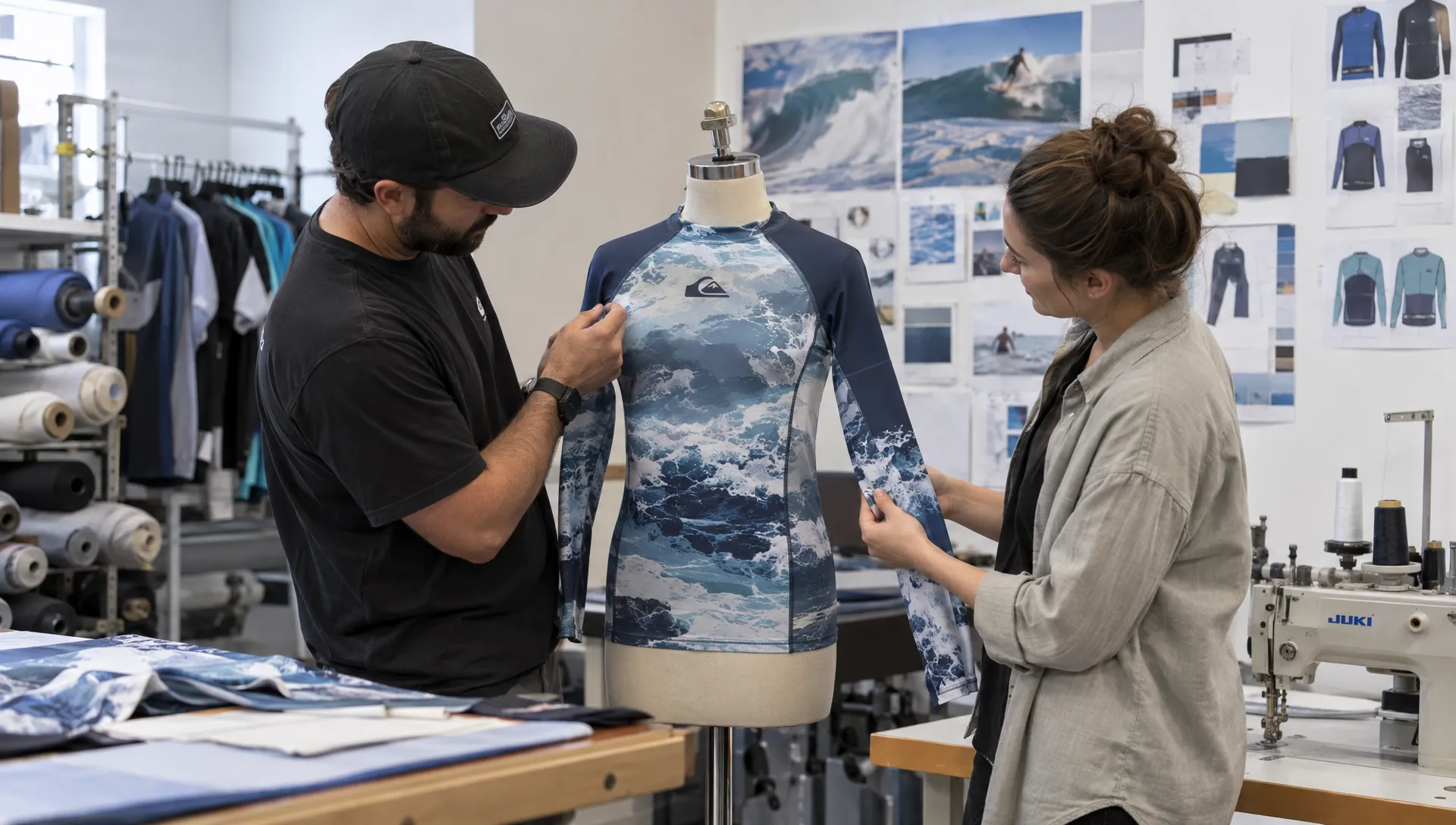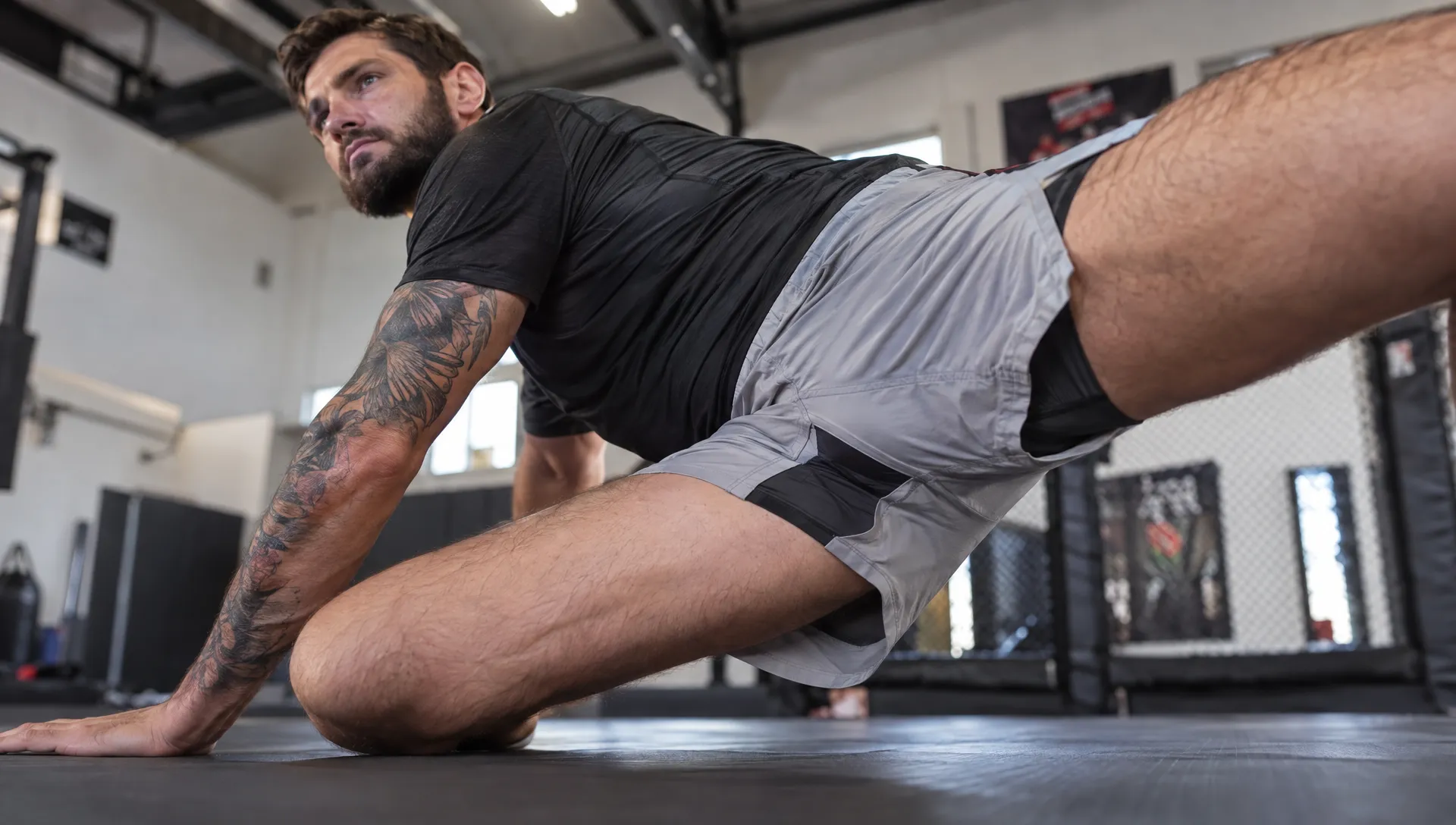
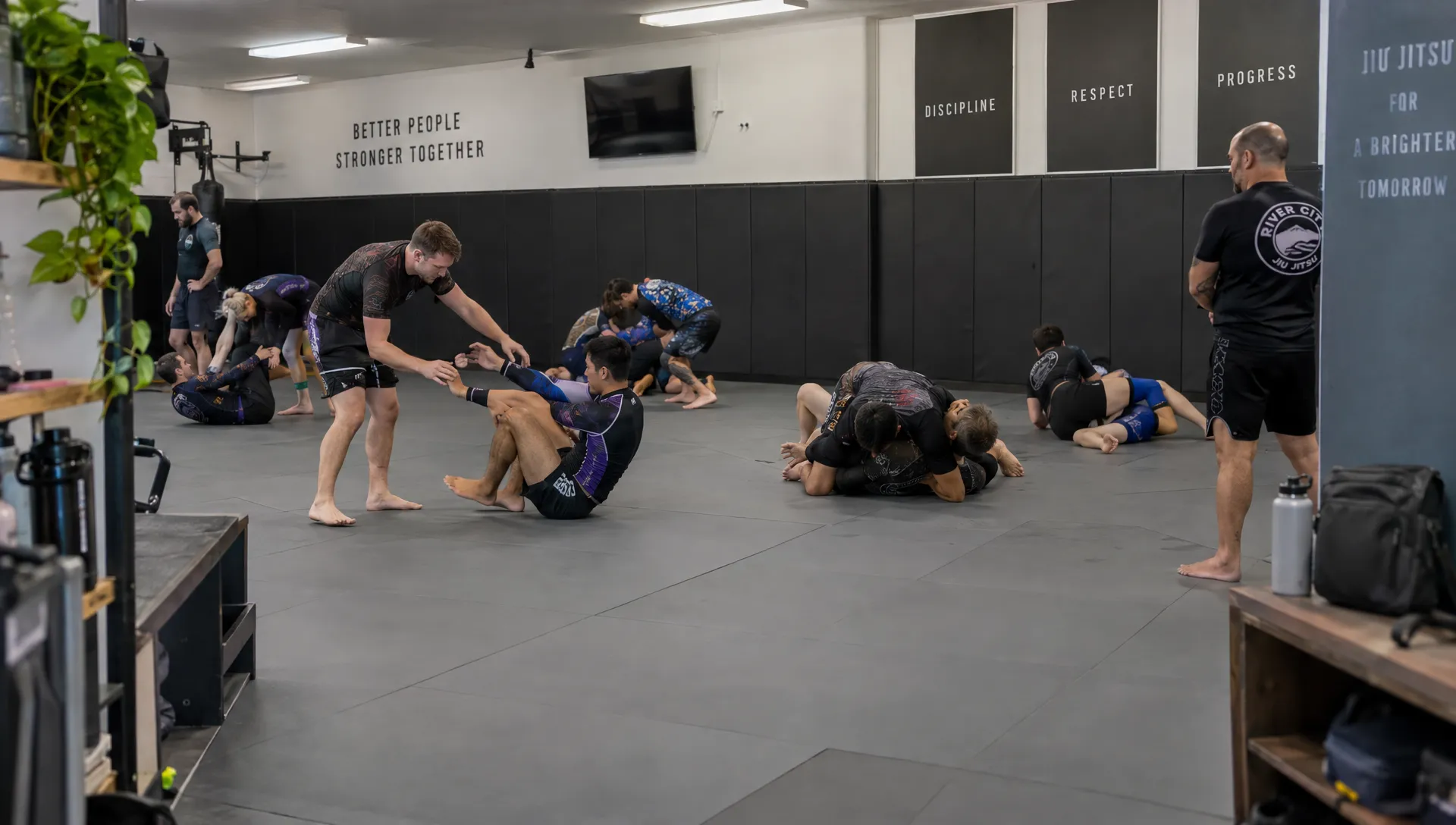
A clean mockup cannot tell you whether custom rash guards will survive repeated takedowns, mat friction and washing. The real test is whether the finished garment keeps its shape, stays comfortable and holds together after athletes train in it.
For brands and gyms, that makes development a quality-control problem as much as a design project. A sample can look excellent while hiding weak seam junctions, poor stretch recovery or a hem that rides up during every scramble.
The most useful approach is to turn likely failures into checks you can repeat before approving bulk production. Instead of asking a manufacturer for something “premium” or “durable,” define what must hold up, how you will test it and which results require a revision. This guide focuses on those decisions, from the first brief through production approval.
Create custom rash guards with a failure-first brief
Start by identifying the environment the garment must withstand. No-gi training exposes the fabric directly to mats and training partners. Wearing it under a gi introduces a different combination of rubbing, heat and pressure. A competition garment may also need to satisfy an organizer’s current color and uniform rules.
Describe expected use in your brief: training frequency, sleeve length, intended fit and whether athletes will wear it under a gi. Include the actual care routine you expect customers to follow, rather than an ideal washing routine nobody uses.
Then define observable failures. “Good compression” is subjective; “the neckline remains comfortable and returns to its original shape after training” is something a tester can evaluate.
For custom rash guards, the most useful specifications connect each requirement to a check and an approval decision.
| Requirement | Practical check | Reason to revise the sample |
|---|---|---|
| Shape retention | Compare garment measurements before and after the trial | Persistent bagging or dimensional change outside your agreed tolerance |
| Seam integrity | Inspect stressed junctions after movement and washing | Broken stitches, seam opening or spreading needle holes |
| Coverage | Observe sprawls, bridging and overhead reaches | Repeated hem movement that exposes the torso |
| Surface durability | Inspect areas that contact mats and training partners | Excessive pilling, snagging or fabric thinning |
| Branding durability | Compare graphics before and after stretching and washing | Cracking, lifting or unacceptable color change |
Agree on tolerances with the manufacturer before testing. A pass/fail rule written after you see the results is much easier to compromise.
Choose fabric by recovery, not just softness
Stretch and recovery are different properties. A fabric can stretch easily yet remain baggy after repeated loading. Another can recover well but feel restrictive when used in the wrong pattern or size.
Ask for the proposed fiber composition, fabric weight in GSM and fabric construction. Keep a labeled swatch from the approved material so you can compare later samples against it. Composition and weight alone do not prove durability, but they help identify substitutions.
During screening, compare swatches in both directions using the same marked length and controlled procedure. Observe whether they return toward their starting dimensions after release. Treat this as a comparison exercise, not a substitute for laboratory testing.
Custom rash guards should also be evaluated as complete garments because fabric recovery cannot compensate for a poorly balanced pattern. Watch for elbows that bag, a neckline that stays stretched or a torso that becomes loose after the garment is damp.
If you need laboratory evidence, ask a textile lab about abrasion, pilling and stretch-recovery tests appropriate to the fabric. Martindale abrasion testing can help compare candidates, but its results do not translate directly into a guaranteed number of grappling sessions.
For hot training environments, evaluate moisture handling separately from strength. Arus Sportswear’s guide to sourcing breathable apparel for high-heat combat sports explains why ventilation, wicking and drying speed should not be treated as interchangeable.
Specify seams that move with the fabric
A seam must tolerate the extension required by the garment’s fit. When the fabric stretches farther than the seam allows, stitches can break or the material can fail beside the stitching.
Ask the manufacturer to identify the seam construction used at major joins and explain why it suits the fabric. Do not approve “flatlock” as a quality guarantee by itself. Thread choice, stitch formation, tension and execution still matter.
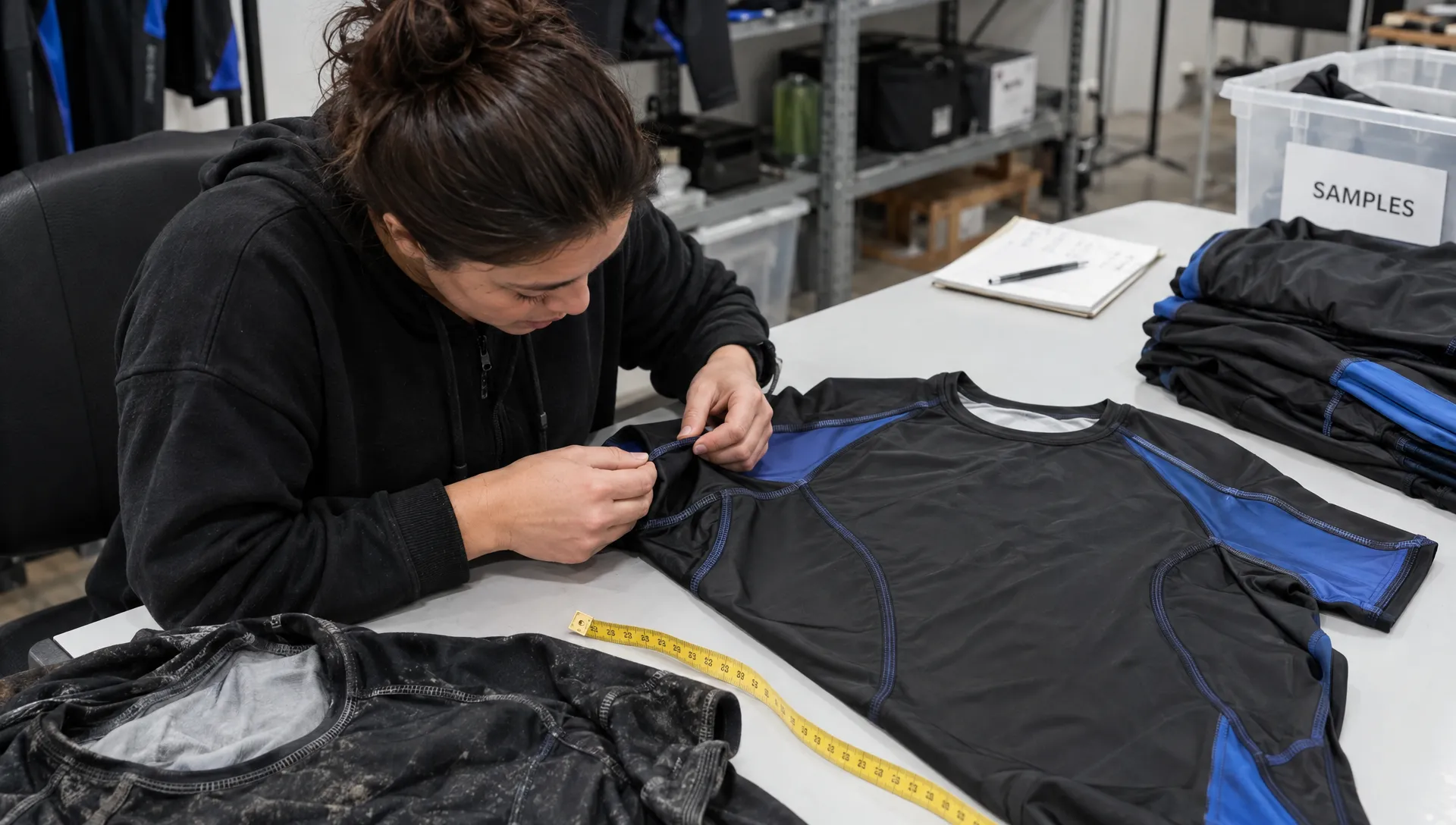
Check underarm intersections, shoulder joins and neckline attachment closely. Look for skipped stitches, uneven tension, unsecured ends and needle damage. Stretch an unworn sample gently across the seam and inspect whether the stitches accommodate the movement without opening.
For custom rash guards, adding reinforcement everywhere can create a new problem: bulky, restrictive junctions that rub during training. Reinforce the areas that need it while preserving movement and comfort.
Compare the inside of the garment with the outside. A clean exterior can conceal rough seam intersections that become uncomfortable under pressure. Arus Sportswear’s article on reinforcement zones martial arts rash guard brands often miss provides a closer look at those locations.
Record each construction change between samples. If the seam, thread and pattern all change at once, it becomes difficult to identify which adjustment solved the problem.
Run a sample trial with clear pass and fail criteria
Use a small group of athletes whose measurements and training habits reflect your intended customers. One strong athlete wearing one size cannot validate an entire size range.
Before training, photograph each sample and record its identifier, size and key measurements. Choose consistent measurement points, such as chest width, body length and sleeve length. Measure the garment flat and relaxed using the same method each time.
A practical pilot might include several normal training sessions and a defined series of wash cycles. For example, you could begin with six sessions and ten washes, then extend the trial where results are unclear. These are illustrative screening targets, not an industry durability standard or a lifetime claim.
Test custom rash guards through ordinary movement, including pummeling, sprawls, guard retention and bridging. Do not ask partners to pull deliberately on a worn garment to simulate strength testing.
After each session, log the location and nature of any problem. “Left underarm seam opened after session four” is actionable. “Quality feels off” is not.
Keep training conditions reasonably comparable between candidates. Differences in session length, washing or garment size can otherwise make a weaker fabric appear better than it is.
Include comfort and movement checks
Structural survival is only half the test. A garment that stays intact but distracts athletes with constant adjusting is not ready for release.
Observe whether the hem rises during bridging, the sleeves twist or the neckline pulls when athletes reach forward. Ask testers where they notice pressure or rubbing, then check whether the issue comes from size, pattern shape or construction.
A silicone hem treatment, if proposed, should be tested rather than assumed to solve ride-up. Some wearers may dislike the contact sensation, and added grip does not correct an incorrectly proportioned torso.
If you supply inclusive sports groups, collect individual comfort feedback. Programs such as Ons Plekske’s day activities for young people include sport alongside work and learning for participants with mild intellectual disabilities and/or autism. For apparel intended for similarly inclusive settings, ask each wearer about seam contact, neckline pressure and preferred fit rather than assuming shared preferences.
Custom rash guards benefit from this wearer-specific review even when the range is designed for a conventional fight gym. Avoid attributing every complaint to someone choosing the wrong size; repeated feedback at the same location often points to a product issue.
Measure what washing changes
Wash testing should reflect the care instructions you intend to provide. If a sample only holds up under a gentler routine than the label will recommend, the label and product are not aligned.
Keep detergent, temperature and drying method consistent across comparison samples. Record any departures from the procedure. Inspect only after garments have dried fully and had a consistent rest period.
Measure the same points again. Calculate dimensional change as the difference between the final and starting measurement, divided by the starting measurement, multiplied by 100. Record whether the change represents growth or shrinkage. Use an agreed method so the manufacturer can reproduce your results.
Inspect appearance and function separately. A garment may retain its measurements while developing rough pilling, an uneven neckline or damaged graphics. Conversely, an apparent shape change can come from inconsistent measuring rather than a material failure.
For custom rash guards, repeated washing is part of normal use, not an optional stress test. Approval should cover the combination of training and laundering rather than either one alone.
If you commission laboratory testing, ISO 5077 addresses dimensional change after washing and drying. Ask the lab to specify the washing and drying procedure used so you can interpret the report against your intended care instructions.
Keep branding from becoming a failure point
Choose decoration with the garment’s stretch and use in mind. A large, stiff surface application across a high-extension area can behave differently from the fabric underneath it.
Dye sublimation on a compatible polyester-based fabric colors the material without adding the same kind of surface film as a transfer. That makes it a useful option to discuss, but it does not prevent pilling, abrasion or every form of color change.
For transfers, screen printing or other surface decoration, ask how the application accommodates stretch. Inspect it while the fabric is relaxed and gently extended, then repeat the inspection after the wash trial.
When developing custom rash guards, approve artwork on the actual production fabric, not only on a digital rendering. Fabric color, stretch and print placement can change how a logo looks in use.
Check graphics across sizes. A placement that works on a medium may drift toward a seam or wrap awkwardly on a smaller size. Mark critical logo positions relative to specific garment measurement points.
Keep a physical print reference alongside the artwork file. Color names and on-screen previews are not enough to settle an approval disagreement.
Lock the approved sample before bulk production
Once a sample passes, preserve the combination that produced that result. Your approval should identify the material, pattern version, seam construction, decoration method and care instructions, not simply say “sample approved.”
Keep an approved reference garment and a matching record with the manufacturer. Depending on your order, request a pre-production sample made with the materials intended for bulk production. Clarify which differences, if any, still require approval.
For custom rash guards, material substitutions should trigger a review rather than pass silently because the fabric looks similar. A different knit or elastane content can change recovery, fit and how seams behave.
Confirm size grading too. Testing one size does not establish that the smallest neckline is comfortable or that the largest garment has adequate body length. Select additional sizes based on the range and your customers’ measurements.
During production inspection, use the approved sample and written specification together. Check measurements, workmanship, print placement and labeling against the agreed requirements. Where destructive testing is needed, allocate samples specifically for it.
Agree on inspection scope, defect classifications and remedies before production begins. Inspection cannot guarantee that every unit is flawless, but a defined process makes acceptance decisions more consistent.
Retain records from the trial and production review. If returns later cluster around one seam or size, those records help you distinguish a design issue from a batch-specific problem.
Ask questions that reveal production risk
A useful supplier conversation goes beyond fabric options and an attractive unit price. Ask who will control the approved specifications and what happens if production cannot match them.
Use these questions to make the next steps concrete:
- Which fabric and construction details will be recorded in the technical specification?
- What changes require written approval before production continues?
- How are minimum quantities calculated across designs, colors and sizes?
- Can the pre-production sample use the actual bulk fabric and decoration process?
- What inspection process and remedy apply to units outside the agreed requirements?
The answers should be reflected in your order documents. Verbal reassurance is difficult to use when a delivery differs from the approved sample.
For custom rash guards sold internationally, confirm labeling requirements for each destination market as well. Do not assume one label setup works everywhere, and keep the garment size chart separate from assumptions about regional sizing conventions.
Also clarify whether quoted timing includes sample revisions, approvals and shipping. A production deadline that leaves no time for corrections can undermine an otherwise sound development process.
Frequently Asked Questions
What fabric weight is best for a grappling rash guard? There is no single GSM that proves durability. Weight should be assessed alongside knit construction, recovery, abrasion behavior and finished-garment comfort. Compare candidates under the same conditions rather than choosing the heaviest option automatically.
Are flatlock seams always better? No. Flatlock can provide a low-profile join, but the result depends on materials and execution. Evaluate seam extension, comfort and integrity on the finished garment rather than approving it by stitch name alone.
How many sessions should a sample survive before approval? Set a documented screening trial that reflects expected use, then extend it if results are uncertain. A short trial helps reveal early failures but cannot justify a claim that the garment will last for a particular number of months or sessions.
Can one approved sample validate every size? No. Custom rash guards need size-range checks because grading can change neckline comfort, coverage and how stress falls across seams. Test additional sizes that represent your intended customers, especially at the ends of the range.
Should care instructions be finalized before testing? Yes. Test against the instructions customers will receive. If those instructions change, consider whether the wash trial needs to be repeated.
Turn the test results into a manufacturing brief
Arus Sportswear offers private label and OEM manufacturing with custom designs, branding, low minimum orders and worldwide shipping. When discussing a project, bring your intended use, size range, artwork and sample acceptance criteria.
Explore Arus Sportswear’s rash guard manufacturing options and ask which materials, construction choices and sampling arrangements are available for your brief. Approve the combination that performs in testing, then make that approved specification the reference for your bulk order.