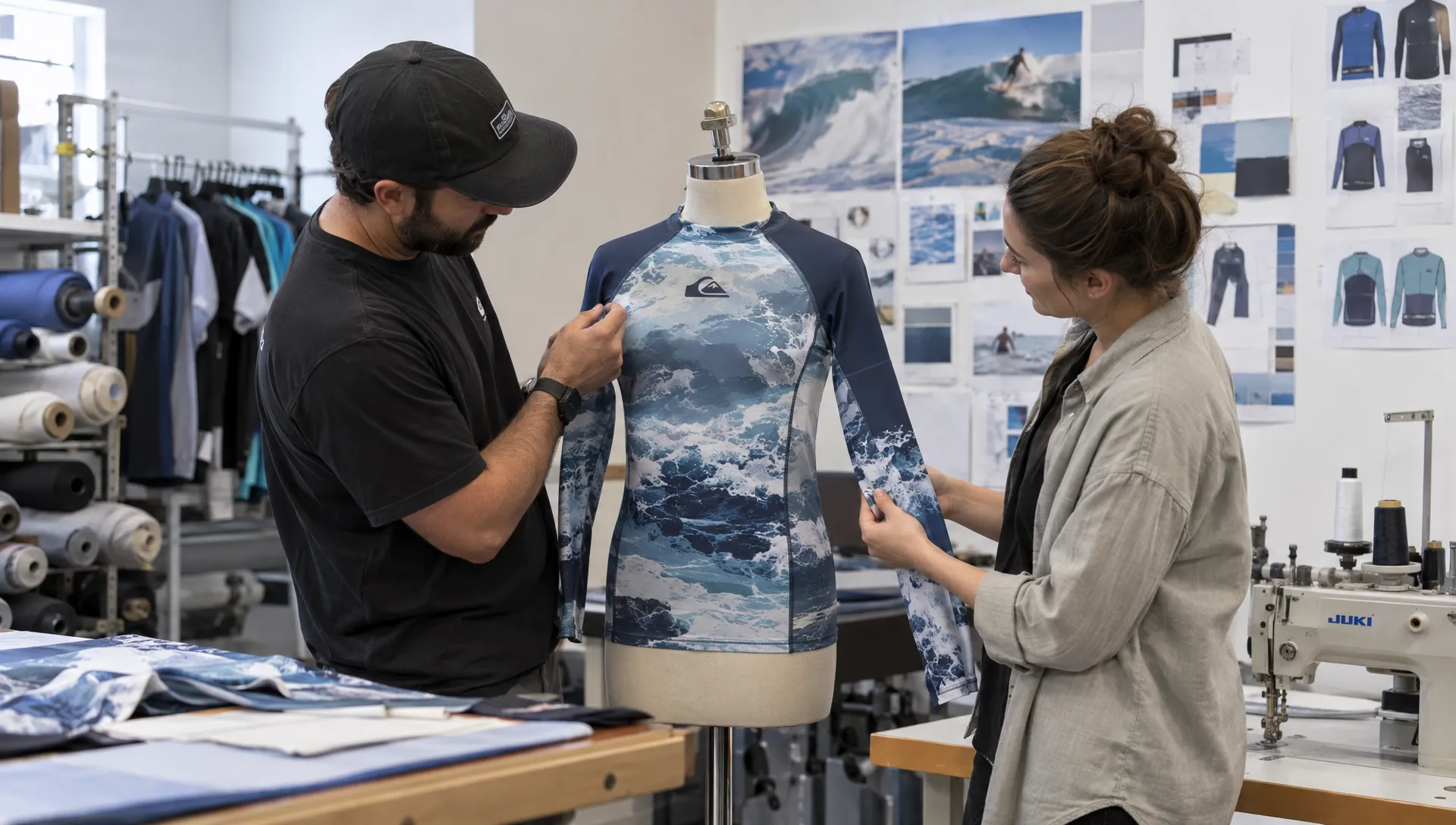
Testing bjj shorts before bulk production means checking more than appearance. A sample can look clean on a table yet ride up during guard work, loosen when wet or develop seam openings after repeated washing. For brands, gyms and distributors, those failures become returns, replacement costs and complaints once the order reaches customers.
The goal is to create a repeatable approval process: test production-intent samples, record what happens and compare the results against written acceptance criteria. Separate basic in-house screening from laboratory testing, then give the manufacturer a clear approval, revision or rejection decision. This guide focuses on that process, not on choosing a supplier or designing a product from scratch.
Define the pass criteria before testing
Testing bjj shorts without agreed acceptance criteria produces opinions rather than a production decision. Start with a short test sheet tied to the current technical specification, including the sample revision, intended use and care instructions.
Specify measurement points, size tolerances, fabric details, closure construction and artwork placement. If the design requirements are still unsettled, first clarify why grappling shorts need different specifications from MMA shorts. Testing cannot resolve a disagreement about what the garment was supposed to do.
Use a matrix like this to connect each check to an observable result:
| Test area | What to record | Acceptance basis |
|---|---|---|
| Fit and movement | Restriction, ride-up and waistband movement | Intended fit across the approved size set |
| Construction | Seam openings, broken stitches and exposed rough edges | Agreed workmanship specification |
| Closure | Loosening, opening and contact with skin | Secure retention without hazardous exposed components |
| Washing | Measurement changes, twisting and surface damage | Agreed tolerances after a defined wash sequence |
| Branding | Color transfer, cracking, lifting and placement | Approved artwork and decoration specification |
Write numerical limits where measurement is possible. “Comfortable,” “durable” and “premium quality” are not sufficient on their own. For observations such as chafing, define the location, activity and severity that would trigger a revision.
Prepare samples that represent the intended production
Use production-intent bjj shorts made with the proposed fabric, waistband, drawcord, thread and decoration process. A development sample made from substitute materials can help assess shape, but it cannot establish how the finished order will perform.
Identify every garment with a sample code and revision number. Record fabric and trim references, stated fiber composition, nominal fabric weight, size and color. Photograph the front, back, waistband interior and high-stress seams before testing.
Where practical, retain an unwashed control and use separate pieces for wear testing and wash testing. Destructive laboratory tests require additional specimens, which the laboratory should specify.
Include the main selling size plus smaller and larger sizes that challenge the grading. One medium sample cannot validate the entire range. Different fabrics, colors or printing processes may also need separate checks rather than automatic approval based on one version.
Allow garments to dry fully and rest under consistent conditions before taking baseline measurements. Use the same measurement method afterward so differences reflect the garment rather than the person measuring it.
Check fit under realistic grappling movement
Use a consistent movement sequence
Ask testers to wear bjj shorts with the underlayer customers are expected to use. Record the tester’s relevant body measurements and chosen size rather than relying only on “usually wears large.”
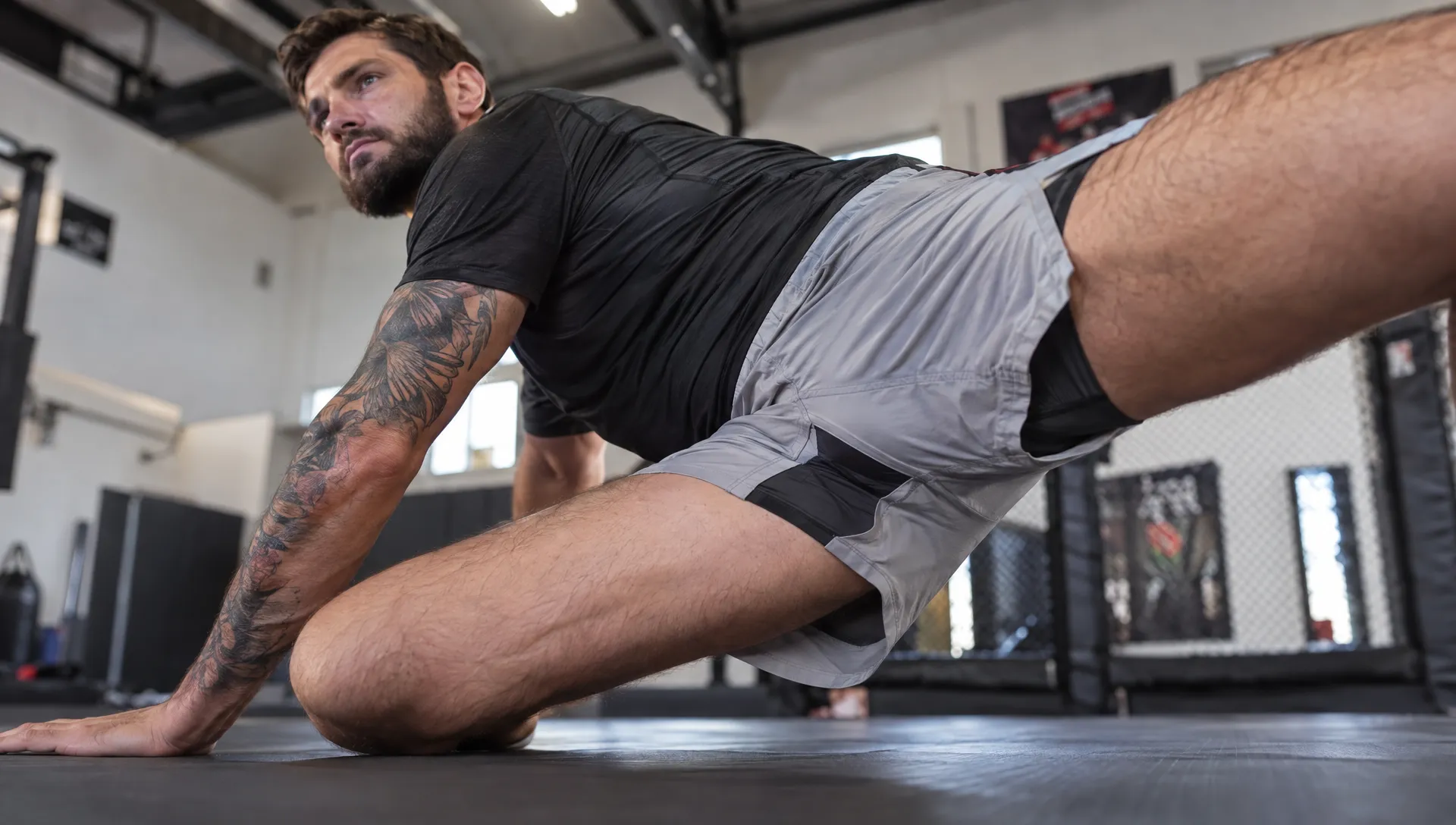
Start with controlled movements before live rolling: deep squats, lunges, hip escapes, technical stand-ups, seated guard transitions and sprawls. Use the same sequence for each sample so comparisons remain useful.
Watch for waistband migration, crotch restriction, hem catching and excessive fabric bunching. Check whether side openings expose more than intended or whether the garment interferes with normal leg movement.
After controlled movement, progress to normal training only if no safety issue appears. Do not deliberately snag a closure on a partner or continue through pain to complete a test. Stop if a component becomes exposed or the garment restricts movement dangerously.
Capture feedback immediately
Have testers record observations immediately after each session. Ask where the garment rubbed, when it shifted and which movement caused restriction. “Good fit” is less useful than “the front waistband folded during seated guard transitions.”
Separate sizing problems from pattern problems. If only one tester experiences tightness, body shape or size selection may explain it. If several correctly sized testers report the same restriction at the same seam, investigate the pattern or construction.
Test waistband retention and closure safety
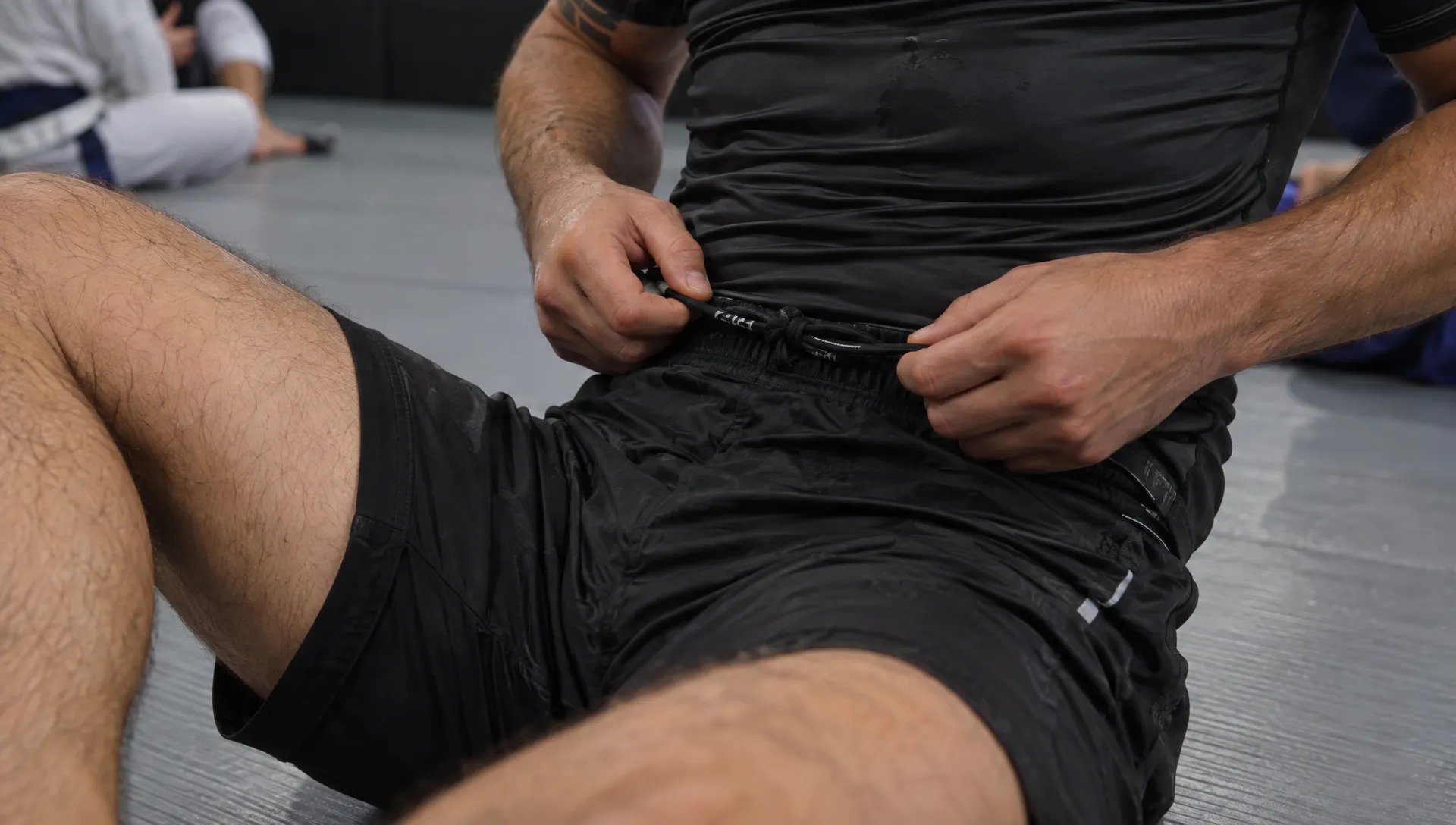
The closure on bjj shorts should remain secure without creating a hard, abrasive or snag-prone contact point. Inspect drawcord exits, fastening edges and any internal flap both before and after wear.
Document relaxed waistband dimensions separately from any stretched measurement. If you measure under extension, define the extension or applied load; “pull firmly” is not a repeatable instruction.
Check the closure dry, then after ordinary training has dampened the garment. Record loosening, repeated adjustment and whether a drawcord knot creates concentrated pressure. Test fastening operation outside partner drills rather than forcing a failure during rolling.
For hook-and-loop systems, inspect whether abrasive material becomes exposed as the wearer bends or the waistband shifts. Note any snagging on the intended underlayer.
Competition suitability is a separate requirement. Check the current rules of the intended organizer, such as the IBJJF uniform requirements, before approving closures, pockets or other design details. A successful training trial does not prove tournament compliance.
Inspect seams before and after loading
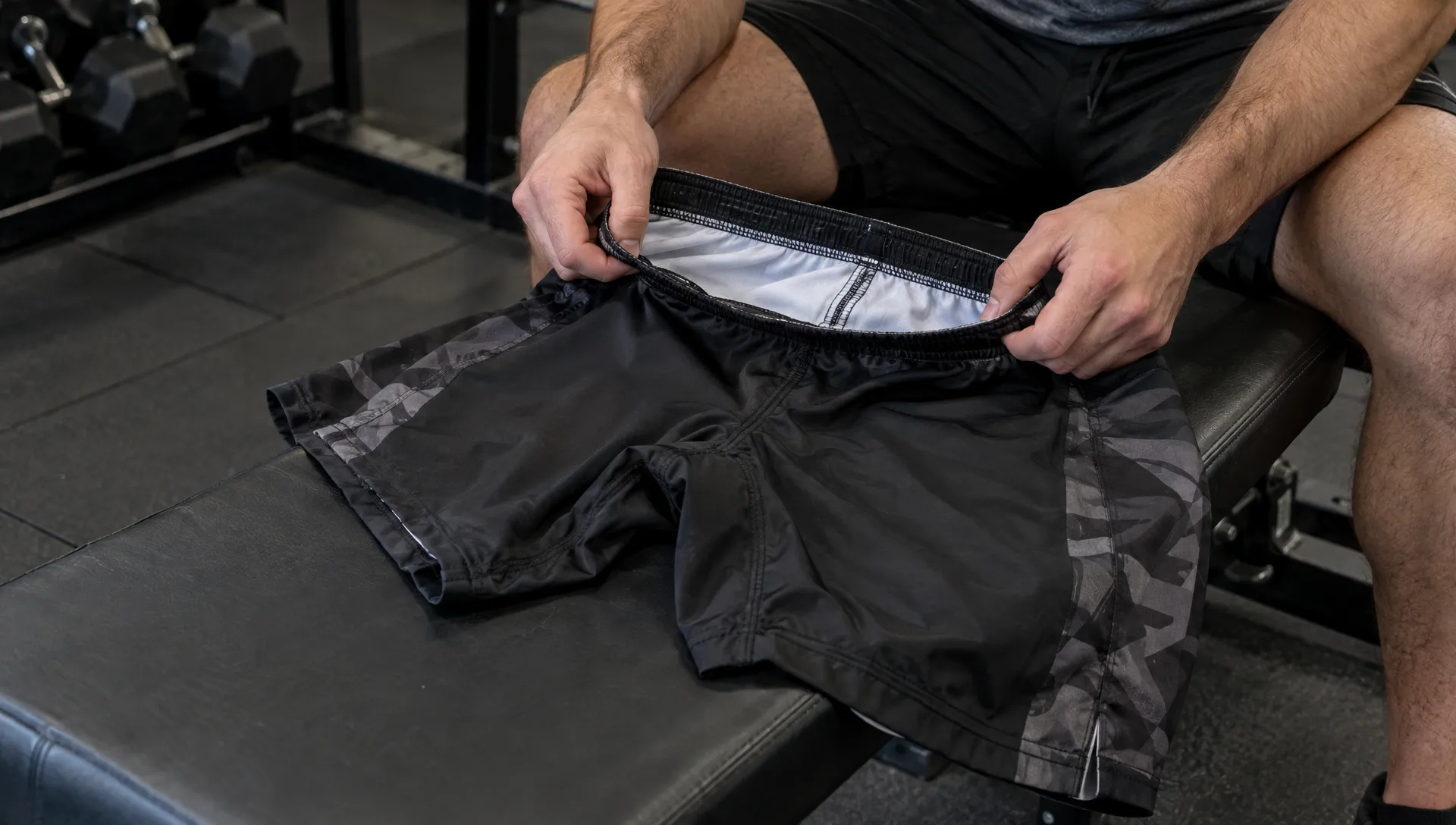
Turn each sample inside out and inspect the crotch, seat, side openings and waistband attachment. Look for skipped stitches, unsecured seam ends, uneven seam allowances and rough edges that contact skin.
A practical wear trial for bjj shorts should include seam inspections between sessions, not just at the end. Photograph any opening beside a ruler and identify its location on the test sheet. Check whether the thread broke, the fabric tore or the fabric yarns slipped apart beside the stitching; these failures need different corrections.
For manual seam screening, use a consistent method agreed with the manufacturer. Uncontrolled pulling cannot produce a defensible seam-strength value.
If strength is a purchasing requirement, specify a laboratory seam test instead. Also assess seam bulk and comfort: a strong seam can still be unsuitable if its placement or finish repeatedly rubs the wearer.
Do not accept a stitched repair as evidence that the original construction passed. A repaired or revised sample needs its own identification and repeat testing of the affected areas.
Run controlled wash tests for bjj shorts
Wash samples according to the proposed care label, using a documented machine program, detergent, load and drying method. Keep those conditions consistent across the test sequence.
Choose the number of cycles before testing begins. Five cycles can serve as an initial development screen, but that is a project choice, not a universal durability standard or a prediction of product lifespan. Longer testing may be appropriate for a daily-training product.
Measure the same points before washing and after the garment has fully dried and rested. Calculate dimensional change as:
Dimensional change (%) = (after measurement − before measurement) ÷ before measurement × 100.
For example, a measurement that falls from 50 cm to 49 cm has changed by −2%, indicating shrinkage. Check width and length separately; one dimension can shrink while another grows.
An agreed limit might be no more than 3% dimensional change at specified points after five prescribed cycles. That is an illustrative buyer-defined requirement, not a standard limit for all shorts. Select tolerances that protect fit and suit the material.
Also record twisting, puckering, closure distortion and label damage. Passing the measurement check does not excuse a waistband that no longer lies correctly.
Check decoration, surface wear and wet appearance
For printed bjj shorts, assess decoration after both washing and wear. Inspect high-flex areas for cracking, applied graphics for lifting and embroidered areas for rough backing or puckering.
Check color transfer with a consistent screening procedure using white cloth, then request formal testing if colorfastness is part of the purchase specification. An informal rub check can flag a problem, but it does not establish a standardized rating.
Inspect areas that contact the mat for pilling, fuzzing and surface damage. Record the training conditions because different mat surfaces and drills can produce different wear. Avoid improvised abrasive tests that do not resemble intended use.
Finally, assess coverage when the garment is stretched and damp, using the intended underlayer and lighting. A fabric that appears opaque when relaxed may behave differently during movement. Keep any test photography private and obtain the wearer’s consent.
Use laboratory testing for measurable performance claims
In-house trials reveal fit and usability problems. They cannot verify fiber composition or provide standardized strength, abrasion and colorfastness results.
If bjj shorts will carry a measurable performance claim, ask a textile laboratory which test method, conditioning procedure and acceptance limit suit that claim. Relevant methods may include ISO 6330 for domestic washing and drying procedures, ISO 5077 for dimensional change, ISO 105-X12 for rubbing colorfastness and ISO 13935-2 for seam maximum force using the grab method.
These methods address different questions. A passing wash result says nothing about seam strength, while fabric stretch alone does not demonstrate comfortable garment fit.
Give the laboratory the intended use, fabric construction and proposed care instructions. Confirm whether it needs fabric yardage, finished garments or both. Request reports that identify the tested material, method and result so they can be matched to the approved sample.
Verify that any supplier-provided report covers the actual proposed material. A report for another fabric or finish is background information, not evidence that your product passed.
Turn the results into a clear approval decision
Approve bjj shorts only when the relevant tests are complete and outstanding issues have been resolved in writing. Do not combine several different revisions into an informal “best of each sample” approval; identify one final construction that the factory can reproduce.
Use three decision categories:
- Approved: The identified revision meets the agreed criteria and may proceed to the specified production stage.
- Revise and retest: A documented change is needed, with affected tests repeated before approval.
- Rejected: The sample has a safety issue, fundamental performance failure or unresolved departure from the specification.
Prioritize defects by consequence. Exposed sharp components and hazardous snagging need a different response from a slightly misplaced logo. Define critical, major and minor defects with the manufacturer rather than assuming both parties use those terms identically.
The report should include sample codes, test conditions, results, photographs and the decision-maker’s approval. Specify the revisions required and the deadline for submitting replacement samples. If a fabric, closure or seam construction changes, review which earlier results are no longer applicable.
Carry sample approval into bulk production
An approved sample is a reference, not proof that every bulk garment will match it. Retain a signed reference sample and ensure the manufacturer has an identical approved reference or an agreed equivalent record.
Written evidence matters across custom purchases. For example, this comparison of engagement ring retailers in New Zealand considers customization, certification, warranties and resizing. The transferable purchasing lesson is to clarify what is verified and what correction terms apply, rather than relying on a broad promise of quality.
For apparel, document whether substitutions require fresh approval, how nonconforming goods will be handled and who authorizes production release. If those responsibilities are unresolved, address them while vetting the shorts manufacturer for a bulk order.
Inspect first production output against the reference before the full run advances. Agree on in-line checks and a final inspection sampling plan separately; development wear testing is not a substitute for bulk quality control.
Frequently asked questions
How many samples should I test? Use enough samples to retain an unwashed reference, conduct wear and wash checks and supply any laboratory specimens. Include relevant sizes and materially different variants. The quantity depends on the range and testing needs; one sample cannot validate every size, color and construction.
Can I approve bjj shorts after one training session? One session can reveal obvious fit or closure problems, but it cannot establish repeated-wash performance or longer-term wear behavior. Treat it as an early screen, then complete the agreed test sequence before approval.
Should every size receive a wear test? Checking the full size set is the strongest approach to validating grading. If the budget limits wear trials, prioritize key selling sizes and range extremes, measure every size and document the remaining uncertainty.
What if the sample fails only after washing? Identify whether the cause is dimensional change, fabric distortion, closure damage or decoration failure. Correct the relevant material or construction, then repeat the wash test on the revised sample. Changing the care label is appropriate only when the revised instructions genuinely suit the product and intended customer use.
Prepare your production brief
Before requesting a bulk quote, assemble the specification, size chart, artwork files and test acceptance sheet. This gives the manufacturer a concrete basis for discussing feasibility and sample revisions.
Arus Sportswear offers private-label and OEM combat sports apparel manufacturing, custom branding, low minimum orders and worldwide shipping. Share your bjj shorts requirements and proposed testing plan to discuss sample development and production requirements. Confirm testing responsibilities, approval stages and correction terms before committing to the bulk run.