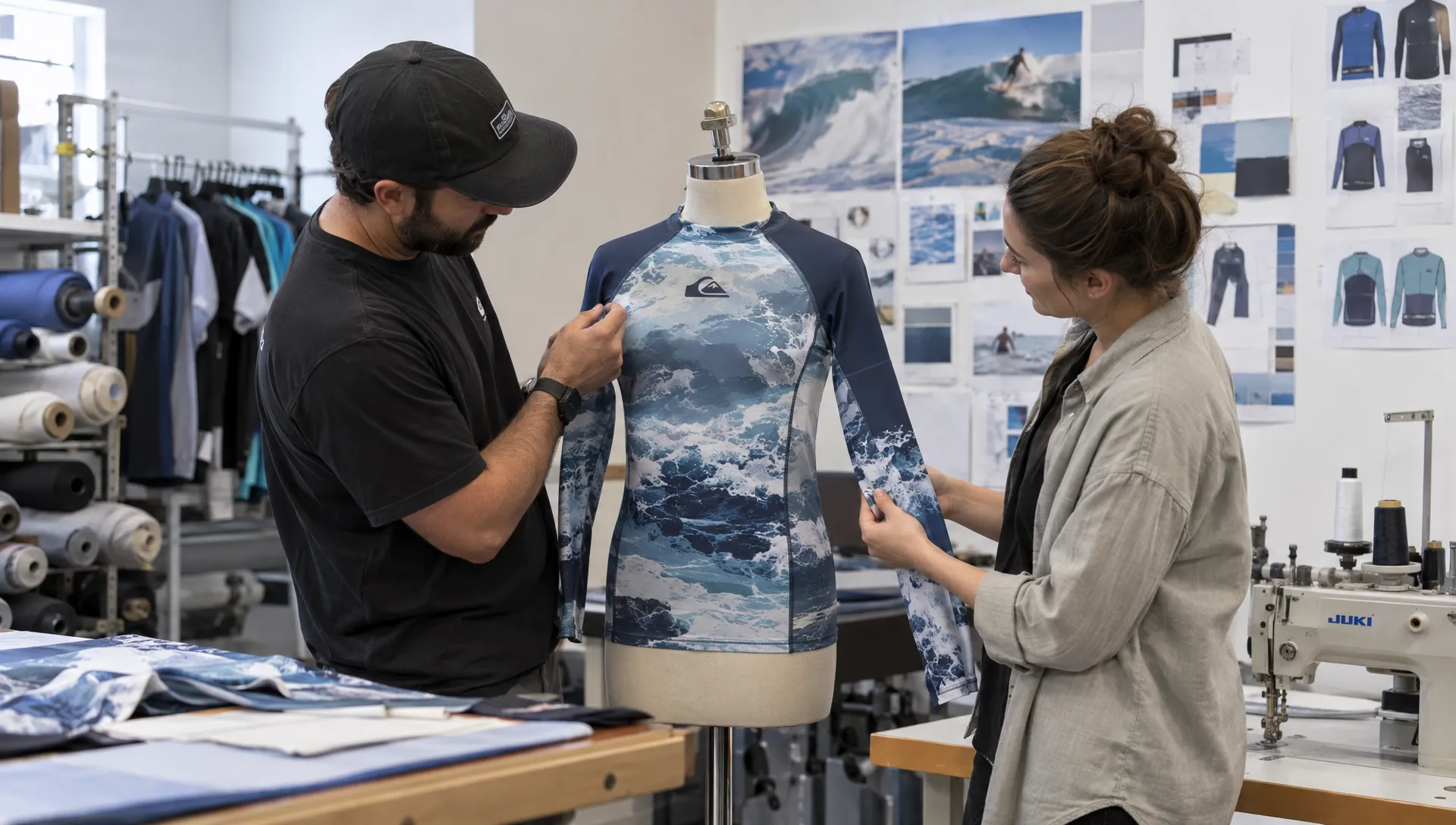
Ordering custom team apparel should feel organized, not like a last-minute chase for missing sizes, late roster changes and unclear fit notes. Most sizing delays do not start on the cutting table. They start when teams approve artwork before confirming measurements, collect sizes in mixed formats or send a manufacturer a spreadsheet that needs too much interpretation.
For gyms, clubs, schools, sports brands and distributors, the fix is a clearer ordering workflow. When sizing is treated as production data, the manufacturer can move from sampling to bulk production with fewer pauses and fewer questions.
How to order custom team apparel without sizing delays
The fastest apparel orders are not rushed. They are structured. A clean process gives every person one role, one deadline and one place to enter size information. That matters whether you are ordering MMA shorts for a fight team, soccer kits for a club, rash guards for a gym or uniforms for a retail sportswear launch.
Start by deciding who owns the size file. This person should not be the same person casually collecting messages from athletes in five different apps unless they can also verify the data. The size owner should receive the manufacturer’s chart, explain how measurements should be taken and lock the final file before artwork approval moves into production.
A good order file answers three questions before the first bulk cut: who is wearing each garment, which garment size applies to that person and whether any name, number or custom detail is attached to the size.
Why sizing delays happen in team orders
Sizing delays usually come from missing information, not from manufacturing complexity alone. Team orders have more moving parts than individual retail purchases because one late athlete, one duplicate jersey number or one misunderstood youth size can hold up the full batch.
| Delay trigger | What usually causes it | How to prevent it |
|---|---|---|
| Missing sizes | Athletes submit S, M or L without using the correct chart | Use one manufacturer-approved size chart |
| Wrong unit system | Inches, centimeters and body measurements are mixed together | Label every field clearly and avoid free-text entries |
| Late roster changes | New players join after the size file is approved | Set a roster freeze date and define how add-ons are handled |
| Fit assumptions | Buyers rely on retail sizing from another brand | Confirm garment measurements and sample fit before bulk |
| Decoration mismatch | Names or numbers do not match the size file | Audit roster, size and artwork details together |
The biggest risk is treating size collection as an admin task that can be fixed later. Once patterns, fabric yield and decoration placements are planned, every size change can affect production flow.
Build your measurement standard before sampling
For custom team apparel, use one source of truth for measurements. A spreadsheet that says “large fit” or “usually medium” is not enough. Ask for the manufacturer’s size chart and confirm whether it shows body measurements, finished garment measurements or both.
Body measurements describe the wearer. Finished garment measurements describe the actual apparel. Confusing the two can create major fit problems, especially in compression items like rash guards, spats and base layers. Loose teamwear, warm-ups and travel gear may need a different fit allowance than competition uniforms.
If you are still planning the product itself, it helps to clarify fit, fabric and end user before the first prototype. Arus Sportswear covers this early planning stage in its guide to planning custom made sports apparel before sampling, which is useful when sizing choices are tied to fabric stretch, sport use and branding placement.
Use size sets when the order risk is high
A size set is a sample run that includes multiple sizes, usually in the intended fabric and fit. It is especially useful for clubs with mixed age groups, teams ordering compression garments or brands preparing a repeatable product line.
Not every project needs a full size set, but high-risk orders benefit from one. If you serve athletes across the USA, Canada, Germany, Australia, Japan, Thailand and the Netherlands, a size set can reveal regional fit expectations before the bulk order begins. It can also help coaches and gym owners stop guessing between adjacent sizes.
Lock the roster before you lock production
A custom team apparel order needs a roster deadline that everyone respects. Without one, the manufacturer may receive new names, new sizes and new numbers after artwork has already been arranged. That can cause avoidable rework, especially for sublimation, embroidery, patches or printed personalization.
Create a roster freeze date and communicate what happens after that date. Late additions might move to a separate top-up order, wait for the next production window or require a confirmed size from existing stock if available. The exact solution depends on the manufacturer and project, but the rule should be clear before players start submitting details.
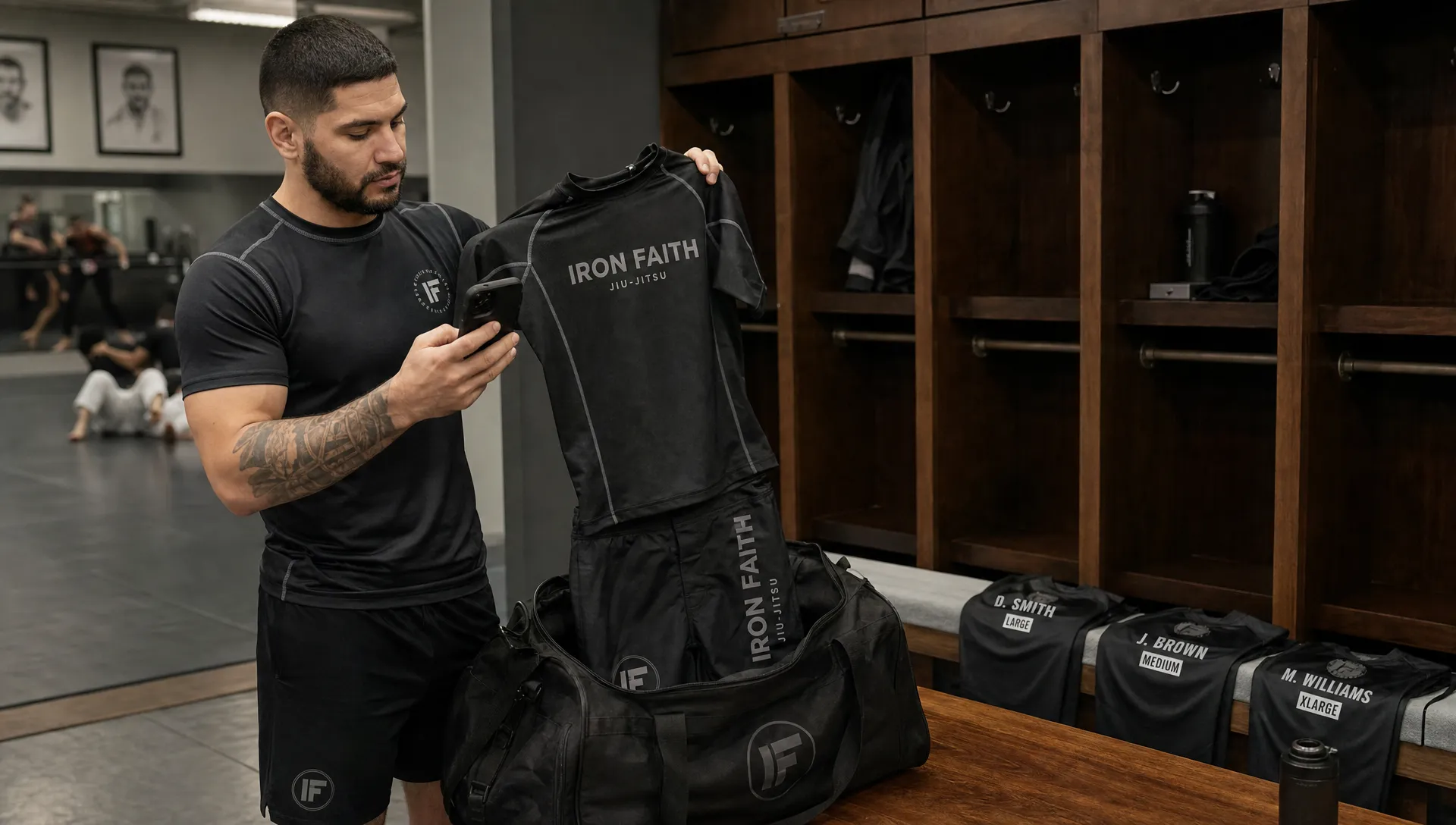
The size file should connect every person to the exact garment they need. For example, an athlete may wear a medium rash guard, large shorts and small warm-up jacket. A single “M” beside that athlete’s name does not give production enough information.
Confirm garment type, fabric and fit together
Sizing cannot be separated from fabric. A basketball jersey, BJJ gi, boxing robe, karate uniform and MMA fight short all fit differently because each garment moves differently. Fabric stretch, shrinkage, garment cut and sport-specific movement all change the size decision.
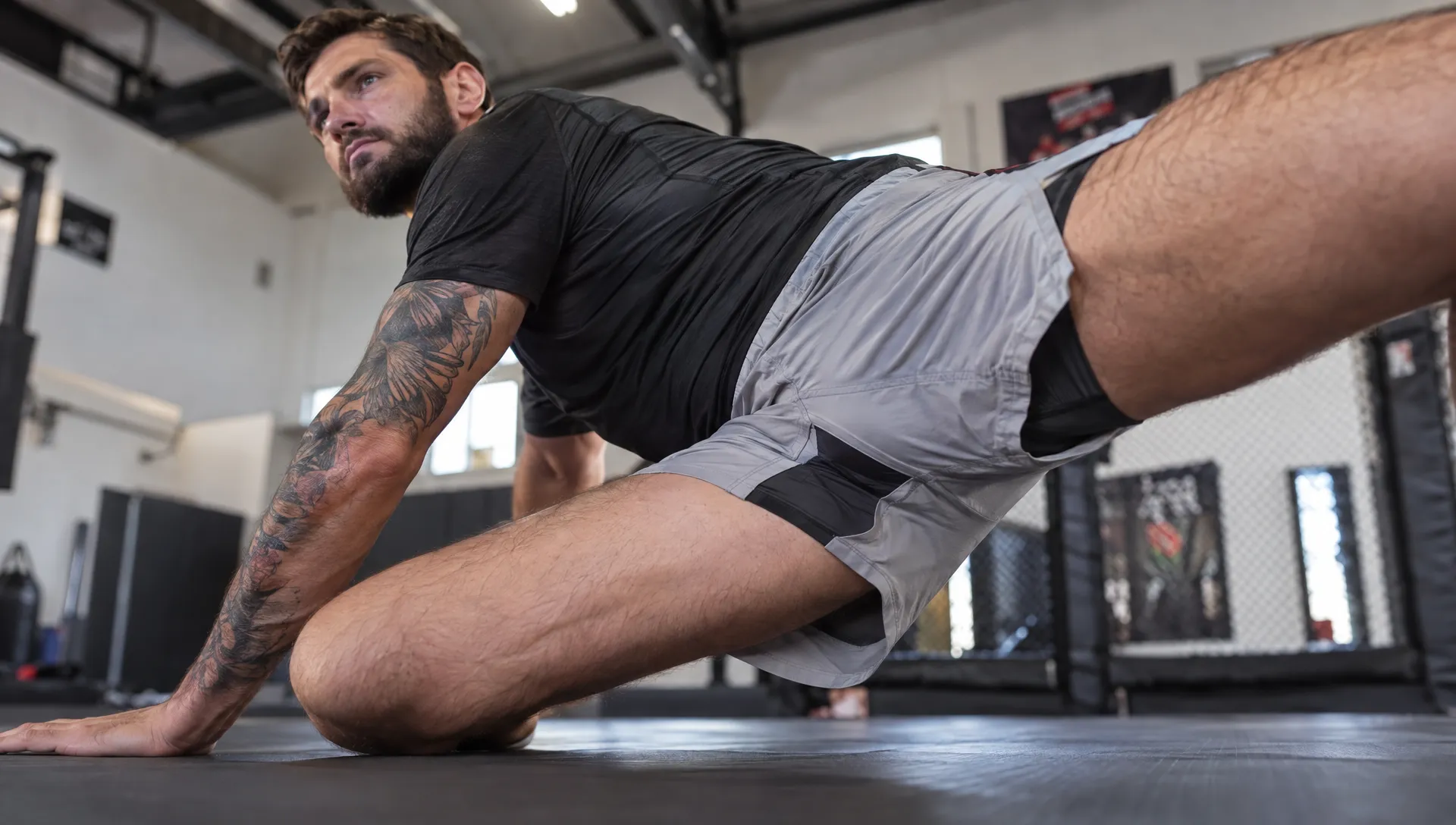
Compression apparel should be checked for negative ease, meaning the garment is smaller than the body measurement so it fits close to the skin. Woven fight shorts need room for kicking, grappling and hip rotation. Cotton-rich martial arts uniforms may need shrinkage allowance, depending on the fabric and wash expectations.
If your order includes several garment types, do not assume one athlete has the same size in every item. Build separate size columns for each product. This is also where checking artwork placement matters, since a logo that looks balanced on an XL may need adjustment on youth or small sizes.
Audit names, numbers and personalization before approval
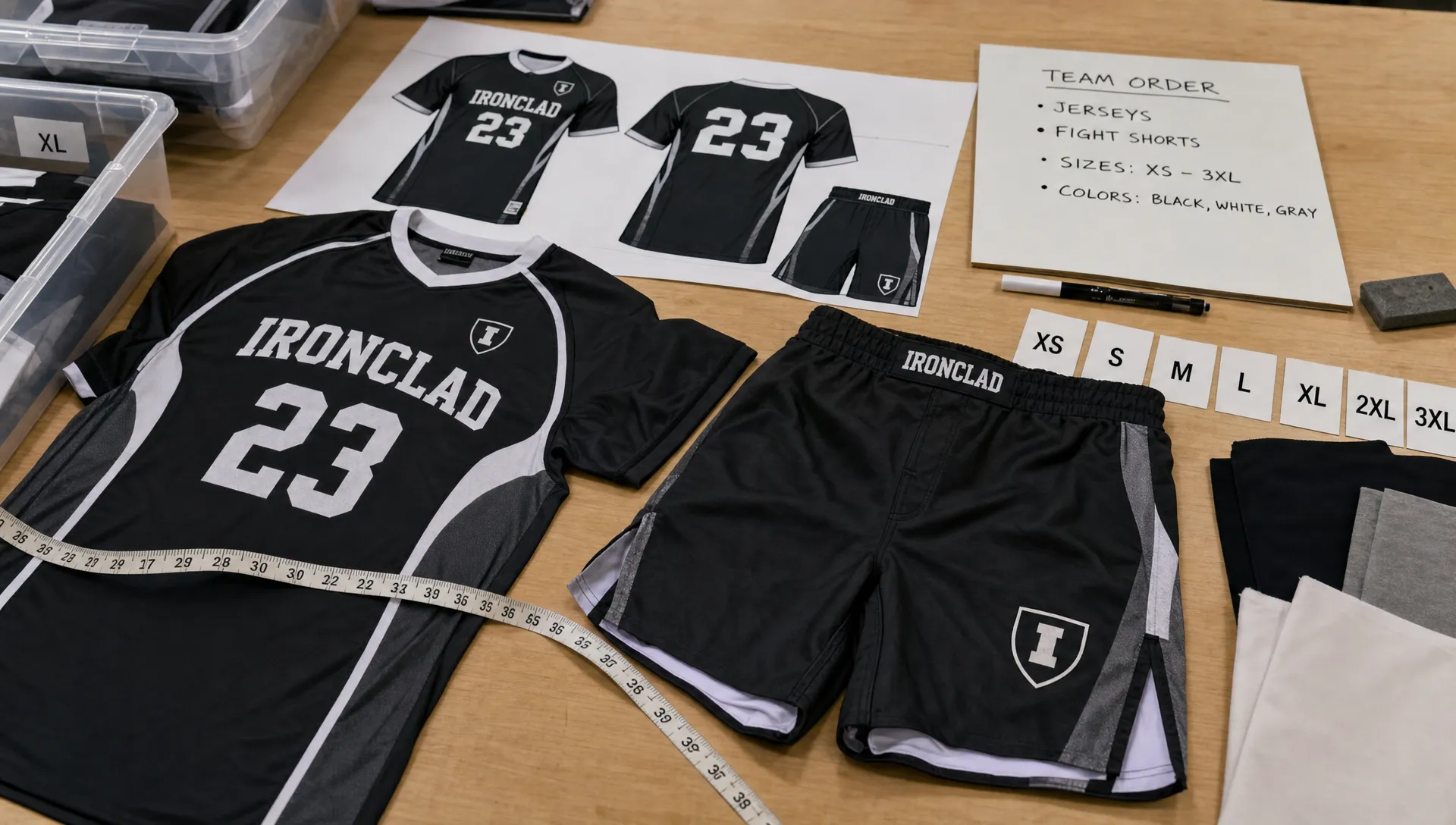
Personalized details can delay an otherwise clean order. Names, numbers, sponsor logos, belt ranks and gym marks should be reviewed with the same care as measurements. A typo on one jersey can force a remake, but a wrong number assigned across the size file can affect several garments.
Before approving production, compare three files side by side: the roster, the size chart submission and the artwork mockup. If the same athlete appears as “Mike T.” in one file and “Michael Thompson” in another, standardize the entry. If two players share a number, solve it before artwork is finalized.
For a broader pre-approval checklist, the Arus Sportswear article on custom sport uniform details that prevent costly reworks is a helpful companion because sizing is only one part of avoiding production corrections.
Manage international orders with extra clarity
When custom team apparel is ordered across countries, small assumptions can become big delays. A “large” in one market may not match a “large” in another. Some teams measure in inches, others use centimeters. Some coordinators describe height in feet and inches, while others use centimeters and kilograms.
Use one measurement system in the final manufacturer file. If athletes submit in different systems, convert the data before sending it. Keep the original submission in your records, but make the production file clean and consistent.
Time zones also matter. A brand based in Germany may collect feedback from a gym in Thailand, approve artwork with a distributor in Canada and ship to customers in Australia. Set one approval deadline with a named time zone. “Friday end of day” is not specific enough for a global order.
If your team also sends travel information to families, keep it separate from the apparel file. For example, a parent email can point families toward baby and travel essentials from DrBash for tournament weekends with younger siblings, while the manufacturer receives only garment-specific data such as names, sizes, numbers and approval status.
Final size audit before production starts
Before custom team apparel moves into bulk production, run a final audit. This is the moment to catch missing data, duplicate entries and inconsistent sizes. The audit should be done by one person, then confirmed by a second person who did not build the file.
| Audit item | What to check | Why it matters |
|---|---|---|
| Roster count | Total athletes, coaches and staff | Confirms quantity before cutting |
| Product count | Jerseys, shorts, rash guards, jackets or uniforms per person | Prevents missing garment types |
| Size fields | One confirmed size for each garment | Avoids production pauses |
| Personalization | Names, numbers, ranks and sponsor placements | Prevents remakes |
| Artwork approval | Mockups match final roster and size range | Reduces design corrections |
| Shipping details | Destination, contact person and delivery notes | Supports smoother dispatch |
Do not send multiple versions of the final file unless the new file is clearly labeled. Version confusion is one of the easiest ways to create a delay that no one notices until approval questions begin.
What to send your manufacturer
The manufacturer does not need every conversation your team had about sizing. It needs the final, approved production information in a format that is easy to follow.
Send one complete order package that includes:
- Full team roster with standardized names
- Size chart used for the order
- Confirmed size for each garment type
- Player numbers, ranks or personalization details
- Approved colors, logos and placement notes
- Fabric or garment specifications if already confirmed
- Quantity breakdown by size and product
- Final delivery information and contact person
If the order is part of a private label or OEM sportswear program, keep the same format for every repeat run. Repeatable files make scaling easier because each new order starts from a proven template rather than a fresh round of interpretation.
Frequently Asked Questions
How early should we order custom team apparel before an event? Start as early as possible once your roster is likely to be stable. The exact timeline depends on garment type, customization, sampling needs, order size and shipping destination, so ask your manufacturer for a production calendar before announcing a delivery date to the team.
Should athletes choose their normal retail size? Retail size can be a starting point, but it should not be the final decision. Use the manufacturer’s size chart and confirm whether it refers to body measurements or finished garment measurements.
What is the best way to avoid youth sizing problems? Separate youth and adult sizes clearly in the order file. Avoid labels like “small” unless they are tied to a specific chart, since youth small and adult small are very different garments.
Can we add more players after production approval? Sometimes, but late additions may need a separate order or updated production schedule. Define the late-add policy before collecting sizes so coaches and athletes understand the cutoff.
Order with a clearer sizing workflow
Sizing delays are rarely caused by one mistake. They come from unclear ownership, inconsistent charts, late roster changes and approvals that happen in the wrong order. When your team confirms measurements, garment types, personalization and roster deadlines before production, the entire process becomes easier to manage.
If your next custom team apparel order includes MMA fightwear, BJJ uniforms, boxing apparel, karate uniforms or team sportswear, Arus Sportswear can support private label and OEM manufacturing with custom branding, bulk order support, low minimum orders and worldwide shipping.