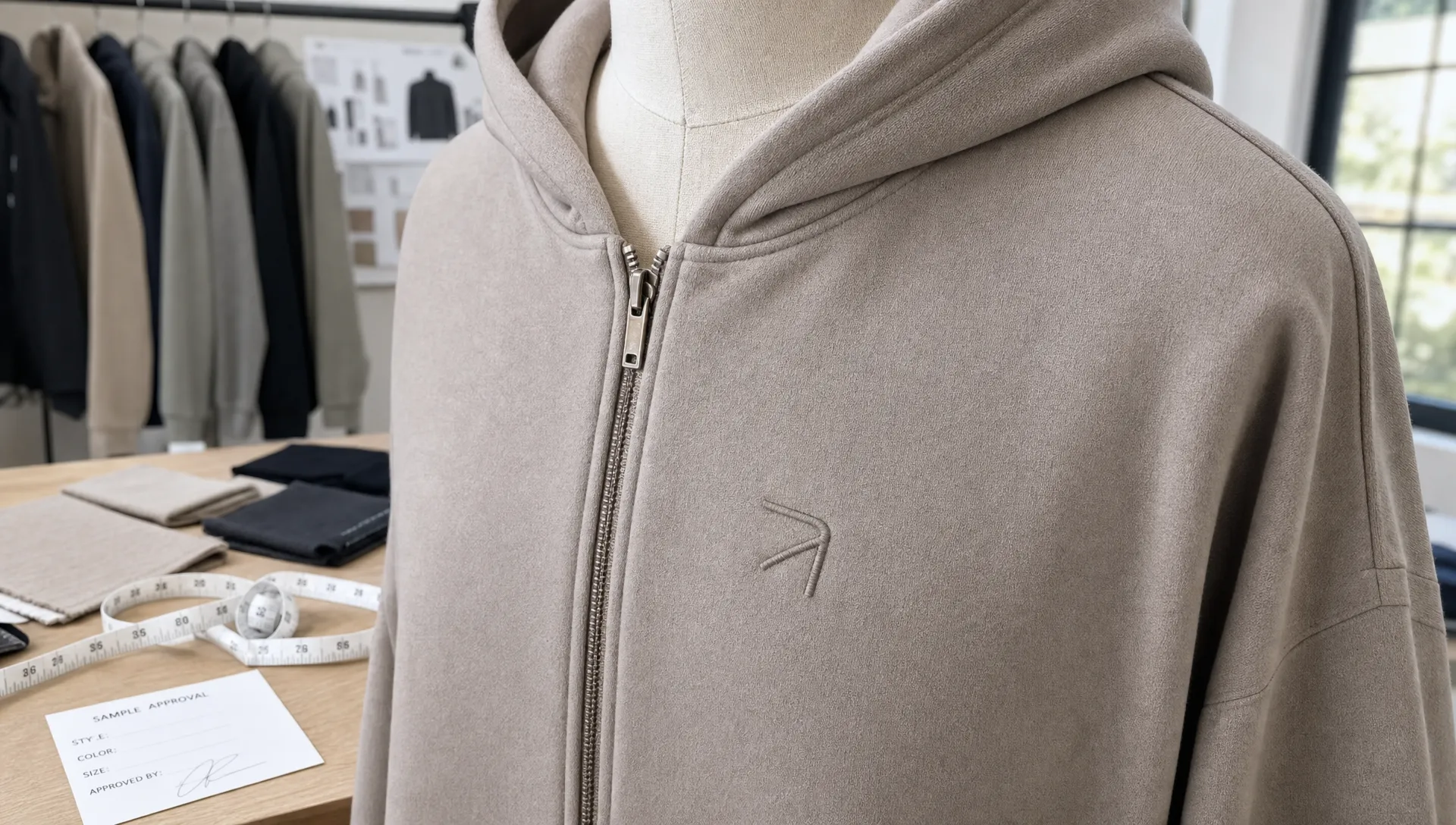
Ordering wholesale karate uniforms should not turn into a cycle of returns, exchanges and disappointed students. Most fit issues can be prevented before production starts, but only if the buyer gives the manufacturer more than a size list and a logo file.
For brands, gyms and distributors, fit consistency affects more than comfort. A gi that feels too tight in the shoulders, shrinks unexpectedly or has sleeves that run long can hurt repeat orders and make instructors question the program. The solution is not simply choosing a different size chart. It is building a clearer ordering process that connects wearer profiles, garment measurements, shrinkage control, sample testing and market-specific size ratios.
Fit problems usually start before production
Bulk uniform orders go wrong when everyone assumes the words “small,” “medium” and “large” mean the same thing. They rarely do. One supplier may grade generously for North American adult bodies, while another may cut closer for a lighter, competition-style fit.
For most programs, wholesale karate uniforms fit better when buyers define the garment by measurements rather than label names. A “size 4” gi should have a target chest width, jacket length, sleeve length, pant waist, inseam and finished hem width. Without those numbers, the manufacturer has to interpret the fit, and interpretation is where inconsistency begins.
Fit issues also come from mixing different user groups into one product. Children, teen competitors, adult beginners and instructors do not wear a gi the same way. A beginner school uniform may need easier movement and more tolerance after washing, while a more advanced customer may prefer a cleaner silhouette and heavier fabric.
What makes wholesale karate uniforms harder to size
Karate gis look simple, but the fit is affected by several variables working together. Jacket overlap changes how the chest feels. Sleeve width affects punches and blocks. Pant rise changes comfort during stances. Fabric weight can make the same measurement feel roomier or tighter.
The best wholesale karate uniforms are ordered from a complete fit profile, not from a generic apparel size chart. That profile should explain who will wear the uniform, how it will be used, how much shrinkage is acceptable and whether the brand wants a traditional, relaxed or more tailored cut.
Start with the wearer, not the size chart
Before asking for a quote, define the people who will actually wear the uniforms. This is especially important for international programs serving the USA, Canada, Germany, Australia, Japan, Thailand, the Netherlands and wider Europe. Body proportions, customer expectations and labeling habits can vary by market.
A clear wearer profile does not need to be complicated. It should tell the manufacturer whether the order is mainly for children, adults, mixed club use, retail resale or tournament preparation. It should also explain whether the gi will be worn by beginners who may prioritize comfort or experienced practitioners who may expect a firmer, more structured garment.
| Buyer segment | Common fit risk | Ordering decision that helps |
|---|---|---|
| Children’s karate schools | Sleeves and pants too long after sizing up | Add child-specific grading and confirm hem lengths |
| Adult beginner programs | Jacket feels tight after washing | Build shrinkage allowance into the spec |
| Retail martial arts brands | Inconsistent reviews across sizes | Test a full size set before bulk approval |
| Distributors | One ratio does not match every market | Adjust size ratios by region and customer base |
| Instructor uniforms | Fabric feels right but movement is restricted | Check shoulder width, sleeve opening and pant rise |
When wholesale karate uniforms are tied to specific wearer groups, the size chart becomes a buying tool instead of a guessing exercise. It also makes repeat orders easier because everyone is working from the same baseline.
Build a specification sheet that controls fit
A specification sheet, often called a spec sheet or tech pack, is the document that turns your fit expectations into production instructions. If you are developing a custom or private label line, this document is more important than a mood board. Design references help with appearance, but measurements control the customer experience.
Your spec sheet should include finished garment measurements, fabric type, fabric weight, stitching details, labels, packaging requirements and branding placement. For more complex private label programs, it can also include grading rules, wash test requirements and approved tolerances. If you are building a new line from the ground up, Arus Sportswear’s guide to moving from tech pack to bulk order gives useful context for the wider OEM process.
For fit control, pay close attention to these measurement points:
- Jacket chest width, measured flat under the armhole
- Jacket body length, from high shoulder point to hem
- Sleeve length, from shoulder seam or center back depending on the pattern
- Sleeve opening, since narrow sleeves can restrict movement
- Pant waist relaxed and stretched, especially with elastic waistbands
- Pant rise, inseam and leg opening
- Belt length and width, if belts are included in the set
Account for shrinkage before approving sizes
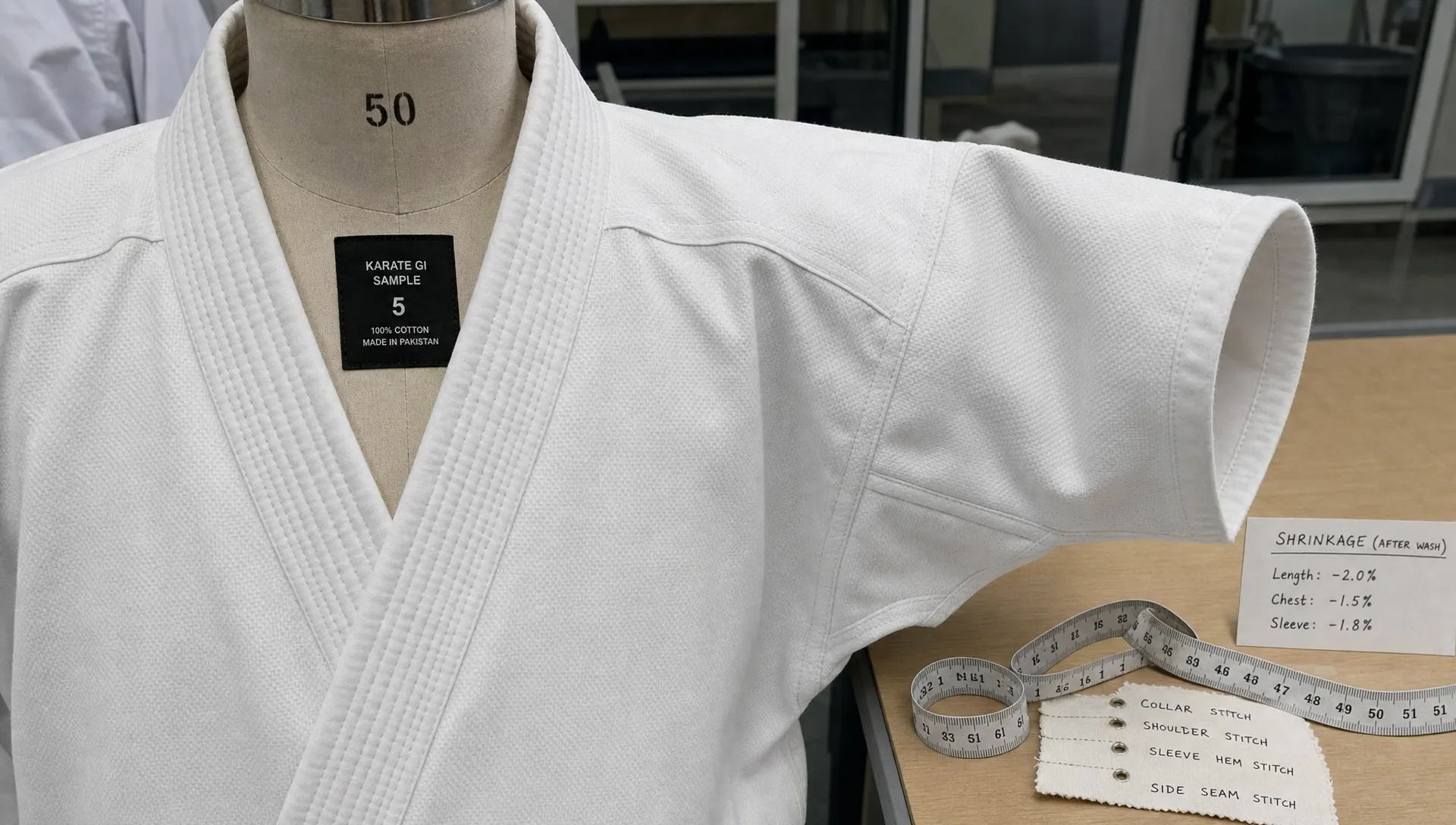
Cotton and cotton-rich karate fabrics can change after washing. The amount depends on the weave, fabric weight, pre-shrinking process and laundry conditions. If the production size only looks good before washing, customers may still complain after the first few uses.
Before approving wholesale karate uniforms, ask for pre-wash and post-wash measurements on the sample. The goal is not to eliminate all shrinkage, which may be unrealistic depending on the fabric, but to understand it and build it into the finished size. A uniform that is intended to shrink slightly should be explained clearly in the product description and size chart.
Use size set samples before committing to bulk
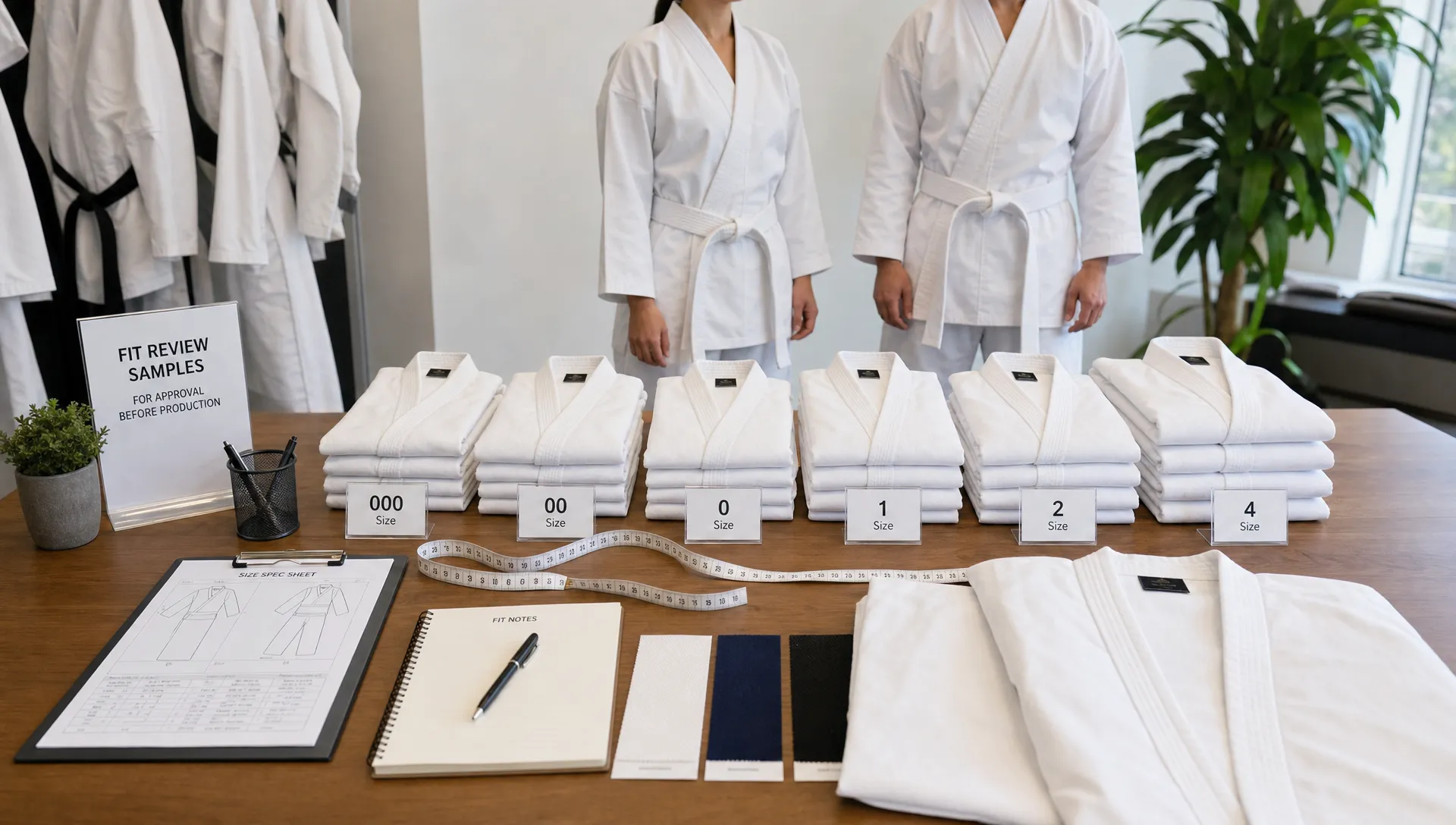
One perfect sample in one size does not prove that the full order will fit well. Bulk fit problems often appear in the smallest and largest sizes because grading is not linear across the entire range. A child’s size cannot simply be a smaller adult gi, and a large adult size should not gain length without enough width.
A size set sample is a small run covering the key sizes in your order. It helps you confirm whether the grading feels balanced, whether the sleeves and pants scale properly and whether the same design works across the full range. This step may add time, but it can prevent expensive corrections after the order arrives.
During size set review, test the uniforms on real wearers where possible. Ask them to perform basic karate movements, including front stance, horse stance, stepping punches and blocks. Static measurements matter, but movement reveals problems that a flat table cannot.
Plan size ratios by market and sales channel
Many buyers place a bulk order by copying the same size ratio from a previous apparel category. That can be risky. Karate uniform demand is shaped by student age, school enrollment, regional body proportions, retail audience and whether the uniform is sold as an entry-level set or a premium gi.
For international buyers, wholesale karate uniforms should be ordered with market-specific size planning rather than one global ratio. A youth-heavy school program may need more small sizes, while a distributor serving adult clubs may need a deeper range through larger sizes. Retail brands should also consider exchange history, customer service notes and online size-chart questions when planning reorders.
Clear comparison also matters. In any considered purchase, customers make better decisions when models, steps and options are easy to understand. You can see that principle outside apparel in businesses that present manufactured home models and buying steps in San Antonio clearly, helping buyers match a practical product to real-life needs. Karate uniform programs benefit from the same clarity: define the model, explain the fit and make sizing easy to compare.
Set tolerances before production begins
No bulk garment order will have every piece measuring exactly the same down to the millimeter. Fabric handling, cutting, sewing and pressing all create small variations. The key is deciding what variation is acceptable before production begins.
Tolerances protect both the buyer and the manufacturer. They give the quality control team a measurable standard and reduce disputes after delivery. A tolerance should be tight enough to protect fit, but realistic enough for garment production.
| Fit point | Why it matters | Example tolerance to discuss |
|---|---|---|
| Jacket chest width | Controls ease and overlap | Smaller tolerance for core sizes |
| Jacket length | Affects traditional appearance | Confirm by size and style |
| Sleeve length | Common source of complaints | Check after washing if shrinkage is expected |
| Pant waist | Affects comfort and returns | Test relaxed and stretched measurements |
| Inseam | Impacts stance comfort | Confirm grading for child and adult sizes |
| Belt length | Often overlooked in sets | Match belt size to uniform size |
A quality-focused supplier will be able to discuss how measurements are checked during cutting, sewing and final inspection. For a deeper look at production controls, this overview of how a karate gi factory handles quality at scale explains why inspection points matter before goods are packed.
Communicate branding choices that can affect fit
Logos, patches and labels may seem unrelated to fit, but they can influence comfort and movement. A thick patch placed near the chest overlap can feel stiff. Embroidery on lightweight fabric can pull or pucker if the backing is not suitable. Large labels at the neck or waistband may irritate students during training.
If you are ordering private label uniforms, include branding placement in the same review as fit. Ask for a sample with the actual label, patch or embroidery method, not a blank garment. A uniform can pass measurement review and still feel wrong if branding changes how the fabric behaves.
A reliable purchase order for wholesale karate uniforms should also state how each size will be packed and labeled. If a distributor or gym receives mixed sizing in cartons without clear markings, even a well-made order can create fulfillment mistakes.
Use a fit approval checklist before paying for full production
A simple checklist keeps the order disciplined. It also helps teams avoid approving a sample because it “looks good” without confirming the details that matter later.
- Confirm target wearer group and sales channel
- Approve finished measurements for each size
- Review pre-wash and post-wash sample measurements
- Test movement with real wearers when possible
- Approve grading across small, middle and large sizes
- Confirm fabric weight, weave and hand feel
- Approve logo, label and patch placement
- Set measurement tolerances in writing
- Confirm packaging, carton labels and size breakdown
- Keep one approved sample for comparison with bulk goods
This process is especially useful when comparing suppliers. A manufacturer may quote a low price, but if the spec, grading and quality controls are vague, the hidden cost can appear later through returns and reorders. If you are still evaluating partners, Arus Sportswear’s article on what to look for in a karate uniform manufacturer can help you assess reliability beyond the first quote.
How Arus Sportswear supports custom uniform programs
For brands, gyms and distributors that need custom martial arts apparel, Arus Sportswear offers private label and OEM manufacturing for karate uniforms, MMA fightwear, BJJ gis, boxing apparel and related combat sports products. The company supports custom designs, branding options, bulk orders, low minimum orders and worldwide shipping.
If you are planning wholesale karate uniforms for a school network, retail brand or distribution program, the most productive first conversation is about the product specification. Share your target market, preferred fabric, size range, branding needs, expected order quantity and any fit complaints from previous suppliers. That gives the manufacturer the information needed to quote, sample and produce with fewer surprises.
Frequently Asked Questions
What causes most fit issues in bulk karate uniform orders? Most issues come from unclear measurement specs, untested size grading, fabric shrinkage and size ratios that do not match the actual customer base. Label sizes alone are not enough for consistent production.
Should I order samples before buying wholesale karate uniforms? Yes. A pre-production sample and, ideally, a size set sample help confirm fit, fabric, shrinkage, branding placement and grading before you commit to the full order.
How do I choose the right size range for a karate school? Start with your current student mix, age groups and enrollment trends. If possible, review past uniform sales or exchange requests, then build a size ratio around real demand instead of a generic adult apparel curve.
Can custom branding create fit or comfort problems? It can if patches, embroidery or labels are too stiff, too large or placed in high-movement areas. Always approve branding on a real sample before bulk production.
What information should I send to a karate uniform manufacturer? Send your target wearer profile, size range, finished measurements, fabric preference, branding artwork, packaging needs, estimated quantity and any required delivery timeline. Photos or samples from previous uniforms can also help explain the fit you want.
Ready to reduce fit problems in your next order?
Fit consistency starts with a better brief. If you need custom karate uniforms for a brand, gym or distributor program, Arus Sportswear can help you plan private label or OEM production with the right specs, branding details and bulk order support. Contact Arus Sportswear to discuss your next uniform order and build a clearer path from sample approval to delivery.