A martial arts rash guard can look excellent on a product page and still fail after a few hard training sessions. The issue is rarely one obvious defect. More often, it is a missed reinforcement zone: a neckline that stretches out, a side seam that rubs under pressure, an underarm panel that cannot handle posting, framing, pummeling and scrambling.
For fightwear brands, gyms and distributors, these details matter because martial arts rash guards are not worn like ordinary compression tops. They are pulled, twisted, soaked, washed frequently and exposed to constant mat friction. A garment built only for gym fitness may not survive No-Gi, MMA, wrestling, grappling or striking classes.
The challenge is that reinforcement does not always mean adding thicker fabric everywhere. In rash guard manufacturing, smart reinforcement is usually about pattern placement, seam construction, stitch elasticity, panel mapping and finish quality. If those areas are ignored, the product may pass a quick visual inspection but disappoint once athletes train in it.
Why Reinforcement Zones Matter in Martial Arts Rash Guards
Rash guards sit close to the skin, which means every construction choice is under tension. When an athlete shoots, sprawls, frames against an opponent, clinches, posts on the mat or rotates through a scramble, the garment stretches in multiple directions at once. The fabric may be capable of handling that movement, but the seams, hems and binding often become the weak points.
This is especially relevant for private label brands because customers judge the entire brand by the first few wears. A collar that waves after washing, a loose hem during rolling or thread popping near the underarm can make a product feel cheap even if the fabric itself is high quality.
Reinforcement also affects fit. A rash guard that is too heavily reinforced can feel bulky, hot or restrictive. A rash guard with no reinforcement in key zones may feel comfortable at first but lose shape quickly. The goal is balance: flexible where the athlete needs mobility, stable where stress concentrates.
If you are developing a new line with a custom rash guards manufacturer, these zones should be discussed at the sample stage, not after bulk production has already started.
The Neckline: The First Area Customers Notice
The neckline is one of the most visible and most abused areas of a rash guard. Athletes tug it while putting the garment on, it absorbs sweat, it stretches during clinch work and it is often the first area to look tired after repeated washing.
Brands often focus on the graphic layout near the chest and shoulders but under specify the collar construction. A weak neck binding can curl, ripple or lose recovery. In grappling, the collar may also be pulled accidentally during hand fighting, collar tie transitions or escapes.
A well built neckline usually needs:
- Binding or collar fabric with strong stretch recovery
- Stitching that stretches without cracking
- Neck opening measurements matched to the intended sport and fit
- Clean joining at the back neck or shoulder so there is no bulky lump
- Testing after washing, not just testing straight from the sample room
For BJJ and MMA, a collar that is too loose can feel sloppy under pressure. A collar that is too tight can irritate the throat and make the product uncomfortable during longer sessions. The reinforcement here is not about stiffness. It is about controlled recovery.
Shoulder Seams and Upper Back Stress
The upper back and shoulder area takes heavy load during grappling. Athletes post on their hands, pull their arms across the body, rotate through scrambles and frame with extended arms. All of these movements pull across the shoulder seam and upper back panel.
A common mistake is placing a standard shoulder seam directly where the fabric experiences repeated strain. This may be acceptable for a basic athletic top, but martial arts use can expose that seam quickly. Brands should consider whether the shoulder design needs a raglan sleeve, shifted seam, reinforced yoke or more elastic stitch construction.
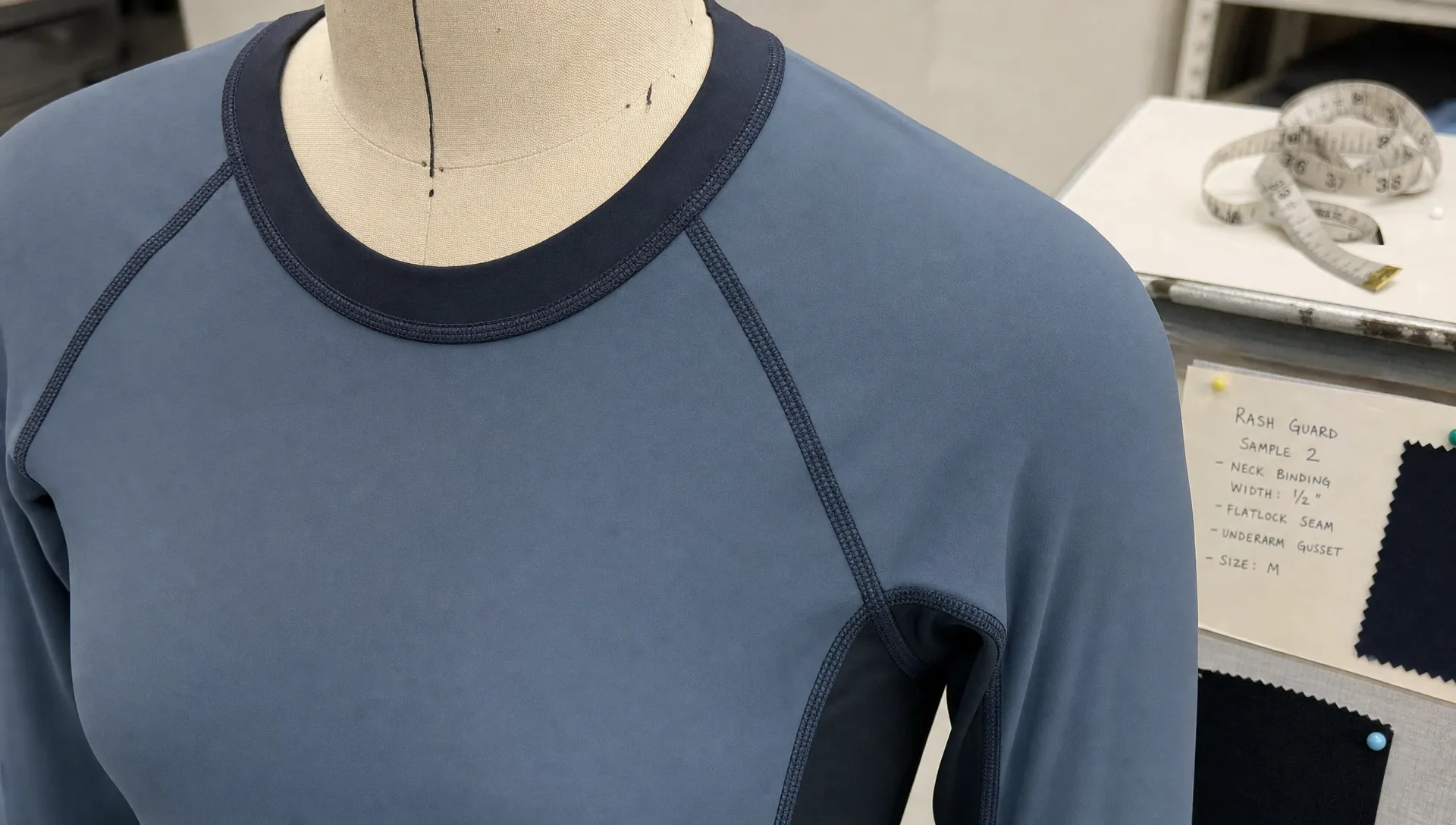
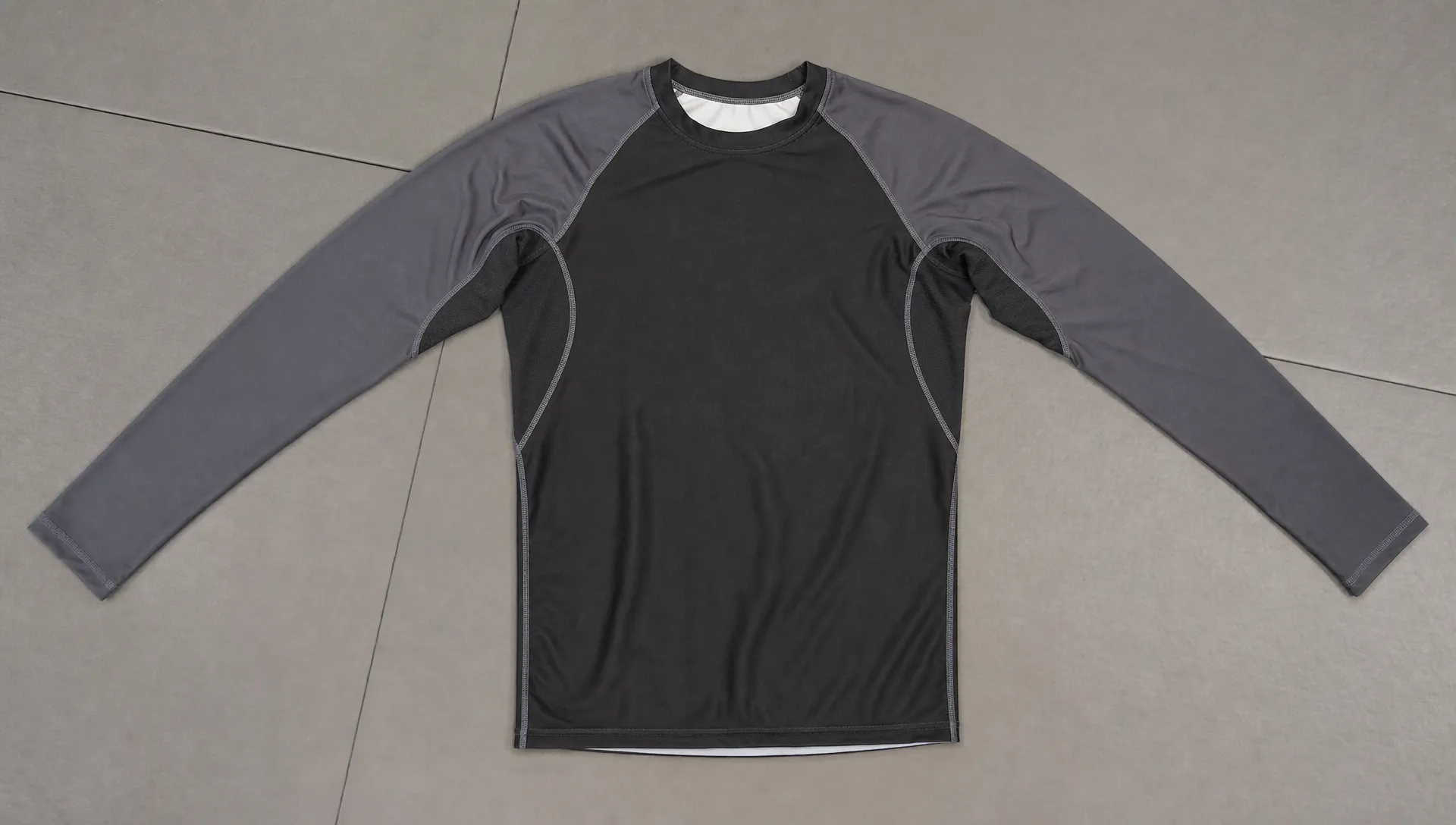
Raglan sleeves are popular in combat sports rash guards because they reduce pressure at the top shoulder and allow a wider range of motion. That does not automatically make every raglan pattern better, though. If the seam curves into a high friction zone or the stitch tension is wrong, the benefit is reduced.
Upper back reinforcement is also important for athletes with broader shoulders. If the size grading only scales the body width without adjusting shoulder geometry, larger sizes may fail faster. A strong rash guard line should be tested across multiple sizes, not only on a medium sample.
Underarm Panels: The Zone Many Brands Underestimate
The underarm is one of the hardest working zones on a martial arts rash guard. It handles sweat, heat, friction, arm rotation and repeated stretching. During wrestling shots, frames, clinches, sprawls and guard work, the underarm panel is pulled in several directions.
This is where many low quality rash guards show early failure. Thread can pop, seams can rub the skin or the garment can feel tight when the athlete reaches forward. A small pattern issue in this zone can make the entire product feel restrictive.
A gusseted underarm can improve mobility by giving the arm more freedom without forcing the body panel to distort. The gusset does not need to be obvious. In many designs, it is a subtle panel that changes how the garment moves. The fabric selected for this area may also need better moisture management and stretch recovery because sweat concentration is high.
Brands should ask suppliers how the underarm is constructed, where the seams sit and whether the sample has been tested in real grappling movement. A model wearing the garment for a photo shoot will not reveal the same issues as an athlete doing rounds on the mat.
Side Seams and Rib Cage Contact
Side seams are easy to overlook because they seem simple. In martial arts, they are not. The side body is exposed to twisting, gripping pressure, hip movement and mat abrasion. During scrambles, the side seam can be compressed between the athlete and the mat or between two athletes.
If the side seam is too raised, too rigid or poorly placed, it can become irritating during rolling. If it lacks elasticity, it can restrict torso rotation. If it is positioned without considering panel stretch direction, the garment may twist on the body.
For brands, the side seam should be reviewed both for durability and comfort. A seam can be strong in a lab pull test but still be uncomfortable in training if it sits in the wrong place or creates a ridge against the ribs.
The best solution depends on the intended use. A retail fitness rash guard may prioritize a smooth silhouette. A No-Gi training rash guard may require seam placement that reduces rubbing during ground contact. An MMA rash guard may need a slightly different balance because striking and clinch work create different movement patterns.
Hem Reinforcement: The Difference Between Secure and Sloppy
A rash guard that rides up during training is frustrating. The athlete keeps pulling it down, the product feels unreliable and the brand loses credibility. Hem reinforcement helps prevent this, but many brands treat the bottom hem as a basic finishing detail rather than a performance zone.
A secure hem depends on several factors: garment length, fabric recovery, stitch elasticity, waist opening measurement and whether the brand uses an internal grip solution. Some rash guards include silicone gripper elements, though these need to be specified carefully because a poor grip application can crack, peel or feel uncomfortable.
The hem must also survive repeated stretching when athletes put the garment on and take it off. If the bottom opening is too tight, customers may overstretch the hem. If it is too loose, it may shift during rolling. The pattern has to match the fabric behavior and the intended compression level.
Cuffs and Sleeve Ends
Sleeve cuffs are exposed to constant grabbing, wrist movement, sweat and friction. In long sleeve rash guards, the cuff area also affects the athlete's perception of fit. If the wrist opening is loose, the sleeve may slide. If it is too tight, it can feel restrictive and make the garment difficult to remove after training.
Some brands focus heavily on sleeve graphics and forget cuff recovery. This becomes clear after several washes when sleeve ends flare out or lose shape. The issue can come from fabric choice, stitch tension, cuff width or incorrect grading between sizes.
Cuffs should stretch comfortably over the hand, recover at the wrist and avoid excessive seam bulk. For competitive grappling, sleeve finish should also avoid features that could catch fingers or create unnecessary grip points. Clean construction matters as much as visual design.
Decoration Zones That Create Hidden Weak Points
Branding is central to private label fightwear, but decoration can weaken a rash guard if it is placed without considering stretch and friction. Large logos across high stretch zones, thick prints near seams or poorly cured transfers can crack, peel or change the feel of the garment.
Sublimation is commonly used for rash guards because it allows full color graphics without adding a heavy surface layer. However, even sublimated products need smart artwork planning. If key graphics cross seam lines, panel joins or areas that stretch heavily, the final appearance may distort when worn.
For screen printing, heat transfer or other decoration methods, reinforcement planning becomes even more important. Thick decoration on the chest, shoulders or sleeves may look sharp on a flat sample but feel stiff during grappling. Decoration should support the product's identity without compromising performance.
When reviewing samples, stretch the garment where the logo sits. Check whether the graphic distorts acceptably, whether the area feels rough and whether the decoration behaves after washing. This is a practical step that can prevent customer complaints later.
Seam Type, Thread and Stitch Tension
A reinforced rash guard is not only about panel placement. The seam system has to work with the stretch fabric. If the stitch does not stretch enough, it may snap. If the tension is poorly balanced, the seam may pucker, wave or feel scratchy.
Flatlock seams are often used in compression and performance apparel because they can reduce bulk and sit more comfortably against the skin. Overlock and coverstitch construction may also be used depending on the design, fabric and factory capability. The right choice depends on the garment specification rather than a single universal rule.
Thread quality matters too. A seam can look clean on day one but fail after sweat, washing and repeated stretching if the thread is not suitable. Stitch density should be consistent, but more stitches per inch is not automatically better. Too dense a stitch can perforate some fabrics or reduce elasticity.
Brands should define seam expectations clearly in the tech pack. Photos, stitch type references and sample notes are often more useful than vague terms like “premium stitching.” If you are still deciding how to evaluate suppliers, this guide on how to compare martial arts uniform manufacturers explains why sample quality, communication and repeatability matter beyond price.
Reinforcement Zones by Training Use
Different combat sports place different demands on rash guards. A No-Gi grappler may prioritize mat abrasion, compression and anti ride up performance. An MMA athlete may need a balance between grappling movement, striking mobility and breathable construction. A wrestling rash guard may require high stretch through the shoulders and torso rotation.
| Training use | High stress zones | Common issue if missed | Design response |
|---|---|---|---|
| No-Gi BJJ | Neckline, underarms, side seams, hem | Ride up, seam rubbing, collar distortion | Secure hem, flexible seams, strong collar recovery |
| MMA training | Shoulders, upper back, cuffs, torso | Restricted punching or clinch movement | Mobility focused sleeve pattern and stretch balanced panels |
| Wrestling | Shoulders, rib cage, underarms | Thread popping during shots and sprawls | Reinforced underarm construction and high recovery fabric |
| General martial arts fitness | Hem, cuffs, decoration zones | Shape loss after washing | Durable finishing and decoration tested for stretch |
This type of mapping helps brands decide where to invest construction detail. Not every rash guard needs the same reinforcement package. The product should match the athlete, price point and sales channel.
Fabric Direction and Panel Mapping
Even strong fabric can perform poorly if it is cut or mapped incorrectly. Stretch fabrics usually behave differently across the width and length. If panels are placed without accounting for stretch direction, the rash guard may feel tight in one movement and loose in another.
Panel mapping is especially important around the shoulders, chest, underarms and waist. These areas need coordinated stretch so the garment moves as one piece instead of pulling from a single seam. In practical terms, this means the pattern maker and production team must understand how the garment will be used, not only how it should look.
Fabric weight also affects reinforcement. A heavier fabric may feel durable but can trap more heat or reduce mobility. A lighter fabric can feel fast and comfortable but may need smarter seam placement and stronger recovery. The best fabric is the one that fits the intended use, climate and customer expectations.
For brands selling across the USA, Canada, Europe, Australia, Japan, Thailand or other markets, climate and training culture can influence product decisions. Athletes training in hot, humid environments may value breathability. Gym owners buying team rash guards may prioritize long term shape retention and consistent sizing.
Fit Grading: The Reinforcement Zone You Cannot See
Many reinforcement problems are actually grading problems. A sample may fit well in one size, then fail in larger or smaller sizes because the pattern was scaled without enough attention to shoulder width, sleeve length, torso length and compression level.
In rash guards, grading is not just about making the garment bigger or smaller. Compression changes how the fabric behaves on the body. A size small that feels supportive may become restrictive if the same proportions are used too aggressively. A larger size may place more load on side seams and shoulders if the grading does not account for body shape.
This is one reason specialized production partners matter. A factory familiar with martial arts apparel is more likely to understand why a rash guard needs movement testing, wash testing and size set review before bulk production. For a broader view of supplier selection, Arus Sportswear also covers why brands often prefer a specialized martial arts apparel manufacturer instead of a generic clothing supplier.
A Practical Sample Review Checklist for Brands
Before approving a rash guard sample, review it like an athlete will use it. Do not only check color accuracy and logo placement. Put stress on the areas that will decide whether the product survives training.
Use this checklist during sample review:
- Stretch the neckline repeatedly and check whether it recovers cleanly
- Raise, rotate and cross the arms to test shoulder and underarm mobility
- Twist the torso and check if side seams pull or rub
- Pull the hem down, then simulate grappling movement to see if it rides up
- Stretch decoration areas and inspect cracking, stiffness or distortion
- Turn the garment inside out and check seam bulk, thread consistency and loose ends
- Wash the sample several times before final approval and compare measurements
This process does not replace formal quality control, but it catches many issues early. For larger programs, brands may also reference recognized textile test methods, such as dimensional change after laundering, seam strength, pilling resistance and colorfastness testing. The exact testing plan should match the product, market and buyer requirements.
How to Brief Your Manufacturer on Reinforcement Zones
A clear brief helps the manufacturer build the rash guard you actually want. Instead of saying “make it durable,” describe the sport, fit, training environment and stress zones. Include reference samples if you have them, but explain what you like and dislike about each one.
Your brief should cover the intended use, target customer, sleeve length, compression level, collar preference, hem behavior, seam comfort and decoration method. If the rash guard is for a gym, include whether it will be used mainly for No-Gi, MMA, wrestling, kids classes or general training. If it is for retail, clarify whether the customer expects a competition fit or a more forgiving athletic fit.
For private label and OEM programs, reinforcement decisions should appear in the tech pack and sample comments. This makes the product easier to repeat when you reorder or expand into new colorways. Consistency is one of the biggest differences between a one time sample and a scalable fightwear line.
Frequently Asked Questions
What are the most important reinforcement zones in martial arts rash guards? The most important zones are usually the neckline, shoulders, underarms, side seams, cuffs and bottom hem. These areas handle the most stretching, sweat, friction and pulling during training.
Does a heavier fabric automatically make a rash guard more durable? Not always. Heavier fabric can improve durability in some cases, but construction, seam elasticity, panel placement and fit are just as important. A lighter fabric with better pattern engineering can outperform a heavy fabric with weak seams.
Are flatlock seams always best for rash guards? Flatlock seams can reduce bulk and improve comfort, but the best seam type depends on fabric, fit, use case and factory execution. Poor stitch tension or wrong thread can still cause problems even with a suitable seam type.
How can brands reduce rash guard returns? Brands can reduce returns by testing samples in real movement, reviewing wash results, checking size grading and specifying reinforcement zones before bulk production. Clear communication with the manufacturer is essential.
Should reinforcement zones be different for BJJ, MMA and wrestling rash guards? Yes. Each sport stresses the garment differently. BJJ often needs strong hem control and abrasion awareness, MMA needs shoulder mobility for striking and clinching, and wrestling places heavy stress on shoulders, underarms and torso rotation.
Build Martial Arts Rash Guards That Hold Up in Training
Missed reinforcement zones can turn a good looking rash guard into a product that fails too soon. For brands, gyms and distributors, the safest approach is to plan durability into the pattern, seams, fit and decoration from the beginning.
Arus Sportswear manufactures custom MMA and martial arts apparel for private label and OEM programs, including rash guards, fightwear, BJJ uniforms, boxing apparel and other combat sports gear. If you are developing a new line or improving an existing one, start by defining the reinforcement zones your athletes will feel in training, then build the sample around those details.