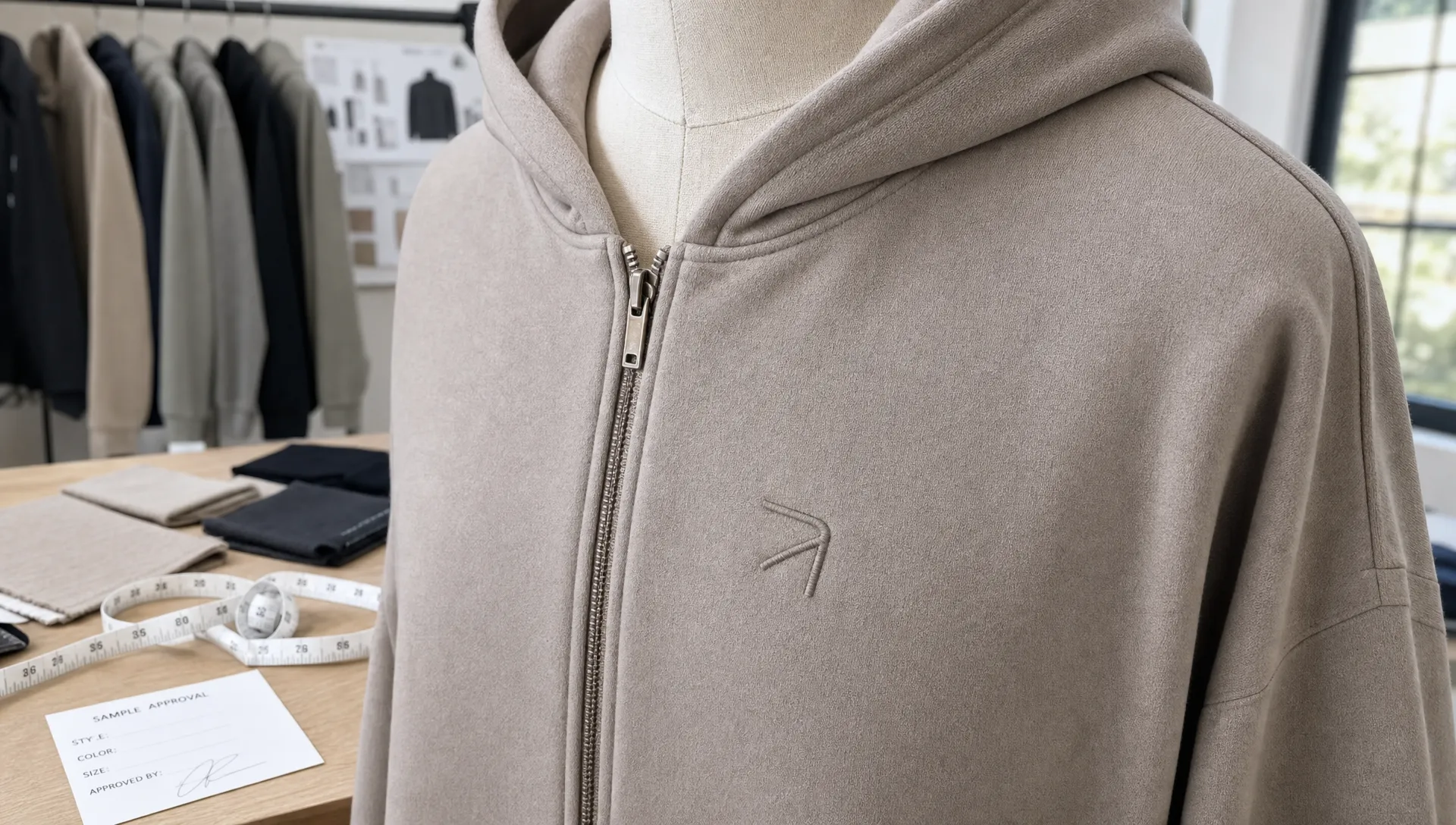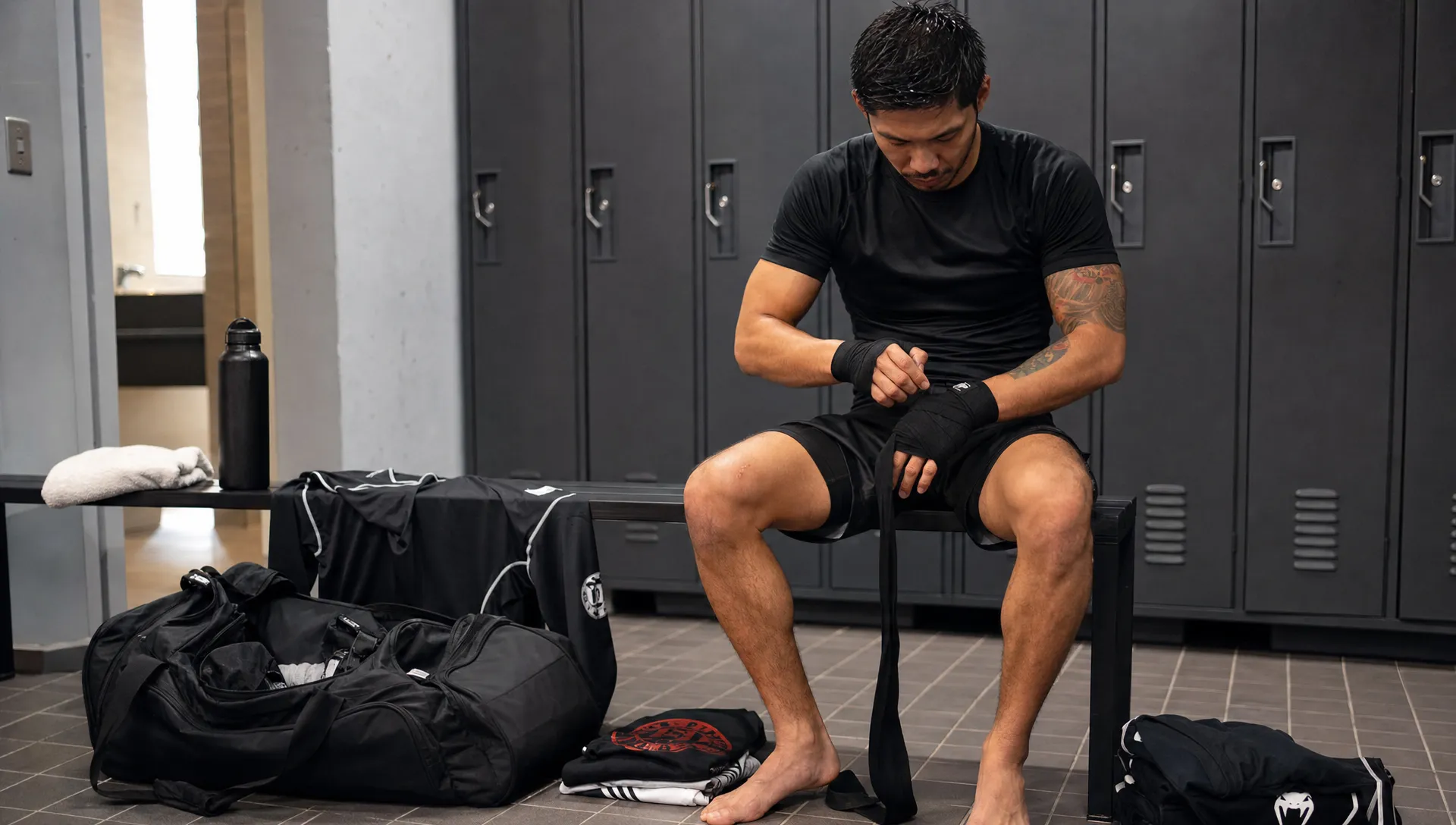
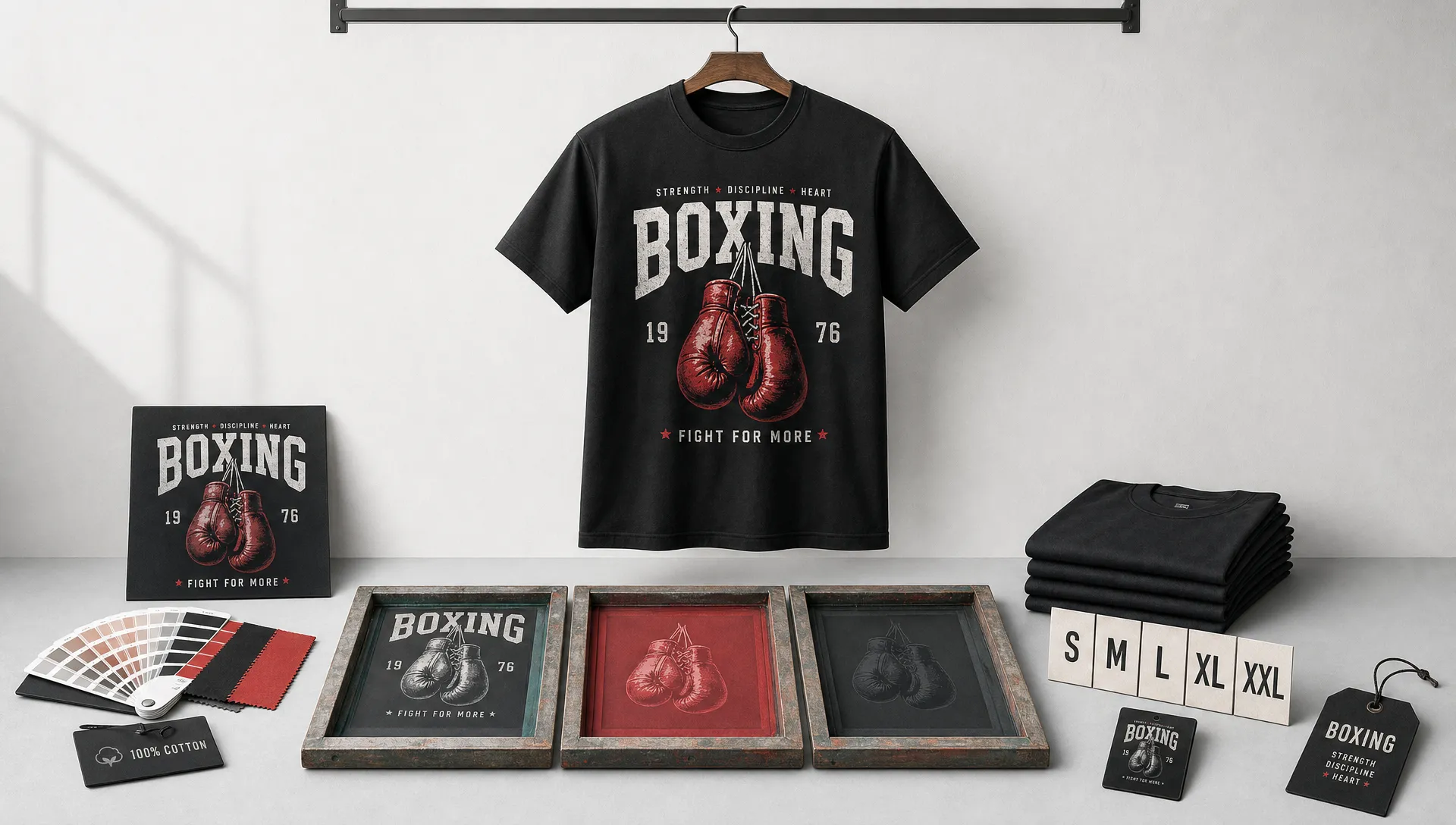
Boxing T-shirts look simple on a line sheet, but the difference between a slow-moving tee and a repeat-order bestseller usually comes down to three decisions: fit, fabric and print. A shirt can have a strong logo, a popular fighter name or a sharp gym identity, yet still miss if it feels boxy, traps sweat or cracks after a few washes.
For boxing gyms, fight brands and distributors, boxing T-shirts often sit at the center of a merch range. They are easier to size than gloves, more wearable than fight shorts and more affordable than jackets. They can work for training, coaching, casual wear, event merch, sponsor drops and private label retail. That flexibility is exactly why they deserve more product development attention than a basic promotional tee.
This guide breaks down how to build boxing T-shirts that sell through, not just look good in a mockup.
Start With the Use Case, Not the Graphic
Before choosing fabric or print method, decide what job the shirt must do. A boxing T-shirt for a retail streetwear drop is not the same product as a coach uniform or a sweat-heavy training tee. When brands treat every tee the same, they often end up with a compromise that works for nobody.
Most successful boxing T-shirt programs fall into one of four categories:
- Training tees designed for bag work, mitt work, conditioning and daily gym use.
- Retail merch tees built for fans, members and casual wear outside the gym.
- Event tees made for fight nights, tournaments, seminars or limited drops.
- Team and staff tees used by coaches, athletes and club members for a consistent look.
Each category has a different priority. Training tees need mobility and moisture control. Retail merch needs comfort, color depth and lifestyle appeal. Event tees need strong artwork and reliable delivery. Staff tees need durability and consistent sizing across repeat orders.
If you are developing a full boxing apparel range, the T-shirt should also connect visually with other products. For example, the same logo system used on tees can carry into custom boxing shorts, hoodies or walkout pieces. Arus Sportswear’s custom boxing T-shirts page is a useful starting point if you are planning private label or OEM production rather than buying generic blanks.
Fit Is the First Sales Filter
Customers usually touch and try on a T-shirt before they judge the print quality. If the shoulders sit wrong, the sleeves flare awkwardly or the body length feels off, the design has already lost.
For boxing, fit needs to serve both movement and style. A fighter warming up in a tee needs room through the shoulders and upper back. A fan buying merch wants the shirt to look good with jeans, joggers or training shorts. A gym selling to mixed body types needs sizing that feels predictable.
Athletic Fit for Training
An athletic boxing T-shirt should allow rotation without pulling across the chest or riding up during punches. The sleeve opening should not restrict the upper arm, but it should not be so wide that the shirt looks sloppy.
Key fit points include:
- Shoulder seams that sit close to the shoulder point.
- Enough chest width for movement without excess fabric.
- A sleeve length that works for both training and casual wear.
- Body length that stays comfortable during skipping, pad work and stretching.
- Neckline stability so the collar does not stretch out quickly.
A slightly tapered cut often works well for boxing brands because it feels athletic without becoming compression wear. For broader customers or markets where relaxed streetwear fits are preferred, a regular fit may sell better.
Retail Fit for Everyday Wear
Retail boxing T-shirts do not need to perform like rash guards, but they still need to feel intentional. A good merch tee should have enough structure to hold its shape on a hanger and enough softness to encourage repeat wear.
Streetwear-inspired boxing merch often uses a heavier cotton or cotton-rich fabric, a relaxed body and a stronger collar. Gym retail lines may prefer a midweight performance blend that works for both lifting and everyday use. The right choice depends on your audience. A boutique boxing gym in New York may sell a different silhouette than a Muay Thai and boxing club in Thailand or a distributor supplying general sports stores in Europe.
Sizing for International Buyers
Because Arus Sportswear serves brands, gyms and distributors worldwide, sizing strategy matters. A “large” in one market may not match expectations in another. USA and Australia buyers may expect roomier cuts, while some European and Japanese retail fits trend more tailored. Germany and the Netherlands often favor practical, clean fits with reliable measurement charts.
For private label orders, always review garment measurements instead of relying only on size names. Ask for chest width, body length, shoulder width and sleeve length across the full size range. If you sell online, publish a size chart based on finished garment measurements to reduce returns and customer hesitation.
Fabric Determines Whether the Shirt Gets Worn Again
Fabric is where many boxing T-shirts win or fail after the first purchase. A customer may buy once because of the logo, but they come back because the shirt feels good and survives real use.
The best fabric choice depends on whether the shirt is for training, retail or both.
| Fabric type | Best use | Strengths | Tradeoffs |
|---|---|---|---|
| Cotton jersey | Retail merch, lifestyle tees | Soft hand feel, familiar comfort, strong casual appeal | Holds more moisture during hard training |
| Cotton polyester blend | Gym merch, hybrid use | Better shape retention, faster drying than pure cotton | Hand feel varies by yarn and finish |
| Polyester performance fabric | Training tees, teamwear | Lightweight, moisture management, good for sublimation | Can feel less premium if fabric quality is low |
| Stretch performance blend | Athletic training tees | Better mobility, closer fit, improved comfort during movement | Higher cost than basic jersey |
| Heavyweight cotton | Streetwear drops, premium merch | Structured look, premium feel, durable perception | Warmer and less ideal for intense sessions |
Cotton for Merch Appeal
Cotton remains popular because it feels familiar. For boxing gyms selling shirts to members, cotton or cotton-rich tees can work especially well as everyday merch. The fabric feels comfortable after training, looks natural with casual outfits and supports many print methods.
The downside is moisture. A 100 percent cotton tee can feel heavy during intense bag work or conditioning. If the shirt is marketed primarily as a training garment, a cotton-only fabric may lead to disappointment. For lifestyle boxing T-shirts, it can be a strong choice.
Polyester for Training Performance
Polyester performance fabrics are common in combat sports because they dry faster and hold color well with sublimation printing. For teams, fighters and high-volume training environments, they offer practical advantages. The shirt can stay lighter during sweating and can support all-over artwork when sublimated.
The main risk is perceived quality. Cheap polyester can feel shiny, clingy or uncomfortable. A better performance fabric should have a smooth hand feel, stable stretch and enough opacity so it does not look thin under bright gym lighting.
Blends for the Middle Ground
Many commercially successful boxing T-shirts use blended fabrics because they balance comfort and performance. Cotton polyester blends can create a soft tee that dries faster than pure cotton and holds its shape better over time. Stretch blends add mobility, which can matter for boxing movements.
For gyms and brands that want one shirt to cover both training and casual wear, a midweight blend is often the safest starting point. It gives the customer a product they can wear to class, then keep on after class without feeling like they are still in technical gear.
Print Quality Turns a Good Tee Into a Brand Product
A boxing T-shirt is not only a garment. It is a walking identity for a gym, fighter, promotion or apparel label. Print quality affects how professional that identity looks.
The right decoration method depends on fabric, artwork, order size and intended use. No single method is best for every boxing T-shirt.
Screen Printing for Strong, Repeatable Graphics
Screen printing is a proven option for bold logos, gym names and event artwork. It works especially well on cotton and cotton-blend tees. For simple designs with solid colors, it can deliver a durable, professional finish.
For boxing merch, screen printing often fits classic placements such as left chest logos, large back graphics, sleeve marks and sponsor prints. It is especially useful when the same design will be reordered in bulk.
The main consideration is artwork complexity. More colors usually mean more setup and cost. If your design has gradients, photo effects or full-shirt coverage, another method may be more suitable.
Sublimation for All-Over Performance Designs
Sublimation is common for polyester boxing T-shirts because the ink bonds with the fabric rather than sitting heavily on top. This allows lightweight feel, strong color and full-coverage designs.
It is ideal for fight team shirts, walkout-inspired tees and performance training tops with dynamic patterns. Sublimation can incorporate sponsor logos, national colors, gym artwork and fighter branding without adding heavy print layers.
The limitation is fabric compatibility. Sublimation works best on polyester or polyester-rich fabrics and is generally not the right choice for a traditional cotton merch tee.
Heat Transfer and Specialty Effects
Heat transfer can be useful for smaller runs, names, numbers, sponsor additions or detailed graphics. It can also support reflective, metallic or specialty effects when used carefully.
For boxing brands, the risk is overuse. A large transfer on a training tee may feel heavy or reduce breathability. Always test how the decoration feels during movement and after washing, not just how it looks when new.
Embroidery for Premium Details
Embroidery is less common for large T-shirt graphics, but it can work well for small chest logos or premium capsule pieces. It gives a textured, durable appearance and can elevate a simple tee.
However, embroidery adds weight and may not suit lightweight performance fabrics. It works best when used as a small branding detail, not as the main graphic on a sweat-heavy training shirt.
Graphic Placement That Sells
A strong boxing graphic needs to be readable, wearable and aligned with the product’s purpose. Many designs fail because they are created as flat artwork without considering the body.
For retail, the most reliable placements are left chest plus back print, center chest logo, small sleeve mark or oversized back graphic. For training tees, lighter print coverage can improve comfort. For event tees, the back often carries fight details, sponsor logos or tournament information.
Placement should also respect how the shirt is worn. A graphic that sits too low can disappear under a hoodie. A sponsor logo too close to the armpit may distort when the fighter moves. A large front print may look strong in a mockup but feel stiff during training if the wrong print method is used.
For brands building a wider combat sports merch program, consistency matters. A gym may use the same core logo placement across tees, tanks and hoodies, then change seasonal colors or back graphics. This makes the line feel intentional. If you are expanding beyond tees, Arus Sportswear also manufactures custom boxing tank tops for warmer climates, summer drops and high-intensity training environments.
Build a Range, Not Just One Shirt
One boxing T-shirt can sell, but a small range usually performs better because customers have different reasons to buy. A gym member may want a clean logo tee. A fighter may prefer a performance training top. A fan may buy a limited fight-night graphic.
A practical boxing T-shirt range can include:
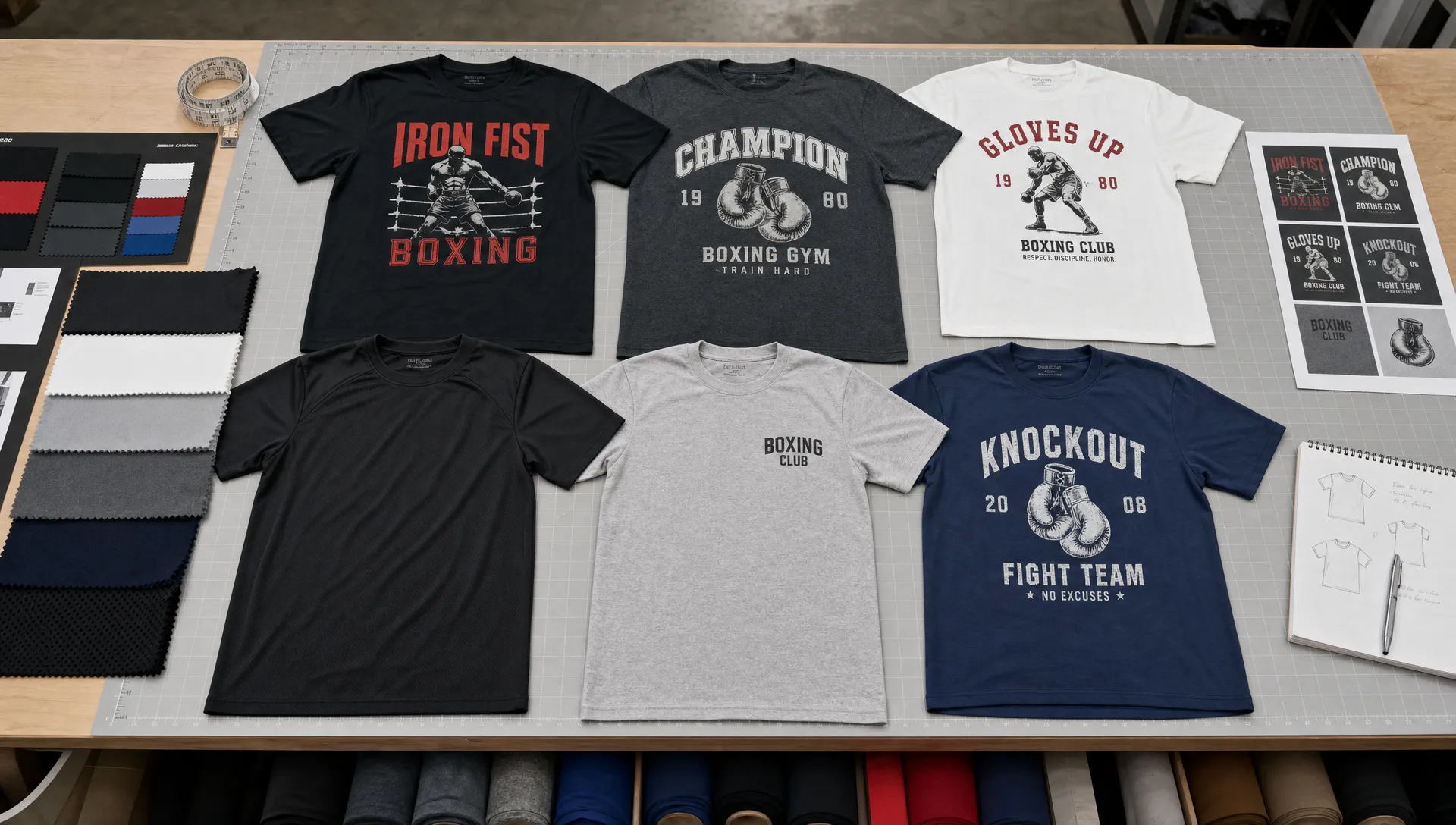
- Core logo tee in black, white, grey or navy for year-round sales.
- Performance training tee in polyester or stretch blend for active use.
- Limited event tee for fight nights, seminars or tournaments.
- Premium merch tee with heavier fabric, stronger collar and lifestyle graphics.
- Team tee for coaches, fighters and staff with consistent branding.
This approach helps with sell-through because each SKU has a clear role. It also makes buying easier for distributors. Instead of guessing whether one design will satisfy everyone, you can offer a balanced assortment across price points and use cases.
For gym owners building a broader retail wall, the same logic applies across categories. Arus Sportswear’s guide to custom branded clothing ideas that sell for gyms covers how tees, hoodies, fightwear and training apparel can work together as a commercial range.
Color Strategy for Boxing T-Shirts
Color choices should support both brand identity and inventory control. Black remains a strong default in combat sports because it looks sharp, hides sweat and pairs with most logos. White works well for clean retail graphics but may be less practical for training. Grey, navy, red and forest green can add variety without becoming risky.
For international buyers, consider climate and retail habits. Lighter colors may perform better in hot markets such as Thailand or parts of Australia. Darker, heavier merch may work well for colder seasons in Canada, Germany and the Netherlands. In Japan, cleaner graphics and precise finishing can be especially important for lifestyle positioning.
A smart first range might use two safe base colors and one seasonal color. This gives customers choice without splitting demand too thinly. For example, black and white can cover the core range while a limited red or sand color creates urgency.
Sampling and Testing Before Bulk Production
A boxing T-shirt can look good in a digital mockup and still fail in production if the fabric shrinks, the print cracks or the fit grades poorly across sizes. Sampling protects your margin and your brand reputation.
When reviewing samples, check more than the logo. Put the shirt through realistic conditions. Train in it, wash it, hang it, fold it and compare it against the size chart. Look for collar recovery, twisting seams, print hand feel, color matching and overall comfort.
| Sample check | What to look for | Why it matters |
|---|---|---|
| Fit on body | Shoulder position, sleeve shape, body length | Determines first impression and return risk |
| Fabric feel | Softness, stretch, opacity, weight | Affects perceived value and repeat wear |
| Print finish | Sharp edges, color accuracy, flexibility | Protects brand presentation |
| Wash result | Shrinkage, fading, cracking, twisting | Reveals real-world durability |
| Size grading | Consistent proportions from small to larger sizes | Helps serve mixed customer groups |
The best sampling feedback is specific. Instead of saying “make it better,” note that the sleeve needs 1 cm more length, the collar rib should be firmer or the back print should move 3 cm higher. Clear feedback helps manufacturers correct the product efficiently.
Pricing Depends on Perceived Value
Boxing T-shirts compete in a crowded market, but that does not mean every product must be cheap. Customers will pay more when they understand the value. Fit, fabric and print all contribute to that perception.
A basic event tee can be priced for volume. A premium heavyweight merch tee can command more if the fabric feels substantial and the artwork looks retail-ready. A performance training tee can justify a higher price when it clearly improves comfort during workouts.
For gyms, the margin can also come from community connection. Members buy the shirt because it represents where they train. For fight brands, the margin may come from design, athlete association or limited availability. For distributors, the margin depends on reliable production, consistent sizing and low defect rates.
The mistake is treating all boxing T-shirts as interchangeable. A low-cost blank with a generic print may move once, but it rarely builds a strong repeat program. A well-developed tee can become a core SKU that buyers reorder season after season.
Manufacturing Details Buyers Should Confirm
When sourcing boxing T-shirts, buyers should confirm production details before placing bulk orders. This is especially important for private label and OEM programs where the shirt carries your brand name.
Ask about fabric options, size grading, print methods, label customization, packaging, minimum order quantities and shipping support. If the manufacturer works across combat sports categories, they may also understand the movement, durability and branding needs specific to boxing and martial arts apparel.
For brands comparing suppliers, it helps to evaluate whether the manufacturer can support both the creative and technical sides of production. Experience with fightwear matters because boxing apparel is not just fashion. It sits between sport, identity and retail. Arus Sportswear’s article on what a combat sports clothing manufacturer should offer explains the supplier capabilities worth checking before you commit.
Common Mistakes That Hurt Sell-Through
Many boxing T-shirts underperform for avoidable reasons. The most common issue is designing for the logo instead of the wearer. A huge front graphic may satisfy the brand owner, but if it feels stiff or looks hard to style, customers may leave it on the shelf.
Another issue is choosing the wrong fabric for the promise. If a shirt is marketed as a training tee, it needs to handle sweat and movement. If it is sold as premium merch, it needs a fabric and finish that feel premium in hand.
Sizing mistakes also hurt sales. Too-short bodies, narrow shoulders or inconsistent grading can create customer complaints across markets. Finally, weak print testing can damage trust. A shirt that cracks or fades quickly turns a buyer into a critic.
The strongest boxing T-shirts avoid these problems by connecting design decisions to the actual use case. They look like boxing, feel good on the body and hold up after the first wash.
Frequently Asked Questions
What fabric is best for boxing T-shirts? The best fabric depends on the use case. Cotton works well for casual merch, polyester is strong for training and sublimation and cotton polyester blends are a good middle ground for gym retail.
Are boxing T-shirts better with screen printing or sublimation? Screen printing is ideal for bold graphics on cotton and cotton-blend tees. Sublimation is better for polyester performance shirts with all-over artwork or lightweight training designs.
How should boxing T-shirts fit? A boxing T-shirt should allow shoulder rotation, feel comfortable through the chest and stay in place during movement. Retail merch can be more relaxed, while training tees usually benefit from an athletic fit.
Can gyms sell boxing T-shirts as merchandise? Yes. Boxing T-shirts are one of the most practical merch products for gyms because they are wearable, easy to display and suitable for members, coaches, fighters and fans.
What should I check before ordering custom boxing T-shirts in bulk? Review the sample fit, fabric weight, print finish, wash performance, size chart and branding details. Clear sample approval reduces risk before bulk production.
Build Boxing T-Shirts People Actually Wear
A profitable boxing T-shirt is not built from artwork alone. It comes from aligning the fit with the wearer, matching the fabric to the use case and choosing a print method that supports the design without compromising comfort.
For gyms, brands and distributors, that means thinking like a product developer before thinking like a merch seller. Decide where the shirt will be worn, who will buy it and why they will choose it again after the first wash.
Arus Sportswear manufactures custom MMA and martial arts apparel for brands, gyms and distributors worldwide, including private label and OEM boxing apparel. If you are planning a boxing T-shirt range with custom designs, branding options, bulk order support and worldwide shipping, start by defining your fit, fabric and print direction before moving into production.