Kickboxing attire has to do more than look athletic. It must hold its shape through sweat, pivots, clinch contact, bag rounds, repeated laundering and, for competition, rules that may change by federation or event.
For fightwear brands, gyms and distributors, the best spec is not one universal outfit. Training, sparring and competition each place different demands on fabric, fit, trim, branding and quality control. A garment that feels great in conditioning class may be too loose for sparring or fail an event inspection because of a logo placement, pocket, color or fastening detail.
This guide breaks down practical kickboxing attire specs you can use when briefing a manufacturer, building a private label line or standardizing uniforms for a fight team.
Start with the use case, not the garment
Before choosing fabrics or artwork, define the environment where the apparel will be used. Kickboxing athletes do not move like general fitness customers. They kick high, rotate the hips, check kicks, sprawl during mixed classes, sweat heavily and often train in humid rooms. That changes how apparel should be designed.
| Use case | Typical activity | Spec priority | Main risk if underspecified |
|---|---|---|---|
| Training | Bag work, pad rounds, drilling, conditioning and classes | Breathability, easy care, range of motion and wash durability | Shrinkage, odor retention, seam irritation or restricted kicks |
| Sparring | Controlled contact with gloves, shin guards and partner movement | Secure fit, soft trims, abrasion resistance and no hard edges | Waistband shifting, exposed fasteners, fabric tearing or skin irritation |
| Competition | Sanctioned bouts, weigh-ins, team walkouts and event inspection | Rule compliance, exact fit, clean branding and backup uniform planning | Failed inspection, illegal color, prohibited trim or sponsor conflict |
For B2B sourcing, separating these use cases helps you avoid a common mistake: asking one garment to solve every scenario. You can still create a unified line, but each product should have its own technical reason to exist.
What counts as kickboxing attire?
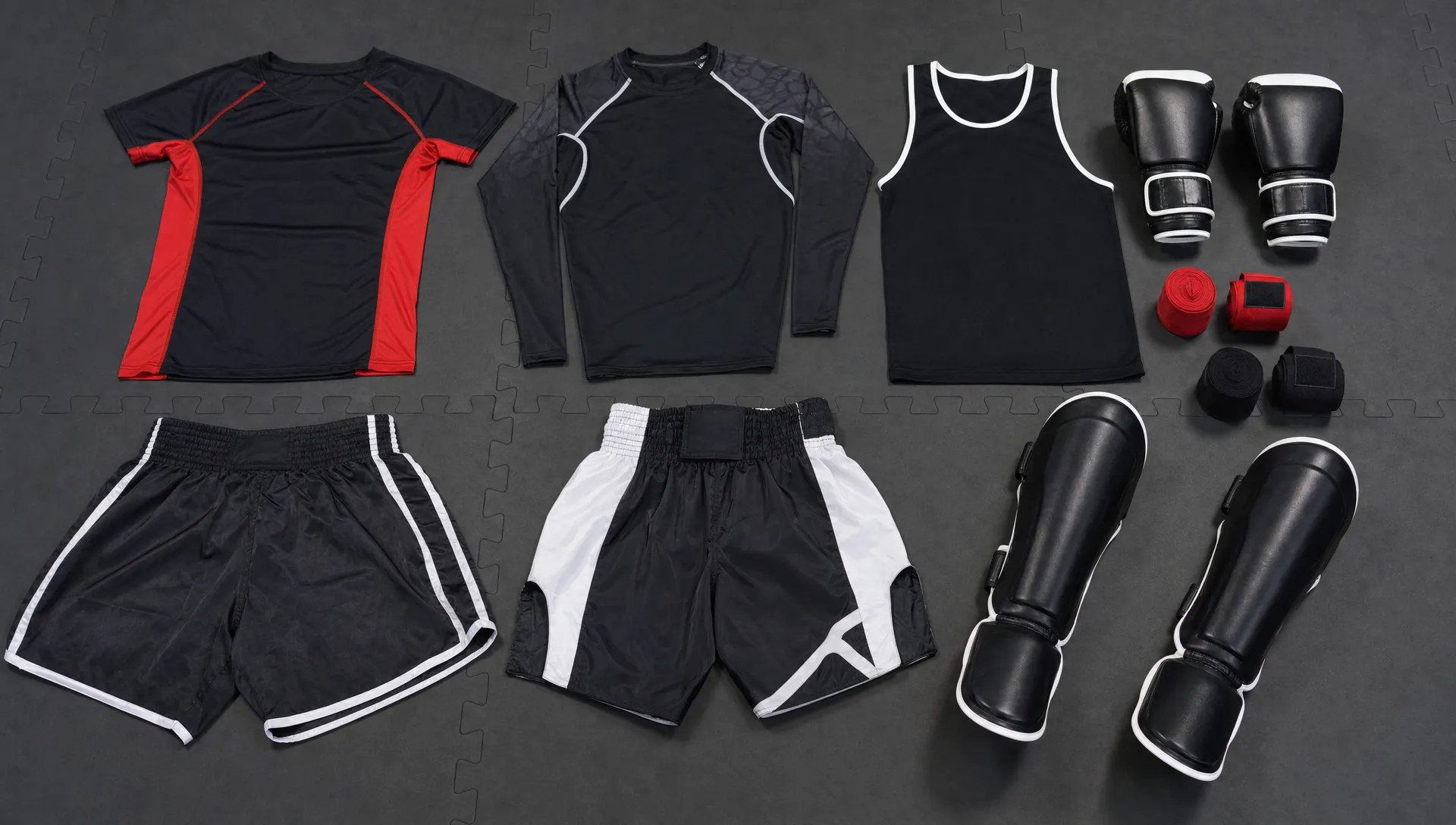
Kickboxing attire usually includes the soft goods an athlete wears under or around protective gear. Depending on the style, gym culture and federation, that can include performance tops, compression rash guards, fight shorts, training shorts, leggings, warm-up pieces and team uniforms.
A complete attire system often covers:
- Tops such as performance tees, tanks, sleeveless fight tops and compression rash guards.
- Bottoms such as kickboxing shorts, hybrid fight shorts, long training shorts and compression tights.
- Protective gear interfaces such as garments designed to sit cleanly under shin guards, groin guards, belly pads or chest protectors.
- Team and retail details such as woven labels, printed neck labels, size tabs, hang tags, polybags and barcode stickers.
- Branding zones for gym logos, national team marks, sponsor placements and retail graphics.
Gloves, wraps, mouth guards and shin guards are protective equipment rather than apparel, but they still affect attire specs. Sleeve length, short cut, waistband height and seams should all be tested while the athlete is wearing the gear they actually train in.
Training kickboxing attire specs
Training attire should prioritize comfort, mobility and repeat washing. It is the workhorse category for gyms, online fightwear brands and distributors because athletes may buy multiple pieces for weekly use.
For tops, polyester or polyester blend knits are common because they dry faster than cotton and hold sublimated artwork well. Elastane can improve stretch and recovery, especially for compression tops and fitted rash guards. For more casual gym tees, a cotton blend can feel softer, but it will usually absorb more sweat and take longer to dry.
For shorts, lightweight woven polyester with stretch is a strong starting point. Kickboxing requires hip rotation and high kicks, so the pattern matters as much as the fabric. Side vents, curved hems, gussets and panel shaping allow a slimmer short to move without pulling across the thigh.
| Training garment | Practical spec starting point | Why it works |
|---|---|---|
| Performance tee | 140 to 180 gsm polyester knit, optional elastane, soft neck binding | Light enough for sweat sessions and suitable for frequent washing |
| Compression rash guard | 180 to 240 gsm polyester and elastane blend, 4 way stretch, flatlock seams | Keeps fit close to the body and reduces loose fabric during drills |
| Kickboxing shorts | 120 to 180 gsm stretch woven polyester, elastic waistband, internal drawcord | Supports high kicks without heavy fabric or exposed hardware |
| Training leggings | 220 to 280 gsm compression knit, gusseted crotch, non transparent stretch | Useful for colder markets and mixed striking or conditioning sessions |
| Warm-up jacket or hoodie | Midweight knit or light woven shell, soft cuffs, no sharp trims | Builds team identity without interfering with pre-session mobility |
These ranges are not fixed rules. A brand selling to Thailand or humid parts of Australia may choose lighter, faster drying fabrics, while a distributor serving Canada, Germany or the Netherlands may need heavier layering pieces for colder gyms and winter travel.
Seams should be low profile in areas that rub against gear. For rash guards, flatlock stitching is often preferred because it lies flatter against the skin. For looser tees, soft overlock construction may be enough if seam allowance is controlled and the inside finish is clean.
Sparring kickboxing attire specs
Sparring increases contact, friction and garment movement. Shorts may be grabbed accidentally during close range exchanges. Tops may rub under chest protectors or body protectors. Waistbands are stressed by pivots, checks and repeated kicks.
The first sparring rule for apparel is simple: remove anything that can scratch, catch or shift. Avoid open pockets, metal eyelets, hard zipper pulls, exposed drawcord ends and rough patches near high contact zones. If a closure is needed, keep it internal, covered or away from impact areas.
Sparring shorts should stay locked at the waist without restricting breathing. A wide elastic waistband with an internal drawcord is usually more reliable than a narrow waistband for repeated movement. Hook and loop closures can work on fight shorts, but they should be soft, secure and positioned so the edges do not contact a partner.
If your apparel line is being developed alongside protective gear, define the system together. For example, glove shape can influence sleeve length and wrist exposure during sparring. Arus Sportswear has a dedicated guide to custom MMA glove specs that is useful when a brand is building a broader combat sports range with coordinated apparel and equipment.
For sparring tops, compression fits are often safer than oversized shirts because loose fabric can twist, ride up or catch under pads. If the gym prefers loose tees, specify a balanced fit with enough shoulder mobility and a hem that does not swing excessively during rotation.
Competition kickboxing attire specs
Competition attire starts with rules, not aesthetics. Kickboxing is governed by different federations, event promoters and local athletic bodies. Uniform expectations can vary between point fighting, light contact, full contact, low kick, K-1 style events and amateur or professional shows.
When WAKO rules apply, the published WAKO rules and regulations should be checked before production. Other events may use their own rulebook, so do not assume that one championship kit will pass every inspection.
Common competition considerations include garment type, color, logo placement, sponsor restrictions, protective equipment compatibility and athlete presentation. Some events may require specific corner colors or prohibit certain designs. Others may require a particular top style or allow different uniforms depending on discipline.
| Competition requirement | Spec decision | Why it matters |
|---|---|---|
| Rule set confirmation | Build a rule checklist for each event type before artwork approval | Prevents illegal garment shapes, trims or colors |
| Color planning | Prepare approved colorways or corner compatible versions | Helps teams avoid last minute uniform changes |
| Branding placement | Keep federation, team and sponsor zones separate in the tech pack | Reduces sponsor conflicts and inspection issues |
| Fit precision | Use athlete measurements, not only retail size labels | Competition garments should stay stable under pressure |
| Backup units | Produce spare garments in key sizes and colors | Covers weigh-in changes, damage and travel delays |
Competition attire should look sharp without sacrificing inspection safety. Avoid hard ornaments, raised decorative trims in contact areas and graphics that could be considered offensive or unauthorized. If sponsor marks are used, keep editable artwork files and placement maps so changes can be made without rebuilding the entire design.
Fabric and construction details that decide performance
Two shorts can use the same fabric and still perform differently. Pattern engineering, seam placement, waistband construction and print method often decide whether the athlete trusts the garment.
A good kickboxing short needs hip clearance. The side seam, inseam, gusset and leg opening must work together so the athlete can throw round kicks, knees and teeps without the waistband dragging downward. Many kickboxing lines borrow ideas from Muay Thai and MMA silhouettes. For example, short-cut fight shorts can be a useful reference point when studying how compact inseams, elastic waistbands and mobility-focused cuts support striking movement.
Tops require a different kind of control. Rash guards need stretch recovery, meaning the fabric should return to shape after being pulled. Tees need enough shoulder and back room for punches but should not balloon under pads. Tanks need armhole shaping that does not expose too much torso during movement.
| Component | Strong spec choice | Watch point |
|---|---|---|
| Waistband | Wide elastic with internal drawcord | Test after sweat exposure because elastic can roll or loosen |
| Side vents | Reinforced vent opening with bar tack or strong seam finish | Poor reinforcement can split during high kicks |
| Gusset | Diamond or curved crotch gusset on close fit shorts | Reduces seam stress during kicks and stance changes |
| Seam type | Flatlock for compression, clean overlock for looser knits | Thick seams can irritate under pads or guards |
| Print method | Sublimation for all over graphics, screen or heat transfer for selected marks | Raised prints should not crack, peel or create rough contact points |
| Labels | Printed neck labels or soft woven labels | Stiff labels can irritate when athletes sweat |
Building a production-ready spec sheet
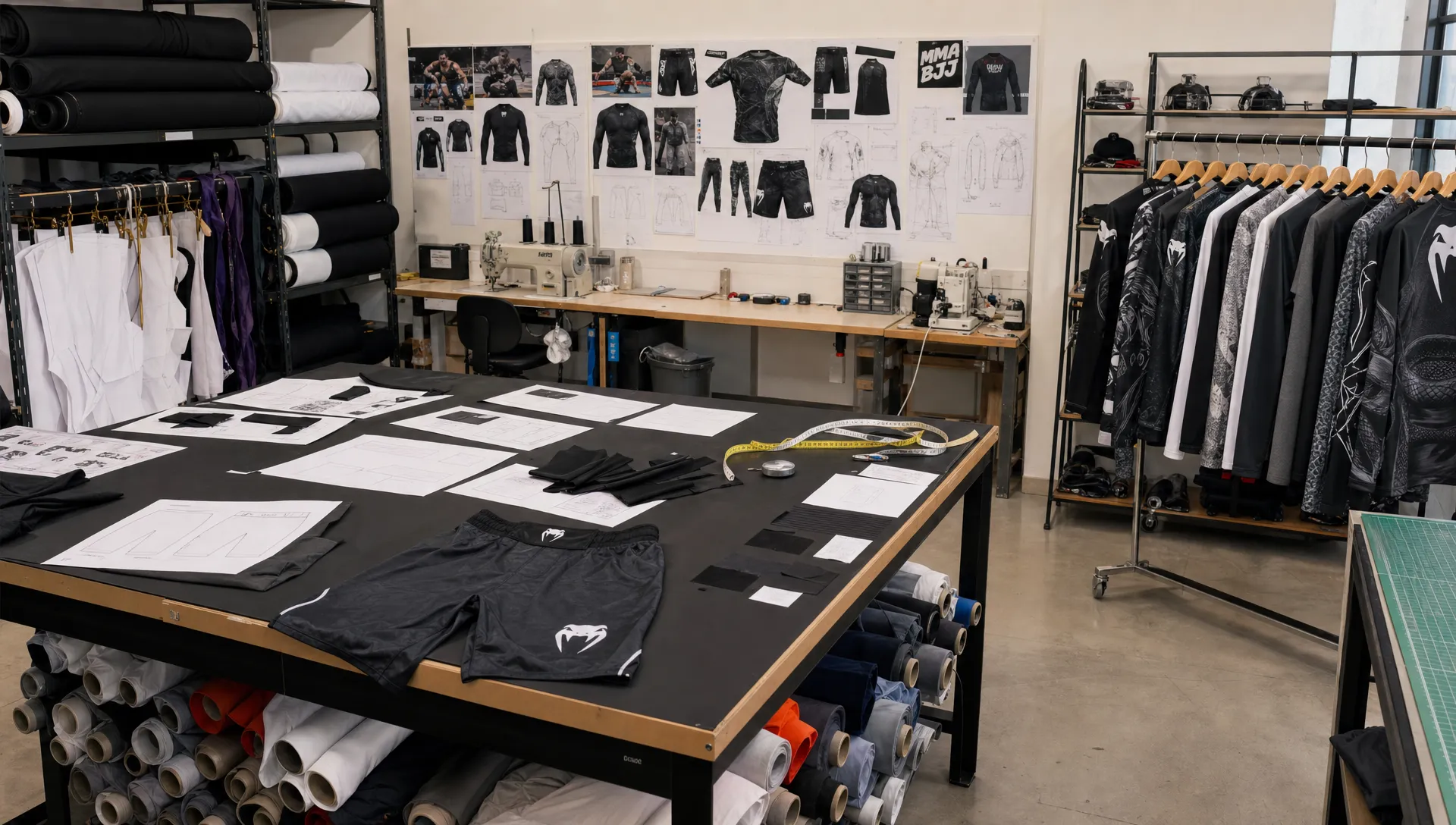
A tech pack should remove guesswork. If a manufacturer has to interpret too much, the final product may still look close to the design but fail in fit, comfort or durability.
For private label and OEM kickboxing attire, include body measurements, finished garment measurements, fabric composition, GSM, stretch requirement, seam type, print placement, label details and packaging instructions. A simple mockup is not enough for repeatable production.
| Spec sheet field | What to include | Example decision to document |
|---|---|---|
| Garment purpose | Training, sparring, competition or retail lifestyle | Competition short for K-1 style event use |
| Fabric | Fiber content, GSM, stretch direction and hand feel | 160 gsm stretch woven polyester with elastane |
| Fit | Intended silhouette and finished measurements | Athletic regular fit, high kick leg opening |
| Construction | Seam type, waistband build, gussets, vents and reinforcements | Internal drawcord, reinforced side vents and bar tacks |
| Artwork | Vector files, Pantone or color references, placement and scale | Left leg logo at approved size with sublimated side panel graphic |
| Labels | Main label, care label, size tab, country of origin and barcode needs | Printed neck label plus woven hem label |
| Packaging | Folding method, polybag size, carton marking and assortment | Size sorted cartons for team distribution |
| Quality tolerance | Measurement tolerance, defect limits and sample approval process | Size set approval before bulk cutting |
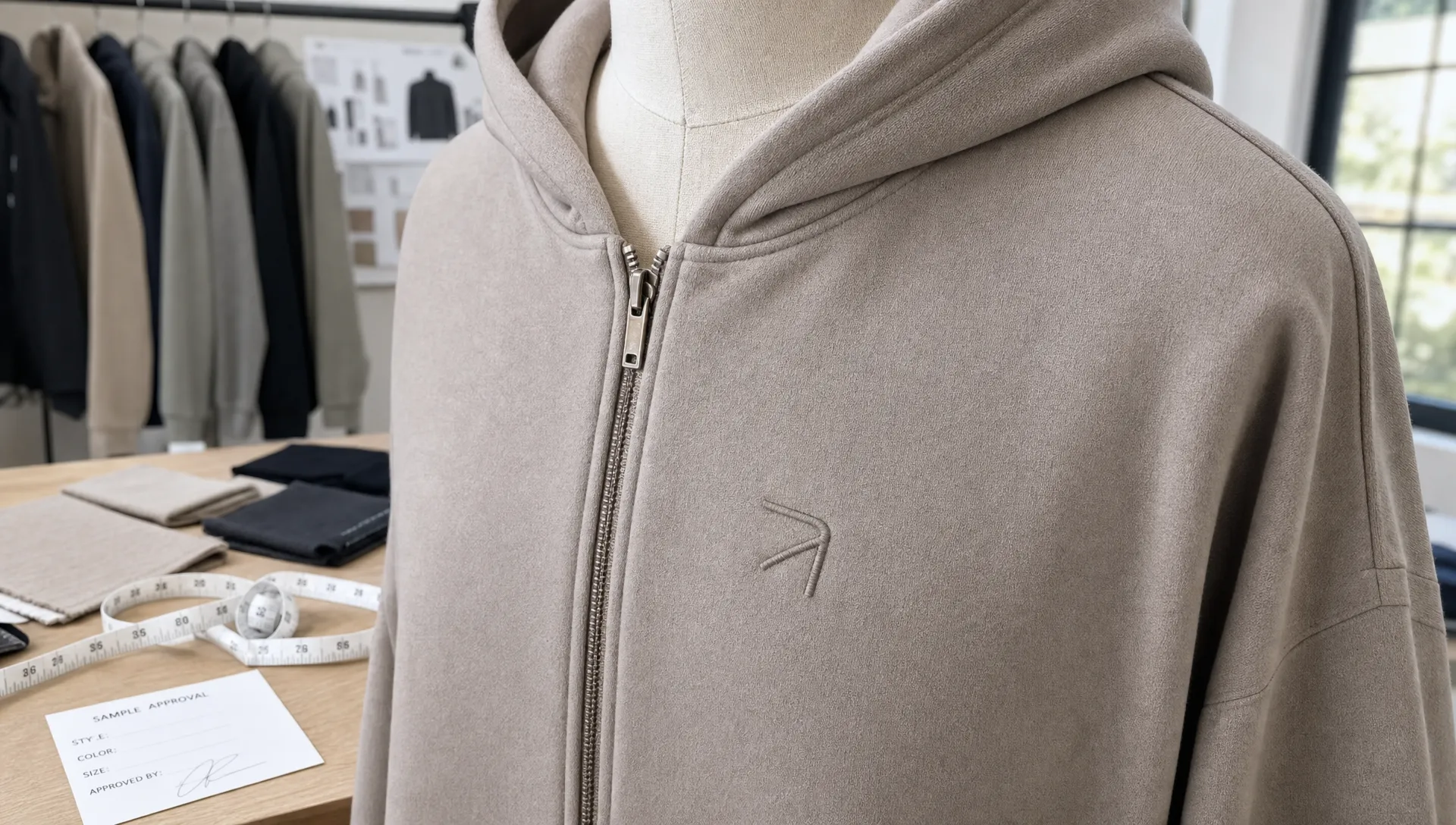
For repeat orders, keep approved samples and measurement records. The approved sample is the physical standard that helps the factory, brand and buyer agree on what acceptable production looks like.
Quality control checks for kickboxing apparel
Quality control should happen before bulk production, during production and before shipping. Combat sports apparel is exposed to sweat, friction and repeated laundering, so defects show quickly when athletes train hard.
Start with a fit sample in the intended fabric, not a substitute fabric with a different stretch profile. Then approve a size set to confirm grading across smaller and larger sizes. A short that works in medium can fail in XL if the leg opening or rise is not graded properly.
| Checkpoint | What to verify | Common failure to catch early |
|---|---|---|
| Fit test | Kicks, stance switches, knees, punch rotation and pad rounds | Waistband slip, tight thigh, shoulder restriction or hem ride-up |
| Wash test | Shrinkage, twisting, print durability and color change | Neck distortion, print cracking or fabric bleeding |
| Seam stress | Side vents, crotch, waistband joins and label attachment | Split seams or loose bar tacks |
| Fabric feel | Hand feel before and after wash | Roughness, pilling or clingy sweat retention |
| Artwork review | Color accuracy, placement and logo scale | Crooked logos, mismatched team colors or sponsor conflicts |
| Packaging audit | Size ratio, labels, cartons and shipping marks | Incorrect size stickers or mixed team orders |
For technical product claims, use appropriate testing rather than marketing language. Fabric labs may use ISO, ASTM or AATCC methods for colorfastness, abrasion, stretch recovery and laundering performance. If your buyer requires a specific standard, include that requirement in the purchase order before sampling.
Labeling also matters for international sales. In the United States, the Federal Trade Commission publishes textile labeling guidance through its Threading Your Way Through the Labeling Requirements resource. In the European Union, fiber naming and textile labeling are governed by Regulation (EU) No 1007/2011. Canada, Australia, Japan, Thailand and other markets have their own import and labeling requirements, so confirm obligations before finalizing care labels and packaging.
Sizing and fit across global markets
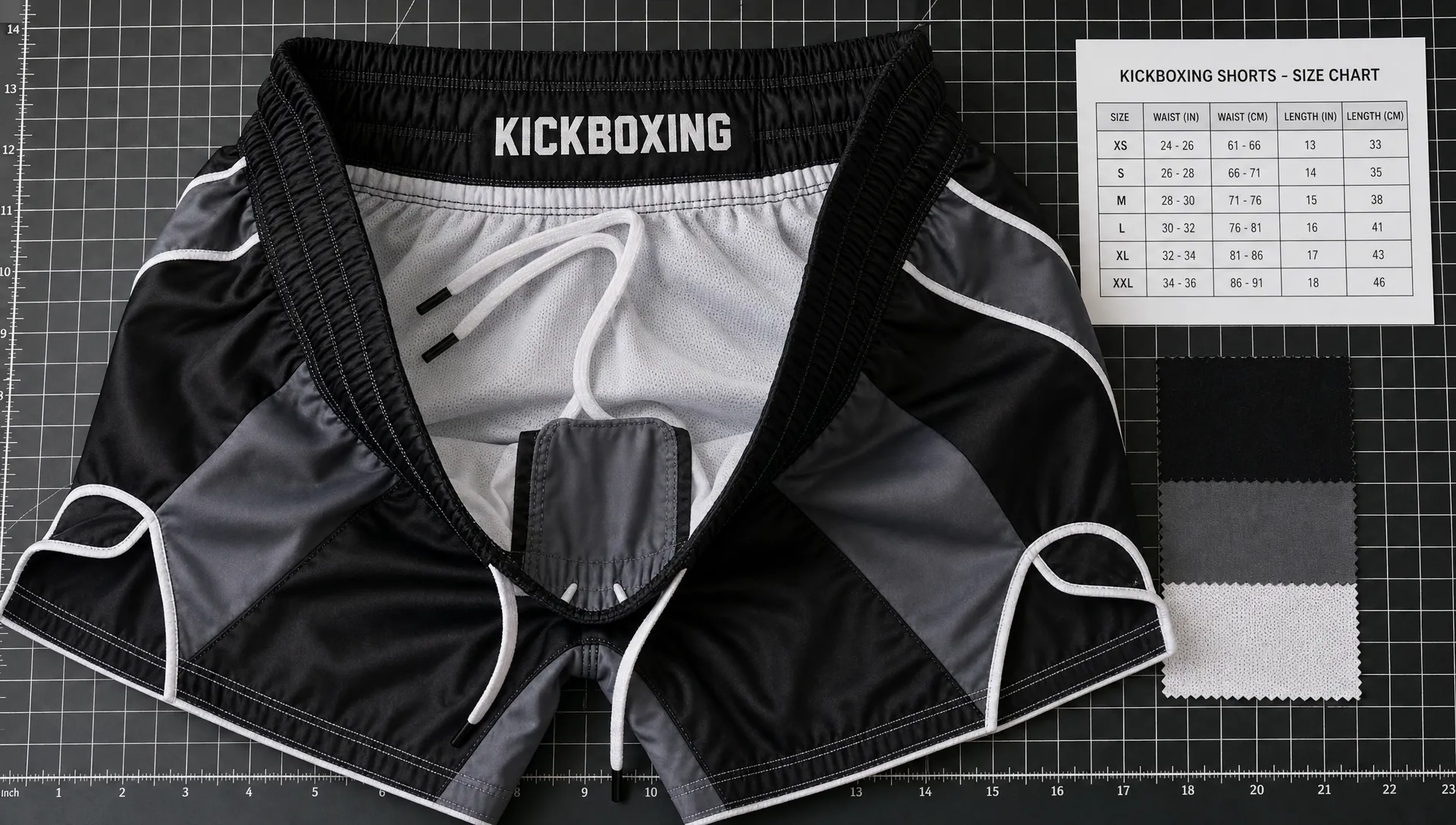
A USA gym, a German distributor and a Japanese fight team may all order medium shorts, but the body expectations behind that size can be different. Do not rely on generic S to XXL labels without a measurement chart.
Use finished garment measurements for production and body measurements for customers. Finished garment measurements tell the factory what to make. Body measurements tell the buyer what size to choose. Both should be available in inches and centimeters for international use.
For compression pieces, define negative ease carefully. A rash guard is supposed to stretch on the body, but too much compression can restrict breathing and shoulder movement. For loose training tees, define chest width, shoulder slope and body length so the garment looks athletic without becoming tight during punches.
Women’s kickboxing attire deserves separate pattern work, not only smaller men’s sizing. Sports bras, rash guards, shorts and leggings need fit testing for coverage, waistband comfort and movement under protective gear. Youth sizing also needs separate grading because proportions change quickly by age group.
Spec packages for brands, gyms and distributors
A gym uniform program usually needs durability, clean branding and fast repeat ordering. A retail fightwear brand may prioritize unique graphics, seasonal drops and premium hand feel. A distributor needs consistent sizing, carton labeling and reliable assortment planning. The same manufacturer can support these models, but the spec package should match the business model.
For a gym, start with a core training kit: performance tee, kickboxing short and optional rash guard. Keep colors controlled and logos easy to reorder. For a fightwear brand, build more variety into panel shapes, graphics and trims, but protect your fit block so each new design still performs. For a distributor, keep SKU complexity manageable and use clear size ratios based on actual customer demand.
The strongest kickboxing attire programs usually share three qualities: the garments are tested in real sessions, the tech packs are specific and the branding is built into the product rather than added as an afterthought.
Common specification mistakes to avoid
The most common mistake is choosing fabric by appearance alone. A shiny stretch fabric may look premium in photos but overheat in training or lose recovery after washing. Always test sweat feel, stretch recovery and drying behavior.
Another mistake is overbuilding competition apparel. Heavy embroidery, thick patches and decorative trims can look impressive but may create irritation or inspection problems. For active fightwear, lighter and cleaner is often better.
Sizing shortcuts also create returns. If a brand copies a generic size chart without testing on athletes, the garment may fit casual customers but fail during high kicks, guard checks and repeated stance changes. Measure real athletes in your target market and record feedback during movement, not only while standing still.
Finally, do not leave compliance until the end. Fiber content, care instructions, country of origin, importer details and event rules can affect labels, packaging and artwork. Late changes cost more once fabric is printed and bulk production has started.
Frequently Asked Questions
What is the best fabric for kickboxing attire? Polyester and polyester elastane blends are common for performance kickboxing attire because they dry quickly, support stretch and work well with sublimated graphics. Cotton blends can be comfortable for casual gym tees, but they usually absorb more sweat.
Should kickboxing shorts have pockets? For sparring and competition, pockets are usually a bad idea because fingers, gloves or toes can catch. If pockets are needed for lifestyle shorts, create a separate product instead of using the same short for contact training.
Are training and competition kickboxing shorts the same? They can look similar, but competition shorts need rule checks for color, logos, garment shape and trims. Training shorts can be more flexible as long as they remain safe and functional.
How tight should a kickboxing rash guard be? A rash guard should sit close to the body without limiting breathing, shoulder rotation or kicking movement. The fabric should stretch and recover instead of becoming loose after rounds.
What should be included in a kickboxing apparel tech pack? Include garment purpose, fabric composition, GSM, finished measurements, seam construction, waistband details, artwork placement, labels, packaging and quality tolerances. Add event rule notes for competition styles.
Build kickboxing attire with production specs that scale
If you are developing kickboxing apparel for a gym, fightwear brand or distributor, the right spec sheet protects both athlete performance and your brand reputation. It helps samples move faster, reduces rework and makes repeat orders more consistent.
Arus Sportswear manufactures custom MMA and martial arts apparel for brands, gyms and distributors worldwide, including private label and OEM production with custom designs, branding options, bulk order support, low minimum orders and worldwide shipping. Use the specs above as your starting point, then refine them through sampling, athlete testing and clear production documentation.