MMA jerseys sit in a tricky space. They need the visual punch of fight-night apparel, the comfort of performance training gear and the brand discipline of a retail product people will buy after class or online.
That means a strong jersey design is not just a cool graphic on a polyester shirt. For gyms, fight teams, apparel startups and distributors, the best designs begin with a clear use case: walkout, training or retail. Each one has different priorities for fit, fabric, logo placement, color, decoration method and production planning.
This guide breaks down how to design MMA jerseys that look professional, hold up in real use and support your brand beyond a single event.
Start With the Jersey's Main Job
Before choosing colors or artwork, decide what the jersey is supposed to do. A walkout jersey has a different purpose than a weekly training top. A retail jersey has to be easy to size, easy to style and profitable to reorder.
| Jersey use case | Main design priority | Fit and fabric focus | Branding focus |
|---|---|---|---|
| Walkout | Camera-ready impact | Comfortable over warmups or compression gear | Fighter name, team identity, sponsors |
| Training | Durability and movement | Stretch, breathability, sweat control | Gym logo, rank or team color, subtle graphics |
| Retail | Sellable everyday appeal | Inclusive sizing, comfortable cut, easy care | Strong brand mark, lifestyle colorways, clean finish |
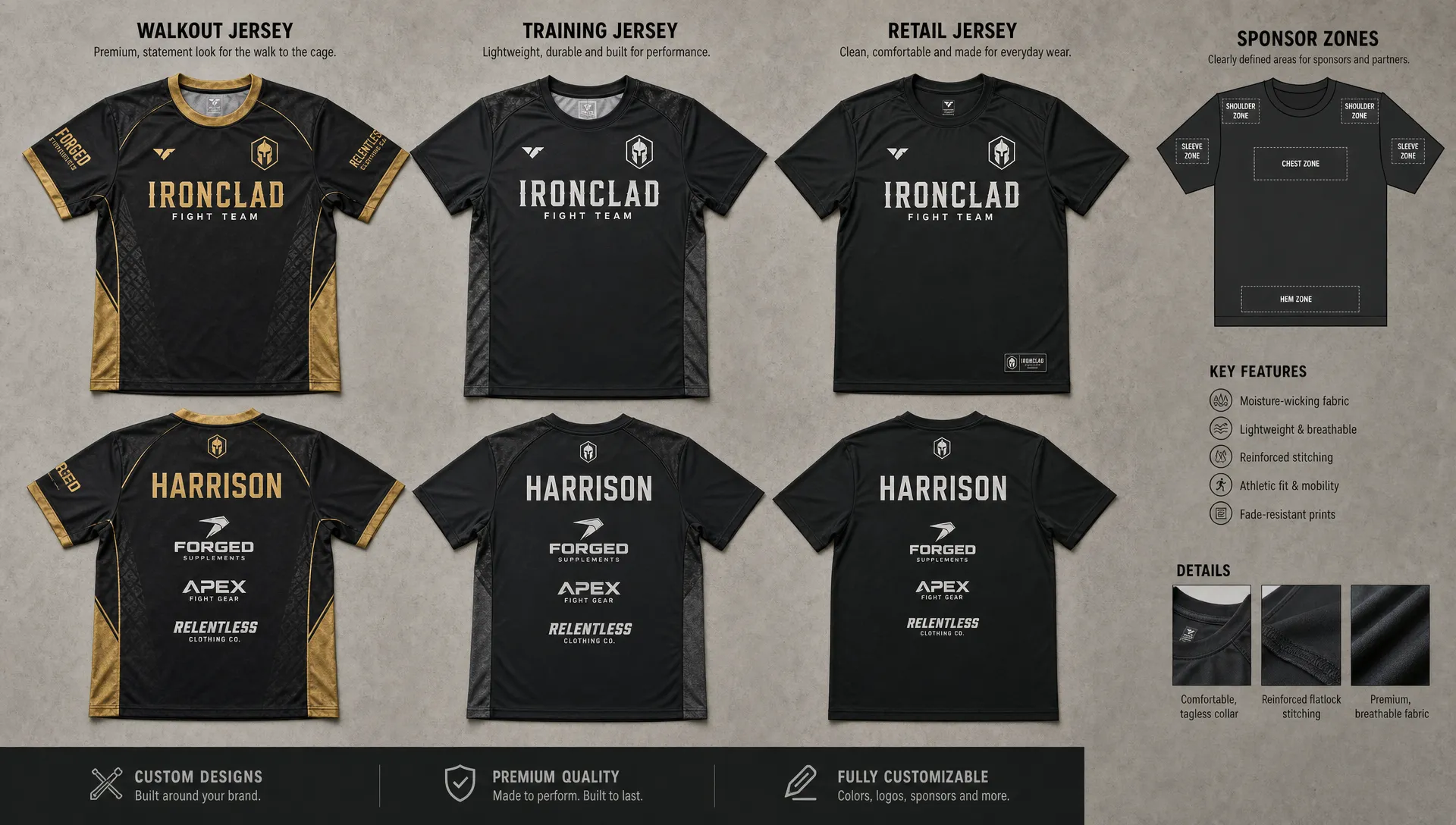
Walkout jerseys can be louder because they are built for entrance photos, social media clips and sponsor visibility. Training jerseys should be less distracting and more functional, especially if athletes use them for striking drills, conditioning or light grappling. Retail jerseys need a design that makes sense outside the gym too.
If one design tries to do everything, it usually becomes average at all three. A better approach is to build a small design system: one high-impact walkout version, one performance training version and one retail-friendly version that shares the same core identity.
Define the Brand Identity Before the Artwork
Strong MMA jerseys are built around brand clarity. The artwork should make it obvious who the fighter, gym or brand is without forcing every graphic idea onto the same garment.
Start with these identity decisions:
- Primary logo and secondary mark
- Main color palette and accent colors
- Fighter or team name format
- Typography style for names and numbers
- Sponsor zones, if needed
- Graphic theme, such as minimal, aggressive, heritage, national, streetwear or technical
The most common mistake is treating the jersey as unlimited ad space. Too many logos, fonts and graphic effects make the product look less premium. A simple, repeatable identity usually looks more professional and prints more consistently across sizes.
Logo quality matters here. Vector files, clean spacing and correct contrast can make the difference between a jersey that looks like a serious fightwear product and one that feels improvised. If you are refining brand marks before production, this guide to athletic wear logos that make your brand look pro covers practical logo sizing, placement and file preparation.
Choose a Silhouette That Matches the Use Case
The word jersey can mean several things in MMA apparel. It may be a walkout tee, sleeveless top, performance shirt, compression-style team top or loose athletic jersey. The right silhouette depends on how the athlete or customer will wear it.
For walkouts, the garment should layer comfortably over wraps, compression tops or warmup gear. A slightly relaxed athletic fit often works better than a tight fit because fighters need to move, raise their arms and remove the top easily before competition.
For training, the fit should reduce distraction. Too loose and the fabric can catch during partner drills. Too tight and it may restrict movement or feel uncomfortable during long sessions. For striking and conditioning, an athletic short-sleeve or sleeveless cut can work well. For grappling-heavy use, consider whether the product should be closer to a rash guard than a standard jersey.
For retail, fit consistency is the priority. Customers in the USA, Canada, Europe, Australia, Japan, Thailand and other markets may have different sizing expectations, so your size chart should be planned early. A retail cut should be wearable for training but not so technical that casual customers avoid it.
Pick Fabrics for Performance, Not Just Appearance
MMA jerseys are usually built from synthetic performance fabrics because they need to manage sweat, dry quickly and support full-body movement. Polyester-based fabrics are common for sublimation printing, mesh panels can improve airflow and spandex blends can add stretch.
Fabric choice affects everything: print vibrancy, comfort, durability, shrinkage, hand feel and cost. A glossy fabric may make colors pop but feel too shiny for retail. A heavier fabric may feel premium in the hand but become uncomfortable in hard training. A very lightweight fabric may breathe well but show wear faster in rough gym environments.
For walkouts, you can prioritize visual sharpness and structure. For training, prioritize breathability, stretch recovery and abrasion resistance. For retail, choose a fabric that feels good immediately because customers often judge a product within seconds of touching it.
Design Graphics With Production in Mind
The most impressive mockup is useless if it cannot be produced cleanly. MMA jerseys often use sublimation because it supports full-color artwork, gradients, patterns and large graphic coverage without adding a heavy print layer. Sublimation works best on polyester-rich fabrics and is a strong choice for team jerseys, walkout tops and custom fightwear.
Other decoration methods can also make sense depending on the design. Screen printing can work for simpler artwork. Heat transfers can be useful for names, sponsor logos or limited runs. Embroidery can look premium for patches or small logos, but it can add weight and may not be ideal in high-sweat or high-friction zones.
| Decoration method | Best for | Watch out for |
|---|---|---|
| Sublimation | All-over graphics, team designs, bold color | Best on polyester-rich fabrics |
| Screen print | Simple logos, limited colors, larger runs | Can add surface feel and may crack over time if poorly applied |
| Heat transfer | Names, numbers, sponsor marks, smaller batches | Placement and wash durability need testing |
| Embroidery | Small premium marks or patches | Can feel bulky on lightweight performance fabric |
A good manufacturer should help translate your artwork into production-ready files, panel layouts and samples. If you are comparing production partners, this overview of what a combat sports clothing manufacturer should offer is useful when evaluating design support, sampling and quality control.
Plan Logo and Sponsor Placement Like a System
For walkout MMA jerseys, sponsor visibility is often part of the value. That does not mean every sponsor should be the same size. Build a hierarchy so the fighter or team remains the main story.
The front chest is usually the strongest position for the main logo or team identity. The upper back works well for fighter names, gym names or brand slogans. Sleeves can carry smaller sponsor marks. Side panels can hold patterns, secondary logos or national colors without overcrowding the main view.
Think about how the jersey appears in real media. A front-facing photo may crop out the lower body. A walkout video may show side angles. A post-fight interview may frame only the chest and shoulders. Place the most important marks where they remain visible in these common shots.
For retail jerseys, reduce sponsor clutter unless the sponsor identity is part of the product's appeal. Customers are more likely to wear a clean team or brand jersey than a garment that feels like event signage.
Use Color Strategically
MMA apparel often leans into black, red, white, gold, gray and national color themes. These can work, but the category is crowded. Color should support recognition, not just aggression.
A practical design system uses one dominant base color, one secondary color and one or two accents. High contrast improves logo visibility, especially for social media photos and event lighting. Low-contrast designs can look premium in person but may disappear on camera.
For teams and gyms, consider creating color tiers. A black and white version can act as the core training jersey, a high-contrast fighter edition can be used for walkouts and seasonal colors can support retail drops. This keeps the brand consistent while giving customers a reason to buy more than one version.
Build a Size and Fit Strategy Early
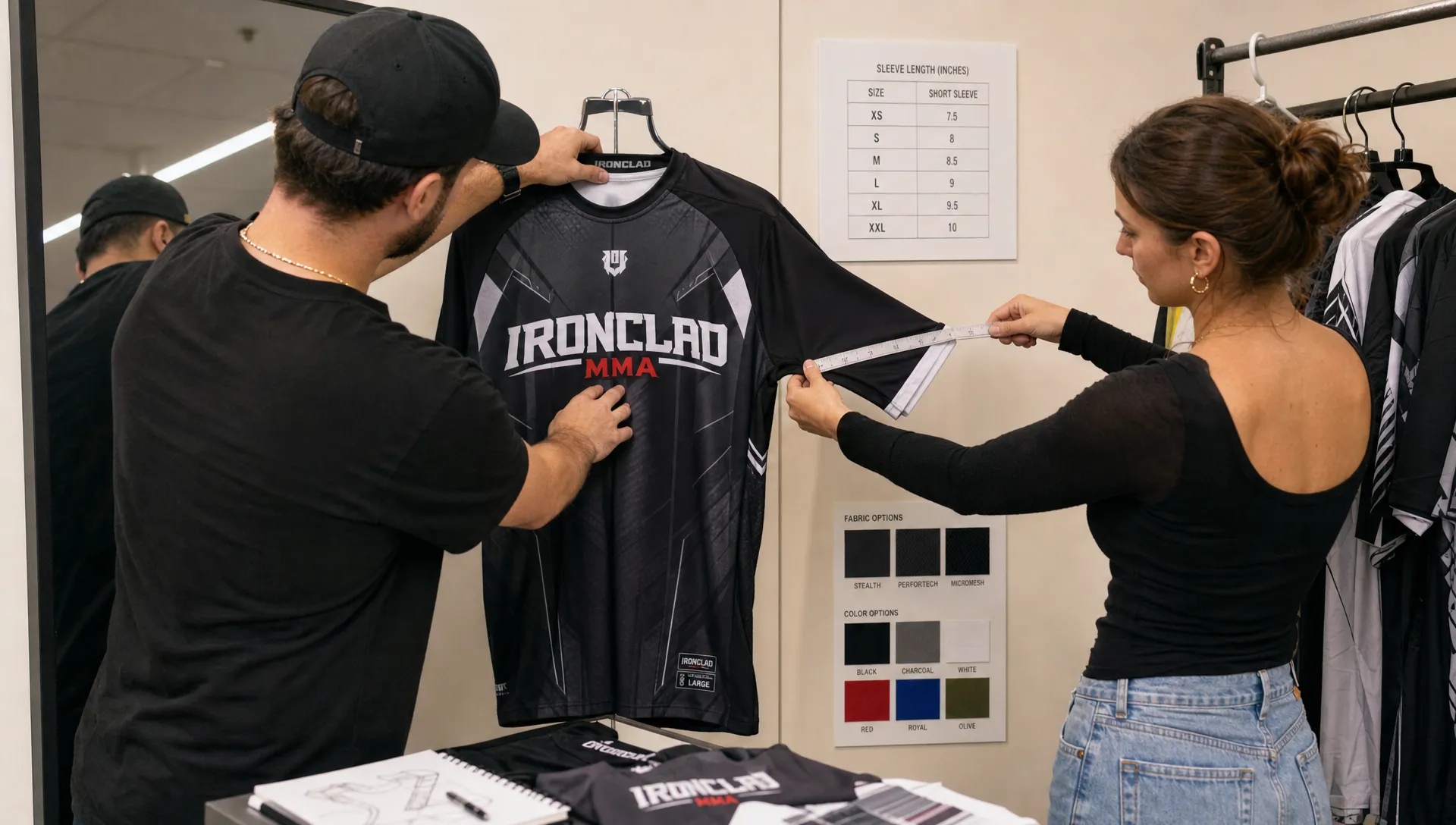
Sizing should not be an afterthought. If your MMA jerseys are too tight in the shoulders, too short in the torso or inconsistent between production runs, customers will notice quickly.
Use fit samples before bulk production. Test them on different body types, including lighter athletes, heavyweight fighters and casual customers. Combat sports bodies vary widely, so a design that looks good on one model may not work across your full market.
For retail, publish a clear size chart and specify whether the fit is compression, athletic or relaxed. For gyms and teams, collect size orders with enough time to confirm measurements before production. If you plan to sell internationally, be careful with size naming because a large in one market may not match customer expectations in another.
Design for Training Durability
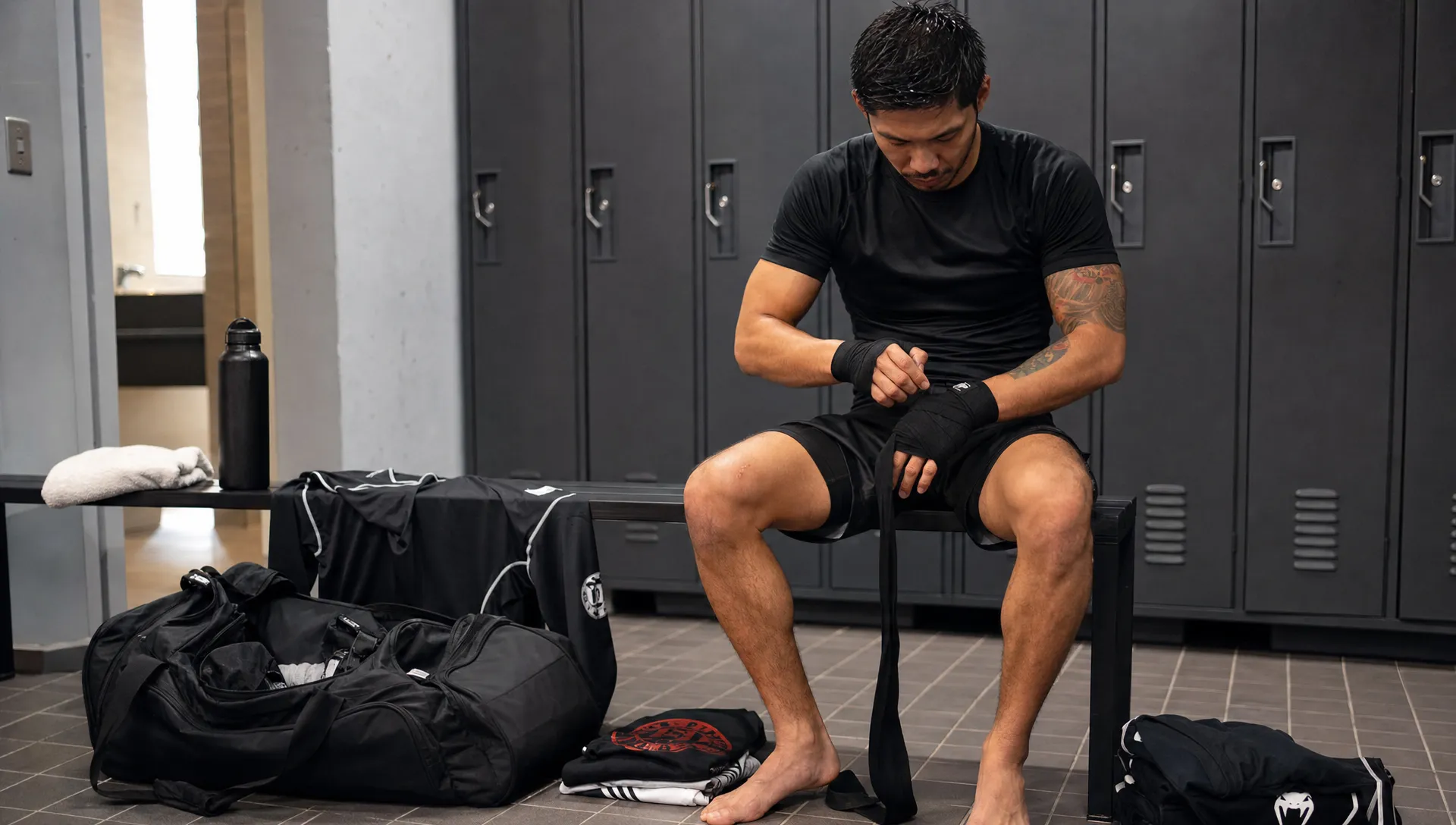
Training jerseys face sweat, stretching, friction, repeated washing and gym bag abuse. A jersey that looks sharp on day one but loses shape after a few washes can damage brand trust.
Focus on practical construction details: smooth seams, secure stitching, reinforced stress areas and trims that do not irritate the skin. Avoid heavy decorations in areas that rub against pads, gloves or training partners. If the jersey will be used during intense conditioning, prioritize ventilation and sweat management over decorative panels.
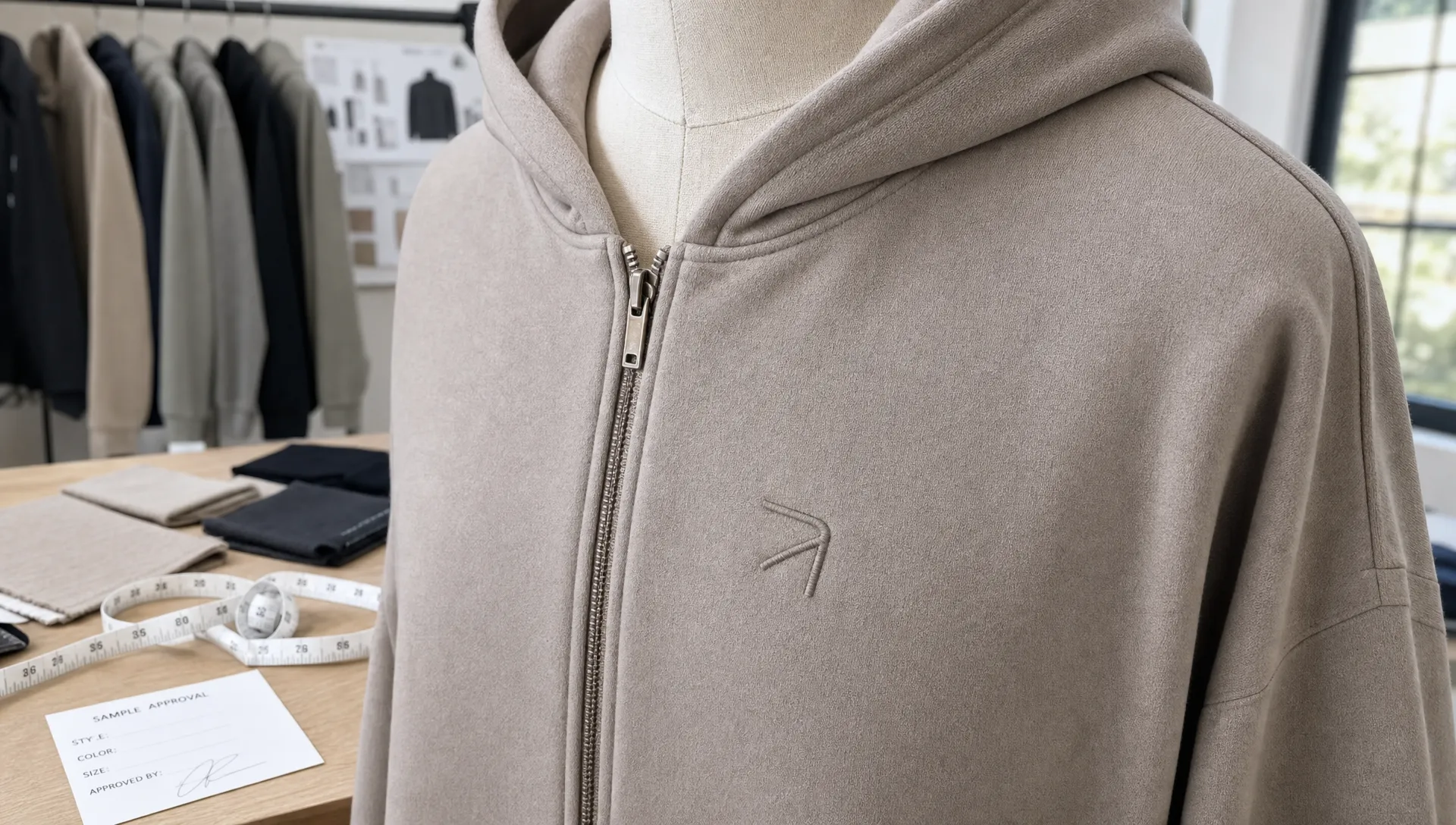
Wash testing is also important. Before approving a bulk order, test the sample after repeated washing according to the intended care instructions. Check for color changes, twisting, seam issues, print problems and shrinkage. A clean sample approval process helps avoid expensive surprises later.
Make Retail Versions Easier to Buy
Retail MMA jerseys need a different design mindset. Customers are not only buying performance. They are buying identity, community and style.
A retail jersey should photograph well for ecommerce, display clearly on hangers or shelves and pair naturally with fight shorts, joggers or casual gym wear. If your design is too event-specific, it may sell well for one fight but lose relevance quickly. If it is too plain, it may not feel special enough to buy.
Limited editions can work well for fighter drops, gym anniversaries, tournament teams or national events. Core designs are better for year-round sales. Many brands use both: a stable core jersey for consistent revenue and limited drops for urgency.
This is especially useful for gyms building merchandise programs. If your facility sells apparel to members, this article on custom branded clothing ideas that sell for gyms can help you think beyond a single jersey and build a broader product mix.
Prepare a Production-Ready Tech Pack
A tech pack turns your concept into clear manufacturing instructions. Even if your manufacturer helps with design, you should still organize the details before sampling.
A strong MMA jersey tech pack usually includes:
- Front, back and side mockups
- Logo files in vector format
- Pantone or color references when available
- Fabric choice or performance requirements
- Size chart and fit notes
- Decoration method and artwork placement
- Label, neck tape and packaging details
- Care instructions and country-specific labeling needs
- Quantity by size and color
If you are selling in regulated markets, labeling deserves attention. For the USA, the Federal Trade Commission provides guidance on textile labeling and care instructions through its Threading Your Way guide. For the European Union, review the European Commission's information on textile labelling rules. Requirements can vary by product and market, so confirm details before production.
Review Samples Like a Buyer, Athlete and Brand Owner
Sample review should be strict. Look at the jersey from three perspectives.
As a buyer, ask whether it feels worth the price. Check hand feel, fit, color and finishing. As an athlete, test movement, sweat comfort and irritation points. As a brand owner, inspect logo clarity, artwork alignment, stitching and consistency with your wider collection.
Do not approve a sample only because the graphic looks good in photos. Wear it, wash it, stretch it and compare it to your intended customer expectations. If the sample is for a walkout jersey, test it under bright lights and in video. If it is for training, use it in a real session before approving bulk production.
Common Design Mistakes to Avoid
The biggest mistake is overdesigning. Flames, splatters, gradients, flags, sponsor logos, oversized typography and animal graphics can all work individually, but combining them without hierarchy usually weakens the final product.
Another mistake is ignoring panel breaks. Artwork that looks perfect on a flat mockup may not align after cutting and sewing. Keep critical logos and text away from seams unless your production partner confirms the placement is safe.
Brands also underestimate the importance of reordering. A jersey design may sell well, but if the artwork files, fabric choice or color references are poorly documented, the second production run may not match the first. Consistency is part of brand value.
Frequently Asked Questions
What makes MMA jerseys different from regular sports jerseys? MMA jerseys must balance branding with combat sports movement. They often need better stretch, sweat control, durable seams and graphics that work for walkouts, training footage and gym retail.
Are sublimated MMA jerseys better for custom designs? Sublimation is often a strong choice for full-color custom designs because it allows all-over graphics without a heavy print feel. It works best on polyester-rich performance fabrics.
Where should logos go on a walkout jersey? The main logo usually works best on the chest, with fighter or team identity on the back and smaller sponsor marks on sleeves or side zones. Keep the hierarchy clear so the jersey does not look cluttered.
Can one MMA jersey design work for walkouts, training and retail? It can, but it is usually better to adapt one identity into separate versions. Walkout jerseys can be bolder, training jerseys should prioritize function and retail jerseys should be easier to wear casually.
How many samples should a brand review before bulk production? At minimum, review a fit and print sample before approving bulk production. For larger programs, test multiple sizes and wash the sample to check comfort, color, stitching and print durability.
Turn Your MMA Jersey Concept Into Production
Designing MMA jerseys is part creative direction and part product planning. The strongest results come from clear use cases, disciplined branding, suitable fabrics, production-ready artwork and serious sample testing.
Arus Sportswear manufactures custom MMA and martial arts apparel for brands, gyms and distributors worldwide, including private label and OEM fightwear production. If you are planning walkout jerseys, training jerseys or retail-ready MMA apparel, Arus Sportswear can help turn your design direction into custom branded production with bulk order support and worldwide shipping.