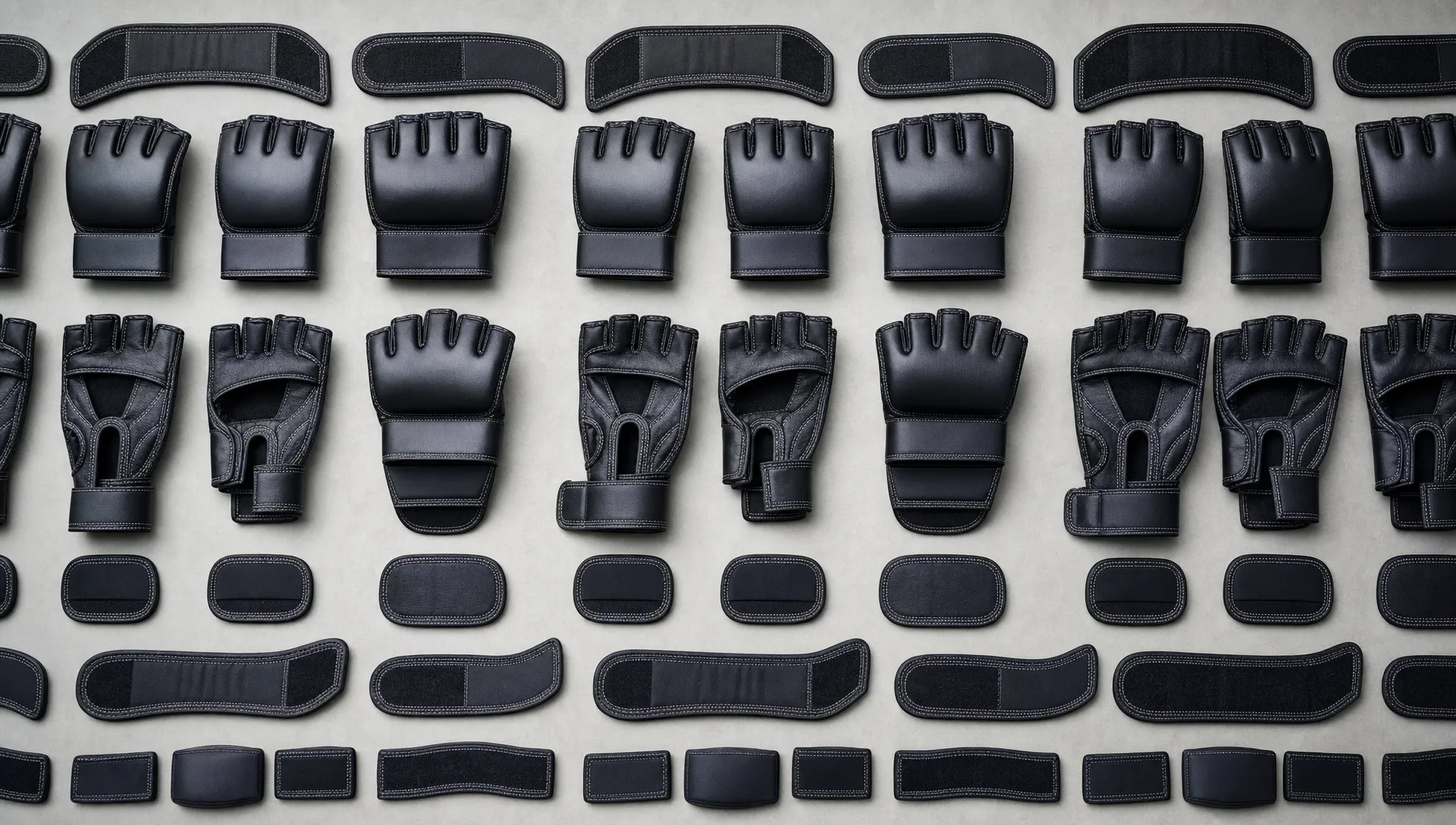
A custom MMA glove is not just a canvas for a logo. It is a piece of protective equipment that has to survive sweat, impact, gripping, clinching, bag work, sparring rounds and repeated washing of wraps and liners nearby. If the glove fits badly or the wrist closure fails, the customer does not blame the factory first. They blame the brand printed on the cuff.
For fightwear brands, gyms and distributors, the smartest way to protect both athletes and reputation is to define the glove before production starts. That means translating brand expectations into measurable specs: use case, padding structure, material grade, wrist support, sizing, logo method, packaging and quality control.
If you are comparing MMA gloves custom manufacturing options, the goal is not to make the cheapest glove that looks good in photos. The goal is to make a glove that performs consistently once it reaches real training rooms.
Why custom MMA glove specs matter
MMA gloves sit in a difficult middle ground. They need enough padding to reduce impact on the knuckles, but they also need an open hand structure for grappling, pummeling, hand fighting and grip control. A boxing glove can prioritize enclosure and cushioning. An MMA glove has to balance protection with mobility.
That balance affects your brand in three ways.
First, the glove has to protect the hand. Poor padding placement can leave the metacarpals, knuckles or thumb area exposed during angled strikes. Weak wrist support can make the glove feel unstable when the athlete throws hard punches on the bag.
Second, the glove has to protect the training partner. Sparring gloves usually need more forgiving padding than competition gloves, especially around the knuckle zone and outer edges. A glove that is marketed for sparring but built closer to a fight glove can create trust problems with coaches and gym owners.
Third, the glove has to protect your brand promise. If your product page says “premium,” “durable” or “pro training” but the seams fray after a few sessions, the mismatch becomes visible in reviews, returns and repeat order rates.
Start with the use case, not the logo
Many glove projects start with artwork. That is backwards. The first question should be: what is the glove for?
A glove designed for amateur competition, daily sparring, bag work or general fitness MMA will not share the same ideal spec. The silhouette may look similar, but the padding, palm opening, wrist wrap and finger compartment details should change.
| Glove type | Primary use | Spec priorities | Common brand risk |
|---|---|---|---|
| Competition style MMA glove | Regulated bouts or fight simulations | Low bulk, secure fit, rule-compatible weight and finger mobility | Overpromising approval across markets |
| Sparring MMA glove | Partner drills, technical sparring and controlled rounds | More padding volume, softer impact feel and stable wrist closure | Too little padding for safe partner work |
| Training or bag MMA glove | Pads, heavy bag, cardio MMA and gym classes | Durability, wrist support, sweat management and comfort | Padding compacts too quickly |
| Hybrid fitness MMA glove | Entry-level training and multipurpose gym use | Easy fit, broad sizing, comfort and accessible pricing | Unclear positioning for serious athletes |
This choice should be written into the tech pack and product description from the start. For example, if the glove is intended for gym sparring, the brief should state that it prioritizes training protection over a minimal fight profile. Arus Sportswear’s custom MMA sparring gloves designed for training and protection are a useful reference point for brands thinking about this category.
Padding specs: where protection begins
Padding is the core performance spec in custom MMA gloves, but padding weight alone does not tell the full story. Two gloves can feel completely different at the same stated weight because foam type, layering, density and placement affect impact absorption.
For a stronger manufacturing brief, define the padding by zone.
The knuckle zone needs the most attention because it receives the direct impact load. A multi-layer structure can help balance firmness and comfort, with a softer inner layer for hand feel and a denser outer layer to slow compression. The exact foam combination should be finalized through sampling and impact testing, not guessed from a catalog image.
The back of the hand also matters. During grappling exchanges, athletes scrape, post and frame with the glove. Thin backhand padding may make the glove look sleek, but it can feel harsh during drills.
Finger padding needs careful shaping. If it is too bulky, the glove becomes clumsy in clinch work. If it is too thin, the finger joints and knuckle edges feel exposed. The goal is controlled mobility, not barehand flexibility.
Thumb design should be reviewed for both protection and freedom of movement. Many MMA gloves leave the thumb more open than boxing gloves, but the pattern should avoid hard seams or edges that rub during gripping.
Wrist closure and stability
A good custom MMA glove should feel secure before the first strike lands. Wrist instability is one of the fastest ways for a glove to feel cheap, even if the materials look premium.
Most MMA gloves use a hook and loop closure because it is adjustable and practical for gym use. The closure spec should define strap length, strap width, hook and loop quality, cuff height, reinforcement points and edge binding. A strap that looks fine in a sample photo can fail in use if the hook area is too small or the stitching at the anchor point is weak.
The wrist area should also be tested with hand wraps, since many serious athletes will not train without them. If the glove only fits comfortably on a bare hand, the size grading may be too narrow for the intended market.
Palm, finger loops and grip function
The open palm is one of the features that makes an MMA glove functional. It supports ventilation, helps athletes grip during grappling and allows the hand to open and close more naturally.
Still, the palm opening should not be treated as an empty space. Its shape affects comfort and durability. A palm cutout that is too wide can make the glove twist. A cutout that is too narrow can create sweat buildup and limit grip.
Finger loops should feel secure without cutting into the skin. The inside edges need clean finishing, especially around the webbing between fingers. Athletes notice sharp edges, uneven seams and rough binding quickly because MMA gloves move constantly during mixed striking and grappling.
Materials that support durability and brand perception
Material choice affects cost, feel, lifespan and how customers perceive your brand. Genuine leather can offer a premium hand feel and strong durability when properly specified. High-grade synthetic leather can also perform well for training gloves, especially when the goal is consistent color, easier maintenance or a vegan-friendly product direction.
The outer shell is only one part of the spec. The lining, reinforcement layers, thread, binding tape and hook and loop material all influence the final glove. A premium outer material paired with weak internal components can still produce a disappointing glove.
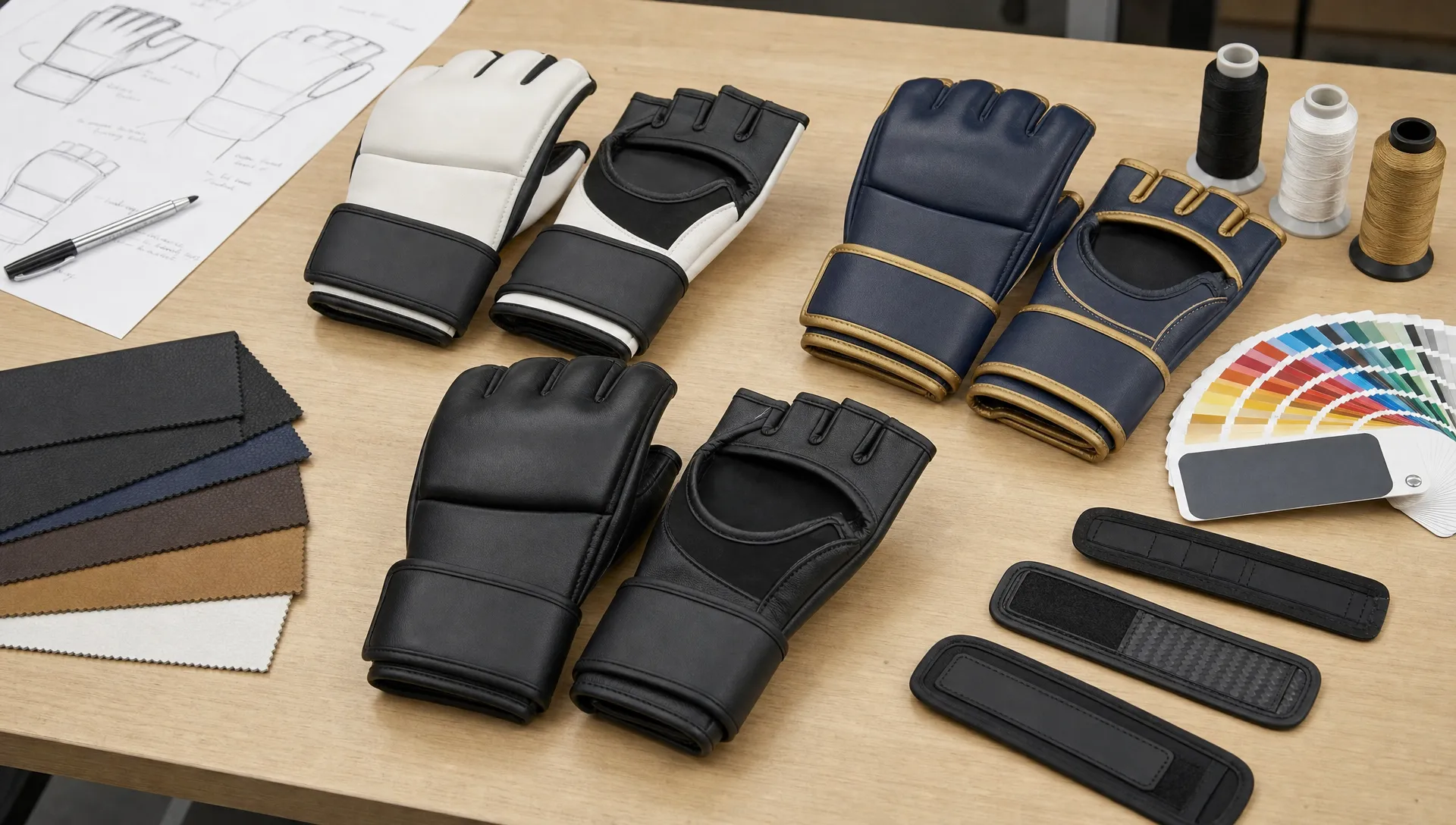
For custom MMA gloves, define these material details before sampling:
- Outer shell material and thickness range
- Foam structure by layer and zone
- Inner lining material and sweat resistance expectations
- Thread type and color
- Binding material around palm, fingers and cuff
- Hook and loop closure grade
- Label, logo and care instruction materials
A serious supplier should be able to discuss these components clearly. If a manufacturer can only talk about the logo and colorway, not the glove construction, that is a warning sign.
Branding specs that should not weaken the glove
Branding has to be visible, durable and placed where it will not compromise performance. The most common areas for logos are the wrist strap, back of hand panel and packaging. Each has different production considerations.
A printed logo on the back of the hand can look clean, but the print needs to tolerate flexing, sweat and abrasion. Embroidery can feel premium on some gear, but it may create raised areas or stiffness if placed where the glove bends. Woven labels and patches can work well on cuffs, but they need secure stitching and should not irritate the wrist.
Color matching also deserves more attention than many new brands give it. If your rash guards, shorts and gloves are supposed to share the same brand palette, define the color reference before production. A small shade mismatch may be acceptable for a one-off gym order, but it can look unprofessional in an ecommerce launch or distributor catalog.
For brands building a wider fightwear line, gloves should feel connected to the rest of the collection. That does not mean every item needs identical graphics. It means the typography, colors, trims and packaging should feel intentional. This is one reason many growing brands choose private label MMA apparel instead of mixing unrelated stock products from different vendors.
Sizing and fit: the overlooked reputation driver
Bad sizing creates returns, negative reviews and frustrated customers. It also creates safety concerns. A glove that is too loose can rotate during strikes. A glove that is too tight can restrict circulation, cause finger discomfort or discourage athletes from using wraps.
Your size chart should be based on hand circumference and intended wrap use, not vague labels alone. Small, medium, large and extra large can mean different things across brands, countries and factories. If you sell in the USA, Canada, Germany, Australia, Japan, Thailand and the Netherlands, fit expectations may vary across customer groups.
A strong glove spec should include sample fit checks across multiple hand sizes. Test the glove barehanded and with wraps. Ask athletes to make a fist, open the hand, grip, post on the mat and throw controlled punches. The glove should remain stable through movement, not just feel comfortable when standing still.
Compliance and market-specific expectations
Custom MMA glove compliance depends on how the glove will be sold and used. Competition gloves may need approval from a sanctioning body, athletic commission or event organizer. Training gloves need truthful marketing, safe materials and appropriate labeling for the target market.
In North America, many commissions reference the Association of Boxing Commissions unified MMA rules, which include glove requirements for regulated bouts. Brands should still verify the rules in each jurisdiction because commission requirements can differ and event approval is not automatic.
For Europe, material compliance can involve chemical restrictions under frameworks such as EU REACH, especially for plastics, coatings, dyes and synthetic components. If you plan to distribute in Germany, the Netherlands or other European markets, ask your supplier what documentation they can provide for materials used in the glove.
For any market, avoid vague claims such as “officially approved,” “fight legal everywhere” or “injury-proof.” Use precise language. If a glove is designed for sparring, say that. If it is designed for bag and pad training, say that. If approval depends on a commission or event, say that too.
Quality control specs to define before bulk production
Quality control should not begin when cartons arrive at your warehouse. It starts in the sample stage and continues through production.
A practical approval process includes the concept sample, revised sample, pre-production sample and bulk production inspection. Each stage should compare the glove against the agreed spec sheet, not just the previous photo in a message thread.
Key QC checks should include seam strength, symmetry, padding placement, closure strength, logo alignment, size accuracy, material consistency and packaging accuracy. The inspection should also include practical wear checks, such as repeated opening and closing of the strap, flexing the fingers and checking for rough internal edges.
| QC item | What to check | Why it protects the brand |
|---|---|---|
| Padding placement | Knuckle coverage, finger coverage and left-right consistency | Prevents uneven protection and poor hand feel |
| Stitching | Seam alignment, skipped stitches and reinforced stress points | Reduces early failures and warranty issues |
| Wrist closure | Strap length, grip strength and anchor stitching | Keeps the glove secure during training |
| Sizing | Internal hand space with and without wraps | Reduces returns and fit complaints |
| Branding | Logo position, color accuracy and print durability | Keeps the product looking professional |
| Packaging | SKU, size, barcode, labels and care information | Prevents fulfillment errors and distributor issues |
For growing brands, QC consistency is often what separates a one-time launch from a repeatable product line. A glove can look great in its first marketing shoot, but brand value comes from hundreds or thousands of units performing the same way.
What to include in a custom MMA glove tech pack
A tech pack is the bridge between your product idea and the factory floor. It reduces assumptions and gives both sides a shared reference.
For MMA gloves, include product purpose, target user, size range, material details, padding map, closure design, stitching instructions, logo placement, color references, label requirements, packaging details and inspection criteria. Photos and sketches help, but they should support written specs rather than replace them.
If you are developing gloves as part of a larger combat sports collection, your tech pack should also account for brand consistency across rash guards, shorts, gis, boxing apparel and other gear. A specialized combat sports clothing manufacturer is usually better equipped to understand how performance specs and brand presentation work together.
Common mistakes brands make with custom MMA gloves
The most expensive glove mistakes often happen before production begins. They usually come from rushing the spec stage or focusing too much on appearance.
One common mistake is choosing a glove from photos only. Product photos can hide poor wrist structure, rough lining and weak stitching. Always request physical samples before a bulk order.
Another mistake is using one glove for every purpose. A fight-style glove may appeal to athletes visually, but it is not automatically the right choice for daily sparring or beginner training classes. Position the product honestly.
Brands also underestimate packaging and labeling. Distributors, gyms and ecommerce buyers need correct sizes, SKUs, care information and country-specific requirements. A well-built glove can still create operational problems if the packaging is unclear.
Finally, some brands approve a sample without enough athlete feedback. Designers, buyers and factory teams all have valuable input, but gloves should be tested by people who train. A coach or experienced MMA athlete will notice issues that a desk review may miss.
How Arus Sportswear supports custom MMA glove projects
Arus Sportswear manufactures custom MMA and martial arts apparel for brands, gyms and distributors worldwide. For glove projects, that manufacturing approach matters because the product has to combine protection, fit, branding and repeatable production quality.
Whether you are building a private label fightwear collection, adding gloves to a gym merchandise line or sourcing bulk MMA equipment for distribution, the safest path is to begin with a clear spec and refine it through sampling. Low minimum orders can help brands test a design before scaling, and worldwide shipping supports launches across markets such as the USA, Canada, Europe, Australia, Japan and Thailand.
The best custom MMA gloves are not defined by a logo alone. They are defined by the way the glove feels after rounds of real use, the way it holds up after repeated sessions and the confidence customers have when they buy from your brand again.
Frequently Asked Questions
What are the most important specs for custom MMA gloves? The most important specs are glove purpose, padding structure, wrist closure, palm opening, finger fit, material quality, sizing, stitching and branding method. These details affect both athlete protection and product durability.
Are sparring MMA gloves different from competition MMA gloves? Yes. Sparring gloves usually prioritize more padding and partner safety, while competition-style gloves prioritize lower bulk and fight-specific mobility. The exact requirements depend on the intended use and any relevant sanctioning body rules.
Can I put my logo anywhere on an MMA glove? Not always. Logo placement should avoid high-flex zones, rough contact areas and parts of the glove that affect grip or comfort. Common branding areas include the wrist strap, back of hand panel and packaging.
How should brands test custom MMA glove samples? Test samples with and without hand wraps, across multiple hand sizes and during realistic movements such as striking pads, gripping, posting and opening the hand. Also check stitching, lining comfort, strap strength and logo durability.
Do custom MMA gloves need certification? It depends on the market and use case. Gloves used in regulated competition may need approval from a commission, event organizer or sanctioning body. Training gloves still need accurate labeling, safe materials and truthful product claims.
Build custom MMA gloves with protection and brand trust in mind
If you are planning a custom MMA glove line, start with the spec before the artwork. Define how the glove should protect the athlete, how it should fit, how it should carry your branding and how each unit will be checked before shipment.
Arus Sportswear works with brands, gyms and distributors on custom combat sports apparel and fightwear manufacturing. To discuss private label or OEM production for your next MMA glove project, visit Arus Sportswear and share the product direction you want to build.