Importing kung fu uniforms can be a profitable category for martial arts distributors, school suppliers, e-commerce sellers, and private label brands. The challenge is that kung fu apparel is not a single standardized product. A Shaolin training suit, a lightweight wushu competition uniform, and a traditional school uniform may share visual elements, but they can differ greatly in fabric, cut, stitching, closures, sizing, and buyer expectations.
For importers, the goal is not simply to find the lowest unit price. The goal is to create a wholesale program that is consistent, compliant, easy to reorder, and aligned with the needs of martial arts schools and retail customers. This guide walks through the key decisions importers should make before placing a bulk order, from product specifications and quality control to labeling, shipping, and supplier selection.
Understand the Wholesale Market Before You Source
Kung fu uniforms serve several types of buyers. Some schools want affordable training uniforms for beginners. Others need traditional styling for demonstrations, ceremonies, or advanced students. Retailers may want a broader assortment that includes black, white, red, or custom color options, while private label brands may focus on branded packaging and consistent fit across multiple size runs.
Before requesting quotes, define the specific customer you are importing for. A uniform that works well for a traditional kung fu academy may not satisfy a wushu competitor who needs lighter fabric and more movement. A school uniform for children will also require different sizing, durability, and compliance considerations than an adult demonstration uniform.
If you are building a broader martial arts apparel line, it can help to compare category-wide sourcing principles with a resource like these martial arts uniform wholesale buying tips, then narrow your requirements specifically for kung fu silhouettes and end users.
| Buyer type | Main priority | Product focus |
|---|---|---|
| Martial arts schools | Durability, reorder consistency, size availability | Standard training uniforms in core colors |
| Distributors | Reliable bulk production and packaging | Multiple size ranges and repeatable SKUs |
| E-commerce brands | Visual appeal, fit accuracy, return reduction | Clear product specs, photos, and size charts |
| Event suppliers | Timely delivery and matching sets | Performance or demonstration uniforms |
| Private label brands | Differentiation and branding | Custom labels, embroidery, packaging, and colorways |
Define the Kung Fu Uniform Style You Need
The phrase kung fu uniform can refer to several designs. Importers should be specific because vague sourcing requests often lead to sample revisions, production delays, and mismatched expectations.
Common wholesale styles include traditional kung fu suits with a mandarin collar and frog buttons, wushu uniforms with a loose and fluid cut, Shaolin style training uniforms with simple lines and practical fabrics, and lightweight internal arts uniforms that may overlap with tai chi apparel. If your catalog includes soft martial arts styles alongside kung fu, reviewing product details for custom Tai Chi uniforms can help you understand how loose fit, breathable fabric, mandarin collars, and traditional closures influence comfort and presentation.
A good product brief should clarify whether the uniform is meant for daily training, demonstrations, grading, competition, children, adults, or premium retail. This single decision affects nearly every manufacturing choice, including fabric weight, seam reinforcement, button construction, and packaging.
Build a Clear Tech Pack for Wholesale Production
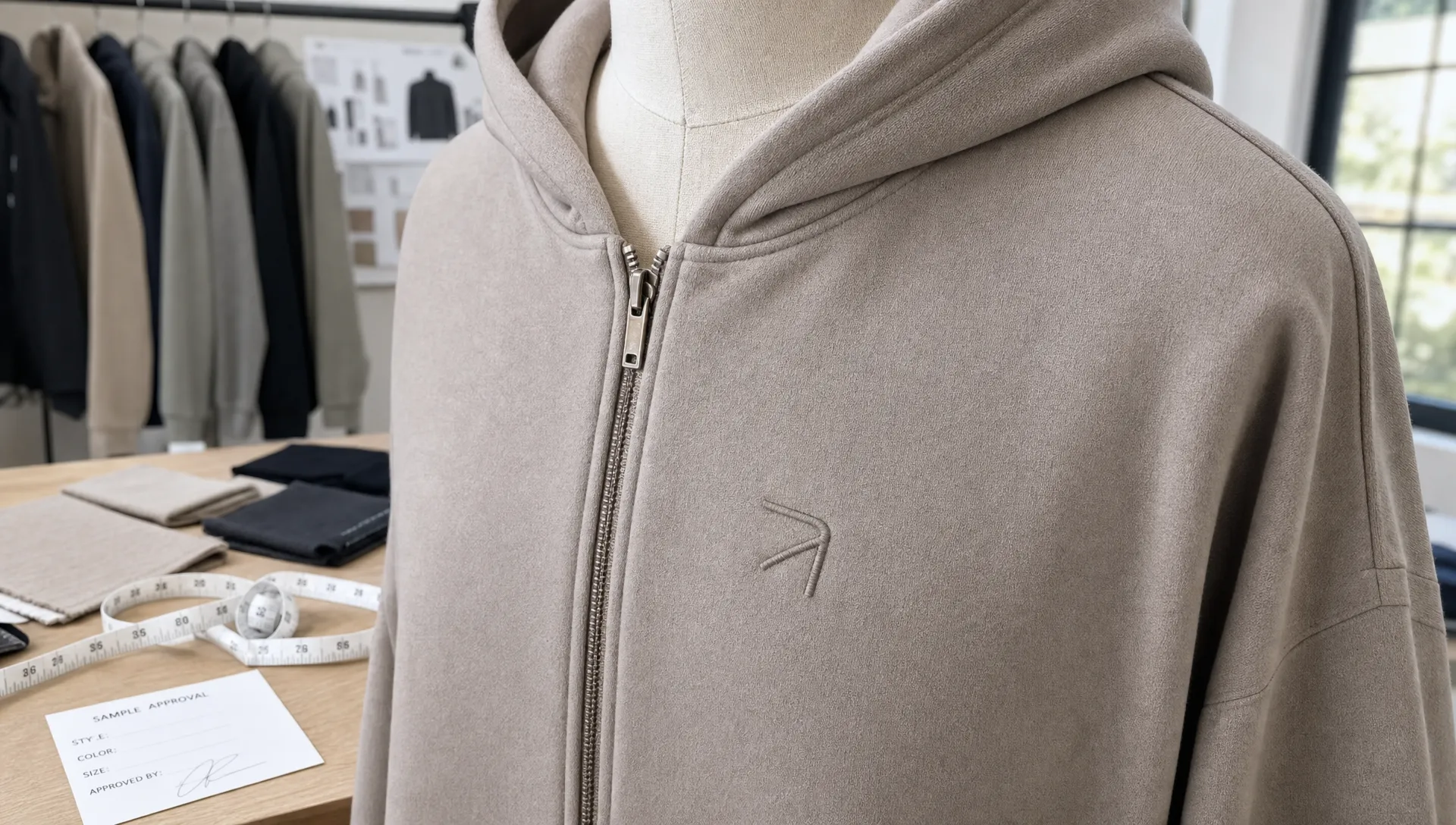
A tech pack is the importer’s best defense against confusion. It tells the manufacturer exactly what to make and gives both sides a reference point for sampling, pricing, and quality checks.
For kung fu uniforms wholesale orders, your tech pack should include product sketches or reference images, fabric composition, fabric weight if known, color codes, size chart, tolerance range, stitching requirements, closure details, branding placements, label requirements, and packaging instructions.
| Specification area | What to define | Why it matters |
|---|---|---|
| Jacket style | Collar shape, front overlap, frog buttons, sleeve width | Determines the traditional appearance and comfort |
| Pants style | Elastic waist, drawstring, ankle cuffs, leg width | Affects movement, fit, and school preferences |
| Fabric | Cotton, polyester, poly-cotton, satin, or blended fabric | Influences durability, breathability, cost, and shrinkage |
| Stitching | Seam type, reinforcement points, thread color | Reduces failure during stretching and training |
| Sizing | Adult, youth, plus sizes, size tolerances | Helps reduce returns and school order mistakes |
| Branding | Woven labels, embroidery, patches, hangtags | Supports private label and retail presentation |
| Packaging | Individual polybags, carton markings, size stickers | Makes receiving, warehousing, and fulfillment easier |
Do not rely only on photos. Photos are useful for communicating style, but they rarely define fabric weight, seam strength, or fit tolerances. For wholesale imports, written specifications reduce risk.
Choose Fabric Based on Use Case, Not Just Cost
Fabric is one of the biggest drivers of customer satisfaction. A cheaper fabric may improve margin at first, but it can increase complaints if it shrinks, fades, tears, or feels uncomfortable during training.
Cotton and cotton-rich fabrics can feel natural and breathable, but they may require careful shrinkage control and finishing. Polyester and poly-cotton blends are often chosen for durability, color retention, and easier maintenance. Satin or shiny polyester fabrics are common for demonstration or performance uniforms, especially where visual impact matters more than everyday abrasion resistance.
The right fabric depends on the intended market. A beginner training uniform should be comfortable, washable, and durable enough for repeated classes. A competition or demonstration uniform may prioritize drape, color, and movement. A premium private label product may require a more refined hand feel, stronger buttons, cleaner finishing, and custom presentation.
Importers should request fabric swatches before approving a sample. If possible, compare swatches after washing. Even a simple home wash test can reveal shrinkage, color bleeding, wrinkling, and fabric stiffness before you commit to bulk production.
Pay Attention to Fit and Size Grading
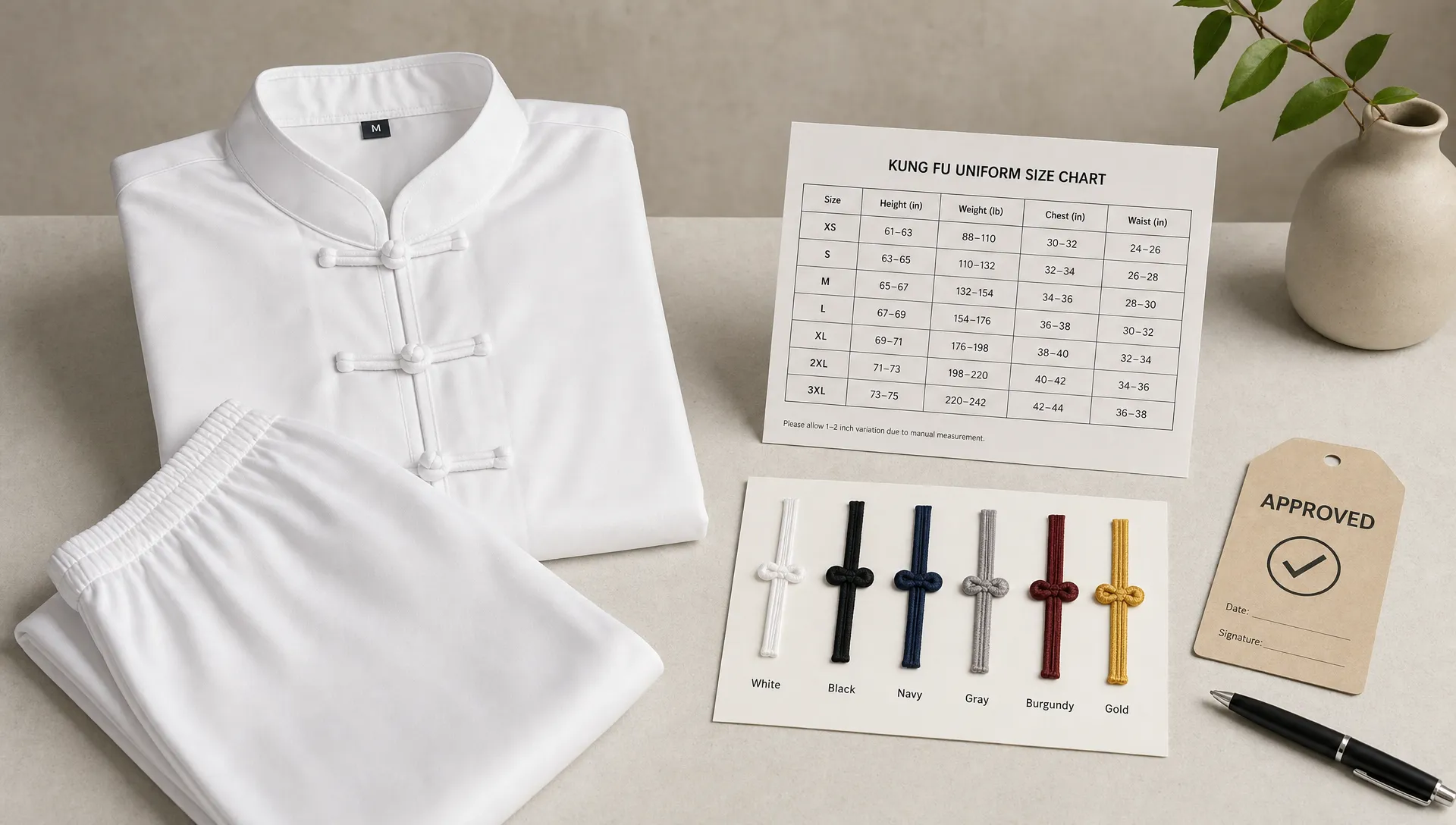
Sizing is one of the most common pain points in martial arts uniform importing. Kung fu uniforms are often designed with a loose fit, but loose does not mean shapeless. The jacket should allow shoulder movement without excessive pulling, sleeves should not interfere with hand techniques, and pants should support deep stances without stress at the crotch or seat.
For children’s uniforms, importers should be especially careful with proportions. A scaled-down adult pattern can result in sleeves that are too long, pants that sit poorly, or collars that feel uncomfortable. For adult uniforms, consider whether your buyers expect standard unisex sizing, separate youth and adult ranges, or extended sizes.
A size set sample is valuable before bulk production. It helps confirm that size grading is logical across the full range rather than correct in only one sample size. If your market is size-sensitive, include body measurement guidance and garment measurements in your product listings.
Plan Branding and Private Label Details Early
Branding should be decided before sampling, not after production begins. Adding embroidery, woven labels, custom patches, or private label packaging can affect cost, lead time, and production steps. It can also change how the garment feels if branding is placed in high-contact areas.
For kung fu uniforms, common branding options include neck labels, waist labels, sleeve embroidery, chest embroidery, woven patches, hangtags, and custom polybags. School suppliers may prefer discreet branding, while retail brands may want a stronger visual identity. Importers should also consider whether they need blank wholesale uniforms, private label uniforms, or custom school logo production.
Packaging is part of the brand experience. A simple size sticker on each polybag can save time in warehouse receiving and school distribution. A clean hangtag can help retailers explain fabric, care instructions, and intended use. If your brand story connects martial arts with tradition, focus, tea culture, or recovery rituals, studying adjacent lifestyle categories such as herbal wellness positioning can offer useful inspiration for how to communicate calm, discipline, and natural wellbeing without overcomplicating your core uniform offer.
Calculate Landed Cost Before You Compare Quotes
The factory unit price is only one part of your final cost. Importers should calculate landed cost before choosing a supplier. This helps you avoid selecting a quote that looks low but becomes expensive after packaging, freight, customs duty, inspection, and handling are added.
| Cost component | What to include |
|---|---|
| Product cost | Unit price, custom trims, labels, embroidery, packaging |
| Sampling cost | Prototype samples, size set samples, shipping of samples |
| Freight | Air, sea, courier, destination handling, local delivery |
| Import charges | Duties, taxes, broker fees, customs processing |
| Quality control | Inspection fees, lab testing if needed, rework costs |
| Inventory cost | Warehousing, fulfillment, stock management, returns |
| Marketing cost | Product photography, listings, catalogs, school sales material |
When comparing suppliers, ask for quotes based on the same specifications, same quantities, and same packaging assumptions. A quote for a plain bulk-packed uniform should not be compared directly with a quote for a private label product with embroidery and individual packaging.
Understand Compliance, Labeling, and Documentation
Import rules vary by country, so importers should always confirm requirements with a customs broker or compliance specialist. Still, several areas are consistently important for martial arts apparel.
Textile products often need accurate fiber content, country of origin labeling, care instructions, and manufacturer or importer identification depending on the destination market. Children’s apparel may face additional safety rules, including requirements related to flammability, drawstrings, small parts, restricted chemicals, and labeling. If you sell in the United States, consider relevant Federal Trade Commission textile labeling requirements and Consumer Product Safety Commission rules. If you sell into the European Union or United Kingdom, review textile labeling and chemical restrictions that may apply to garments and dyes.
Documentation also matters. Commercial invoices, packing lists, carton markings, purchase orders, and product descriptions should match. HS codes can vary based on garment type, fiber composition, and destination country, so avoid guessing. A customs broker can help classify products correctly and reduce the risk of delays.
Set a Practical Quality Control Process
Quality control should not begin when the cartons arrive. It should start at the product brief stage and continue through sampling, production, packing, and shipment.
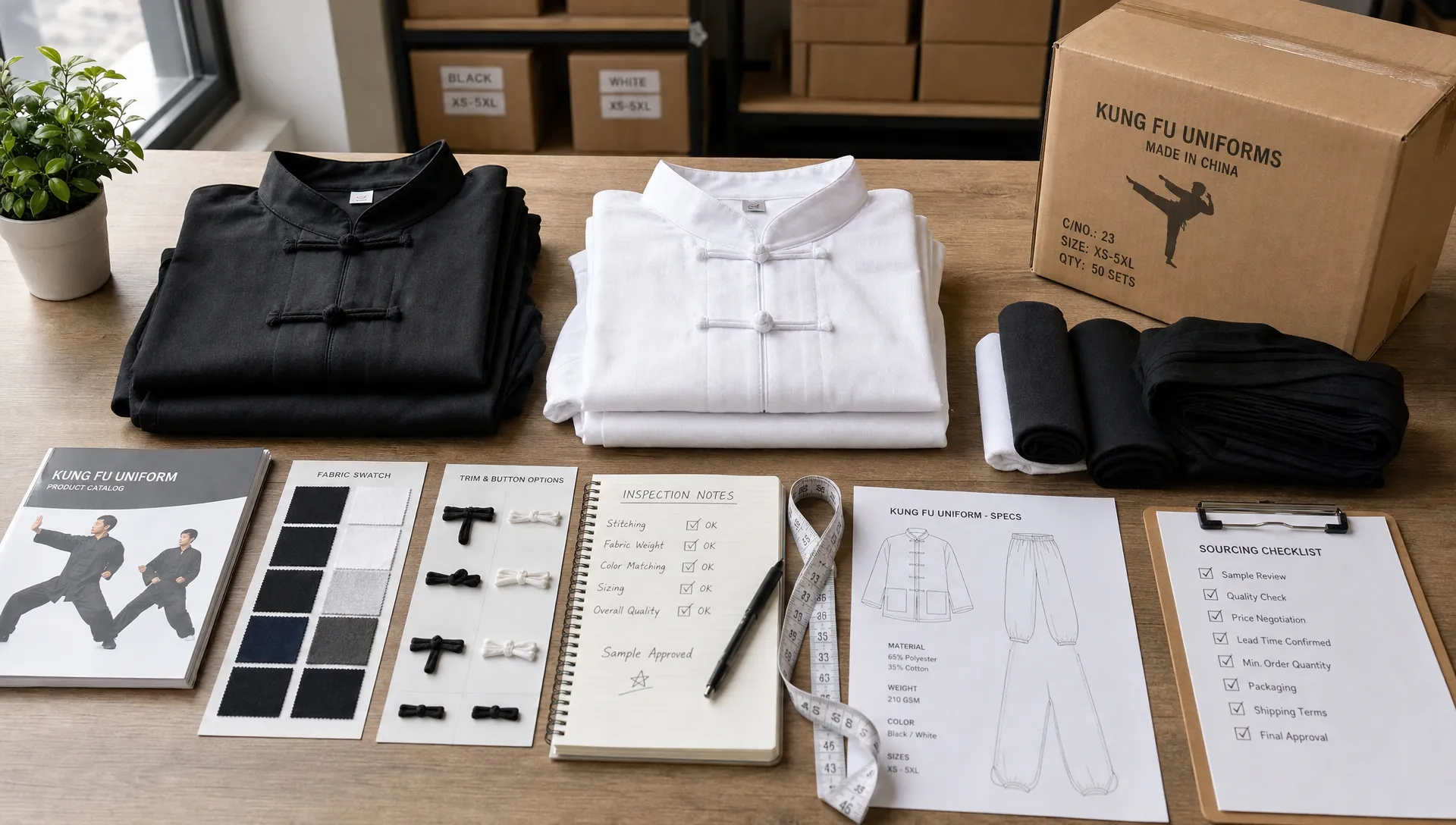
At minimum, importers should approve a pre-production sample before bulk manufacturing begins. For larger orders, consider checking materials before cutting, inspecting sewing quality during production, and reviewing finished goods before shipment. Define acceptable tolerances for measurements, stitching, shade variation, labeling, and packaging.
A basic inspection checklist for kung fu uniforms should cover fabric feel, color consistency, shrinkage risk, button attachment strength, seam strength, embroidery placement, label accuracy, measurement tolerance, stain or oil marks, loose threads, packaging accuracy, and carton labeling.
Quality control is also about communication. If you accept a sample with a minor issue, document whether the issue must be corrected in bulk production. Do not assume the factory will know which details matter most unless they are written into the approved specifications.
Plan Production and Shipping Around Your Sales Calendar
Kung fu uniform demand can be seasonal. Schools may order before new student intake, grading periods, seminars, competitions, or the beginning of a training year. Importers should plan backward from those dates.
Sampling, revisions, fabric sourcing, bulk production, inspection, packing, freight, customs clearance, and local delivery all take time. Exact timelines vary by order complexity, quantity, materials, and shipping method. Custom colors, embroidery, nonstandard sizing, and private label packaging can add steps.
Air freight may be useful for urgent replenishment or small shipments, but it usually costs more. Sea freight can be more economical for bulk orders but requires longer planning. Courier shipping can be practical for samples and small trial orders. A reliable manufacturer should help you understand the production path, but importers should maintain their own timeline and buffer.
How to Evaluate a Kung Fu Uniform Manufacturer
The right supplier should understand martial arts apparel, not just generic garments. Kung fu uniforms have movement requirements and style details that a general clothing factory may overlook. Look for experience with martial arts uniforms, fabric recommendations, pattern making capability, custom branding options, sample development, bulk order handling, and export documentation.
You can use a broader evaluation framework like this guide on how to compare martial arts uniform manufacturers to assess communication, samples, lead times, MOQ, and quality control before choosing a long-term partner.
Useful supplier questions include:
- What kung fu or martial arts uniforms have you produced before?
- Can you develop a sample from a reference image and specification sheet?
- What fabrics do you recommend for daily training versus demonstrations?
- Can you support private label branding and custom packaging?
- What size range can you produce, and can you provide a size set sample?
- How do you inspect finished uniforms before shipment?
- What export documents and packing details can you provide?
A good supplier will ask questions in return. If a manufacturer quotes immediately without discussing fabric, sizing, packaging, branding, or use case, the quote may not reflect your actual needs.
Avoid Common Importing Mistakes
Many wholesale problems are preventable. The most common mistake is treating all kung fu uniforms as interchangeable. A low-cost satin demonstration uniform and a durable cotton-rich school training uniform are different products, even if they appear similar in photos.
Another mistake is approving a sample without testing it. Wear testing, wash testing, and checking button strength can reveal issues before they reach customers. Importers should also avoid changing specifications after sampling unless they confirm how the changes affect price and production.
Poor size charts can also create costly returns. If you sell online, garment measurements are often more useful than generic height or weight ranges. If you sell to schools, make ordering simple by keeping consistent size names and reorder codes.
Finally, do not ignore packaging. Incorrect size stickers, mixed cartons, or unclear carton markings can create warehouse confusion and delay fulfillment. For distributors and school suppliers, organized packing can be just as important as the garment itself.
Why Work With a Martial Arts Apparel Specialist
A specialist manufacturer can help importers connect design intent with production reality. For kung fu uniforms, that means understanding movement, fabric behavior, traditional details, and the expectations of schools and martial arts buyers.
Arus Sportswear manufactures custom MMA and martial arts apparel for brands, gyms, and distributors worldwide. For importers sourcing kung fu uniforms wholesale, the advantages of working with a martial arts-focused partner include private label manufacturing, OEM production, custom apparel designs, branding options, bulk order support, low minimum orders, and worldwide shipping.
The best wholesale programs are built for repeat orders. Once your fabric, fit, size chart, labels, and packaging are approved, your next production run should be easier, faster to check, and more consistent for your customers.
Frequently Asked Questions
What is the best fabric for wholesale kung fu uniforms? The best fabric depends on the use case. Daily training uniforms usually need durable, washable, breathable fabric. Demonstration and wushu uniforms may use lighter or shinier fabrics for movement and appearance. Always request swatches and test samples before bulk ordering.
How should importers choose sizes for kung fu uniforms? Importers should create a clear size chart with garment measurements, not only body height or weight. A size set sample is useful because it confirms how the pattern is graded across youth, adult, and extended sizes.
Can kung fu uniforms be private labeled? Yes, private label options can include woven labels, neck labels, embroidery, patches, hangtags, custom packaging, and carton markings. Confirm all branding details before sampling so the supplier can price and produce accurately.
What documents are needed to import kung fu uniforms? Requirements vary by country, but importers commonly need a commercial invoice, packing list, product description, country of origin details, and accurate customs classification. Work with a customs broker to confirm HS codes, duties, and labeling requirements.
Should I order a sample before placing a wholesale order? Yes. A sample helps verify fabric, fit, stitching, buttons, color, labeling, and packaging. For larger orders, a size set sample and pre-shipment inspection can reduce risk before the goods leave the factory.
Build a Stronger Kung Fu Uniform Import Program
Successful importing starts with clear specifications and the right manufacturing partner. When you define your customer, confirm your fabric, test your sample, calculate landed cost, and control quality before shipment, you reduce risk and build a product line that schools and retailers can reorder with confidence.
If you are planning a private label or OEM kung fu uniform project, Arus Sportswear can support custom designs, branding, bulk production, and worldwide shipping for martial arts apparel buyers. Prepare your tech pack, target quantity, size range, and branding requirements, then start the sourcing conversation with a clear plan.