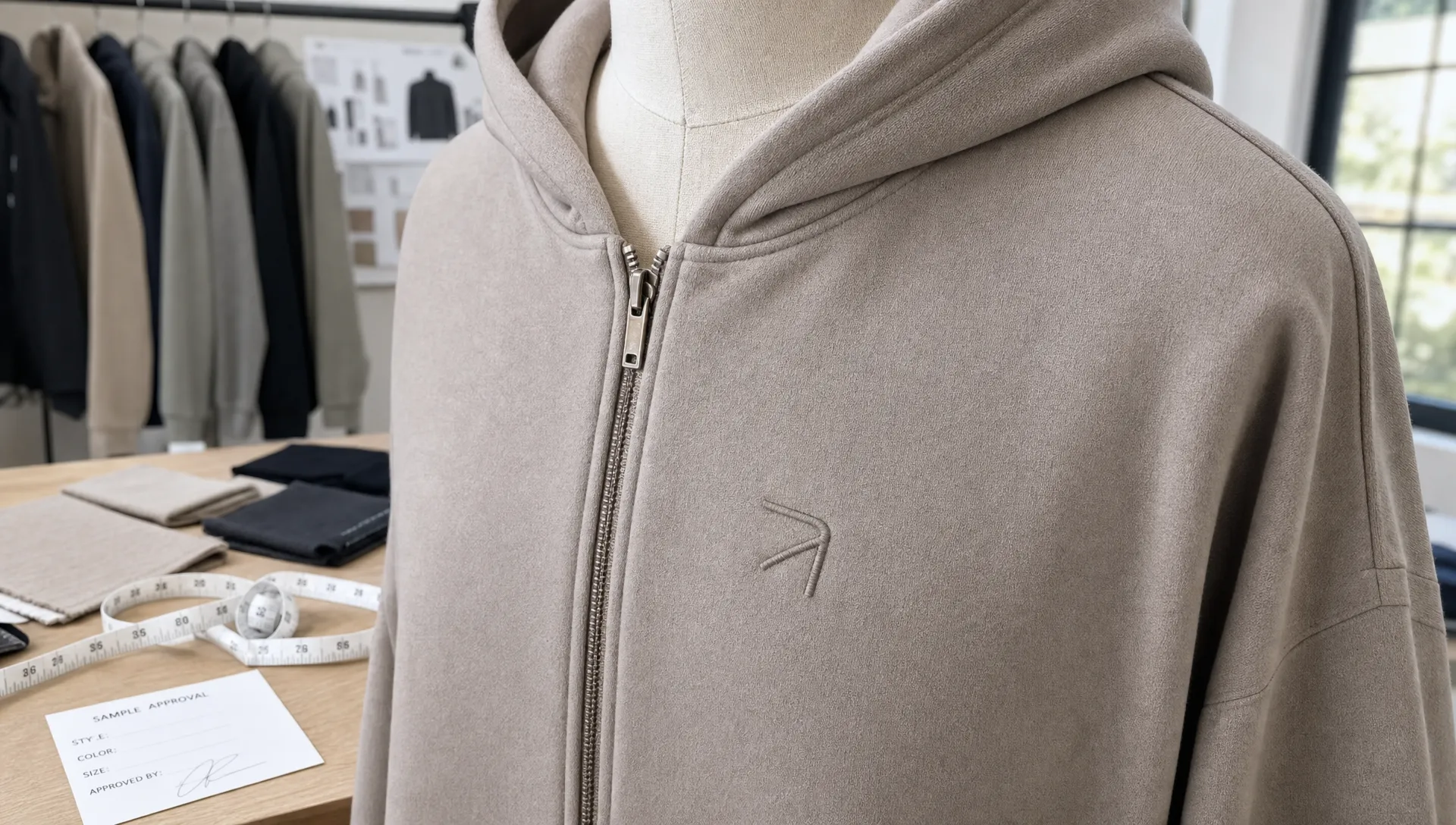
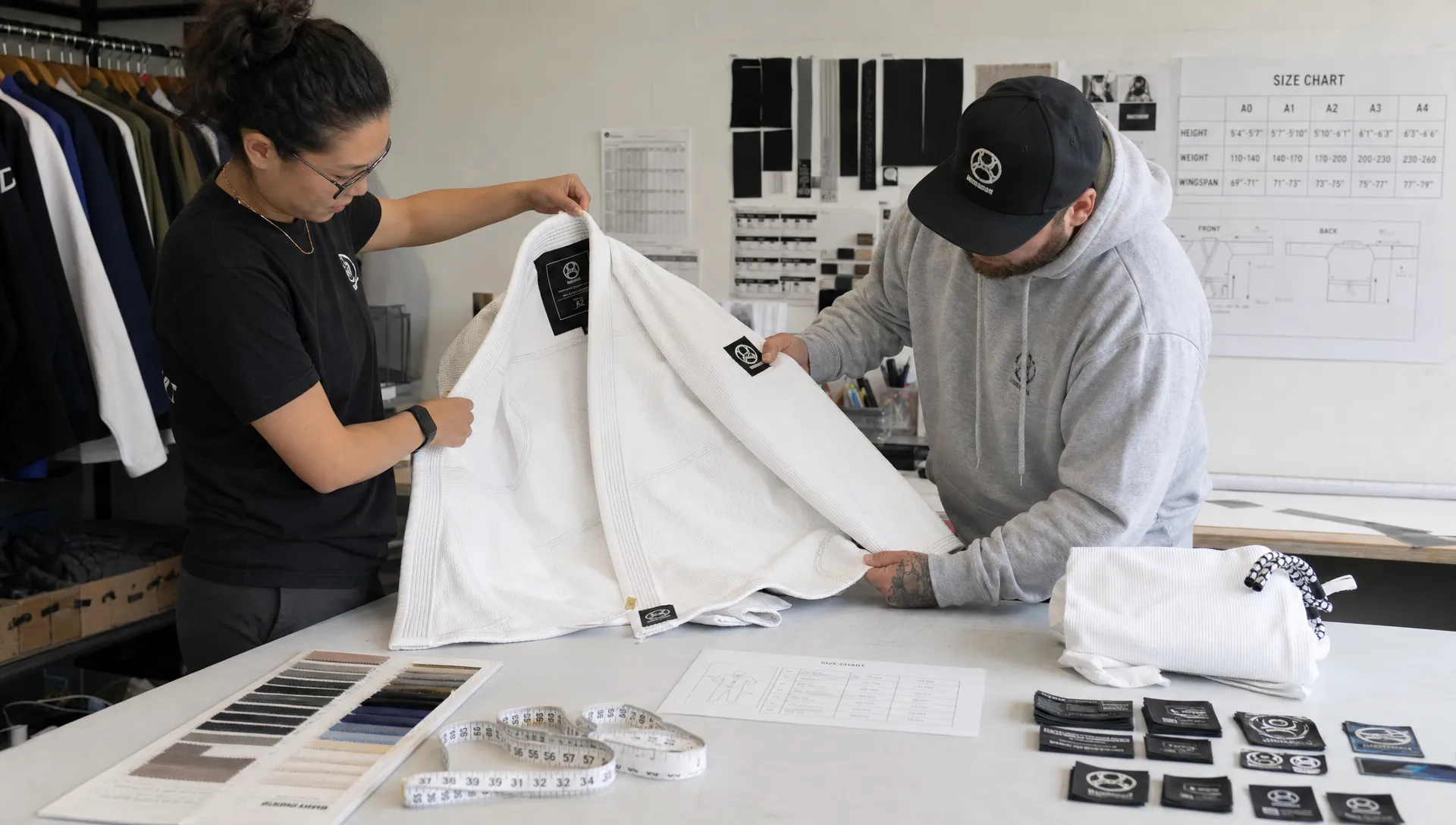
Choosing the right manufacturer can make or break a BJJ gi line. A good factory helps you turn a product idea into a durable, well-fitting uniform that reflects your brand. The wrong one can create inconsistent sizing, weak stitching, delayed shipments, and expensive returns.
For brands, gyms, and distributors, the goal is not simply to find the lowest price. The goal is to find a Brazilian jiu jitsu gi manufacturer that understands combat sports construction, can support your branding requirements, and can scale with you as demand grows.
This guide walks through the key criteria to evaluate before you place a sample order or commit to bulk production.
Start With a Clear Product Brief
Before contacting manufacturers, define what you want to make. A vague request such as “custom BJJ gis” forces the factory to guess, and those guesses may not match your market, pricing, or quality expectations.
A strong product brief should explain who the gi is for and how it will be used. A beginner gym uniform has different priorities than a premium competition gi. A distributor may need broad sizing and dependable repeat orders, while a lifestyle fightwear brand may care more about unique design details and packaging.
Include the following details in your brief:
- Target customer, such as beginners, competitors, kids, women, or premium buyers
- Jacket weave preference, such as pearl weave, gold weave, or another construction
- Approximate fabric weight and desired feel
- Pants fabric, drawstring style, and reinforcement preferences
- Branding placements, including woven labels, embroidery, patches, and inside neck labels
- Size range and fit preference
- Packaging requirements
- Expected order quantity and future reorder plans
If you are still defining the product, Arus Sportswear has a more detailed BJJ gis buyers guide for brands, gyms, and distributors that covers fabrics, sizing, branding, and sourcing considerations in more depth.
Look for Real BJJ Gi Manufacturing Experience
A BJJ gi is not just a heavy cotton uniform. It must withstand pulling, gripping, friction, washing, and repeated training sessions. That makes experience in martial arts apparel important.
A generic apparel factory may be able to sew jackets and pants, but it may not understand stress points, lapel structure, sleeve fit, skirt length, pant reinforcements, or shrinkage control. A specialist manufacturer is more likely to understand why these details matter.
Ask direct questions about their past work. Have they made BJJ gis before? Do they understand private label production? Can they produce both training and competition-oriented models? Can they support multiple fabric weights and branding styles?
| Evaluation area | What to ask | Why it matters |
|---|---|---|
| BJJ experience | Have you produced Brazilian jiu jitsu gis for brands, gyms, or distributors? | Confirms the factory understands the product category |
| Construction knowledge | How do you reinforce high-stress areas? | Reduces tearing around collars, armpits, knees, and seams |
| Fabric options | What jacket and pants fabrics can you source? | Helps you match durability, weight, and price point |
| Private label support | Can you add custom labels, patches, embroidery, and packaging? | Ensures the gi can be sold under your brand |
| Repeatability | Can future orders match the approved sample? | Protects consistency as your line grows |
Experience also affects communication. A knowledgeable manufacturer can advise when a design choice may cause production problems, add cost, or reduce durability.
Evaluate Fabric, Weave, and Construction Quality
Fabric is one of the biggest drivers of perceived quality. Customers notice weight, softness, stiffness, shrinkage, and how the gi feels after several washes. Your manufacturer should be able to explain the difference between available fabric options and help you choose a construction that fits your audience.
For jackets, pearl weave is widely used because it balances strength, texture, and manageable weight. Other weave types may offer different feel and durability characteristics. For pants, cotton twill and ripstop are common options, each with its own look and performance profile.
Construction details are just as important as the main fabric. Pay close attention to collar thickness, seam alignment, armpit reinforcement, side vents, knee reinforcement, belt loops, drawcord quality, and stitching density. These areas affect both durability and customer satisfaction.
When comparing manufacturers, do not judge quality from photos alone. Request physical fabric swatches or samples whenever possible. Photos can hide stiffness, uneven weaving, poor finishing, and color differences.
Ask About Shrinkage and Fit Control
Sizing problems are one of the most common issues in BJJ gi production. Gis are washed frequently, and cotton fabrics can shrink if they are not properly managed. A dependable manufacturer should be able to discuss shrinkage expectations, pre-shrinking options, and measurement tolerances.
Ask for a size chart before production. Review every measurement, including jacket length, sleeve length, chest width, pant length, waist, thigh, and inseam. If you serve a competitive audience, also consider whether your design needs to align with common tournament uniform expectations.
Fit is not only about measurements. A gi can technically match a size chart and still feel awkward if the sleeve opening, shoulder width, crotch depth, or pant taper is poorly balanced. This is why sampling is essential.
Never Skip the Sample Stage
A sample is your chance to catch problems before they become a bulk order issue. Treat it as a product test, not a formality.
When your sample arrives, inspect it like a customer and like a quality control manager. Try it on, wash it, train in it if possible, and compare it against the requested specifications. Look for twisting seams, loose threads, uneven embroidery, inconsistent panels, weak bartacks, collar irregularities, and unexpected shrinkage.
A good sampling process usually includes three steps: initial prototype, revised sample, and approved pre-production sample. Not every project requires multiple rounds, but complex designs often do.
Record every revision clearly. Instead of saying “make the fit better,” provide exact changes, such as “reduce sleeve length by 2 cm” or “increase pant thigh width by 1.5 cm.” Clear feedback reduces misunderstanding and speeds up production.
Review Branding and Private Label Capabilities
For a brand, gym, or distributor, the gi is more than a uniform. It is a product experience. Your manufacturer should be able to support the branding details that make your line recognizable.
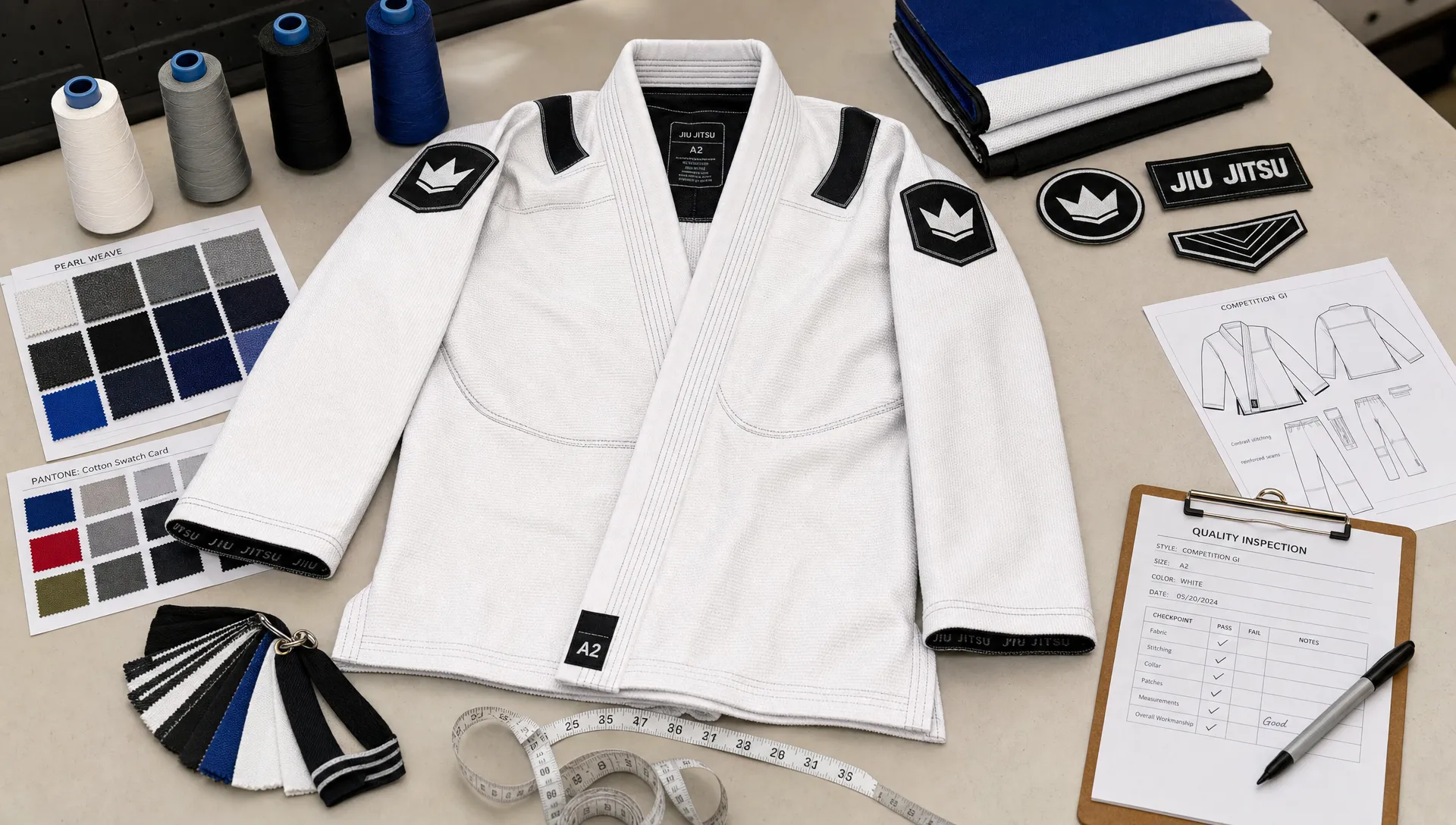
Common branding options include woven neck labels, size labels, sleeve embroidery, shoulder patches, pant embroidery, interior taping, hangtags, poly bags, and custom packaging. If you are building a premium line, consistency across these details matters.
Brand presentation can also extend beyond the gi itself. If you plan to launch the product in a gym retail area, trade show booth, or sponsored event, details such as racks, banners, hangtags, and custom neon signage can help create a stronger branded environment around the product.
Before approving production, confirm the manufacturer’s requirements for artwork files. Vector files are typically preferred for embroidery, woven labels, and patches because they preserve clean edges and accurate scaling. Also confirm color references, placement measurements, and whether the factory will provide digital mockups before sampling.
Understand MOQ, Pricing, and Lead Time
Minimum order quantity matters, especially for new brands testing the market. Low MOQ can help you launch with less risk, but it may come with higher unit costs. Larger orders usually improve unit pricing, but they require more cash, storage, and demand confidence.
When comparing quotes, make sure you are comparing the same product. A cheaper gi may use lighter fabric, fewer reinforcements, lower-cost labels, simpler packaging, or less detailed quality control. Ask each manufacturer to quote against the same specifications so you can compare fairly.
| Cost factor | Why it affects price |
|---|---|
| Fabric weight and weave | Heavier or more specialized fabric can increase cost |
| Reinforcements | Extra panels and stitching add material and labor |
| Branding | Embroidery, patches, labels, and packaging add production steps |
| Size range | More sizes can increase cutting complexity and inventory planning |
| Order quantity | Higher volumes often reduce unit cost |
| Shipping method | Air freight is faster, while sea freight is usually more economical for bulk |
Lead time should also be clarified in writing. Ask how long sampling, fabric sourcing, production, inspection, packing, and shipping may take. Build in extra time for revisions, holiday periods, customs clearance, and unexpected delays.
Check Quality Control Systems
Quality control should happen before the goods leave the factory, not after your customers complain. A reliable Brazilian jiu jitsu gi manufacturer should have inspection steps throughout production.
Key control points include fabric inspection, cutting accuracy, in-line sewing checks, measurement checks, embroidery or patch placement review, final trimming, packaging inspection, and carton labeling. Ask how the manufacturer handles defects and whether they can provide production photos or inspection reports.
For BJJ gis, quality control should focus on both appearance and function. A neat gi that fails during training is not acceptable. Similarly, a strong gi with crooked labels and inconsistent sizing can damage your brand perception.
A practical quality checklist should include:
- Fabric weight, color, and hand feel match the approved sample
- Jacket and pants measurements stay within agreed tolerances
- Collar, armpits, side vents, crotch, and knees are properly reinforced
- Stitching is clean, secure, and consistent
- Embroidery, patches, and labels are correctly placed
- Loose threads are trimmed before packing
- Packaging matches your private label requirements
If you plan to source multiple martial arts products, it is worth understanding how specialized suppliers approach category-specific quality. This article on why brands choose a martial arts apparel manufacturer explains the advantages of working with factories that understand combat sports apparel instead of general clothing only.
Confirm Communication and Production Transparency
Good manufacturing depends on clear communication. A factory may have strong production capability, but if communication is slow, unclear, or inconsistent, the project can become stressful.
Pay attention during the first conversations. Does the manufacturer ask useful questions? Do they understand your brief? Do they explain tradeoffs clearly? Do they confirm details in writing? Do they provide realistic timelines, or do they promise everything without asking for specifications?
A professional manufacturer should be able to communicate about samples, artwork, materials, pricing, order quantities, lead times, payment terms, shipping, and quality expectations. You should also know who your main contact is and how updates will be shared during production.
For brands planning more advanced private label or OEM programs, the sourcing process overlaps with broader uniform manufacturing decisions. You can also review this guide on how to pick an OEM martial arts uniform manufacturer for a wider view of supplier evaluation.
Watch for Red Flags
Not every factory is the right partner. Some warning signs appear early, before you place a bulk order.
Be cautious if a manufacturer cannot explain fabric options, refuses to provide samples, avoids written specifications, gives prices without understanding your requirements, or cannot show relevant martial arts apparel experience. Also be careful with unrealistically low quotes. In manufacturing, very low pricing often means compromises somewhere, whether in fabric, labor, finishing, inspection, or service.
Other red flags include unclear payment terms, poor response times, inconsistent information, no discussion of measurement tolerances, and reluctance to correct sample issues. A trustworthy supplier should not be offended by detailed questions. In fact, serious manufacturers usually prefer working with buyers who know what they want.
Choose for Long-Term Fit, Not Just the First Order
The best manufacturing partner is one that can grow with your brand. Your first order may be small, but future orders may require more sizes, new colors, kids models, women’s cuts, limited editions, or coordinated rash guards and fightwear.
Ask whether the manufacturer can support reorders, seasonal updates, private label expansion, and bulk order planning. If your brand succeeds, you do not want to restart your sourcing process from zero.
Long-term fit also includes trust. You need a supplier that protects your specifications, follows approved samples, communicates clearly, and treats your brand as a serious business relationship.
Final Checklist Before You Decide
Before choosing a manufacturer, review the decision from every angle. A strong supplier should meet your product, branding, quality, price, and communication needs.
Use this checklist before placing a bulk order:
- You have a complete product brief and size chart
- The manufacturer has real BJJ gi or martial arts uniform experience
- Fabric, weave, reinforcements, and branding options are clearly defined
- You have reviewed and approved a physical sample
- MOQ, pricing, lead time, and shipping terms are written clearly
- Quality control steps are understood before production begins
- Branding artwork and placement details are confirmed
- The supplier communicates professionally and realistically
If most of these points are unclear, slow down before ordering. Fixing details before production is far cheaper than fixing problems after hundreds of gis are made.
Frequently Asked Questions
What should I ask a Brazilian jiu jitsu gi manufacturer first? Start by asking about BJJ gi experience, fabric options, MOQ, sampling, private label capabilities, lead time, and quality control. Then share a clear product brief so the manufacturer can quote accurately.
How important is a sample before bulk production? A sample is essential. It lets you test fit, fabric, shrinkage, stitching, branding, and overall quality before committing to a larger order.
What fabric is best for BJJ gis? There is no single best fabric for every brand. Pearl weave is popular for jackets because it balances durability and weight, while pants may use twill or ripstop depending on the desired feel, price point, and training purpose.
Can a manufacturer make BJJ gis with my own brand labels? Many private label and OEM manufacturers can add custom labels, embroidery, patches, hangtags, and packaging. Always confirm artwork requirements, placement details, and sample approval before production.
Should I choose the cheapest BJJ gi manufacturer? Not necessarily. The cheapest quote may lead to weaker fabric, poor stitching, inconsistent sizing, or limited quality control. Compare manufacturers based on total value, not price alone.
Build Your BJJ Gi Line With the Right Manufacturing Partner
Choosing a BJJ gi manufacturer is a business decision as much as a product decision. The right partner helps you create consistent, durable, well-branded gis that your customers are proud to wear.
Arus Sportswear supports brands, gyms, and distributors with custom martial arts apparel manufacturing, including private label and OEM production, custom branding options, low minimum orders, bulk order support, and worldwide shipping. If you are planning a BJJ gi line, start with a clear product brief and work with a manufacturer that understands the demands of combat sports apparel.