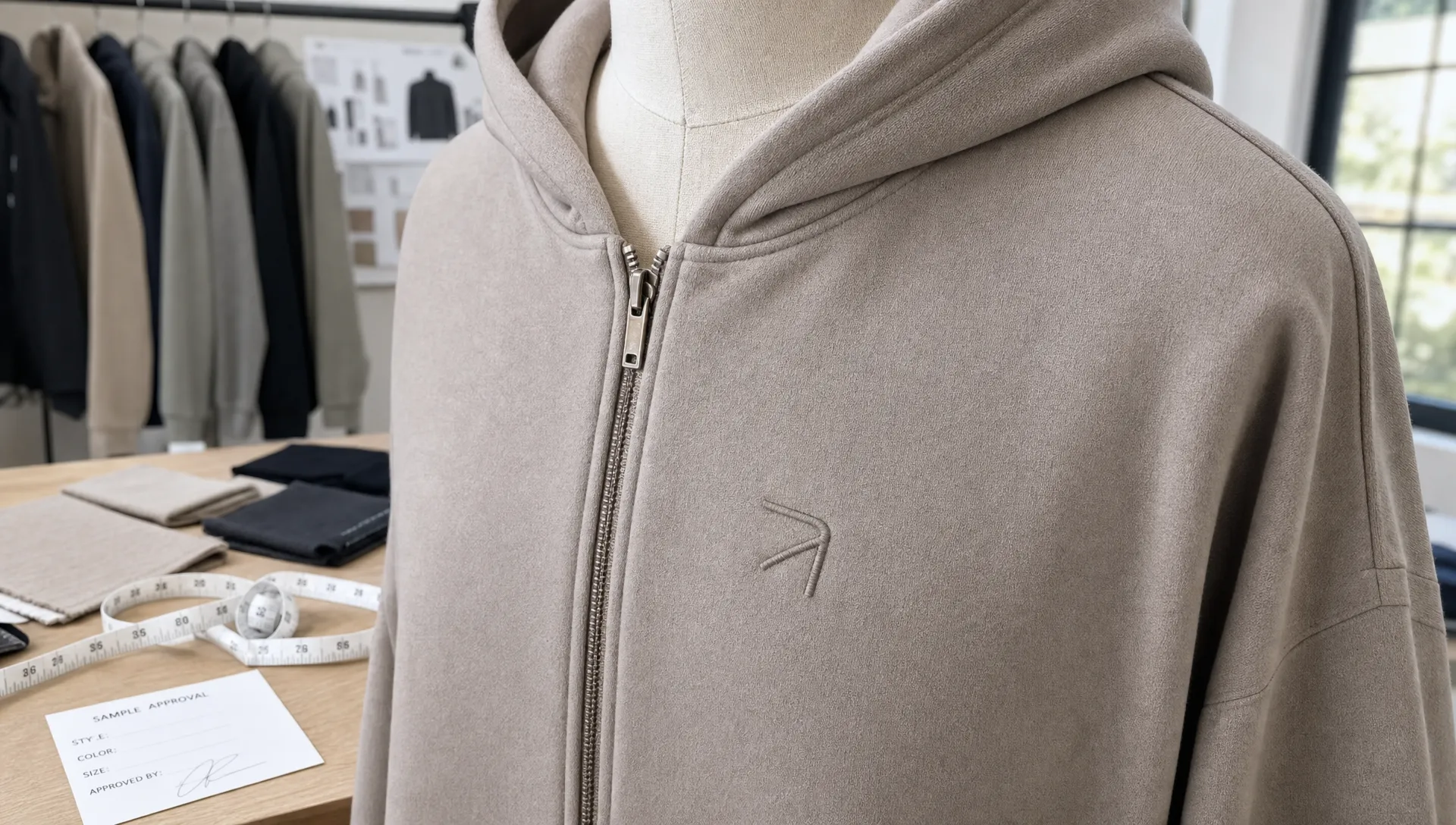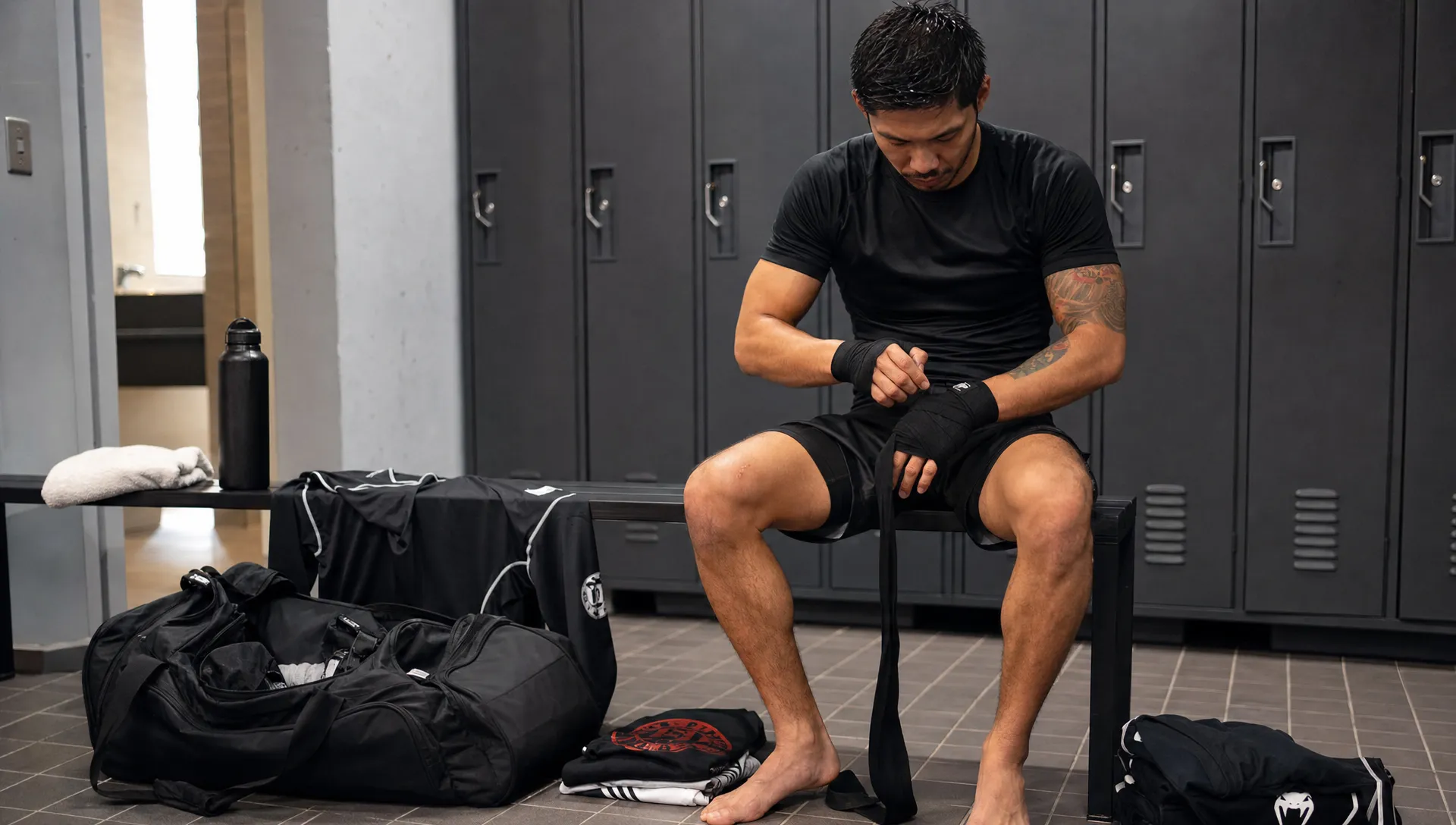
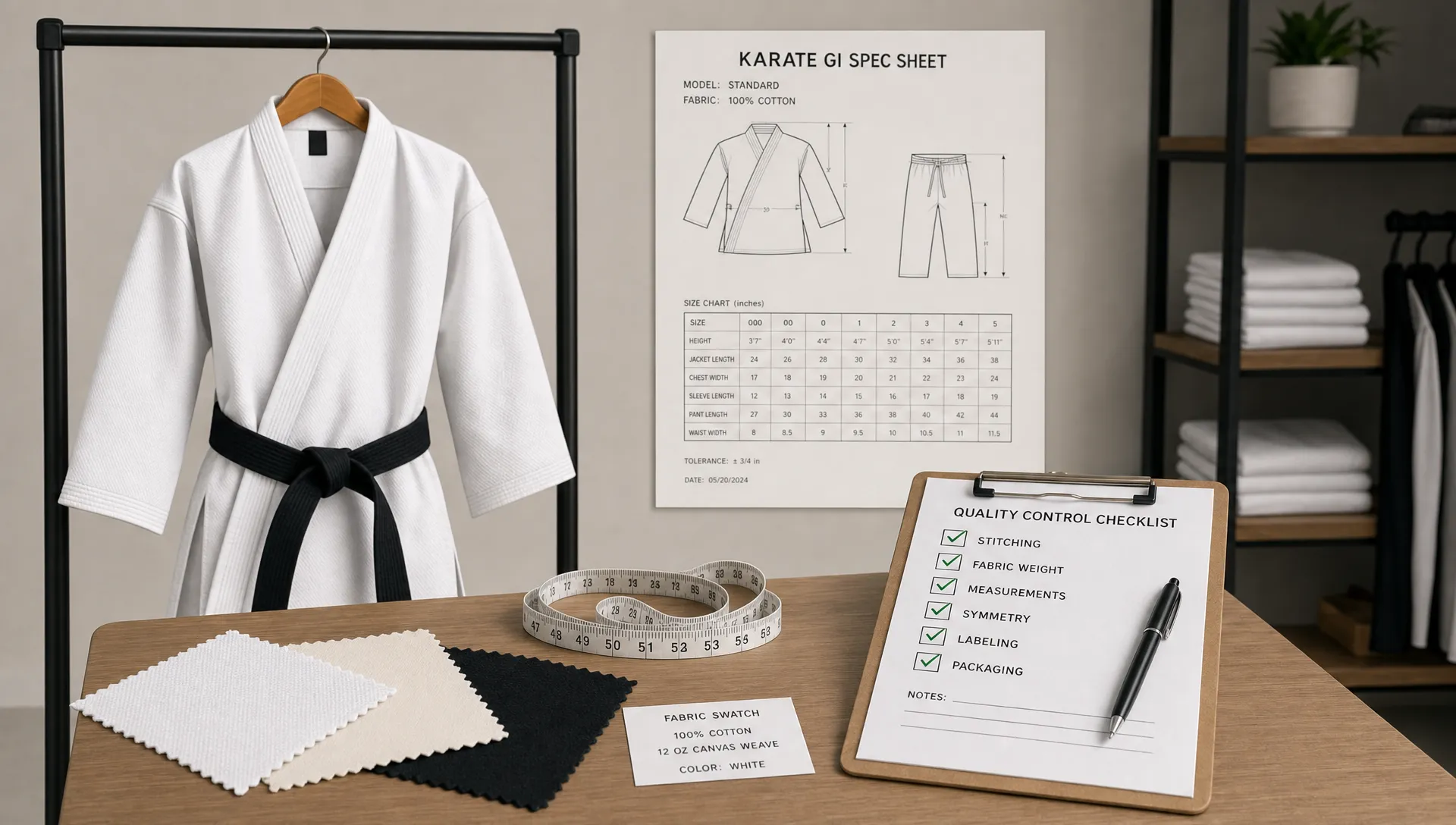
Choosing a karate gi manufacturer is not just a sourcing decision. It affects how your uniforms fit, how long they last, how your logo looks after repeated washing, and how confidently you can sell to students, gyms, retailers, or tournament athletes.
A low quote can look attractive at first, but a poor production partner often creates hidden costs through inconsistent sizing, weak stitching, fabric shrinkage, late deliveries, and customer complaints. A reliable karate gi manufacturer, on the other hand, helps you protect your brand reputation while building a repeatable supply chain.
The goal is not to find the cheapest factory. The goal is to find a manufacturer that understands martial arts apparel, can follow technical specifications, communicates clearly, and can deliver consistent quality across repeat orders.
Start With Your Karate Gi Requirements
Before comparing manufacturers, define exactly what you need. A serious supplier can guide you, but they should not be expected to guess your product strategy.
Karate gis vary by training level, market, style, and customer expectations. A lightweight student uniform for beginners is very different from a heavier kata-focused gi with a crisp feel and reinforced construction. If you approach factories with vague requirements, you will receive vague quotes and inconsistent samples.
At minimum, prepare a basic specification sheet that includes:
- Fabric type and weight: Common options include cotton, poly-cotton blends, and canvas-style fabrics in different GSM ranges.
- Cut and fit: Decide whether you need a traditional fit, modern slim fit, kids sizing, adult sizing, or organization-specific proportions.
- Color options: Most karate uniforms are white, but some brands also request black or custom colors for training programs.
- Stitching requirements: Reinforcement at stress points, sleeve hems, pant hems, and side seams should be clearly defined.
- Branding details: Include embroidery, woven labels, printed labels, patches, hang tags, and packaging needs.
- Shrinkage expectations: Ask how the manufacturer controls shrinkage and whether pre-shrunk fabric is available.
- Order quantities: Share your expected first order and repeat order volume so the manufacturer can quote realistically.
Clear specifications help you compare suppliers on the same basis. Without them, one factory may quote a lightweight beginner gi while another quotes a premium uniform, making price comparisons misleading.
Look for Martial Arts Manufacturing Experience
A karate gi is not the same as a regular tracksuit, hoodie, or casual uniform. It must withstand repeated pulling, gripping, kneeling, washing, and high-mobility training. A manufacturer that mainly produces fashion apparel may understand sewing, but not the practical demands of martial arts.
Ask whether the supplier has experience producing karate uniforms, martial arts uniforms, BJJ gis, boxing apparel, or other combat sports clothing. Related experience matters because these garments require stronger seam construction, functional pattern making, durable fabric choices, and accurate sizing across children and adults.
A reliable manufacturer should be able to discuss the differences between entry-level training gis and more advanced uniforms. They should understand why sleeve length, pant rise, jacket overlap, belt loops, and reinforcement areas matter. If a supplier cannot explain these basics, they may struggle once production begins.
For a broader uniform sourcing checklist, Arus Sportswear also covers key evaluation points in its guide on what to look for in a karate uniform manufacturer.
Evaluate Fabric Quality and Construction
Fabric is one of the biggest factors in how a karate gi feels and performs. It affects comfort, durability, shrinkage, weight, sound, and perceived value. The right fabric depends on your customer base.
Beginner programs often prefer lightweight, affordable, easy-care uniforms. Premium brands may choose heavier cotton or canvas-style fabrics for structure and durability. Kids uniforms need comfort and movement, while adult uniforms may require stronger construction and more consistent sizing.
The table below shows what to evaluate when comparing karate gi samples.
| Component | What to Check | Why It Matters |
|---|---|---|
| Fabric weight | GSM, weave, hand feel, opacity | Determines comfort, durability, and price positioning |
| Stitching | Seam strength, thread quality, stitch density | Prevents tearing during training and repeated washing |
| Reinforcement | Stress points, crotch, side vents, sleeve and pant hems | Improves lifespan in high-movement areas |
| Shrinkage | Wash test results and fabric treatment | Protects sizing accuracy after customer use |
| Pattern accuracy | Jacket overlap, sleeve length, pant cut, mobility | Affects fit, comfort, and customer satisfaction |
| Branding | Embroidery, labels, patches, print durability | Influences brand perception and repeat purchases |
Do not approve a supplier based on photos alone. Request physical samples and test them like a customer would. Wash them, fold them, stretch seams gently, check embroidery backing, compare measurements before and after washing, and inspect how the fabric feels after drying.
Review Sampling Before You Commit to Bulk Production
Sampling is where many sourcing mistakes are caught early. A manufacturer that rushes you directly into bulk production without a proper sample process may not be a good long-term fit.
A professional sampling process should help you confirm the fabric, pattern, trims, branding, stitching, and packaging before mass production begins. It should also reveal how well the supplier follows instructions.
Pay close attention to the first sample. Did the factory follow the specification sheet? Did they ask smart questions before making it? Did they document changes clearly? Did they explain what can and cannot be done within your budget?
A good karate gi manufacturer will not simply say yes to everything. They will advise you when a fabric may shrink too much, when embroidery placement may cause discomfort, or when a design detail may increase production time. That kind of practical feedback is valuable because it prevents problems before your order reaches customers.
Understand Quality Control Procedures
Quality control should not happen only at the end of production. By then, mistakes may already be expensive to fix. Reliable manufacturers build quality checks into multiple stages of the production process.
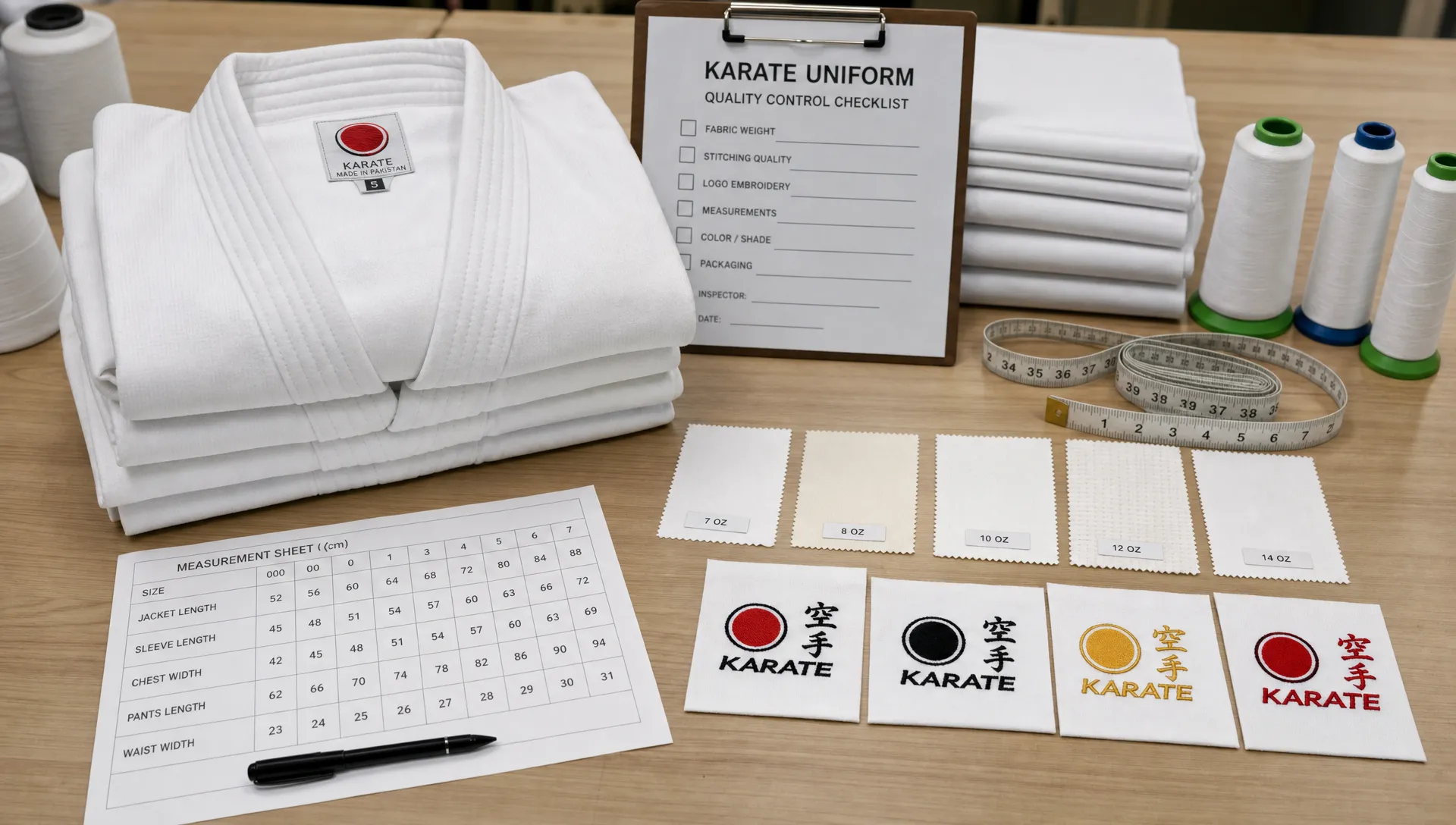
Ask how the factory checks raw fabric, cutting accuracy, stitching, measurements, branding placement, packaging, and final inspection. You do not need a complicated technical audit for every small order, but you do need confidence that the supplier has a repeatable system.
Many apparel buyers use AQL-style inspection methods for bulk orders, where a defined sample of finished goods is checked against acceptable defect limits. Even if you do not use formal third-party inspection, your manufacturer should be able to explain how they separate minor defects from major defects and how they handle rework.
Important quality control questions include:
- How are fabric defects identified before cutting?
- What measurement tolerances are used for each size?
- Are garments checked after washing or shrinkage testing?
- How is embroidery or patch placement verified?
- What happens if finished goods fail inspection?
- Are photos, measurement reports, or inspection summaries available before shipping?
If a supplier becomes defensive when asked about quality control, treat it as a warning sign. Serious manufacturers understand that QC protects both sides.
Check Branding and Private Label Capabilities
If you are building a martial arts brand, gym uniform program, or distributor catalog, branding is more than decoration. It is part of the product experience.
A reliable karate gi manufacturer should be able to support the branding options that match your market positioning. These may include woven neck labels, size labels, sleeve embroidery, chest patches, branded bags, hang tags, and custom packaging. The key is consistency. A logo that looks sharp on one sample but crooked across a full production run can damage your brand image quickly.
Ask to see examples of previous branding work. Look closely at embroidery density, thread color accuracy, label attachment, and patch edges. If you plan to expand beyond karate uniforms into rash guards, fight shorts, BJJ gis, or boxing apparel, it also helps to choose a supplier with broader martial arts apparel capabilities.
For brands planning to sell under their own label, this guide to private label martial arts clothing manufacturing explains how private label production can support custom branding and product line development.
Compare Communication, Not Just Pricing
Pricing matters, but communication often determines whether production succeeds. A supplier can offer a low unit cost and still become expensive if they misunderstand requirements, miss deadlines, or fail to update you when problems arise.
During the quotation and sampling stage, evaluate how the manufacturer communicates. Do they respond clearly? Do they answer your questions directly? Do they provide realistic timelines? Do they confirm details in writing? Do they explain trade-offs between fabric, construction, MOQ, and price?
Reliable manufacturers document important decisions. They confirm approved samples, size charts, colors, labels, packaging, and shipping details before production begins. This reduces confusion and gives both parties a shared reference point.
In the sportswear market, buyers are increasingly used to detailed product information, fast service, and polished presentation from established retailers such as Fabbrica Ski Sises, which is why brands sourcing karate gis should hold their production partners to a high standard for clarity, consistency, and customer-facing quality.
Ask About MOQ, Lead Times, and Scalability
Minimum order quantity is important for new brands and gyms. A low MOQ can help you test the market without tying up too much cash in inventory. However, MOQ should be evaluated together with quality, customization options, and long-term scalability.
Ask the manufacturer what happens after your first order. Can they support repeat production? Can they keep your approved pattern and branding details on file? Can they scale production if demand increases? Can they produce multiple sizes and variations without losing consistency?
Lead time is equally important. A realistic production timeline should include sampling, approval, material sourcing, cutting, sewing, finishing, inspection, packing, and shipping. Be cautious if a supplier promises unusually fast production without explaining how they will achieve it.
For gyms and distributors, late uniforms can disrupt class programs, seasonal launches, or tournament preparation. For brands, delays can affect marketing campaigns and retailer relationships. Reliability means the manufacturer is honest about timing and proactive when issues arise.
Review Packaging and Shipping Support
Packaging is often overlooked until the final stage, but it affects presentation, storage, and shipping efficiency. A karate gi may be folded in a polybag, packed with a belt, labeled by size, or prepared for retail distribution. These details should be agreed upon before production.
Ask how cartons are labeled, how sizes are separated, and whether the manufacturer can support custom packaging. For international orders, confirm shipping options, export documentation support, and whether the supplier has experience shipping to your target market.
Worldwide shipping can be a major advantage, especially for brands working across multiple regions. Still, you should clarify responsibilities. Know whether your quote includes only manufacturing, whether freight is separate, and who handles duties, taxes, and customs clearance.
Watch for Red Flags
Some supplier issues are easy to spot early if you know what to look for. Red flags do not always mean a manufacturer is dishonest, but they do suggest higher risk.
Be cautious if you notice:
- Prices that are far lower than every other quote without a clear reason.
- Refusal to provide samples before bulk production.
- Vague answers about fabric weight, stitching, or shrinkage.
- No written confirmation of specifications or approvals.
- Poor communication during the quoting stage.
- Inconsistent sample quality across sizes or colors.
- No clear process for handling defects or production delays.
- Limited ability to support custom branding or private label needs.
If problems appear before you place an order, they usually become more serious after payment and production begin.
Use a Supplier Scorecard
A simple scorecard can make your decision more objective. Instead of choosing based on price alone, rate each manufacturer across the factors that matter most to your business.
| Evaluation Area | Questions to Ask | Priority |
|---|---|---|
| Product expertise | Do they understand karate gi construction and martial arts apparel? | High |
| Sample quality | Does the sample match your specifications and fit expectations? | High |
| Fabric control | Can they explain fabric options, shrinkage, and durability? | High |
| Branding support | Can they produce labels, embroidery, patches, and packaging consistently? | Medium to high |
| MOQ flexibility | Can they support your first order size and future growth? | Medium |
| Communication | Are they clear, timely, and organized? | High |
| Quality control | Do they inspect during and after production? | High |
| Shipping support | Can they ship reliably to your market? | Medium |
This approach helps you separate a genuinely reliable karate gi manufacturer from a supplier that simply offers an appealing first quote.
Think Long Term, Not One Order at a Time
The best manufacturer is not only the one that can produce your first batch. It is the one that can support your brand as you grow.
If your first karate gi sells well, you may want to add kids sizes, premium uniforms, custom club editions, belts, rash guards, fight shorts, or other martial arts apparel. A manufacturer with private label and OEM experience can make expansion easier because they already understand product development, customization, and repeat production.
If your growth plan includes expanding into broader martial arts or combat sports products, it is worth understanding how OEM manufacturing helps martial arts brands scale through custom production and repeatable supply systems.
A strong supplier relationship also improves over time. Once the manufacturer understands your sizing, quality standards, preferred fabrics, and branding details, future orders become smoother. That consistency is difficult to achieve if you switch factories every time you find a slightly lower price.
Frequently Asked Questions
What makes a karate gi manufacturer reliable? A reliable manufacturer produces consistent quality, follows specifications, communicates clearly, provides samples, controls defects, respects timelines, and supports repeat orders without major variation.
Should I choose the cheapest karate gi supplier? Not necessarily. A very low price can mean lighter fabric, weaker stitching, limited quality control, or poor communication. Compare total value, not only unit cost.
How important is sampling before bulk production? Sampling is essential. It allows you to test fabric, fit, shrinkage, stitching, branding, and packaging before committing to a larger order.
What MOQ should I expect for custom karate gis? MOQ varies by manufacturer, fabric, branding, and customization level. New brands should look for a supplier that can support manageable first orders while still offering room to scale.
Can one manufacturer produce karate gis and other martial arts apparel? Yes, some manufacturers produce multiple combat sports products, including karate uniforms, BJJ gis, rash guards, fightwear, and boxing apparel. This can help brands expand their product range more efficiently.
Build Your Karate Gi Line With the Right Manufacturing Partner
Choosing a reliable karate gi manufacturer comes down to preparation, testing, and communication. Define your specifications, inspect samples carefully, ask about quality control, confirm branding capabilities, and choose a supplier that can support both your first order and your long-term growth.
Arus Sportswear manufactures custom MMA and martial arts apparel for brands, gyms, and distributors worldwide, including private label and OEM production, custom designs, low minimum orders, bulk order support, and worldwide shipping. If you are planning a karate gi line or expanding your martial arts apparel range, Arus Sportswear can help you develop production that fits your brand and market goals.