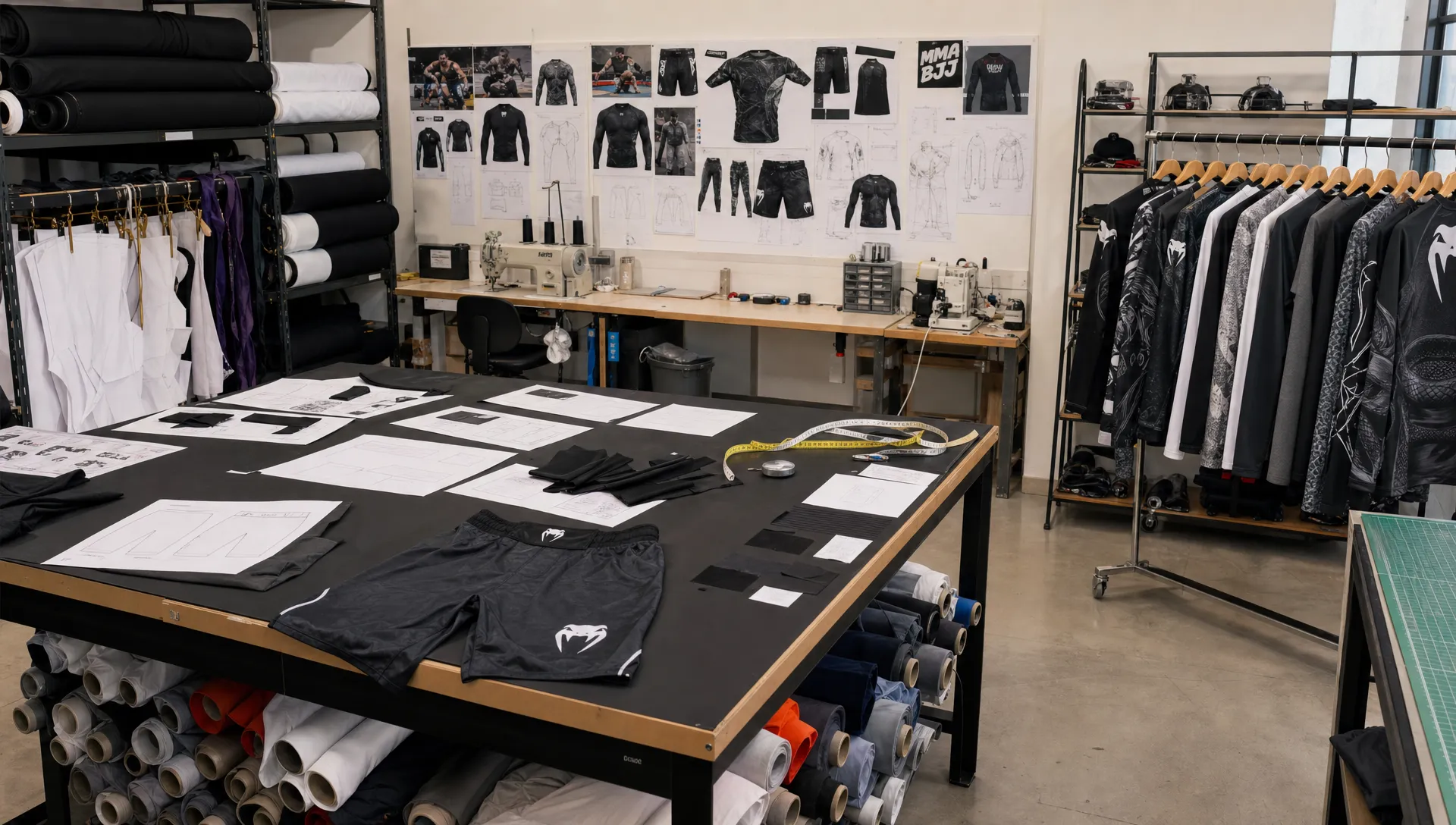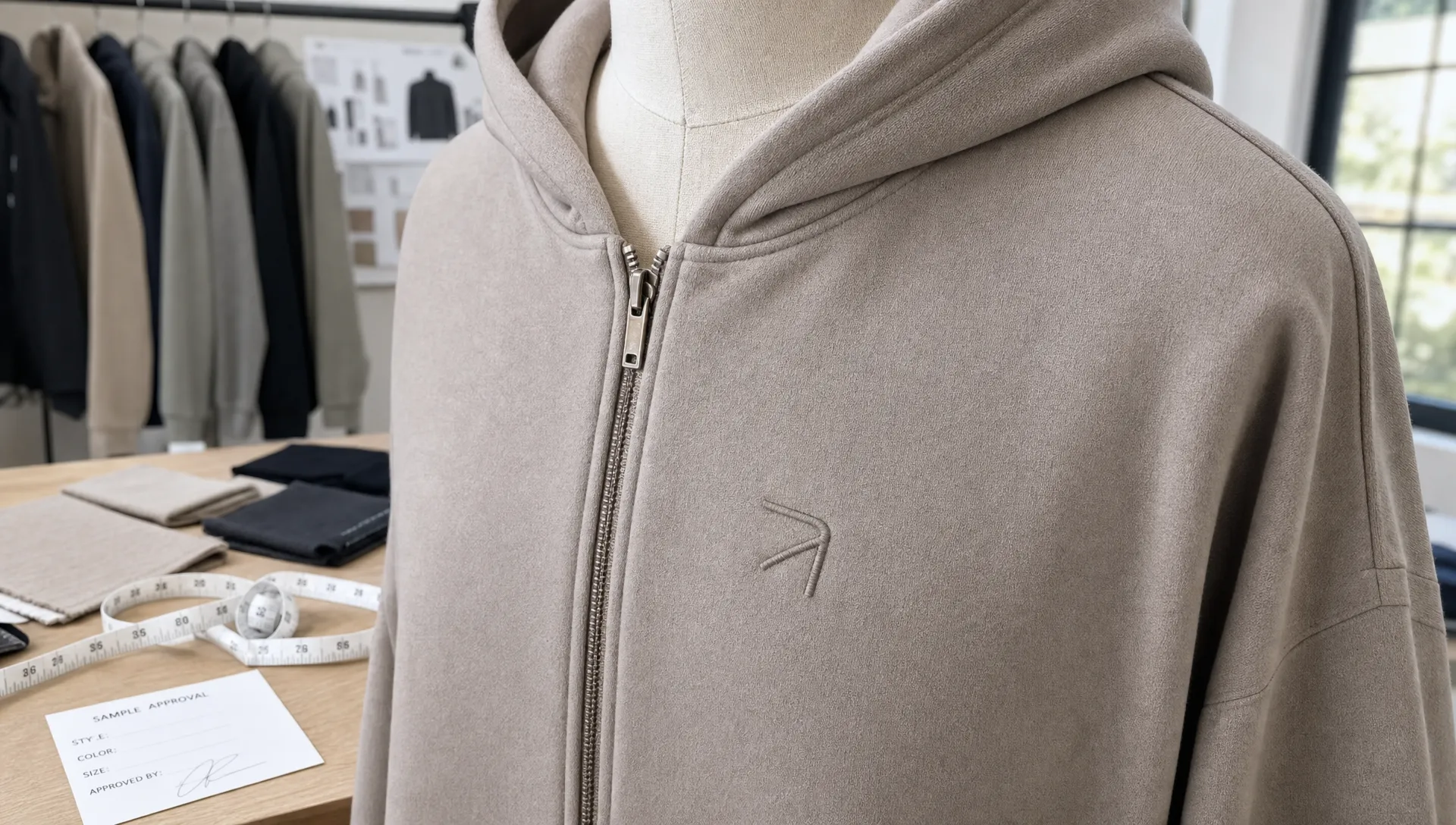
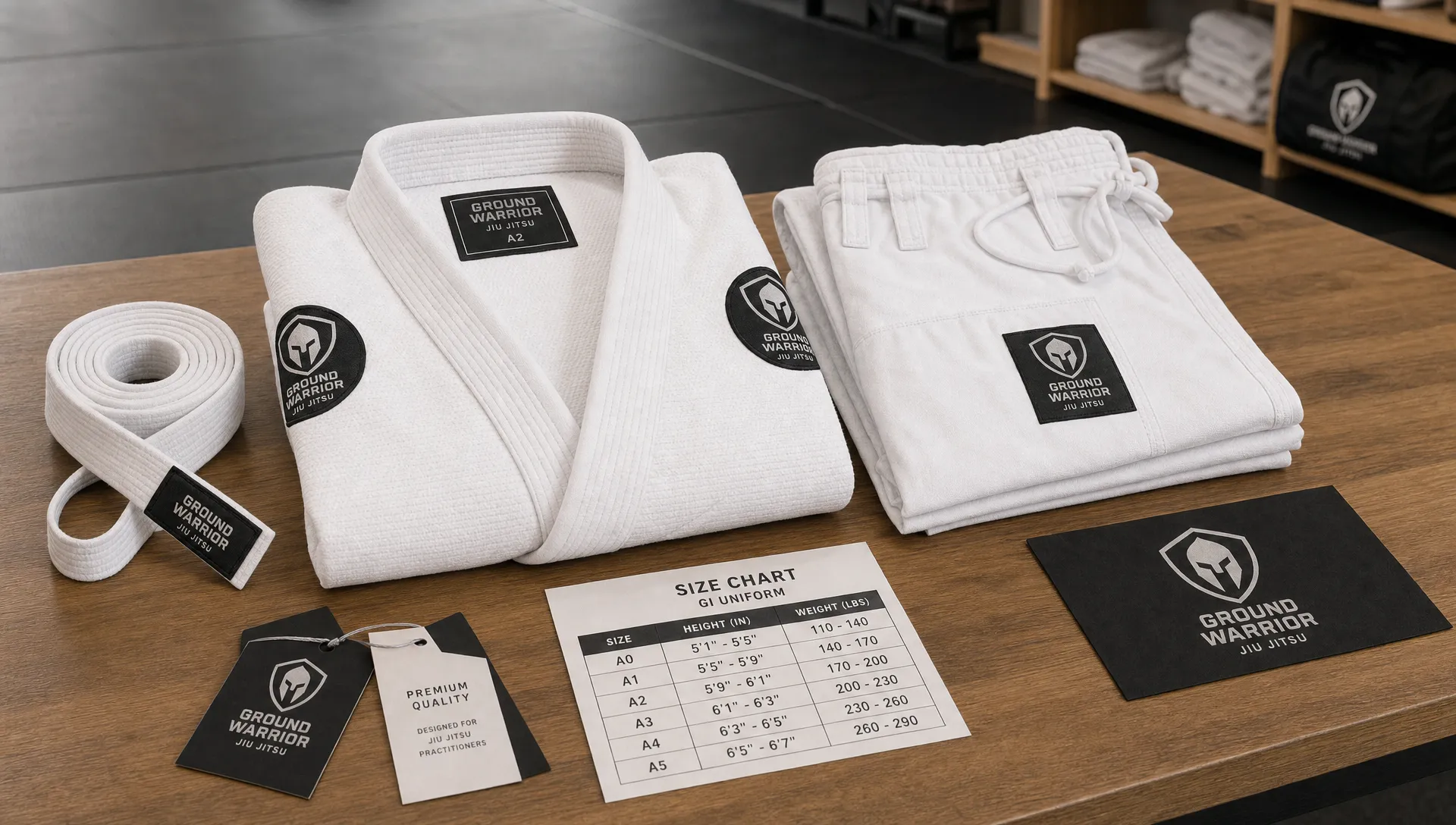
Buying BJJ gis for a brand, academy, or distribution business is very different from buying one gi for personal training. You are not only choosing a uniform. You are making decisions that affect customer satisfaction, repeat orders, tournament readiness, inventory risk, and your reputation in the combat sports market.
A good gi feels right on the mat, holds up through hard rounds, represents your brand clearly, and arrives with consistent sizing from batch to batch. A poor one can lead to returns, shrinkage complaints, weak seams, color bleeding, or branding that looks cheap after a few washes.
This BJJ gis buyers guide is designed for commercial buyers who need to source with confidence. Whether you run a gym shop, launch a private label martial arts brand, or supply retailers, the goal is the same: build a product that athletes want to wear and buyers trust enough to reorder.
Start with your buyer profile
Before you compare fabrics or logo placements, define who the gi is for. The right specification depends heavily on the sales channel.
A gym usually needs reliable team gis for students, beginner packages, kids programs, and academy branding. Fit consistency and clear size runs matter more than experimental design. A brand may need stronger visual identity, premium trims, and a product story that stands out online. A distributor typically prioritizes repeatable quality, reorder planning, cartons, barcode readiness, and dependable bulk production.
| Buyer type | Main priority | Common risk to avoid |
|---|---|---|
| Gym or academy | Durable team uniforms with clean branding | Ordering too many sizes without testing fit first |
| Private label brand | Differentiated design, packaging, and perceived value | Overdesigning before validating demand |
| Distributor | Consistent specs, cartons, labeling, and reorder reliability | Choosing the cheapest unit cost without checking QC |
| Event or competition organizer | Short-run branded gis for a specific deadline | Leaving sampling and shipping too late |
This early clarity helps you avoid one of the most common sourcing mistakes: trying to build one gi that does everything. A lightweight entry-level gi, a premium competition gi, and a durable academy rental gi should not share the exact same specification.
Understand the main parts of a BJJ gi
A BJJ gi has three core product areas: the jacket, the pants, and the belt if you include one. Each area affects comfort, durability, production cost, and perceived quality.
The jacket is usually the most important part of the product. Buyers often compare weave type, weight, collar construction, lapel stiffness, and reinforcement points. Pearl weave is popular because it can balance strength and weight, but other weave options may suit beginner, premium, or heavy-duty training lines. A lighter jacket can appeal to competitors and warmer climates, while a heavier jacket can feel more structured and durable.
The pants are just as important for retention. Athletes notice knee reinforcement, crotch gusset comfort, drawstring quality, and whether the pants restrict movement. Ripstop pants are common because they are lighter and resistant to tearing, while twill-style pants can feel more traditional. Neither is automatically better. The right choice depends on the target customer and price position.
The collar and lapel deserve close attention. A lapel that is too soft may feel low quality and easy to grip. A lapel that is too stiff may feel uncomfortable for beginners. Commercial buyers should ask for sample testing under realistic rolling conditions, not just studio photos.
Choose fabric and weight based on use case
Fabric weight affects the entire buying decision. It influences comfort, shipping cost, drying time, durability, and how premium the gi feels in the customer’s hands. Instead of asking for the strongest possible gi, ask what kind of training environment it must survive.
For beginner academy gis, the priority is usually affordability, comfort, easy care, and broad size availability. For competition-focused gis, athletes may care more about weight, fit, and compliance with event rules. For premium lifestyle-inspired drops, buyers may want richer trims, special colors, interior lining, or distinctive embroidery.
| Gi category | Typical buyer goal | Specification focus |
|---|---|---|
| Entry-level academy gi | Affordable uniform for new students | Comfort, simple branding, easy sizing |
| Core training gi | Reliable everyday product | Reinforced seams, balanced weight, durable pants |
| Competition-style gi | Lightweight and clean-fitting | Fit testing, shrinkage control, rule-friendly design |
| Premium private label gi | Higher perceived value | Custom trims, embroidery, packaging, detail work |
| Kids gi | Safe, comfortable, easy to wash | Soft feel, practical sizing, durable knees |
If your customers compete, avoid finalizing colors, patch locations, or contrast details without checking the rules of the events they are likely to attend. Regulations can vary by organization and may change over time. Conservative color planning is often safer for team and competition gis.
Build a complete tech pack before asking for pricing
Manufacturers can quote more accurately when you provide a clear tech pack. Without it, two suppliers may give very different prices because they are not quoting the same product. This is especially important for BJJ gis, where small construction details can change cost and quality.
A practical gi tech pack should include fabric type, fabric weight target, jacket weave, pants fabric, size range, color references, logo artwork, embroidery or patch locations, label requirements, drawstring style, reinforcement details, packaging, and carton instructions. It should also include your expected tolerance for measurements and any testing requirements.
If you are still building your apparel sourcing process, Arus Sportswear’s guide to private label martial arts clothing manufacturing is a useful companion because it explains how private label decisions connect to branding, production, and supplier communication.
The better your tech pack, the easier it is to compare samples fairly. It also reduces the chance that a low quote is based on cheaper fabric, fewer reinforcements, simpler labels, or packaging that does not match your sales channel.
Plan sizing carefully because fit drives returns
Sizing is one of the biggest commercial risks when ordering BJJ gis in bulk. A gi can have excellent fabric and branding, but if the size grading feels inconsistent, customers will complain.
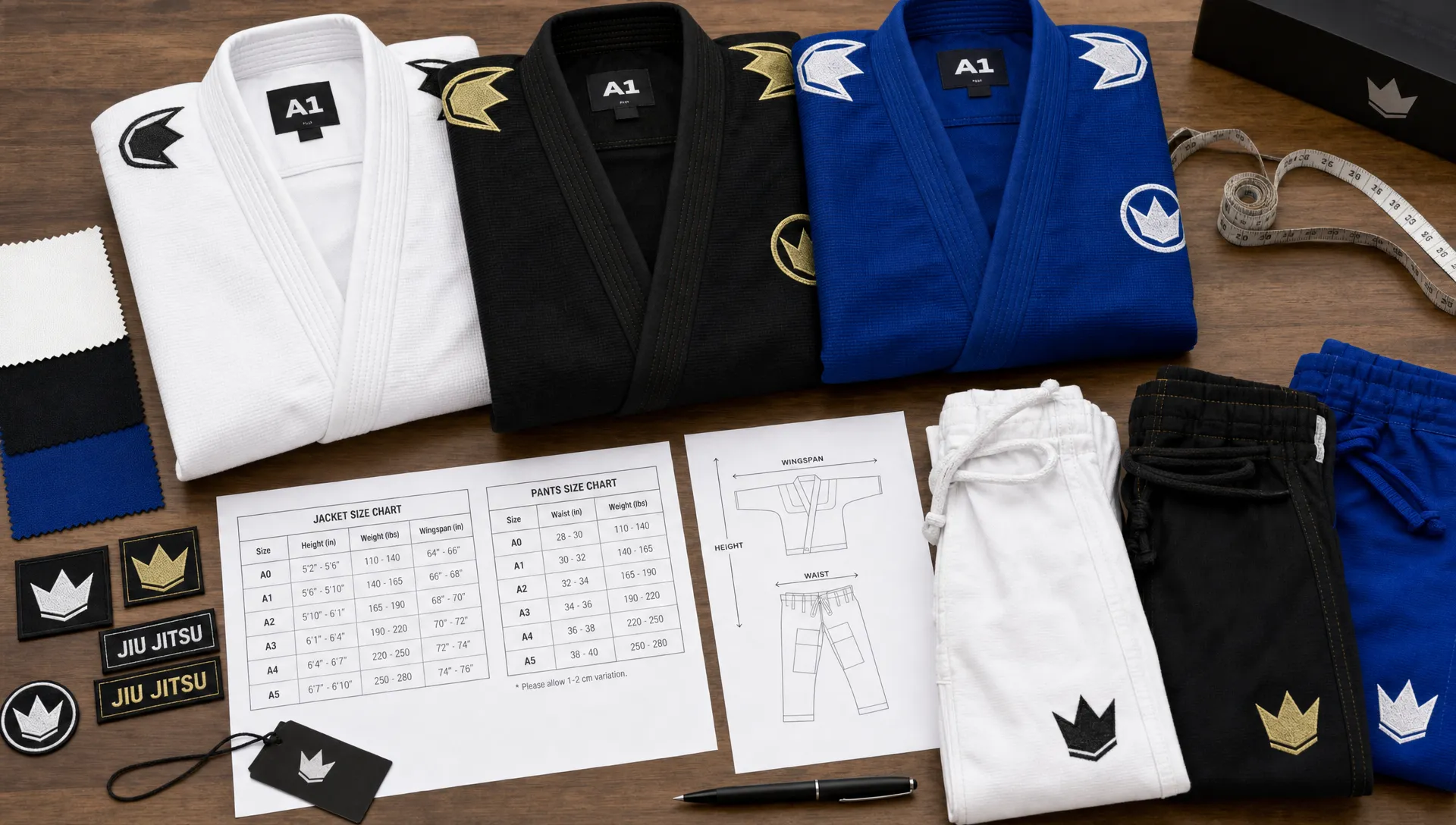
Most adult BJJ gi size ranges use A sizes for men or unisex cuts, often with variations for height and build. Many brands also offer women’s cuts, kids sizes, or in-between sizes for better fit. The exact grading should match your target market, not just a generic size chart.
Ask for a full size chart before production and compare it to your customer base. If you operate a gym, use real students as fit testers across different body types. If you sell online, make sure your final size chart is easy to understand and reflects post-wash expectations.
Shrinkage must also be discussed before production. Cotton-based garments can shrink, and the amount depends on fabric, finishing, washing conditions, and construction. Buyers should request sample wash testing and document the results. This helps you write accurate care instructions and reduce disputes after launch.
Decide how much branding your market will accept
BJJ customers often care about authenticity. Strong branding can help your gi stand out, but excessive branding can make it harder to sell, especially to athletes who prefer a clean look.
Common branding options include woven neck labels, inner jacket labels, sleeve embroidery, skirt embroidery, pant embroidery, woven patches, rubber patches, hang tags, polybags, and branded cartons. Premium lines may also use contrast stitching, interior yoke details, or custom drawstrings.
For gym gis, simple and consistent branding usually works best. A clean academy logo on the jacket and pants can create team identity without overwhelming the uniform. For retail brands, a more distinctive design language may help the product stand out in photos and social media content. For distributors, flexible branding zones may be useful if the same base gi is adapted for multiple clients.
The key is to design for production reality. Highly detailed embroidery can look impressive but may increase cost and lead time. Large patches can affect comfort or tournament acceptance. Special colors may require higher planning discipline to avoid shade variation across batches.
Quality control checkpoints for bulk BJJ gis
Quality control should not begin when the cartons arrive. It should be built into the buying process from sample development to final inspection.
Start with a proto sample to confirm the concept. Then move to a fit sample or size-set sample to check grading. For larger programs, a pre-production sample is especially valuable because it represents the final approved construction before bulk production begins.
| QC checkpoint | What to inspect | Why it matters |
|---|---|---|
| Fabric inspection | Weave consistency, hand feel, weight target, visible defects | Prevents inconsistent product quality |
| Measurement check | Jacket length, sleeve length, chest, pants waist, inseam | Reduces fit complaints and returns |
| Stitching review | Reinforced seams, bar tacks, loose threads, skipped stitches | Protects durability during training |
| Branding check | Logo placement, embroidery quality, label accuracy | Preserves brand presentation |
| Wash test | Shrinkage, colorfastness, twisting, label durability | Helps confirm care instructions |
| Packing inspection | Size labels, polybags, cartons, quantity count | Prevents fulfillment and inventory errors |
Commercial buyers should define acceptable tolerances in advance. For example, measurement tolerances should be agreed before production, not debated after delivery. The same applies to color tolerance, embroidery placement, and packaging details.
If you are comparing suppliers, do not judge only by the best sample they can make. Ask how they maintain consistency across bulk production. A serious BJJ gi manufacturing partner should be able to discuss sampling, approvals, labeling, and inspection steps clearly.
MOQ, assortment planning, and inventory risk
Minimum order quantity matters, but the real question is how the MOQ is distributed. A 200-piece order can be manageable if the size and color split matches demand. It can become risky if it forces you into too many slow-moving variants.
For a first order, keep the assortment focused. Many buyers start with core colors and the most common sizes, then expand after they understand sell-through. Gyms can often estimate demand based on active student count, beginner enrollment, and replacement cycles. Brands should use preorder interest, email waitlists, or small test drops before committing to a broad line.
Distributors should think in replenishment cycles. If a retailer or academy reorders every quarter, your production and shipping schedule must support that rhythm. Stockouts can damage relationships, but overstock ties up cash in sizes that may not move.
A simple planning approach is to separate your gi line into core items and seasonal or limited items. Core gis should be reliable, reorderable, and easy to explain. Limited drops can carry more design risk because they are not expected to serve every customer year-round.
Pricing is more than the unit cost
When buyers compare BJJ gis, the lowest factory quote can look attractive. But the true commercial cost includes sampling, artwork setup, trims, packaging, inspection, freight, duties, storage, and the cost of any delays or defects.
A stronger buying decision looks at landed cost and margin. Landed cost is the total cost to get the finished goods to the point where they can be sold or distributed. For a gym, that may mean delivered to the academy. For a brand, it may mean received at a fulfillment warehouse. For a distributor, it may mean delivered to a regional storage facility or retail customer.
Freight planning is especially important because gis are bulkier and heavier than many lightweight apparel items. Ocean freight may be more economical for large orders, while air freight can help with urgent launches but may reduce margin. For buyers coordinating international movement, a reliable freight forwarding, warehousing, and 3PL partner can help streamline the supply chain beyond the factory stage.
Build a costing sheet that includes every major cost before you set retail or wholesale prices. This protects your margin and helps you decide whether to simplify the product, adjust packaging, reduce color complexity, or increase order quantity.
Packaging and labeling requirements
Packaging is often treated as an afterthought, but it can affect both customer experience and operational efficiency. A gym may only need clean individual polybags with size stickers. An ecommerce brand may need hang tags, barcode labels, branded bags, and carton labels that match fulfillment requirements. A distributor may need carton markings, SKU labels, and packing lists organized by size and color.
Care labels should be accurate and easy to read. Size labels should be consistent across jacket, pants, and packaging. If belts are included, confirm whether they are packed inside the same bag and whether belt size corresponds to gi size.
For retail or wholesale channels, SKU discipline is essential. Each color and size should have a distinct SKU. This reduces picking errors and makes reorders easier. If your first run is small, it is still worth building a clean SKU structure from the beginning because it will save time as the line grows.
Timeline: work backward from your launch date
BJJ gi production involves more steps than printing a T-shirt. Sampling, fabric sourcing, cutting, sewing, embroidery, washing or finishing, quality control, packing, and shipping all take time. If you have a tournament, academy opening, holiday campaign, or product launch date, work backward with buffer time.
A practical sourcing timeline includes design finalization, tech pack preparation, sample development, sample revisions, size-set approval, bulk production, inspection, freight, customs, receiving, and final distribution. Delays often happen when artwork is incomplete, size charts are unclear, approvals are slow, or buyers request changes after production has started.
If you are new to supplier evaluation, this article on how to choose the right martial arts clothing manufacturer can help you assess communication, product focus, and manufacturing fit before placing a serious order.
The safest approach is to confirm the production calendar before you announce a launch. It is better to launch one month later with finished goods in hand than to build demand around a delivery date you cannot control.
Questions to ask a BJJ gi manufacturer
The right manufacturer should understand both apparel production and combat sports use. A generic uniform supplier may not fully understand grip stress, lapel expectations, knee reinforcement, or how BJJ athletes judge fit.
Ask clear questions before you commit:
- What jacket weave and pants fabric options do you recommend for my target customer?
- Can you produce custom labels, embroidery, patches, and packaging for private label orders?
- What is your sampling process before bulk BJJ gis production?
- How do you check shrinkage, sizing, stitching, and branding consistency?
- What size range can you support for adults, women, and kids?
- How are MOQs calculated across colors, sizes, and designs?
- What information do you need from me to prepare an accurate quote?
The answers should be specific. If a supplier avoids details or gives the same recommendation for every buyer, that may be a warning sign. Good manufacturing support should help you align product quality, price point, and market demand.
For brands planning to scale beyond one product, it is also worth understanding how OEM production works across categories. Arus Sportswear’s guide on OEM manufacturing for martial arts brands explains how structured production can support growth across apparel lines.
Common mistakes buyers should avoid
Many BJJ gi sourcing problems are preventable. They usually come from rushing samples, underestimating fit, or focusing too narrowly on price.
One common mistake is approving a sample without washing and training in it. A gi can look excellent out of the bag but change after laundering or hard use. Another mistake is ordering too many colors on the first run. Each color adds complexity, and slow-moving colors can trap inventory.
Buyers also sometimes underestimate branding lead time. Embroidery digitizing, patch development, label approvals, and packaging setup can all slow down production if files are not ready. The same applies to size charts. If the final measurements are unclear, the factory has to make assumptions, and assumptions create risk.
The best buyers treat the first order as the foundation for a repeatable product. They document what worked, collect customer feedback, monitor sell-through by size, and use that data to improve the next batch.
Final checklist before placing a bulk order
Before you approve production, make sure the essentials are confirmed in writing. This protects both you and the manufacturer.
| Item to confirm | Why it matters |
|---|---|
| Final tech pack | Aligns construction, fabric, branding, and packaging |
| Approved sample | Establishes the physical reference for bulk production |
| Size chart and tolerances | Reduces disputes over fit and measurements |
| Color standards | Helps control shade consistency |
| Logo files and placements | Prevents branding errors |
| MOQ and size split | Connects production to real demand |
| Packaging and carton details | Supports fulfillment and distribution |
| Inspection process | Improves consistency before shipment |
| Shipping plan | Protects launch timing and landed cost |
A well-prepared order is easier to produce, inspect, ship, and reorder. It also gives your team a clear reference if you expand into rash guards, fight shorts, boxing apparel, or other martial arts products later.
Frequently Asked Questions
What makes a good BJJ gi for a gym or academy? A good academy gi should be durable, comfortable, easy to size, and cleanly branded. Most gyms benefit from a simple core design that can be reordered consistently for new students and team members.
How should brands choose between lightweight and heavyweight BJJ gis? Lightweight gis can appeal to competitors, warmer climates, and customers who prefer mobility. Heavier gis may feel more structured and durable. The best choice depends on your target market, price point, and whether the gi is designed for daily training, competition, or premium retail.
Should I order custom BJJ gis before testing samples? No. Commercial buyers should review samples, check fit, wash the gi, and test it in training when possible. Sampling helps identify issues with shrinkage, seam strength, comfort, and branding before bulk production.
What branding options are common for private label BJJ gis? Common options include woven labels, embroidery, sleeve or skirt logos, pant logos, patches, hang tags, branded bags, and carton labels. The right mix depends on whether you sell through a gym, ecommerce store, retail channel, or distributor network.
How can I reduce risk on my first bulk gi order? Start with a focused size and color assortment, approve a complete sample, confirm tolerances in writing, and avoid unnecessary design complexity. Tracking customer feedback after launch will help you improve future reorders.
Build BJJ gis your customers want to reorder
A successful BJJ gi program is built on more than fabric choice. It requires the right fit, clear specs, dependable production, practical branding, and smart logistics. When those pieces work together, your gi becomes a product athletes trust and your business can scale with confidence.
Arus Sportswear manufactures custom MMA and martial arts apparel for brands, gyms, and distributors, including private label and OEM BJJ gi production. If you are planning a new gi line, academy uniform, or wholesale program, start with a clear product brief and work with a manufacturing partner that understands combat sports apparel from design through bulk production.
To discuss custom BJJ gis, private label fightwear, or bulk martial arts apparel, visit Arus Sportswear and share your project requirements.