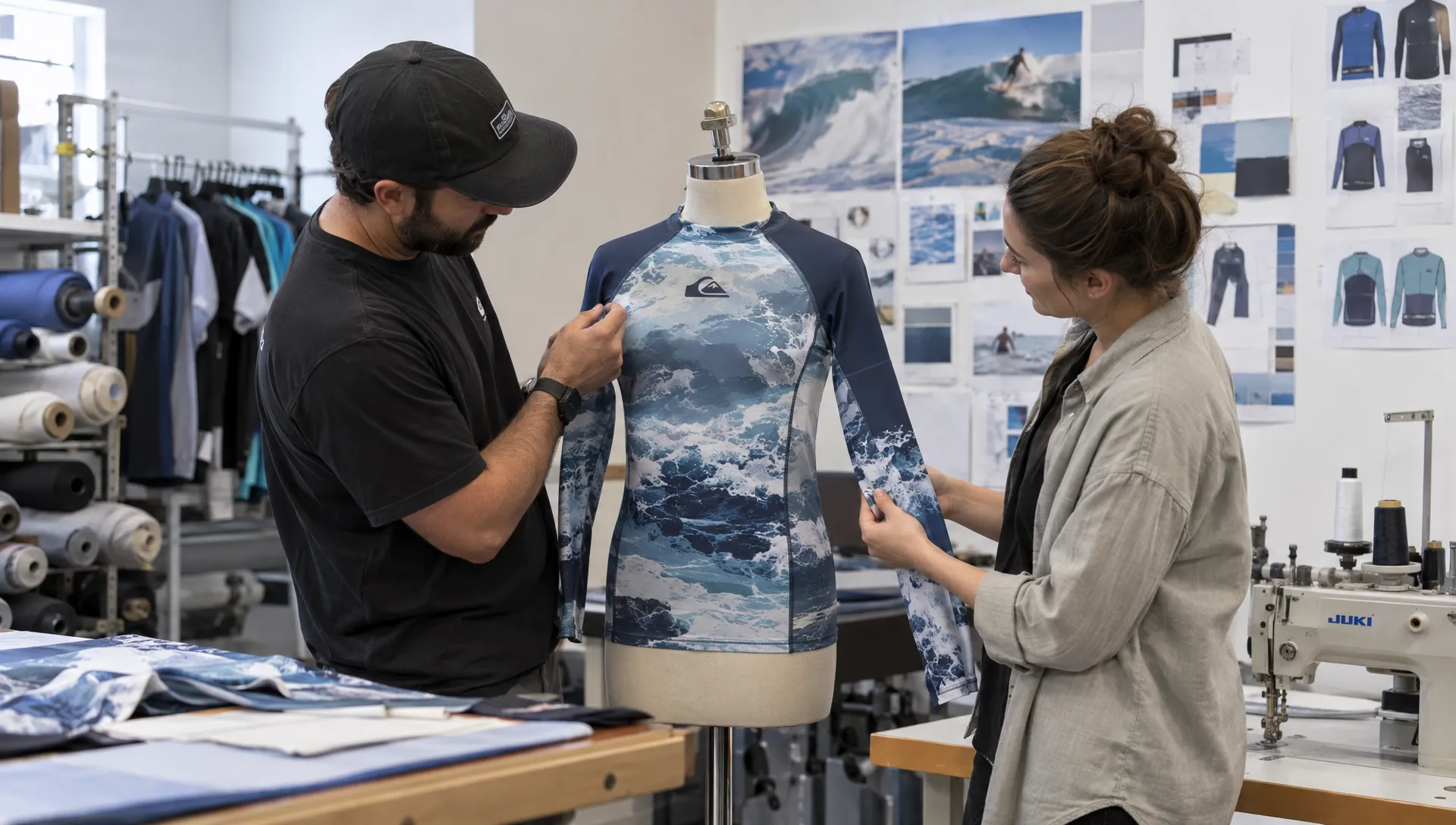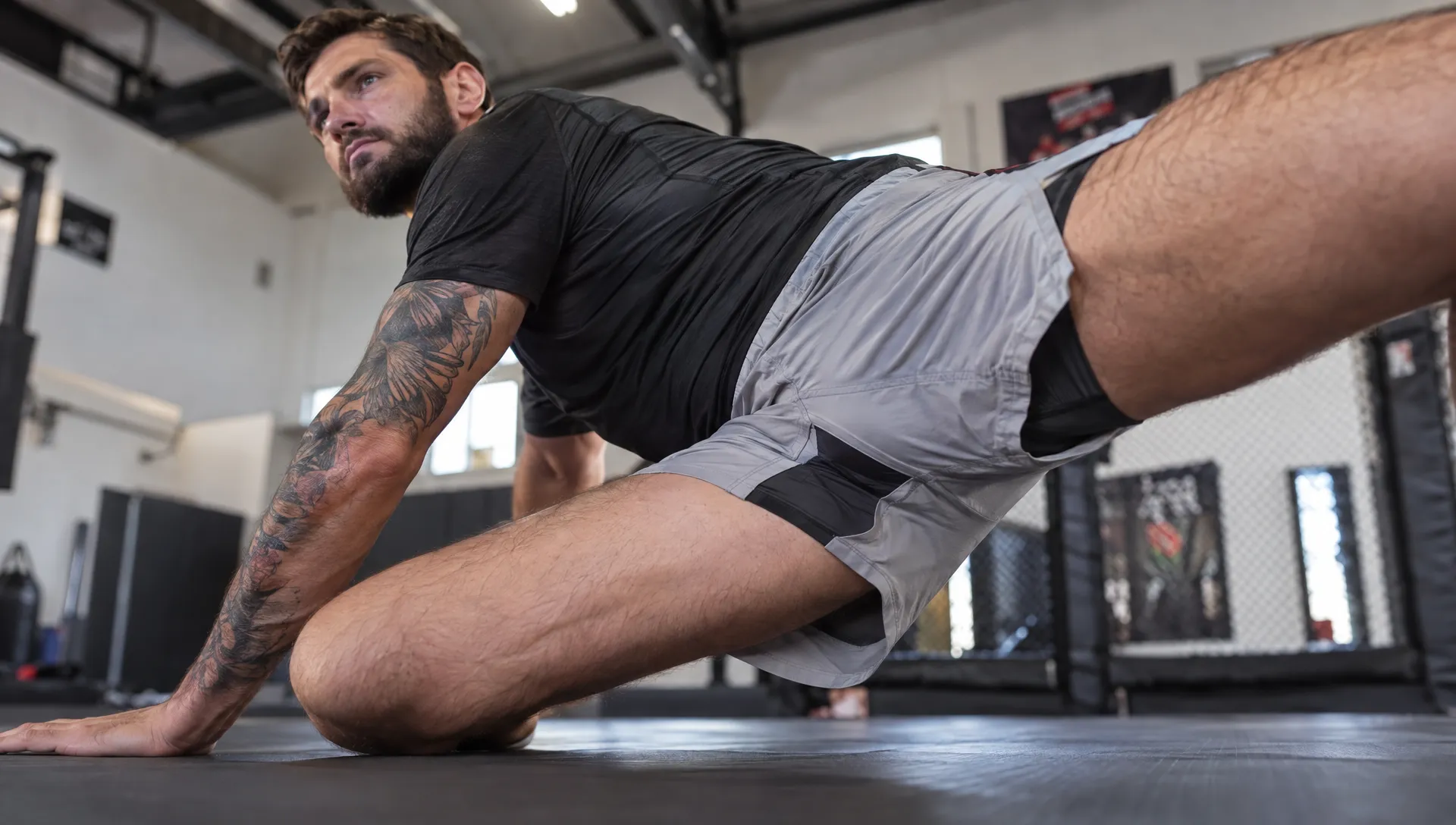
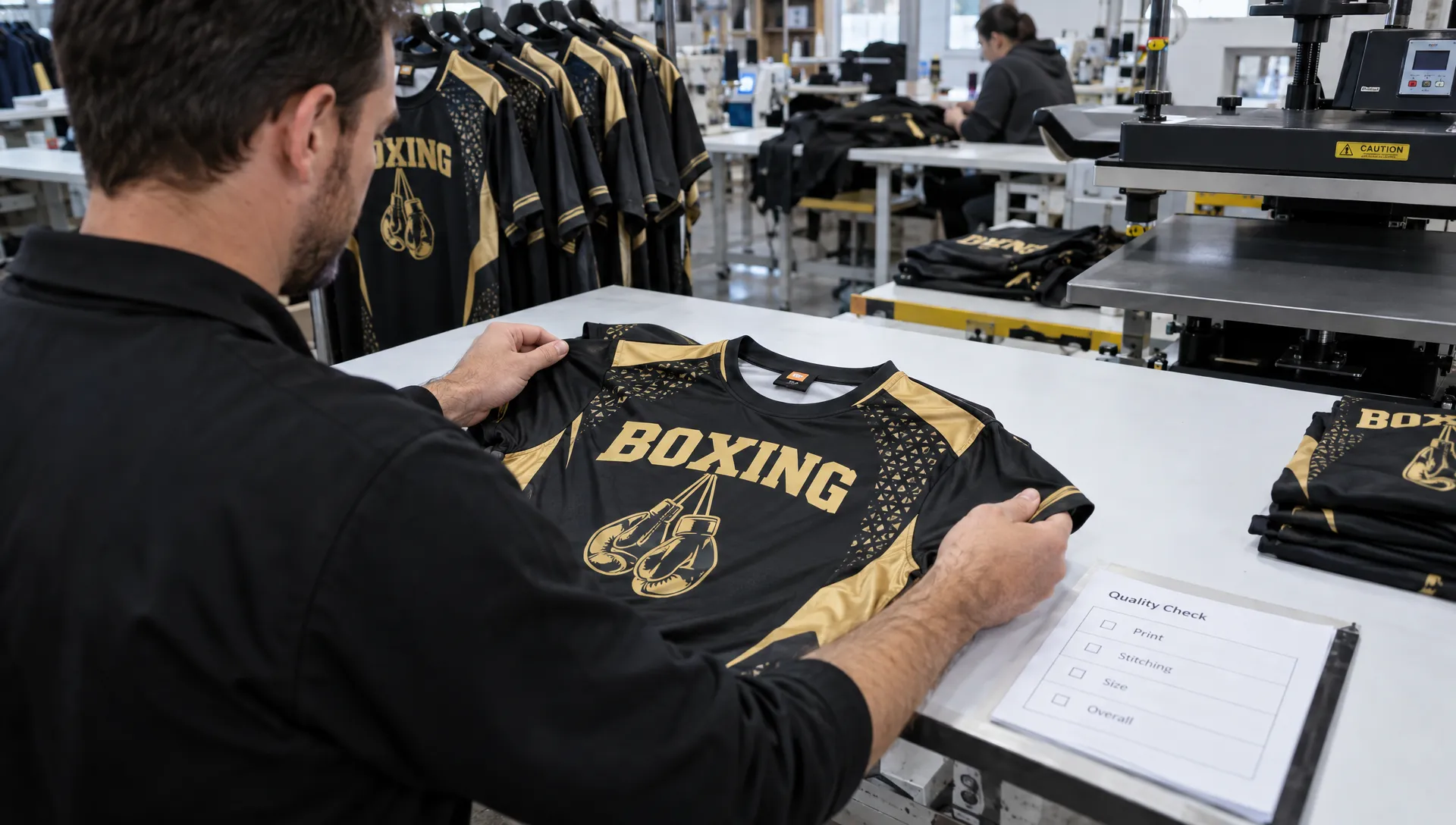
Choosing boxing clothing starts with three different jobs: helping athletes train comfortably, giving coaches a practical working uniform and offering customers merchandise they want to wear. Those jobs can share colors and branding, but they should not automatically share the same garment specifications. A shirt that looks good on a retail rack may feel restrictive during pad work, while lightweight training shorts may not suit a coach’s everyday duties.
For gyms, brands and distributors, the useful starting point is a small, clearly defined range rather than a large catalog. Decide who will wear each item, what movements it must allow and how it will be washed. Then evaluate samples against those requirements before approving a bulk order. This approach also makes supplier conversations more precise and helps separate necessary features from expensive extras.
Match boxing clothing to the job
Build your range around actual use. The following distinctions help prevent one design from becoming an awkward compromise across every channel.
| Buyer or wearer | Main priority | What to check first |
|---|---|---|
| Athletes in training | Unrestricted movement and comfort when sweating | Shoulder mobility, waistband security and wet-fabric feel |
| Coaches | Comfort through long sessions and a consistent team identity | Reach, coverage, practical storage and wash durability |
| Retail customers | Appealing fit, clear sizing and everyday wearability | Silhouette, garment measurements and decoration quality |
Shared logos can connect the collection without forcing identical fabrics or cuts. A coordinated training shirt, coach top and lifestyle tee can look like one range while serving different needs.
Training apparel: prioritize movement before appearance
For athletes, boxing clothing should stay comfortable through guard positions, punches, footwork and conditioning. Evaluate the complete garment rather than choosing solely by fiber name or fabric weight.
A training top needs enough room across the upper back and shoulders to extend both arms without pulling sharply at the neck. Check whether the hem rides up repeatedly during overhead movements. A close fit can work, but tightness is not evidence of better performance.
Shorts should allow stepping, pivoting, squatting and lunging without dragging across the thighs. The waistband must remain secure without excessive pressure. Test the drawcord arrangement for comfort and make sure adjustment does not leave long, loose ends. For partner drills, avoid exposed hard hardware that could catch or scratch.
Polyester or nylon blends can suit frequent sweaty sessions, but construction and finishing affect how a fabric feels and handles moisture. Cotton-rich tops may suit casual wear or lighter activity; assess their drying behavior under the intended conditions rather than making blanket assumptions.
Keep training and competition requirements separate. A garment that performs well in the gym is not automatically approved for a sanctioned bout, and apparel does not replace protective equipment.
Run a realistic movement and wash test
A useful boxing clothing sample test combines movement, repeated wear and laundering. Ask wearers with different builds to test representative sizes, rather than approving the range from one person’s fit feedback.
Have them shadowbox, work pads, skip rope and perform basic conditioning movements. Record specific problems: a sleeve pulling at full extension, a waistband rolling during a squat or a seam rubbing under the arm. “Comfortable” is useful feedback, but it is not precise enough to guide a pattern correction.
Measure each sample before washing, then repeat those measurements after laundering according to the proposed care instructions. Look for changes in body length, width, waistband recovery, color and print appearance. Several wash cycles can reveal problems that a single fitting misses, although an informal wear test is not a substitute for laboratory testing when a specification requires it.
Keep a written record of the garment version, size, tester feedback and wash conditions. If the supplier revises the pattern or decoration, retest the changed feature instead of assuming the original approval still applies.
Coaches need a working uniform, not just a team shirt
Coaches use boxing clothing differently from athletes: they demonstrate movements, hold pads, move equipment and often wear the same kit across several sessions. Their uniform should support that working day without looking unrelated to the rest of the gym.
A coach top should allow overhead reach and forward extension while providing comfortable coverage during demonstrations. Check collar and sleeve comfort during pad work, especially when the arms remain raised for extended periods. A polo may suit reception duties or events, but test its collar and placket before treating it as a training garment.
Storage can be useful for keys or a timer when supervising classes. Choose pocket placement and closures around the task, and avoid loose contents or exposed hard components during close-contact drills. Dedicated coaching trousers or shorts may therefore need different details from athlete kit.
Keep identification simple. A consistent logo position and a clear coach designation can help members recognize staff without covering every panel in decoration. If the garment includes individual names, confirm spelling and placement before approval.
Also plan replacements. A uniform is easier to maintain when its measurements, colors and artwork are documented, rather than recreated from photographs whenever a new coach joins.
Retail: choose a range customers can understand
Retail boxing clothing needs a clear purpose beyond displaying a logo. Customers should be able to distinguish a technical training item from a casual tee without deciphering fabric specifications.
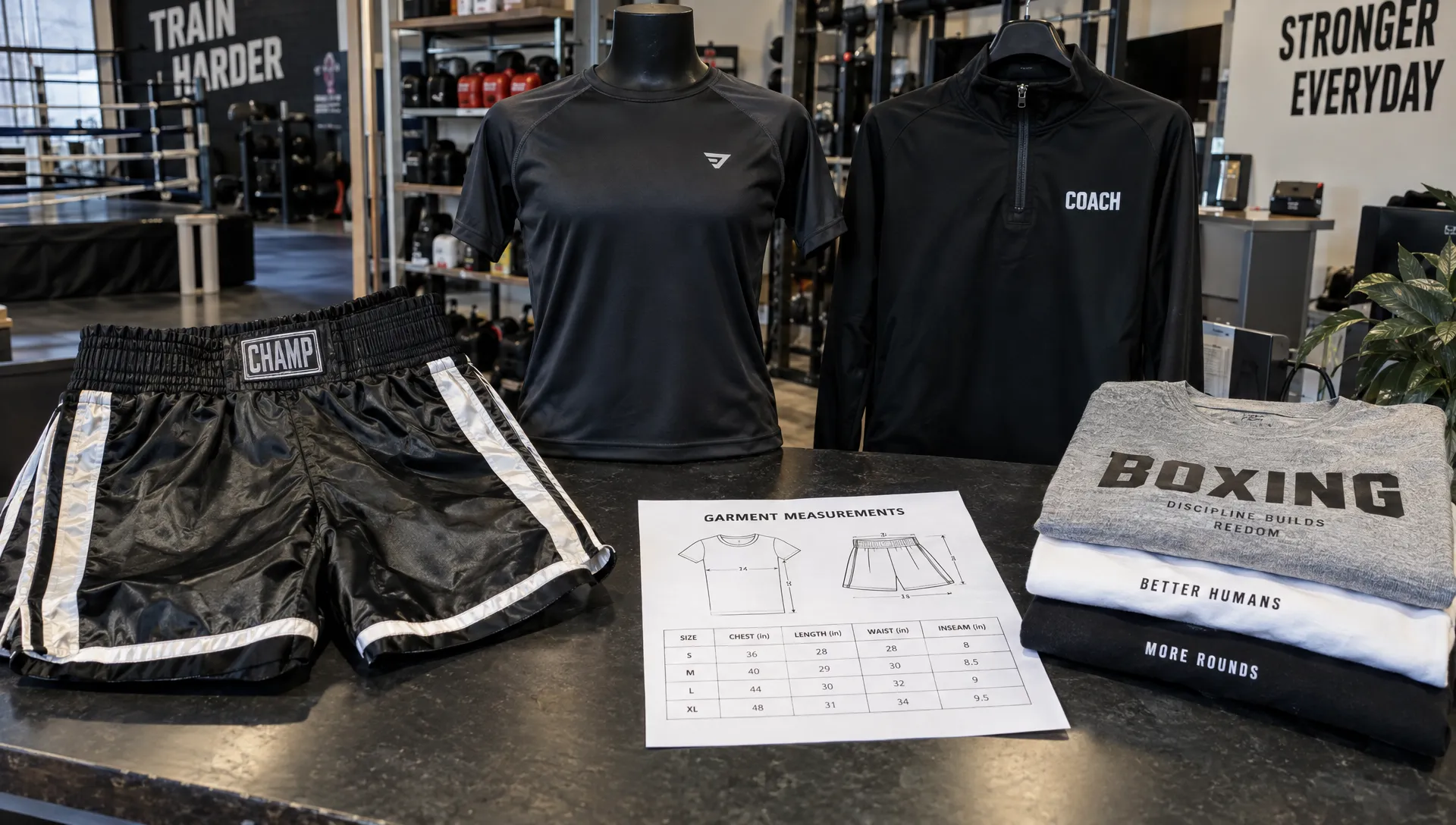
Use plain product descriptions that explain fit, intended use and care. Publish garment measurements and explain how they were taken. For international customers, providing centimeters and inches reduces avoidable confusion, but neither unit solves inconsistent grading between sizes. Check the actual size set rather than relying on familiar labels such as medium or large.
Start with a focused assortment and use preorders, past sales or member feedback to inform quantities. These signals are more useful than assuming every size and color will sell equally. Where possible, track sales by SKU and record why customers exchange items, since repeated fit complaints can identify a pattern issue.
For retail tees specifically, Arus’s guide to choosing shirt fit, fabric and print for boxing merchandise explores those decisions in greater detail.
Presentation can support the range without becoming a large project. Show the garments clearly and make sizing information easy to find. If you need a custom counter stand, a service that accepts customer models, such as Firecloud Printz’s 3D printing service, offers a route to producing your own display design. Confirm dimensions, material suitability and stability separately from the apparel order.
Turn sample feedback into a production brief
Before ordering boxing clothing in bulk, convert your decisions into a specification that both buyer and manufacturer can follow. A reference photo communicates appearance, but it does not define fit, construction or acceptable variation.
Your brief should identify each style’s intended user and use case, then document the details that determine whether the finished garment is acceptable:
- Materials: Fabric composition, target weight, stretch requirements and any agreed performance testing.
- Measurements: Defined measurement points, size grading and agreed tolerances.
- Construction: Seam locations, waistband details, pocket requirements and any components to avoid.
- Branding: Artwork files, dimensions, placement, colors and the agreed decoration method.
- Order details: Quantities by style, color and size, plus labels, packaging and delivery requirements.
Choose decoration in relation to the garment. A large applied design may change how a lightweight training top feels, while embroidery can add bulk in an area that contacts equipment. Assess the decorated sample, not only an undecorated fabric swatch.
Agree which sample establishes the production reference and record approval in writing. Include the final artwork version so an older file cannot be mistaken for the approved design. If material or construction changes after approval, ask for confirmation of how those changes affect fit and appearance.
For repeat orders, retain a reference sample and the final specification. This provides a clearer comparison than memory or a photograph taken under different lighting.
Compare landed cost, labeling and delivery terms
The quoted unit price for boxing clothing is only one part of the purchasing decision. Compare suppliers using the same approved specification and quantity breakdown, otherwise a lower price may simply reflect a different garment.
Ask whether sampling, artwork preparation, labels, packaging and shipping are included or charged separately. Confirm how minimum order quantities apply across styles, colors and sizes. A low overall minimum does not necessarily mean every combination is available in small quantities.
For international orders, establish the shipping terms and who is responsible for freight, customs clearance, duties and import taxes. Work backward from the date you need stock available, allowing for sample revisions and transport rather than treating dispatch as the arrival date. Request current estimates instead of assuming a standard production window.
Labeling also needs market-specific review. For US sales, the FTC’s guidance on textile labeling requirements is a useful starting point. Verify applicable care-label obligations separately and check the requirements of every destination market, including language requirements where relevant.
Before committing, decide how shortages, defects and out-of-tolerance measurements will be documented and resolved. A shared inspection checklist makes the conversation more concrete than a general promise of “premium quality.”
Frequently asked questions
Can the same boxing clothing work for athletes, coaches and retail customers? Some items can cross over, especially a well-fitted tee or warm-up layer. Use one garment across channels only when it meets each group’s requirements. Coaches may need different storage details, while retail customers may prefer a more casual silhouette.
What should a gym order first? Begin with the smallest range that serves a clear demand, such as a training top and shorts, with a separate coach option if needed. Use size collection or preorders to inform quantities rather than guessing the full assortment.
How should competition kit be handled? Treat it as a separate approval task. Check the current rules of the relevant organizer or governing body before finalizing cuts, colors and branding. Arus’s guide to planning amateur club uniform orders covers the club-ordering workflow.
What is the most useful sample to approve? Approve a representative garment with the intended fabric, construction and decoration. Review additional sizes where necessary to assess grading. A visual mockup alone cannot establish movement comfort, wash behavior or finished fit.
Build a focused range with Arus Sportswear
When you are ready to source boxing clothing, bring a clear use-case brief, proposed size breakdown and artwork to Arus Sportswear. Arus offers custom boxing apparel, private label and OEM production, custom branding, low minimum orders and worldwide shipping.
Ask for the applicable minimums, sampling process and delivery terms for your specific range. Start by approving garments for the people who will actually wear them, then use those specifications to guide the bulk order.