For amateur boxing clubs, uniforms are more than matching gear. They help athletes feel part of a team, make the club look organized at events and give sponsors a visible place in the program. Poor planning, however, can turn a simple order into a mess of missing sizes, late approvals, wrong colors and budget surprises.
The best approach is to treat boxing uniform orders like a small season project. Before you ask for quotes or collect money from athletes, define what you need, who needs it, when it must arrive and how much room you have for errors. A clear plan protects volunteers, coaches, parents and fighters from last-minute stress.
Start With the Purpose of the Uniform Order
Not every club needs the same type of boxing uniforms. A beginner youth club ordering training tops has different needs from a competitive amateur team traveling to tournaments. Before choosing fabrics, colors or logo placements, decide what role the uniform will play.
Most amateur clubs are ordering for one or more of these situations:
- Competition kit for sanctioned events
- Training uniforms for daily gym use
- Team apparel for travel, weigh-ins and warm-ups
- Walkout or event gear for shows and exhibitions
- Retail merchandise for parents, supporters and sponsors
This matters because each category has different priorities. Competition gear must be rule-aware, comfortable and easy to move in. Training pieces need durability and washability. Supporter apparel needs broad sizing and a fit people will actually wear outside the gym.
A club with a limited budget should prioritize the items athletes truly need first. For many amateur teams, that means competition shorts, appropriate tops where required, coach shirts and optional team apparel later. If you try to order everything at once without a plan, costs rise quickly and approvals get harder.
Check Competition Rules Before Designing Anything
The most expensive uniform mistake is approving a design that cannot be worn in competition. Rules vary by country, sanctioning body, age group and event type, so the club should confirm the current requirements before production begins.
Common areas to review include color requirements, waistband contrast, logo size, sponsor placements and whether names or decorative elements are permitted. Some events may also have rules around red and blue corners, national team colors or how much branding can appear on the garment.
Do not rely only on what another club wore last season. Ask the event organizer, regional association or governing body for the latest guidance. If your club competes in multiple countries or circuits, such as events across the United States, Canada, Europe, Australia, Japan or Thailand, keep a simple rule summary for each competition type.
A practical approach is to divide designs into two groups: competition-approved kit and club lifestyle apparel. The competition kit should stay clean, compliant and easy to identify. Lifestyle apparel can carry more creative graphics, sponsor storytelling and seasonal designs.
Build a Roster-Based Size Plan
Sizing is where many amateur clubs lose time. Coaches often estimate sizes from memory, parents send incomplete information and athletes change weight classes or grow before the event. A better method is to build a roster spreadsheet before you request pricing.
Collect measurements and preferences early, especially for youth programs. If possible, use a sample set or a manufacturer size chart rather than relying on generic small, medium and large labels. Boxing apparel needs movement through the shoulders, hips and legs, so a normal streetwear size is not always the right reference.
| Information to collect | Why it matters |
|---|---|
| Athlete full name | Prevents spelling errors on personalized gear |
| Age group or division | Helps separate youth, teen and adult sizing |
| Height and weight | Gives the manufacturer a better sizing reference |
| Usual apparel size | Useful but should not be the only sizing input |
| Fit preference | Some athletes prefer looser training wear, others prefer a closer fit |
| Competition date | Determines whether growth or weight changes may affect the order |
| Personalization details | Needed for names, initials or club numbers |
For youth clubs, avoid ordering everything too tight. A child who is between sizes may need the larger option if the uniform will be used throughout the season. For adult fighters, think about the way the garment performs during footwork, sparring and warm-ups. A uniform that looks good standing still is not enough.
Set Quantities With a Realistic Buffer
Amateur clubs often order exactly one set per athlete to keep costs down. That may work for a one-off event, but it leaves no room for late signups, damaged garments, sizing mistakes or new team members. If the club plans to use the same design all season, a small buffer can save money later because reorders may involve additional setup time or different production minimums.
The right quantity depends on the size of the club, age of athletes and whether the uniforms are required or optional. A small adult team can be precise. A growing youth program usually needs more flexibility.
| Order type | Planning advice |
|---|---|
| One tournament only | Order for confirmed athletes plus a small backup in common sizes |
| Full season team kit | Add extra pieces for new members and replacements |
| Youth club uniforms | Allow for growth, size swaps and parent ordering delays |
| Sponsor-funded kit | Confirm sponsor logo approval before locking quantities |
| Retail club apparel | Start with conservative quantities unless you have paid preorders |
Preorders help protect the club budget. If parents, athletes or supporters are buying optional items, collect orders and payments before placing production. For required team kit, make sure the club committee approves whether costs are paid by athletes, sponsors or the club fund.
Build a Design Package Everyone Can Approve
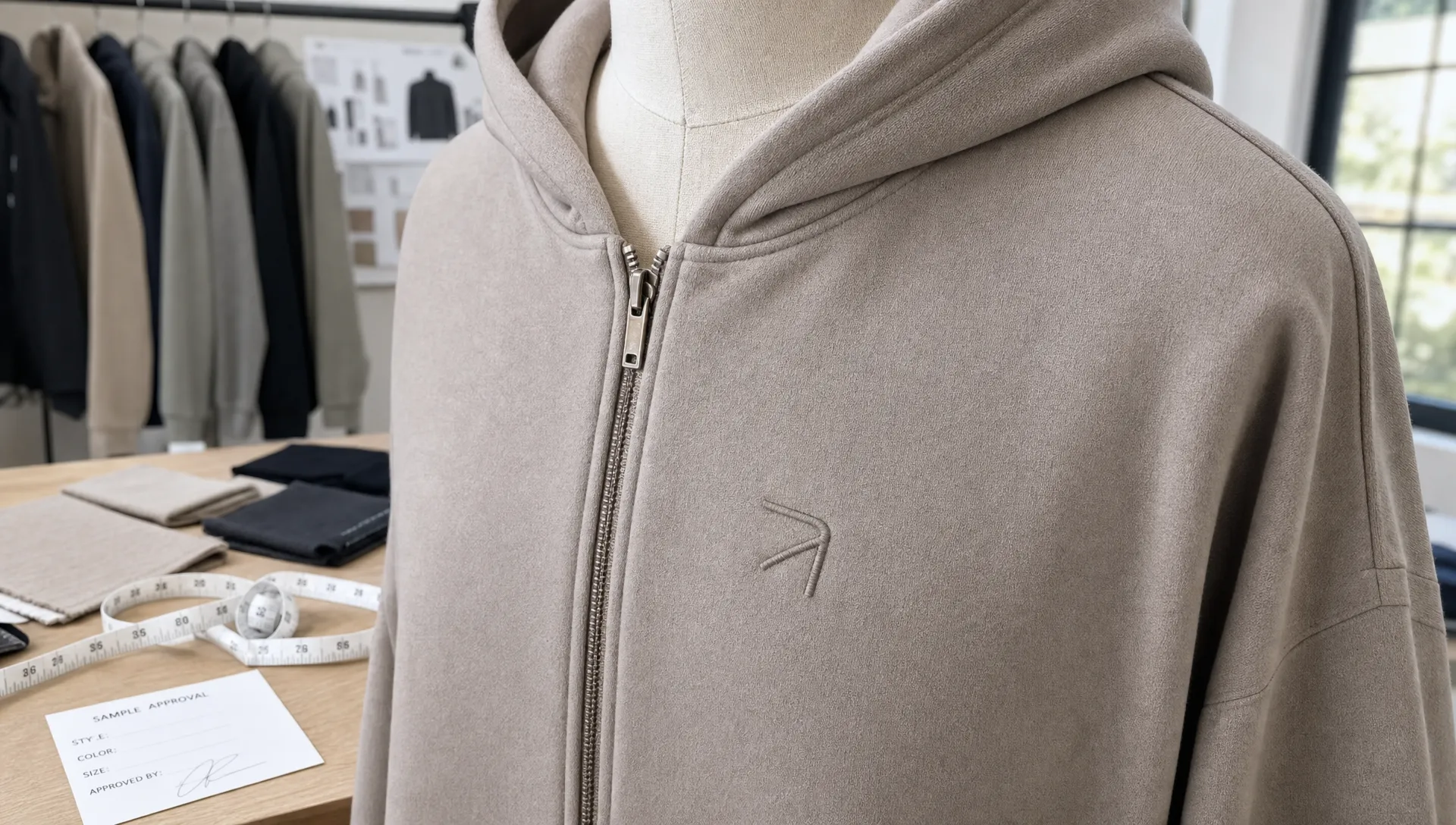
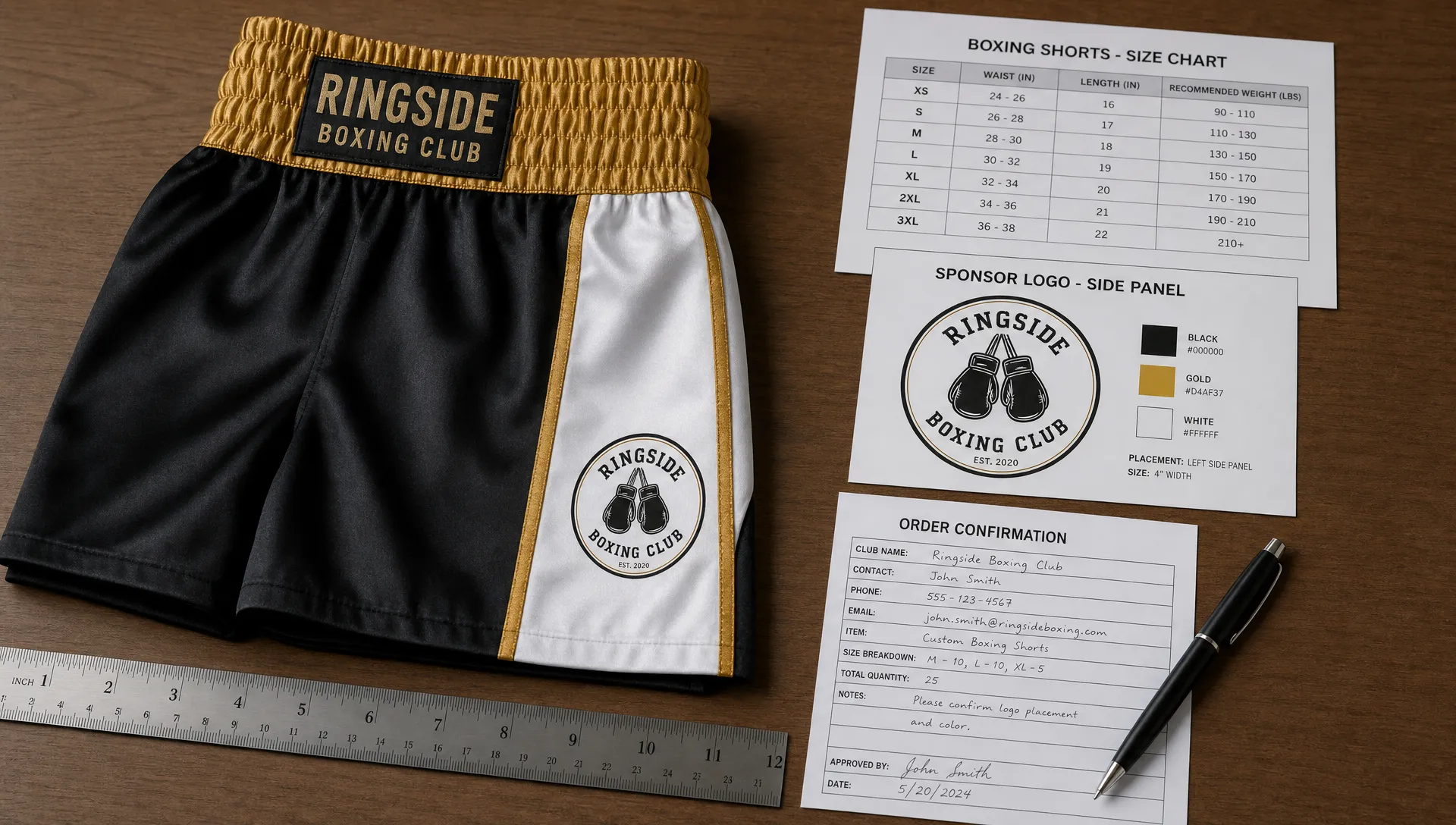
A uniform order moves faster when the manufacturer receives a clear design package. This does not need to be complicated, but it should remove guesswork. At minimum, prepare your logo files, preferred colors, garment types, size breakdown, placement notes and any sponsor requirements.
Vector logo files are best for clean production. If the club only has a low-resolution image copied from social media, the final result may not look sharp. Sponsors should also provide proper artwork before the design is approved. Waiting for sponsor logos after the order has started is a common cause of delays.
For clubs that want to understand how specifications become production instructions, Arus Sportswear’s guide on moving from a tech pack to a bulk order is useful because the same planning logic applies to boxing uniforms, even when the garment details are different.
When preparing your design package, keep club identity consistent. Use the same logo version, color palette and typography across shorts, tops and warm-up pieces. If your team also sells supporter apparel, the article on boxing T-shirts that sell through fit, fabric and print can help you think beyond the competition kit and plan items people will wear regularly.
Plan the Timeline Backward From the Event Date
Uniform orders should be planned backward from the first date the gear is needed, not from the date the committee happens to meet. Amateur clubs have extra coordination steps because coaches, volunteers, parents and sponsors may all need to approve something.
Start earlier than you think you need to. Custom production involves artwork confirmation, sampling or mockups, size collection, bulk manufacturing, quality checks and shipping. International shipping can also be affected by customs clearance, holiday periods and local delivery schedules.
| Phase | What to do | Suggested timing before event |
|---|---|---|
| Club planning | Decide garment types, budget and who pays | 10 to 12 weeks |
| Roster collection | Gather names, sizes and personalization | 8 to 10 weeks |
| Design approval | Confirm colors, logos and sponsor placements | 7 to 9 weeks |
| Quote and order confirmation | Review pricing, quantities and production details | 6 to 8 weeks |
| Production | Manufacturer creates the approved order | Confirm with supplier |
| Shipping and distribution | Receive, inspect and hand out uniforms | 1 to 2 weeks minimum |
These windows are not fixed rules. They are planning guidelines. A simple order with standard garments may move faster, while a complex private label order with multiple custom pieces may need more time. The main point is to leave enough space for decisions and corrections.
If your club has a tournament calendar, build a uniform deadline into it. For example, if entries close six weeks before a regional event, set your size collection deadline before that. Athletes who miss the deadline can still train, but the club should be clear that late uniform requests may not arrive in time.
Communicate Clearly With Athletes, Parents and Sponsors
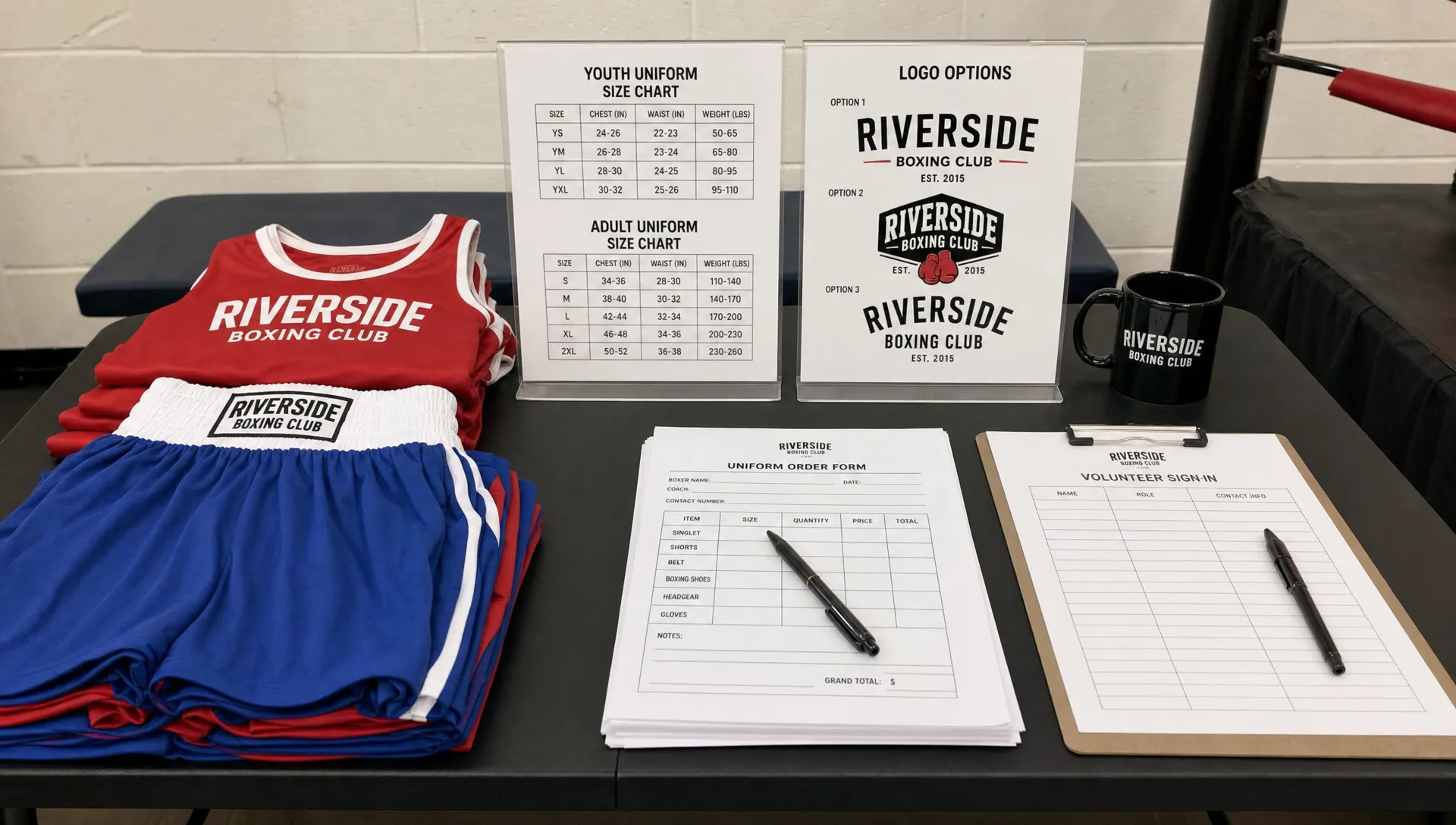
Good communication prevents most ordering problems. Send one clear message that explains what is being ordered, who must buy it, how sizing works, the payment deadline and whether late changes are possible. Keep the tone simple and direct, especially for clubs with parents or members who are new to boxing.
Sponsors need clear communication too. Tell them the logo file format you need, the approval deadline and where the logo will appear. If your club volunteers are short on time, an AI letter generator can help draft polished sponsor requests, parent notices or payment reminder letters that you can then edit with club-specific details.
The key is to avoid scattered messages across group chats. Use one official order form or spreadsheet and one person responsible for final confirmation. If multiple coaches are collecting sizes independently, mistakes become much more likely.
Decide What Should Be Custom and What Should Stay Simple
Customization is valuable, but every custom choice should serve a purpose. Club colors, logos and sponsor marks make sense. Individual names can create pride, but they also reduce flexibility because a personalized item cannot easily be reassigned if someone drops out.
For amateur clubs, the most practical custom options usually include club logo placement, color combinations, size range, fabric choice and sponsor branding. More complex features can be useful for established clubs or private label programs, but new clubs may be better served by a clean design that can be reordered later.
Think about continuity. If the club changes the design every few months, athletes may feel pressure to keep buying new gear. A strong core uniform design can last through a season or more, while limited designs can be reserved for special events, fundraisers or championships.
Choose a Manufacturer That Understands Combat Sports
Boxing uniforms are not the same as general sportswear. The garments must support movement, handle sweat and washing, display branding cleanly and suit the culture of the sport. A manufacturer that works with combat sports apparel will understand why seams, fit, fabric weight and logo placement matter.
When comparing suppliers, ask practical questions rather than focusing only on the lowest unit price. Can they support custom designs? Do they offer private label or OEM production? What are the minimum order quantities? Can they ship to your country? How do they handle bulk orders and branding requirements?
Arus Sportswear manufactures custom MMA and martial arts apparel for brands, gyms and distributors worldwide, including boxing apparel, private label production, OEM orders, custom branding and bulk manufacturing support. If your club is building a consistent team identity, working with a combat sports manufacturer can make the process more organized from design to delivery.
Inspect the Order Before Distribution
Once the uniforms arrive, do not hand everything out immediately at a busy training session. First, compare the shipment against your order sheet. Check quantities, sizes, colors, logo placement and personalization. If anything is missing or incorrect, document it with photos and contact the supplier promptly.
It also helps to sort uniforms by athlete before distribution. Label bags or stacks with each person’s name, size and payment status if needed. For youth clubs, consider asking parents to sign that they received the item, especially when the order was sponsor-funded or subsidized by the club.
After the first training or competition use, collect feedback. Ask whether the fit worked, whether athletes had enough movement and whether coaches noticed any practical issues. This information makes the next order easier and helps the club avoid repeating the same mistakes.
Final Checklist Before Placing a Boxing Uniform Order
Before approving production, review the full order as a committee or with the head coach. A 15-minute check can prevent weeks of correction later.
- Confirm competition rules for the events where the uniform will be used
- Lock the roster, size list and personalization details
- Approve the final design, logo files and sponsor placements
- Confirm the total cost, payment method and who is responsible for collection
- Review production timeline, shipping address and delivery deadline
- Keep a written copy of the approved order for future reorders
This checklist is simple, but it gives amateur clubs a reliable structure. The goal is not to make uniform ordering complicated. The goal is to make it predictable.
Frequently Asked Questions
How early should an amateur club order boxing uniforms? Most clubs should start planning 10 to 12 weeks before the first event, especially if the order includes custom design, sponsor logos or international shipping. Confirm exact production and delivery timing with your manufacturer.
Should clubs order extra uniforms? A small buffer is useful for growing teams, youth clubs and season-long designs. Extra common sizes can cover new athletes, damaged items or sizing swaps, but clubs should avoid overordering optional merchandise without paid preorders.
What information does a manufacturer need for boxing uniforms? A manufacturer typically needs garment types, size breakdown, logo files, colors, branding placements, quantities, delivery location and any personalization details. Clear specifications reduce delays and mistakes.
Can amateur clubs use sponsor logos on boxing uniforms? Often yes, but the club should check competition rules and get sponsor artwork approved before production. Some events may limit logo size, placement or the number of sponsor marks.
Are custom boxing uniforms worth it for small clubs? Custom uniforms can be worth it when they support team identity, sponsor value and consistent presentation at events. Small clubs should keep designs practical, order realistic quantities and choose items athletes will use regularly.
Plan Your Club’s Next Uniform Order With Confidence
A well-planned uniform order gives amateur fighters one less thing to worry about before competition. Start with the rules, build an accurate roster, approve the design early and give production enough time.
If your club, gym or boxing brand needs custom boxing uniforms with private label or OEM support, Arus Sportswear can help manufacture fightwear and combat sports apparel with custom designs, branding options, low minimum orders and worldwide shipping.